
Simon MulvanyMelbourne, Australien
25.06.2017
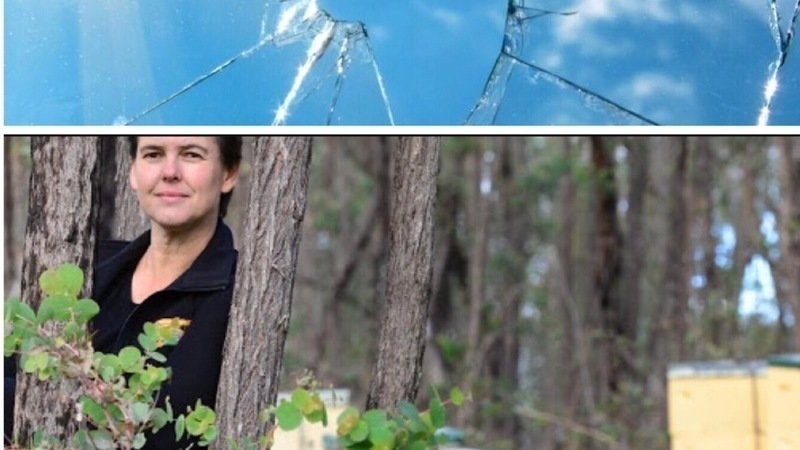
Director Jodie Goldsworthy has smashed the glass ceiling in the often chauvinistic Australian honey bee industry.
Jodie Goldworthy Beechworth Honey passed up millions of dollars in retail revenue in 2004 and again a decade later in 2013/14. Beechworth opted not to sell cheap overseas honey to Australians during the Australian drought that put pressure on local honey production resources. This decision led to Capilano Honey LTD who import honey from China to gain increased market share. I spoke with Beechworth Honey’s Director Jodie Goldsworthy to learn more about the reasons she forwent the opportunity to make a fortune.
"Steven and I considered the supply options of imported honey. However, as a young mother at the time, I simply couldn’t reconcile the idea of feeding our own children imported honey – so the decision was easy. As I would never feed my family imported honey due to the increased and unknown risks coming from different production systems that can lead to honey contamination and also the risk of out right adulteration; how could I sell it to other mothers? Making a profit while putting other families at risk was something we just weren’t comfortable with. In addition, imported honey is a potential biosecurity risk. It potentially introduces strains of diseases that Australia doesn't yet have. The ultimate decision we made meant we suffered considerable financial loss. Today, working on the Global Honey Adulteration Working Group for Apimondia, I stand by our decision and am proud to be continuously working towards preventing fake honey importation”
I began my day in Beechworth Victoria like tens of thousands of Australian children before me, excited to be exploring the Beechworth Honey Bee School. I quickly understood the enormous achievements and sacrifices this self-confessed “Country Girl” had made in the male dominated honey industry.
The Beechworth Honey Experience starts with an informative video about the important roll bees play in honey making and plant pollination. It is clear that Jodie and Steve not only support the hundreds of commercial beekeepers but their involvement in the industry has also helped in firmly planting the small country town of Beechworth on the tourist destination map.
The wet chai made for me at their cafe was one of the best I have ever had. We sat outside near the live observation hive and chatted at length about bees and our genuine concerns for the Australian honey industry. I had some questions for Jodie
Q: Shakespeare told us that bees teach us how to run an ordered kingdom yet there is so much conflict amongst beekeepers and the industry. Why?
A: "Sîmon it has been a very mysoginitic industry. Stubborn power hungry males would ignore me at every VAA meeting. It was common for me to spend hours crying on my way back to Beechworth from Melbourne . I was dismissed for years because I was a female.
Low prices because of imports have driven many beekeepers out of the industry and without the lure of financial security I fear many more will leave the industry. Unlike the beehive there has been little cooperation this has allowed inferior honey imports. Some companies even export Chinese honey blended with Australian honey which taints Australia's reputation overseas. "
Q: When the vector for Varroa the Asian honeybee (apis cerana) was first reported in Cairns Australia you organised trucks to blockade Camberra. Unfortunately the Asian bee is established now in northern Queensland. Is the Australian government doing enough what more can they do?
A: No the Australian government is not doing enough. We need to strategically quarantine areas around ports across Australia. We are so lucky Varroa is not in Australia. Domestically our industry cannot afford have varroa affect our bees. Combined with the impacts and competition from low price imported honey, the addition of varroa would be a disaster risking Australia's food security.
Q. As people wake up to honey laundering and boycott packers that import honey would Beechworth be capable of filling the void if companies importing honey went out of business. Australians do not wants to put hardworking beekeepers out of business.
A. Australian consumers can save the beekeeping industry through their purchasing decisions. It is very unfortunate country of origin is not required on blended honey. Avoid purchasing any honey that uses the words from local and imported ingredients. Markets will readjust we welcome any beekeeper producing quality honey to sell to us. We are beekeepers ourselves. Our main goal is to look after beekeepers. Honey laundering companies going out of business would be the best thing for Australian beekeeper's and bees.
Q. What are your thoughts on the increasing popularity of hobbyist beekeeping?
A. We love it Sîmon. We have a library here dedicated to helping introduce people to beekeeping. New beekeepers should be registered, join a beekeeping club or find a mentor.
Listen to Jodie on ABC Radio
http://www.abc.net.au/news/2015-10-02/6822036
Read more about the risks imported honey brings here.
https://www.beechworthhoney.com.au/beekeeper-blog/fighting-imported-honey
Jetzt unterstützen
Diese Petition unterschreiben
Link kopieren
WhatsApp
Facebook
E-Mail
X