Responding to Several Questions Raised by Readers About My Experience 回应部分读者对我经历的几个疑问

Responding to Several Questions Raised by Readers About My Experience
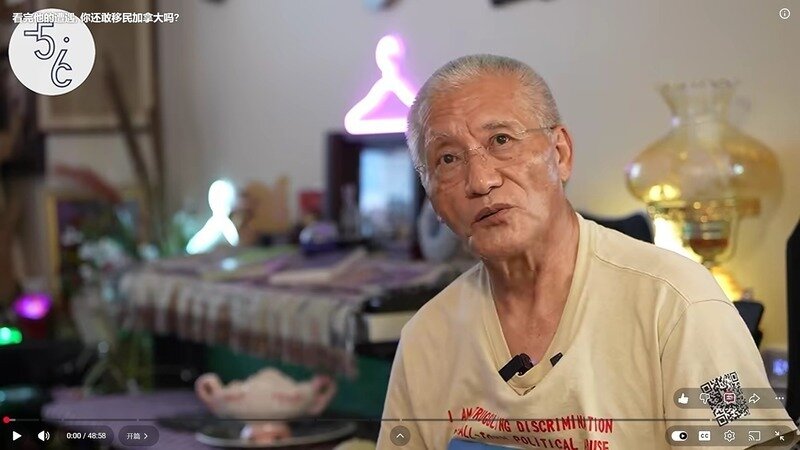
Earlier today, I published “A Supplementary Note Regarding My Interview with 56Below TV.”
After that, I carefully read more comments under the 56Below TV video and on my petition page. Some people expressed support, while others raised questions, doubts, or very practical concerns.
I believe these questions deserve serious answers.
If people only see where things stand today, without understanding what happened before, it is easy to misunderstand my experience.
So I would like to respond here to several questions that readers seem to care about most.
1. Why did I live in Montreal for many years but never become fluent in French?
This is a point that can easily be misunderstood.
In fact, when I first came to Quebec, it was not because I was unwilling to learn French.
Quite the opposite. One of the first things I applied for after arriving in Quebec was access to French-language classes.
However, according to my experience at the time, because I had immigrated as a skilled worker and already had a job, an immigration officer in Montreal did not approve my application for French-language training.
At that time, I had no foundation in French at all.
For an adult immigrant who has just arrived in Canada, the first concerns are very practical: work, family, daily life, and how to adapt to a new society as quickly as possible.
Because I did not have the opportunity to attend the French classes I had originally hoped to take, I had to find another way to acquire a language I could use quickly.
So I chose to teach myself English.
My English was not learned through formal schooling. I learned it gradually through daily life, work, business, and everyday communication.
Therefore, the fact that I later became able to use English does not mean that I had refused to learn French.
The reality was the opposite:
I actively applied to learn French, but I was not given access to the program. With no French background at all, and with the need to work and support my family, I eventually chose to teach myself English.
Many years later, when I began dealing with increasingly complicated government, administrative, and court procedures, the effects of that early language experience became much more significant.
Although my English had become good enough for work and daily communication, my French never reached a level that allowed me to independently handle complex legal and administrative matters.
As a result, when I later had to deal with certain government and court matters in Quebec, I mainly had to rely on English.
In some of my later advocacy and administrative dealings, being a person who did not speak French and who relied mainly on English sometimes created additional questions and communication barriers. That was a difficulty I personally experienced.
I am not saying that every problem can be explained simply by language.
I only want people to understand this:
I did not fail to learn French because I refused to learn it.
2. My life in Montreal was not always a story of failure
Some readers may look at my later bankruptcy, litigation, and years of advocacy and assume that my life in Canada was always marked by failure and conflict.
That is not true.
Before the major tragedy involving my wife, my family and I had a relatively stable, and in many ways successful, life and business experience in Montreal.
Our restaurant received many positive comments from customers and was also introduced and recommended on a number of occasions by local food writers and media figures, including Helen Rochester and Myron Galloway.
So my later bankruptcy should not be taken as a summary of my entire life and business experience in Canada.
For me, the true turning point in my life came after I chose to cooperate with police and become a witness in what I believed involved the public interest.
3. What if I had simply minded my own business?
This is something I feel must be explained clearly.
If I had only focused on my restaurant, my business, and my family—if I had simply minded my own affairs and chosen not to cooperate with police or become involved in matters I believed affected the public interest—perhaps many of the things that followed would never have happened.
But at that time, I chose to trust the police.
I believed that if an ordinary citizen became aware of something that might affect the public interest, that person should be willing to assist police and provide information or evidence.
I also believed that when an ordinary citizen was willing to do that, law enforcement should at least honour the commitments made to that person and provide the protection and support that had been promised.
Unfortunately, in my experience, the police did not later provide the protection and support I had expected based on those earlier commitments.
After that, my family and I gradually experienced a series of serious consequences, including damage to my business, litigation, financial pressure, and eventually bankruptcy.
At the same time, I also had to deal with matters that I believed involved serious misconduct connected with organized criminal elements and with legal representation arranged through the YWCA.
I am not asking the public to decide, based on this statement alone, whether any particular person or institution committed an offence or acted unlawfully.
Those questions should be determined by police records, official documents, court materials, and proper legal processes.
But based on my own experience, I have always believed this:
If I had not stepped forward to cooperate with police in what I believed was the public interest, the course of my life might have been very different.
I do not regret having chosen to step forward.
But I have always believed that an ordinary citizen who cooperates with police in order to protect the public interest should not have to lose his livelihood, family stability, and basic security because of doing so.
4. Why did I later go bankrupt?
My bankruptcy was not simply a story of a business that failed.
In my experience, it was connected to the events described above.
Years of disputes, legal expenses, the impact on my business, major family tragedy, and the pressure that continued to accumulate all had a serious effect on my life and financial situation.
So if someone looks only at the final result—“bankruptcy”—without understanding the process that came before it, the entire story can easily be oversimplified.
That is one reason I have always wanted the relevant records to be preserved and fully reviewed.
5. Did I represent myself because I was unwilling to hire lawyers?
No.
Both in Montreal and later in Alberta, I spent substantial amounts of money hiring lawyers.
I did not choose self-representation from the beginning.
On the contrary, for many years I believed that if I found professional legal counsel and paid the required legal fees, the issues should be capable of being resolved through the normal legal process.
Especially when criminal matters, civil litigation, and long-term legal representation overlap, the procedures, costs, and evidentiary burdens can become extremely heavy for an ordinary person.
When the cases continued for years, legal fees kept increasing, financial pressure became more serious, and some core issues still remained unresolved, I eventually had no choice but to begin learning legal procedures myself, organizing documents, preparing evidence, and appearing in court on my own.
So being a self-represented litigant was never my preferred choice.
It was a path I was forced to take because of long-term practical pressures.
And because I have personally gone through that experience, I have become increasingly concerned about other self-represented litigants.
For an ordinary person who can no longer afford ongoing legal fees, but still has to face courts, government lawyers, and complex procedures, the pressure can be enormous.
6. Some matters in Montreal were never fully closed
Before I left Montreal, some matters had not truly come to an end.
After continued efforts on my part, in August 2025, the office of Montreal’s new mayor agreed to revisit or remove restrictions surrounding certain records that had long been unavailable and that were connected with the events involving my wife.
In addition, before I left Montreal, the last judge dealing with the matter told me that the fraud issue connected with my former Thai restaurant remained open.
With respect to these matters, I still hope that formal documents, police records, and court materials will ultimately provide the proper basis for review, rather than relying only on personal memory.
I mention these points not because I want to reopen every past dispute.
I mention them because I want readers to understand this:
My Montreal experience was not simply a story of “a businessman who failed and then left Quebec.”
7. Why did new property disputes arise after I moved to Alberta?
In 2012, I left Montreal and moved to Alberta because I hoped to start again.
But over time, new disputes developed.
The 56Below TV interview covered some of them, but several important background issues were not fully explained.
One of those issues involves the Village depositing large amounts of snow removed from local streets onto my property over many years.
I later took the position that the Village’s long-term use of my property for street-snow storage should give rise to corresponding responsibility and charges, and I issued related invoices.
After the 2020 auction involving my hotel, I continued to maintain that the auction and related procedures raised serious legal issues.
At the same time, I repeatedly sought a formal response regarding the Village’s long-term use of my property for depositing street snow.
When these disputes remained unresolved, I placed certain municipal property-tax amounts from 2021 to 2024 into an in-trust account, and I informed relevant departments, oversight bodies, and the courts of my position: that these amounts should be considered together with the charges I claim arose from the Village’s long-term use of my property for street-snow storage.
There is also another issue I have continued to raise involving section 610 of Alberta’s Municipal Government Act.
That issue concerns a mobile home that had been removed, while related charges continued to appear afterward.
What I have questioned is this: after the mobile home had already been removed, why did related charges continue, and were those charges legally and procedurally justified?
To me, this was not an isolated minor issue. It became part of the broader, long-running dispute between me and the Village.
So the section 610 issue, the long-term dumping of street snow on my property, the 2021–2024 property-tax amounts placed in trust, and the later disputes involving the hotel auction and property title are not exactly the same issue, but they are all matters that I believe should be examined separately through documents, applicable law, and proper judicial procedures.
I am therefore not asking the public to decide, based on a video or a social-media post, who is definitely right or who has definitely acted unlawfully.
My request is much simpler:
Put the documents on the table. Put the facts on the table. Put the law beside them. Then let the proper legal process decide.
8. Why am I still waiting for Justice Dario’s written decision?
At present, the court proceedings involving the Alberta Ombudsman have not concluded.
I am still waiting for the written decision, order, or written clarification from Justice Dario arising from the hearing on July 6, 2026.
My MLA has also continued to follow developments, and my communications with Municipal Affairs and other provincial bodies are still ongoing.
So I especially hope that those who are following this matter will continue to watch what happens after Justice Dario’s written document is formally released.
At that point, people will no longer be hearing only what I say.
They will also be able to see:
how the court formally records the matter;
how the Ombudsman responds;
how the relevant government departments deal with the issues;
and how the Village responds to the evidence and legal questions.
This is the principle I have continued to follow:
Let the documents speak.
Let the facts speak.
Let the process speak.
And finally, let the judicial outcome speak.
9. Why have I still not given up?
This is the question I most want to answer.
If this were only about recovering money, I might have given up long ago.
If this were only about proving that I am “right” and someone else is “wrong,” it would not be worth spending so many years of my life on it.
Since 2003, I have maintained a blog based on the principle of “Cherish Life, Mutual Help and Mutual Care.”
Later, I founded and remained involved with the nonprofit organization UCMA.
Over the years, I have become increasingly concerned not only with my own problems, but with people who cannot afford lawyers, who have limited language ability, who do not understand legal procedures, who face physical or financial difficulties, and who nevertheless have to confront large administrative and judicial systems on their own.
After going through these experiences myself, I have come to understand more deeply how difficult it is for an ordinary person—without money, without a strong legal team, and without people who understand the system—to have his or her voice genuinely heard when that person believes he or she has been treated unfairly.
So today, I am not continuing only for Peter Pan’s property, Peter Pan’s financial losses, or Peter Pan’s past.
I hope my experience can leave society with a larger question:
When an ordinary person believes that government, administrative bodies, or the justice system have not truly heard his voice, does our system still leave that person a path to continue seeking review, oversight, and fair treatment?
If the wrong turns I have taken can help one vulnerable person avoid some of the same difficulties;
if my experience can help one self-represented litigant understand how to preserve documents, gather evidence, and seek help;
if one ordinary person can see from my experience that even when facing powerful institutions, it is still possible to continue speaking through lawful processes;
then these years of perseverance will no longer belong only to me.
Final Words
Once again, I thank 56Below TV for giving me the opportunity to tell my story.
I also thank every person who has watched, commented, supported me, questioned me, or expressed a different point of view.
I do not ask anyone to accept all of my conclusions simply because they have heard my story.
I only ask that people not judge a person’s life by a headline, and not judge an entire case based only on one person’s account.
Please continue to look at the documents.
Look at the facts.
Look at the legal process.
And look at the formal decisions ultimately made by the courts and other relevant authorities.
I am willing to have my statements tested against the facts.
And I am willing to let time provide the answer.
Further developments and related events can be followed through my petition:
Peter Pan 潘振国
Calgary, Alberta
September 28, 2026
回应部分读者对我经历的几个疑问
今天上午,我已经发表了《关于 56Below TV 采访的一点补充说明》。 在那篇说明之后,我又认真阅读了更多 56Below TV 视频下面以及我的请愿书页面上的留言。有人表示支持,也有人提出质疑,还有一些朋友提出了非常实际的问题。 我觉得这些问题都值得认真回答。 因为,如果只看到今天的结果,而不了解前面的过程,很容易对我的经历产生误解。 所以,我想在这里集中回答几个大家比较关心的问题。
一、我为什么长期生活在蒙特利尔,却不会法语? 这是一个很容易被误解的问题。 事实上,我来到魁北克以后,并不是不愿意学习法语。恰恰相反,我到魁省后的第一项申请之一,就是希望参加法语语言课程。 但是,按照我当时的经历,因为我是以技术移民身份来到加拿大,而且已经有工作,蒙特利尔的移民官以此为理由,没有批准我的法语课程申请。 当时的我一点法语基础都没有。 一个刚刚来到加拿大的成年移民,首先面对的是非常现实的问题:工作、家庭、日常生活,以及怎样尽快适应新的社会环境。 在没有机会参加我原本希望学习的法语课程以后,我只能自己寻找一条能够尽快掌握语言的道路。 于是,我后来选择了自学英语。 我的英语并不是通过系统学校教育学出来的,而是在生活、工作、经营和日常交流中,一点一点自学出来的。 所以,我后来能够使用英语,并不代表我当初拒绝学习法语。 实际情况恰恰相反: 我曾经主动申请学习法语,但没有获得进入课程学习的机会;在完全没有法语基础的情况下,为了工作和生活,我最后选择了自学英语。 多年以后,当我开始面对越来越复杂的政府、行政和司法程序时,这段早年的语言经历才显示出更大的影响。 英语虽然已经能够用于工作和日常交流,但我的法语始终没有达到足以独立处理复杂法律和行政事务的程度。因此,后来在魁北克处理一些政府和司法事项时,我主要只能依赖英语。 在我后来的一些维权和行政交涉中,一个不会法语、主要依靠英语表达的当事人,有时会面对额外的质疑和沟通障碍;这是我个人曾经实际感受到的困难。 我并不是说所有问题都可以简单归因于语言。 我只是希望大家明白: 我不是因为拒绝学习法语而不会法语。
二、我在蒙特利尔并不是一直失败 有些朋友看到今天的我,看到我后来经历破产、诉讼和长期维权,可能会产生一个印象:是不是我的人生一直都在失败和纠纷中? 事实并不是这样。 在我太太发生重大变故以前,我们一家在蒙特利尔曾经有过相当稳定、甚至可以说成功的一段生活和经营经历。 我们经营的餐馆曾经得到不少顾客的好评,也多次得到当地食品专栏记者和媒体人士的介绍和推荐,其中包括 Helen Rochester、Myron Galloway 等。 所以,我后来经历的破产,并不能代表我在加拿大整个生活和经营的历史。 对我来说,真正的人生转折点,是在我为了公共利益选择配合警方、成为证人以后。
三、如果当年我只守着自己“一亩三分地” 这一点,我认为必须说清楚。 如果当时我只顾自己的餐馆、生意和家庭,只守着自己的一亩三分地,不去配合警方,不去站出来处理那些我认为涉及公共利益的问题,也许后来很多事情根本不会发生。 但是,当时我选择相信警方。 我相信,一个普通公民如果知道某些事情可能涉及公共利益,就应该站出来协助警方,提供信息或者证据。 我也相信,当一个普通人愿意这样做时,执法机关至少应该按照当初作出的承诺,给予应有的保护和支持。 遗憾的是,在我的经历中,警方后来并没有按照当初对我所作的承诺,给予我所期待的保护和支持。 此后,我和家人逐渐经历了一连串严重后果,包括生意受损、诉讼、经济压力,最后甚至破产。 与此同时,我还不得不面对我认为与黑帮势力以及由 YWCA 安排的法律代理所涉及的严重不当行为有关的问题。 对于这些具体个人和机构是否构成违法或犯罪,我今天并不希望通过一篇公开文章替警方或者法院作出结论。 这些问题应当由警方记录、正式文件、法院材料和司法程序来判断。 但是,就我自己的经历而言,我始终认为: 如果我当年没有为了公共利益配合警方站出来,后来的人生轨迹很可能完全不同。 我至今没有后悔当年选择站出来。 但我始终认为,一个愿意为了公共利益配合警方的普通公民,不应该因为这样做,而失去自己的事业、家庭稳定和基本保障。
四、我为什么后来会破产? 我的破产,并不是一个简单的“经营失败”故事。 在我的经历中,它与前面这些事件是连在一起的。 长期争议、法律费用、生意受到影响、家庭重大变故,以及后来不断累积的压力,都对我的生活和经济状况造成了很大影响。 所以,如果只看最后“破产”这个结果,而不了解前面的过程,很容易对整个经历作出过于简单的判断。 这也是我为什么一直希望有关文件能够被完整保存和审查。
五、我是不是因为不愿意请律师,才自己上庭? 不是。 无论是在蒙特利尔,还是后来在阿尔伯塔,我都曾经花费过相当大的金额聘请律师。 我不是从一开始就选择自己上庭。 相反,我曾经长期相信,只要找到专业律师、支付律师费用,就应该能够通过正常法律程序解决问题。 尤其当刑事事项、民事诉讼和长期律师代理相互交织时,程序、费用和举证压力,对一个普通当事人来说可能非常沉重。 当案件持续多年,律师费用越来越高,经济压力越来越重,而一些核心问题仍然没有得到真正解决以后,我才不得不开始自己学习法律程序、整理材料、准备证据,最后自己出庭。 所以,self-represented litigant(自诉当事人) 对我来说,并不是一种理想选择。 它是在长期现实压力之下,不得不走的一条路。 也正因为自己亲身走过这条路,我后来越来越关心其他自诉者。 一个普通人如果没有足够的钱继续支付律师费用,而又必须面对法院、政府律师和复杂程序,那种压力是非常巨大的。
六、蒙特利尔的一些事情并没有真正结束 在我离开蒙特利尔以前,有些事情并没有真正画上句号。 经过我持续的交涉,2025年8月,蒙特利尔新任市长方面终于同意重新处理或者解除长期无法取得的、与我太太事件有关的部分文件。 另外,在我离开蒙特利尔以前,最后处理有关事项的法官也曾经告诉我,与我过去泰国餐馆有关的诈骗事项仍然处于开放状态。 对于这些问题,我仍然希望将来能够以正式文件、警方记录和司法材料作为最终依据,而不是只依赖个人回忆。 我提到这些,并不是为了重新开启所有过去的争议。 我只是希望大家理解: 我的蒙特利尔经历,并不是一个简单的“做生意失败以后离开魁北克”的故事。
七、到了阿尔伯塔,为什么又出现新的物业争议? 2012年,我离开蒙特利尔来到阿尔伯塔,希望重新开始。 但是,新的争议又逐渐出现。 56Below TV 的采访已经介绍了一部分,但仍有一些重要背景没有充分展开。 其中包括,多年来 Village 将清理小镇街道产生的大量积雪堆放在我的物业上的问题。 针对这一点,我后来主张,Village 长期使用我的物业堆放街道积雪,应当承担相应责任和费用,我也为此出具过相关费用单据。 在 2020年 Village 对我的旅馆进行拍卖以后,我一直主张该拍卖及相关程序存在严重法律问题。 与此同时,对于 Village 长期使用我的物业堆放街道积雪的问题,我也多次要求得到正式回应。 在这些争议长期未能解决的情况下,我将 2021年至2024年的部分地税款存入 in-trust 账户,并向有关部门、监督机构及法院说明我的立场:我认为这些款项应当与 Village 长期使用我的物业堆放街道积雪所产生的相关费用一并处理。你原来的补充说明已经明确记载了这一主张。YouTube 看完他的遭遇你还敢移民加拿大吗 除此之外,我还长期提出 Alberta Municipal Government Act 第610条 所涉及的另一项问题。 这个问题与我当年一座 mobile home 被移走以后,却仍然继续出现相关收费 有关。 我一直质疑的是:在 mobile home 已经被移走以后,为什么相关费用仍然继续存在,以及这些收费在法律和程序上是否合理。 对我来说,这并不是一个孤立的小问题,而是我与 Village 长期争议中的一个重要组成部分。 因此,第610条问题、街道积雪长期堆放在我的物业、2021年至2024年部分地税存入 in-trust 账户,以及后来围绕旅馆拍卖和物业权属发生的争议,虽然彼此并不完全相同,但都属于我认为应当由文件、法律条文和司法程序逐项审查的问题。 所以,我并不希望通过一段视频或者一篇文章,预先宣布谁一定正确、谁一定违法。 我的要求其实很简单: 把文件拿出来,把事实放在桌面上,把法律条文放在一起,然后由适当的司法程序作出判断。
八、为什么现在还要继续等待 Justice Dario 的书面文件? 目前,我与 Alberta Ombudsman 相关的司法程序仍未结束。 我仍然在等待 Justice Dario 就 2026年7月6日庭审相关事项作出的书面裁决、命令或者书面说明。 我的 MLA 也一直在关注有关后续发展,我与 Municipal Affairs 等部门之间的沟通也仍在继续。你此前的补充说明中已经记录了这一程序状态。YouTube 看完他的遭遇你还敢移民加拿大吗 所以,我特别希望现在关注案件的朋友,在 Justice Dario 的书面文件正式出来以后,再继续看下一阶段的发展。 因为到了那个时候,大家看到的就不仅仅是我个人怎么说。 还可以继续看: 法院如何正式记录有关事项; Ombudsman 后续如何回应; 相关政府部门如何处理; Village 又怎样回应相关证据和法律问题。 这也是我一直坚持的原则: 让文件说话。 让事实说话。 让程序说话。 最后,让司法结果说话。
九、我为什么直到今天还没有放弃? 这是我最想回答的问题。 如果这件事情只是为了追回一笔钱,我也许早就放弃了。 如果只是为了证明我个人“对”、别人“错”,也不值得我花这么多年的人生继续坚持。 从 2003年开始,我建立了以“珍惜人生,互助互爱”为理念的博客。 而后,我又创立并长期参与公益机构 UCMA。 这些年来,我越来越关心的,并不只是自己的问题,而是那些没有足够经济能力请律师、语言能力有限、不懂法律程序、身体或者经济条件困难,却不得不独自面对庞大行政和司法体系的人。 你此前的说明中也已经明确写到,你今天的坚持并不只是为一处物业或者一笔经济损失,而是希望自己的经历能够帮助其他普通人理解,在面对长期行政、土地和司法争议时,还有哪些途径可以让自己的声音被听见。YouTube 看完他的遭遇你还敢移民加拿大吗 我自己走过这些路以后,越来越明白: 当一个普通人没有足够的钱,没有强大的法律团队,也没有熟悉制度的人帮助,而他又认为自己受到不公平对待时,要让自己的声音真正被制度听见,是多么困难。 所以,今天我继续坚持,并不仅仅是在为 Peter Pan 的物业、Peter Pan 的损失或者 Peter Pan 的过去而坚持。 我希望自己的经历最终能够给社会留下一个问题: 当一个普通人认为政府、行政机构或者司法程序没有真正听见他的声音时,我们的制度是否仍然为他保留了一条能够继续寻求审查、监督和公平处理的道路? 如果我自己走过的弯路,能够让未来某一个弱势者少走一点弯路; 如果我的经历能够让某一个自诉者知道怎样保存文件、怎样寻找证据、怎样寻求帮助; 如果一个普通人因为看到这些经历,而知道即使面对强大的机构,仍然可以通过合法程序继续发声; 那么,这些年的坚持,就不再只是属于我个人。
最后的话 再次感谢 56Below TV 给我一个讲述经历的机会。 也感谢每一位认真观看、留言、支持、质疑或者提出不同意见的朋友。 我并不要求任何人因为听了我的故事,就接受我的全部判断。 我只希望大家不要只凭一个标题判断一个人的人生,也不要只凭一个人的陈述判断整个案件。 请继续看文件。 看事实。 看法律程序。 也看法院和有关机构最后正式作出的决定。 我愿意让我的陈述接受事实的检验。 也愿意让时间作出回答。 相关事件及后续发展,可以继续通过我的请愿书跟进: https://c.org/7RLVYP5Sbn
Peter Pan 潘振国 Calgary, Alberta September 28, 2026