My Proponent testimony March 23-2021

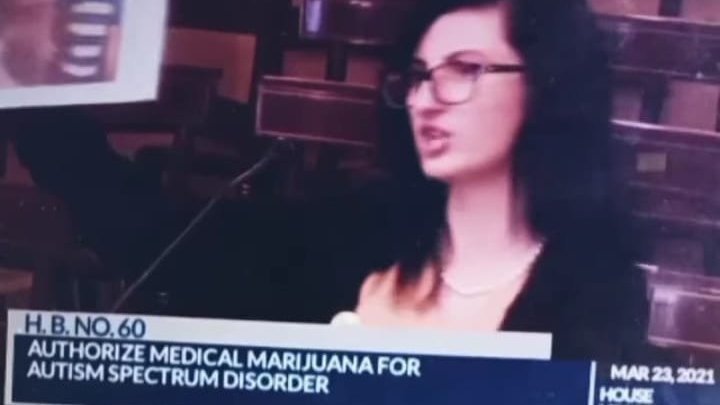
Chair Lipps, Vice-Chair Holmes, Ranking Member Russo, and respected members of the Health Committee:
Thank you for allowing me to make this testimony today.
Mere decades ago, an autism diagnosis was considered to be an unusual and rare neurological diversity. Also was commonly deemed to be a condition that primarily, or largely affected children. Currently, autism is the fastest-growing developmental disorder, yet somehow extremely stigmatized, as well as drastically overlooked.
Today, more than 3 million Americans have been diagnosed as being on the autistic spectrum, a number that has more than tripled over the past 30 years. Now affecting 1 in 59, autism is now one of the most prevalent diagnoses among children and young adults in the United States. More prevalent than childhood cancer, AIDS, Diabetes, Downs Syndrome, Muscular Dystrophy, Cystic Fibrosis, and Cerebral Palsy, combined.
This is why now is the time to learn about how to improve the quality of life for those diagnosed. The cost of not doing so comes at the expense of our children.
My son was diagnosed with severe low functioning autism in 2016 when he was only two years old, but I discovered his symptoms in infancy. He was very withdrawn as a baby and didn't make eye contact for the first year of his life, not even with me. His evaluations started quite young, around about one year old. He was later diagnosed at only two years old.
After diagnosis I dived deep into the rungs of the ASD realm, tediously studying all options, regimens, therapies, and medical treatment options available. I was both shocked and appalled -- saddened at what I found. The studies documenting brain shrinkage when atypical antipsychotics are administered to our kids, obesity and breast development in males, the mortality rates, the never-ending list of dangerous and addictive drugs, the very risky side effects these drugs ensued -- such as suicidal thoughts, sudden death, heart failure, seizures, arrhythmias, respiratory issues and so on…
It was a somber moment when I realized that the three main killers of our kids are ALL side effects listed on the most commonly prescribed medications allotted to our kids. This would be the first, but not the only time in my journey with Autism that I felt truly scared.
At the end of 2018 after years of studying cannabis medication and its many ties to Autism, I discovered many comorbidities were indeed qualifying conditions that were approved for medical cannabis in Ohio, via in inception of HB523, in 2016. Conditions such as PTSD, tourettes, seizures, epilepsy, GI issues like Chrons, IBS, Colitis, TBI, and encephalopathy. With this knowledge, coupled with a bevy of legal ASD friendly states, rife supporting scientific data and various clinical trials on PEDS patients with tremendous success from the UK, Brazil, Chile, and Israel -- I submitted a 500-page petition to the Ohio State Medical Board in support of Autism Spectrum Disorder as a qualifying condition for medical cannabis treatment, as a means to try to avoid the litany of pharmaceuticals that our kids are subjected to.
While my submission was rife with scientific evidence, medical research, and supporting data, including various letters of support from medical professionals, specialists, even the medical board’s expert testimony as well– despite the substantial and profound evidence I presented, the medical board, after first endorsing, flipflopped and voted to deny access to autism against their own expert’s opinions.
I have petitioned every year since collecting more and more evidence. This year I submitted 750 pages worth of documentation in total. Each year 2018-2020 ASD has made it through every phase of becoming a qualifying condition but has yet to be officially approved by the OSMB.
Upon denial in 2018, Schottenstein, President of the board, stated that once a condition is officially added to the list, it cannot be removed. This factored into their decision to deny access. The Ohio State Medical Board also doesn’t believe that it can exclude pediatric use among patients upon approval of new conditions. Some speculation from opponents states marijuana may be harmful to children’s developing brains, despite the fact that pediatric cannabis use is already permitted in Ohio for a variety of conditions that are comorbidities of ASD. In addition, there are a wide array of thriving pediatric patients all across our country. In fact, studies have actually documented vast improvements in cognitive function in the use of cannabis as a treatment for autism spectrum disorder.
The current state of evidence of cannabis utilization for treatment of autism spectrum disorder
Jaxsyn’s symptoms include but are not limited to insomnia, bouts of unfocused aggressive behaviors, self-injury, inability to publically socialize, adherence to repetitive behaviors, GI issues, periods of extreme anxiety, PICA, history of seizures, and the inability to understand concepts such as danger.
At the end of 2019 my son was hospitalized for severe GI complications and my worst fears had rapidly come to light. During this time my son was admitted to the hospital and given a cocktail of medications to kickstart his GI including, sennosides, enemas, suppositories, and polyethylene glycol.
These medications induced convulsive seizures in my son, as polyethylene glycol has been reported to potentially induce seizures and is recognized as hazardous on the Epilepsy Foundation’s website. The FDA has received reports of obsessive-compulsive behavior, tics, tremors, and other neuropsychiatric side effects in children taking PEG 3350 laxatives such as polyethylene glycol such as:
•anger
•aggression
•mood swings
•tremors
•seizure
Despite these concerns, the North American Society for Pediatric Gastroenterology, Hepatology, and Nutrition continue to consider this as the first-choice medication for short- and long-term treatment of constipation in children.
It was recommended that my son take four times the amount of PEG 3350 advised for adults, even after I detected seizure developments in my child.
My son was only five years old when he was diagnosed with a seizure disorder following due to the damage ensued by these cocktails of GI regimens that were supposed to be helping my son, and the doctor’s refusal to take my concerns seriously.
Jaxsyn became lethargic and stopped eating or drinking willingly. The next solution the doctors had to keep him on the GI medications, was the introduction of anticonvulsants, Klonopin, and Lamictal. This made a bad situation, even worse. My sweet, loving son grew violent, aggressive, self-injurious, and extremely anxious. He stopped playing, laughing, and being affectionate, he was living in a constant state of medical misery.
Refusing to earnestly listen to my endless lists of concerns surrounding all of the GI and seizure medications, I felt like I was forcefully backed into a corner of submission.
After his release a week later -- he developed PTSD-type symptoms surrounding anything tied to his stay. He would absolutely refuse his medication, becoming engulfed in panic attacks. Fearful of diaper changes, fearful of me, fearful of hospitals and centers of ALL kinds. This made taking my son to his OT and speech therapy appointments impossible, as his therapy services are given at our local hospital.
We were living the nightmare that I had feared so greatly, it was happening in real-time. The very thing I worked so hard to prevent, was happening. It was like the reset button was hit on his DX and years of progress were undone, his SIB, rage, and anxiety were worse than ever before. His eye contact dissipated, he was withdrawn. It was like the reset button was hit on his diagnosis.
I was watching my son, my happy boy... disappear.
My daughter and I grew fearful for my son’s future, his safety, and our safety as his SIB spiraled out of control. No one was safe, esp Jaxsyn… and he was his main target. For this paired with a variety of other reasons, I had no choice but to pull my son out of public school and began homeschooling my child. He was a danger to himself, and others.
After getting a better handle on his GI, I successfully achieved weaning my son off of pharmaceuticals that caused copious amounts of harm to my child under the proper guidance and asked about opting for cannabis medication instead. Mercy HOSP told me that they would NOT allow cannabis medication on sight, even if he were to be a legal patient. As he now has qualifying comorbidities DX due to the lasting impact of these medications, moreover PEDS cannabis is permitted in our state. We as parents should be allowed to have this conversation without being treated like a common criminal as this is a LEGAL program in our state. But, soon after CPS showed up at my door with accusations of potential abuse. After months of constant turmoil for my entire family, I was able to profoundly prove my case and the accusations went unsubstantiated.
Some emphasis needs to be shifted towards establishing more energy into helping those diagnosed. Innocent lives are at stake, our kids deserve to have a better quality of life. One that is not condemned to the stranglehold of pharmaceuticals, esp even after they fail our kids. We must look at what we can do to improve the quality of life for people with autism in Ohio and all across our country. There is no cure for autism, but there are safer, more effective treatment options. We must urge those in the medical community, legislators, as well as the general population, to change how they observe and treat autism. This a very definite statement of how society treats autistic people and their families.
But my son’s story will not be in vain, he is a survivor. His story is a testament to how we as a society can and must do better to listen to ALL of the science available, not just western medicine. Because his story is far from uncommon, his story echoes the sentiment of thousands of medically fragile children in our state who are just like him and families that are just like mine.
Today all of our collective fight, legislature, and constituents alike should be to ensure the representation of all, not some. HB60 is what we need to ensure our state government still reflects the will of the people it represents, as this has been a wide-spanning, constituent-based initiative since 2018.
Thousands have come together in unison by signing a change.org petition to show solidarity for the cause: https://www.change.org/p/grant-access-to-medical-cannabis-to-those-diagnosed-with-autism-in-ohio
Furthermore, several citizens have reached out to the Ohio State Medical Board, Board of Pharmacy, and various legislators such as yourself, for years in favor of this initiative and are counting on state officials to finally listen. Trust in our democracy has been shaken more than ever before. We’re entering a new era in our country — one that transcends left vs. right. You have the chance to help reclaim the Ohio Promise, one of trust, honesty, and democracy. Please make the right choice today, Thank you.
I now welcome any questions the board may have.
Full video here: https://m.facebook.com/story.php?story_fbid=4175766372458015&id=100000740792209