FROM THE KING’S SANDBOX TO THE PEOPLE’S SANDBOX What Has the Crown Become?

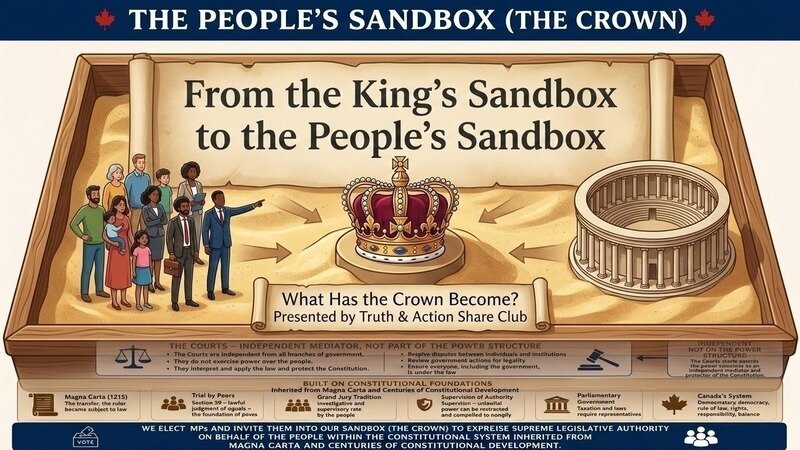
🎥 WATCH AND SHARE: https://docs.google.com/videos/d/1zpuqCmcRkKJJ5eByIUygT5dpJxWnUoqBkIuPgdwtId0/edit?usp=sharing
📢 NOTE: Please share widely.
There is a massive amount of propaganda circulating right now claiming that the King holds absolute power over the people.
That is historically and constitutionally false.
Please help challenge this misinformation by sharing this article and posting it under related discussions and articles.
━━━━━━━━━━━━━━
Since Magna Carta in 1215, the Crown in a Constitutional Democratic Monarchy has existed under legal limits and in service to the people — not above them.
Magna Carta marked the beginning of the principle that rulers themselves are bound by law.
What we are witnessing today appears to be an attempt to flip that structure upside down — placing centralized executive power above both Parliament and the people.
This is now the third major move since the pandemic toward restructuring Canada into a top-down system where a small group at the top exercises increasing control without meaningful consultation or accountability to the public.
During the pandemic, there was an attempt to centralize control through emergency-style public health governance.
The Truckers Convoy and resulting public pushback helped stop that expansion of power.
Then came efforts to shift increasing authority away from Parliament and the people toward judicial and administrative control through broad Charter interpretations.
However, the Supreme Court of Canada pushed back against unlimited state immunity in Attorney General v. Power (2024), reaffirming that governments and officials can still be held accountable under law.
Now there are growing concerns about efforts to bypass the constitutional role of the Crown itself by having the Prime Minister effectively step over the Crown’s traditional function in the appointment of the Governor General — concentrating executive authority even further.
If unchecked, this raises serious concerns about the continued erosion of constitutional safeguards that were specifically designed to prevent the rise of unchecked executive rule.
But this can still be stopped.
✔ Judicial review
✔ Public awareness
✔ Peaceful democratic engagement
These remain powerful tools.
People must understand that in Canada’s constitutional system, the Crown is not meant to stand above the people.
It exists as part of the constitutional structure that is supposed to protect the balance between government power, Parliament, and the rights of the people themselves.
━━━━━━━━━━━━━━
BEFORE MAGNA CARTA: THE KING’S SANDBOX
Before the Magna Carta, the sandbox belonged to the king.
The king made the rules.
The king enforced the rules.
The king controlled taxation, courts, prisons, military power, land, and government itself.
The people lived inside the sandbox — but they did not meaningfully participate in governing it.
Power flowed downward from the throne.
That was the old system.
━━━━━━━━━━━━━━
MAGNA CARTA: THE CONSTITUTIONAL TRANSFER
Then came Magna Carta in 1215.
Magna Carta fundamentally changed the constitutional relationship between ruler and people.
From that point forward, the sandbox no longer belonged exclusively to the ruler.
The king became subject to law.
That was the transfer.
Everything that followed over the next several centuries was the clarification, institutionalization, and enforcement of what that transfer actually meant.
Traditions arose.
Institutions arose.
Balancing mechanisms arose.
But the foundational constitutional shift occurred with Magna Carta itself.
━━━━━━━━━━━━━━
BEFORE MAGNA CARTA: THE KING’S SANDBOX
Before 1215, kings exercised enormous authority.
The ruler could:
• Imprison people
• Seize property
• Raise taxes
• Punish enemies
• Govern largely through force and decree
There were customs and traditions, but there was no mature constitutional framework effectively placing the ruler beneath the law.
The sandbox belonged to the Crown in the sense of personal royal authority.
The people existed under authority — not as constitutional participants within it.
━━━━━━━━━━━━━━
MAGNA CARTA: THE CONSTITUTIONAL TRANSFER
Magna Carta changed that relationship permanently.
It introduced foundational constitutional principles:
• Due process
• Lawful judgment
• Restraints on arbitrary detention
• Limits on taxation
• Accountability of rulers to law
• Jury principles through judgment by peers
• Supervision of those in authority through enforceable constitutional restraints
Most importantly, Magna Carta established that the king himself was subject to law.
That single principle altered constitutional history forever.
The ruler was no longer master of the sandbox.
The sandbox became governed by law.
From that moment forward, authority itself operated inside constitutional restraints.
━━━━━━━━━━━━━━
SECTION 39: TRIAL BY PEERS — THE FOUNDATION OF JURY RIGHTS
One of the most important provisions of Magna Carta was Section 39:
No free man shall be seized or imprisoned, stripped of his rights or possessions, outlawed or exiled, or deprived of his standing in any way, except by the lawful judgment of his equals or by the law of the land.
The phrase “lawful judgment of his equals” became one of the foundational principles of trial by jury.
This principle was revolutionary.
It meant the state could not simply accuse, judge, and punish people entirely through centralized authority alone.
Ordinary people — peers — became part of the justice system itself.
━━━━━━━━━━━━━━
THE TRIAL JURY
The trial jury determines guilt or innocence.
Citizens themselves participate directly in deciding whether the state has proven its case.
This acts as a safeguard against wrongful conviction and concentrated authority.
━━━━━━━━━━━━━━
THE GRAND JURY
The grand jury developed as a broader constitutional body with supervisory and investigative functions.
The grand jury tradition inherited from England could:
• Examine charges the state wanted to lay
• Determine whether sufficient evidence existed
• Investigate government institutions
• Investigate complaints of abusive authority
• Act as a supervisory body of citizens within the justice system itself
The grand jury was not originally designed merely as a rubber stamp for prosecutions.
It functioned as a constitutional mechanism through which the people themselves participated in supervising the lawful operation of authority.
Citizens were no longer merely subjects inside the sandbox.
They became constitutional participants within the administration of justice itself.
━━━━━━━━━━━━━━
SECTION 61: SUPERVISING THOSE IN AUTHORITY
Another extraordinary part of Magna Carta was Section 61.
Section 61 established an enforcement mechanism against unlawful royal conduct.
If the king violated the Charter, a council of barons could lawfully compel compliance.
This was one of the clearest constitutional recognitions in history that rulers themselves could be supervised and restrained when acting unlawfully.
Section 61 reflected a principle later associated with the doctrine of the lesser magistrate:
That lower authorities possess both the right and duty to resist unlawful actions by higher authority.
This principle later appeared through:
• Representative institutions
• Constitutional offices
• Juries
• Local authorities
• Balancing structures designed to supervise and restrain unlawful concentrations of power
Rights without enforcement become meaningless.
━━━━━━━━━━━━━━
PARLIAMENT: CLARIFYING THE MEANING OF THE TRANSFER
Following Magna Carta, representative institutions expanded.
The Parliament of England gradually evolved into a constitutional counterbalance to executive authority.
This was not a new transfer of the sandbox.
The transfer had already occurred when the ruler became subject to law.
Parliament represented the continued clarification and institutional development of that constitutional principle.
Over time:
• Taxation required parliamentary approval
• Legislation increasingly flowed through representative institutions
• Political authority became tied to representation
━━━━━━━━━━━━━━
THE ENGLISH CIVIL WAR
The constitutional struggle eventually erupted into the English Civil War.
The issue was no longer whether rulers were subject to law.
That principle had already been established.
The issue was enforcement.
Would constitutional restraints actually prevail when challenged by centralized authority?
Parliament ultimately prevailed.
This reinforced the principle that rulers themselves operate inside constitutional limits.
━━━━━━━━━━━━━━
THE GLORIOUS REVOLUTION AND CONSTITUTIONAL MONARCHY
Another major constitutional clarification came with the Glorious Revolution.
The English Bill of Rights reinforced:
• Constitutional restraints on executive authority
• Parliamentary control over taxation and legislation
• Government operating under law rather than personal rule
• The continuing constitutional balance between institutions
The Crown remained part of the constitutional structure — but within constitutional limitations.
━━━━━━━━━━━━━━
JURY INDEPENDENCE AND BUSHELL’S CASE
As jury systems developed further, another major constitutional clarification emerged through Bushell’s Case.
Jurors refused to convict William Penn despite pressure from the court.
The resulting ruling reinforced that jurors could not be punished merely for independent verdicts.
This strengthened the constitutional role of citizens within the justice system itself.
The jury was confirmed as an independent constitutional safeguard against concentrated authority.
━━━━━━━━━━━━━━
RESPONSIBLE GOVERNMENT
As constitutional traditions evolved, responsible government emerged.
Executives could not simply govern by personal will.
Prime ministers and cabinets had to maintain the confidence of elected representatives.
Government itself operates within constitutional restraints and accountability structures.
━━━━━━━━━━━━━━
CONFEDERATION AND CANADA
When Canadian Confederation occurred, Canada inherited this constitutional tradition.
Canada adopted:
• Parliamentary government
• Constitutional monarchy
• Representative institutions
• Trial juries
• Grand juries
• Responsible government
• Rule of law principles
These institutions reflected centuries of constitutional clarification flowing from Magna Carta’s original transfer from personal rule to constitutional rule.
━━━━━━━━━━━━━━
THE BALANCES OF POWER IN CANADA
The Crown
Functions within the constitutional structure and continuity of government.
Parliament
Creates laws and controls public spending.
The Executive
Administers government through Cabinet and the Prime Minister.
The Courts
Operate independently as mediators and interpreters of law.
Trial Juries
Place citizens directly into criminal trials as safeguards against wrongful conviction and concentrated authority.
Grand Juries
Historically functioned as investigative and supervisory bodies capable of examining charges, investigating institutions, and reviewing complaints of abusive authority.
The People
Provide democratic legitimacy through elections and public participation.
Constitutional systems contain balancing mechanisms designed to supervise and restrain unlawful exercises of power.
━━━━━━━━━━━━━━
ATTORNEY GENERAL OF CANADA v. POWER
In Attorney General of Canada v. Power, the Supreme Court of Canada reaffirmed the constitutional principle of parliamentary supremacy.
The Court emphasized Parliament’s broad legislative authority within Canada’s constitutional structure.
Under the Westminster tradition inherited by Canada:
• Parliament possesses supreme legislative authority within its constitutional sphere
• Parliament remains politically accountable to the people through representative government and elections
Members of Parliament are not rulers standing above society.
We elect MPs and invite them into our sandbox to exercise legislative authority on behalf of the people.
━━━━━━━━━━━━━━
WHAT HAS THE CROWN BECOME?
Before Magna Carta, the Crown largely represented personal royal authority over the people by the King.
After Magna Carta and centuries of constitutional development, the Crown evolved into something very different.
In modern Canada, the Crown is not simply the King as a person.
The Crown became:
• The constitutional framework of the state
• The legal continuity of government
• The constitutional authority structure operating under law
• Part of the balanced system inherited through centuries of constitutional development
Today, the Crown functions within constitutional restraints rather than above them.
The Crown became constitutionalized.
It operates inside the sandbox — on behalf of the people — not as owner of the sandbox.
*******************************************
SUPPORT THE GRAND JURY ON TREASON
Registration for the Grand Jury Pool is now closed as of April 20, 2026.
The Grand Jury members have been selected
The selection began on May 30. After the selection we need to inform the public that a Grand Jury has been struck and look for endorsers and consultants
While the jury pool is now closed, ongoing support remains essential to the success and integrity of the Grand Jury process. Individuals who wish to contribute may still volunteer in support roles.
Inquiries: grandjuryrising@proton.me
To sign up to help organize: grandjuryrising.ca/grandjurysign-up
Support is needed in the following areas:
• Fundraising to meet the operational needs of the Grand Jury process
• Public awareness and outreach to inform the public about the initiative
• Expert consultation and opinions, including legal and medical expertise
• Identifying and coordinating witnesses willing to provide testimony
• Data collection, organization, and secure storage of materials
• Security and logistical support
May 4 the Grand Jury Pool structure 4 committees so far: Legal, Medical, Media, Data Media, Security, and Foreign/Electoral Interference. If you are interested in joining these committees email us and will get you in touch with the coordinator.Or if you are interested in coordinating the Fund Raising or Accounting committee
To volunteer or donate please visit: grandjuryrising.ca/grandjurysign-up
For questions or further information, please contact: grandjuryrising@proton.me
SIGN GRAND JURY PETITION: https://www.change.org/GrandJuryPetition
********************************************
✅Sign the petition to stop Bill S-206 digital prison: https://www.change.org/Kill_Bill_S-206
✅ Take the National Digital ID Poll here: https://forms.gle/jEsYnfZWVvCfas5g8
📣 JOIN THE TRUTH & ACTION SHARE CLUB on line at: https://www.grandjuryrising.ca/sign-up-to-truth-action-club
Commit to share 1 post for fifteen minutes a day. That’s the movement. If you sent a request to join and do not receive a confirmation email in 24 hours please notify us again.