⚖️ Why Canada Needs a Grand Jury — Now More Than Ever When Courts Fail, the People Must Act

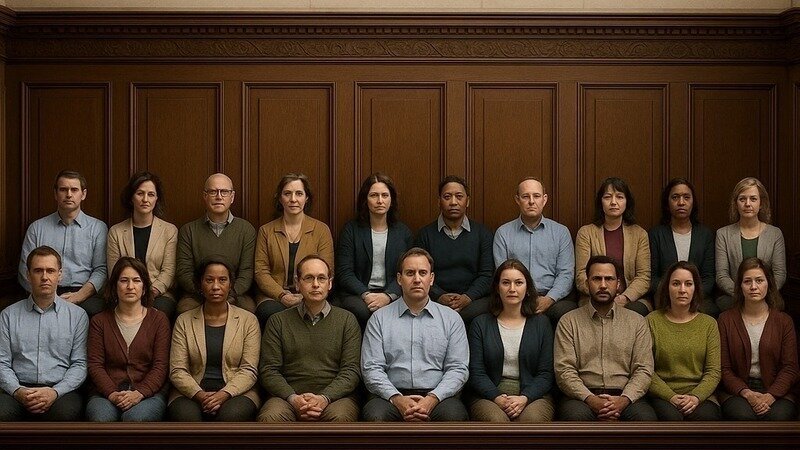
Canada’s justice system was built on the rule of law — habeas corpus, the right to a fair trial, and the right to be heard by one’s peers. Yet today, these rights are being quietly dismantled.
Across the country, we are witnessing politically influenced prosecutions, unlawful detentions, and judicial bias that have stripped ordinary citizens of their most basic legal protections.
It is time to restore lawful oversight through the Grand Jury — a time-tested citizens’ body empowered to investigate corruption, abuse of power, and systemic obstruction of justice.
1. Habeas Corpus Ignored — The Case of Ronald Greene
Ronald Greene, a 71-year-old Ontario farmer, has been unlawfully detained for months under inhumane conditions. His bail was set but not met, only because the Crown objected to his surety and residence on unreasonable grounds — and his lawyer failed to defend either.
When a habeas corpus application was filed — a non-discretionary right guaranteed under Mission Institution v. Khela and May v. Ferndale Institution — the court refused to hear it.
That refusal is a direct violation of the rule of law. Habeas corpus is the ancient right to challenge unlawful detention before a judge. It is the bedrock of liberty.
When that right is ignored, government has stepped beyond the law itself.
2. Denied a Jury Trial — JP Ayotte’s Convoy Appeal
Justice of the Peace JP Ayotte was charged in relation to the Freedom Convoy, a case that was clearly political in nature. Despite the charges carrying potential imprisonment, Ayotte was denied the right to a jury trial, violating section 11(f) of the Canadian Bill of Rights.
He filed an appeal properly, with transcripts paid for and submitted, yet the court has refused to schedule a hearing.
This silent obstruction is a form of judicial censorship — a denial of due process.
When political cases are heard only by judges, not juries, the system ceases to represent the people and instead protects the power of the state.
3. The Coutts 4 — Two and a Half Years in Jail Without Bail
In Alberta, four men known as the Coutts 4 — participants in the 2022 border protest — were imprisoned for over 2½ years without bail. They were denied release despite having no criminal records, stable community ties, and weak evidence against them.
The most serious charges — conspiracy to murder RCMP officers — ultimately collapsed in court for lack of credible evidence.
These men lost years of their lives for political optics, not public safety.
This was a complete breakdown of the presumption of innocence. When courts deny bail based on political climate or public pressure rather than evidence, they become tools of propaganda, not justice.
4. Judicial Bias and Corporate Overreach — The Isabelle Beaudoin Case
In another alarming case, Isabelle Beaudoin challenged the forced installation of a smart water meter containing EMF transmitters and lithium batteries. She raised legitimate concerns about health risks, privacy violations, and environmental dangers.
The presiding judge dismissed these concerns with visible bias, siding with the municipality and corporate interests.
But water is a right — not a bargaining chip. Forcing residents to accept surveillance-capable, hazardous technology as a condition for receiving water is an abuse of power.
This case proves how deeply the judiciary has become entangled with bureaucratic and corporate agendas, abandoning its duty to protect the people.
5. A Pattern of Corruption and Denial of Rights
Across these cases — Greene, Ayotte, the Coutts 4, and Beaudoin — the pattern is unmistakable:
Habeas corpus denied.
Jury trial denied.
Bail denied.
Judicial bias unchecked.
These are not isolated incidents — they are evidence of a systemic failure.
The courts have become self-policing institutions, shielding their own misconduct while ignoring the law they are sworn to uphold.
When lawful remedies no longer work inside the system, the people must act lawfully outside of it.
That is where the Grand Jury comes in.
6. The Grand Jury — The People’s Court
The Grand Jury is not a protest. It is a constitutionally grounded mechanism of oversight recognized in common law for centuries.
It empowers ordinary citizens to lawfully investigate wrongdoing by government officials, judges, and bureaucrats.
A Grand Jury can:
Compel testimony and documents;
Investigate corruption, misconduct, and denial of rights;
Issue findings and public reports;
Refer evidence of criminal wrongdoing for prosecution.
The Grand Jury is the final safeguard when Parliament, the courts, and the executive branch have all failed to act within the law.
7. A National Call for Justice
We are demanding a Grand Jury Investigation into Canada’s judicial process — starting with:
The unlawful detention of Ronald Greene;
The denial of a jury trial to JP Ayotte;
The 2.5-year pretrial detention of the Coutts 4; and
The judicial bias in Isabelle Beaudoin’s smart-meter case.
These abuses represent not isolated errors but a coordinated erosion of fundamental rights — the right to liberty, to a fair trial, and to bodily and privacy integrity.
Without accountability, those responsible remain free to repeat these injustices.
The Grand Jury is how the people peacefully reclaim the rule of law.
8. Stand With Us — Demand the Grand Jury Now
If you believe in justice, fairness, and truth — stand with us.
Let the people restore lawful government oversight in Canada.
🖋️ Sign and share the Grand Jury Petition
✍️ https://www.change.org/GrandJuryPetition
Every signature strengthens the lawful foundation for the first citizen-led Grand Jury investigation in modern Canadian history.
“When justice is denied, the people have both the right and the duty to restore it.”
Let this generation be remembered not for surrendering its freedoms — but for defending them.