
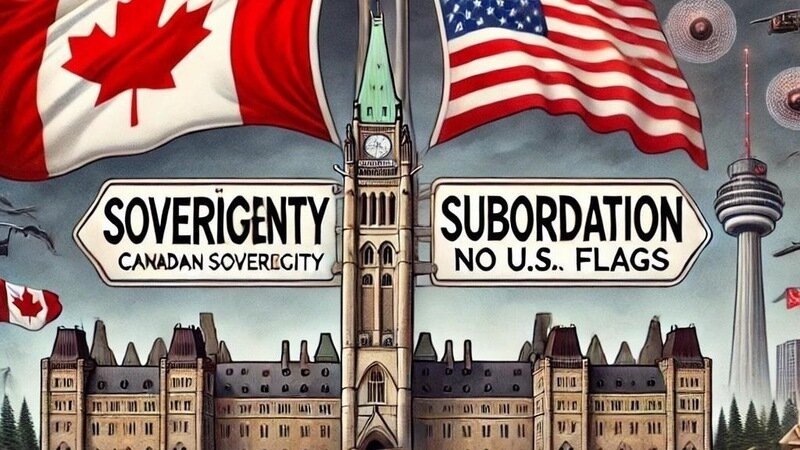
Why Canada Must Never Become the 51st State: The Hidden Cost to Our Constitutional Freedom
The idea of Canada joining the United States as its 51st state might seem like a hypothetical fantasy to some—but if it ever became reality, the cost would be catastrophic: the loss of our common law constitution, our deep-rooted civil protections, and our independent mechanisms for government accountability.
I. Our Common Law Constitution: A Living Shield of Freedom
Unlike the U.S., which has a rigid, written constitution interpreted by politically appointed judges, Canada’s foundation is a common law constitution—a living legal tradition rooted in Magna Carta principles, case law, and unwritten constitutional conventions. It prioritizes individual liberty and limits on government through inherited precedent and direct legal remedies, rather than political interpretation.
If we became a U.S. state, this living constitution would be obliterated, replaced by the American model. That means:
• No recognition of inherent rights under common law unless codified.
• The erosion of legal remedies that exist even when not written down.
• The replacement of sovereign people-led mechanisms with federal bureaucracies.
II. Canada Has Stronger Common Law Traditions Than the U.S.
Despite our problems, Canada retains deeper adherence to true common law traditions than the United States, where legal procedure has become heavily statutory and partisan. In particular:
• Grand Juries in Canada, though suppressed, still exist under common law. They are empowered to investigate government officials, ministries, and agencies and issue indictments independently of the Crown. In the U.S., grand juries still exist in name, but they have been fully hijacked by prosecutors—operating behind closed doors and serving the state, not the people.
• Canadian Trial Juries have the unwritten power of nullification—meaning they can refuse to convict under unjust laws. This is rooted in the 1670 Bushel’s Case and has never been abolished. In the U.S., while jury nullification exists in theory, judges routinely forbid jurors from being told about it, effectively silencing this tool of resistance.
So yes, jury nullification exists in both countries—but in Canada, it remains more intact and respected under our common law heritage.
III. The American System Is Controlled by Party and Bureaucracy—Not the People
Becoming a U.S. state would throw us into a system with:
• Two entrenched parties, legally privileged and nearly impossible to challenge.
• Elected prosecutors with political interests, undermining impartial justice.
• A Supreme Court that interprets rights based on ideology, not principle.
Canada—if it returns to its common law roots—has the tools to restore real democracy and hold government accountable, including:
IV. Our Tools to Reclaim Democracy
Why Canada Must Never Become the 51st State: The Hidden Cost to Our Constitutional Freedom
The idea of Canada joining the United States as its 51st state might seem like a hypothetical fantasy to some—but if it ever became reality, the cost would be catastrophic: the loss of our common law constitution, our deep-rooted civil protections, and our independent mechanisms for government accountability.
I. Our Common Law Constitution: A Living Shield of Freedom
Unlike the U.S., which has a rigid, written constitution interpreted by politically appointed judges, Canada’s foundation is a common law constitution—a living legal tradition rooted in Magna Carta principles, case law, and unwritten constitutional conventions. It prioritizes individual liberty and limits on government through inherited precedent and direct legal remedies, rather than political interpretation.
If we became a U.S. state, this living constitution would be obliterated, replaced by the American model. That means:
• No recognition of inherent rights under common law unless codified.
• The erosion of legal remedies that exist even when not written down.
• The replacement of sovereign people-led mechanisms with federal bureaucracies.
II. Canada Has Stronger Common Law Traditions Than the U.S.
Despite our problems, Canada retains deeper adherence to true common law traditions than the United States, where legal procedure has become heavily statutory and partisan. In particular:
• Grand Juries in Canada, though suppressed, still exist under common law. They are empowered to investigate government officials, ministries, and agencies and issue indictments independently of the Crown. In the U.S., grand juries still exist in name, but they have been fully hijacked by prosecutors—operating behind closed doors and serving the state, not the people.
• Canadian Trial Juries have the unwritten power of nullification—meaning they can refuse to convict under unjust laws. This is rooted in the 1670 Bushel’s Case and has never been abolished. In the U.S., while jury nullification exists in theory, judges routinely forbid jurors from being told about it, effectively silencing this tool of resistance.
So yes, jury nullification exists in both countries—but in Canada, it remains more intact and respected under our common law heritage.
III. The American System Is Controlled by Party and Bureaucracy—Not the People
Becoming a U.S. state would throw us into a system with:
• Two entrenched parties, legally privileged and nearly impossible to challenge.
• Elected prosecutors with political interests, undermining impartial justice.
• A Supreme Court that interprets rights based on ideology, not principle.
Canada—if it returns to its common law roots—has the tools to restore real democracy and hold government accountable, including:
IV. Our Tools to Reclaim Democracy
1. Grand Juries (People’s Inquest Panels)
Under common law, grand juries can still be struck in Canada to:
• Investigate electoral fraud
• Examine police misconduct
• Review abuse of power by ministries
• Indict public officials directly
2. Trial Juries with Power of Nullification
Canadian trial juries have final say over:
• Whether a law is just and should be enforced
• Whether the use of force was justified
• Whether the public interest is served by punishment
These tools do not exist in functioning form in the United States. Canadians still possess the dormant power to strike grand juries themselves, without needing Crown approval—because our common law never extinguished it.
V. Conclusion: Canada Must Stand Alone to Stand Free
To surrender our sovereignty to the United States would be to trade centuries of inherited freedom for a system that is more bureaucratic, more divided, and more controlled by elite interests.
Instead, we must reawaken our own powers, enforce our common law, and reclaim our democracy through grand juries and jury trials.
We don’t need to join the United States to fix our problems. We need to remember who we are.
Under common law, grand juries can still be struck in Canada to:
• Investigate electoral fraud
• Examine police misconduct
• Review abuse of power by ministries
• Indict public officials directly
2. Trial Juries with Power of Nullification
Canadian trial juries have final say over:
• Whether a law is just and should be enforced
• Whether the use of force was justified
• Whether the public interest is served by punishment
These tools do not exist in functioning form in the United States. Canadians still possess the dormant power to strike grand juries themselves, without needing Crown approval—because our common law never extinguished it.
V. Conclusion: Canada Must Stand Alone to Stand Free
To surrender our sovereignty to the United States would be to trade centuries of inherited freedom for a system that is more bureaucratic, more divided, and more controlled by elite interests.
Instead, we must reawaken our own powers, enforce our common law, and reclaim our democracy through grand juries and jury trials.
We don’t need to join the United States to fix our problems. We need to remember who we are.