Give Alabama's wildlife a chance at rehabilitation
The Issue
Give Alabama's Wildlife a Fighting Chance
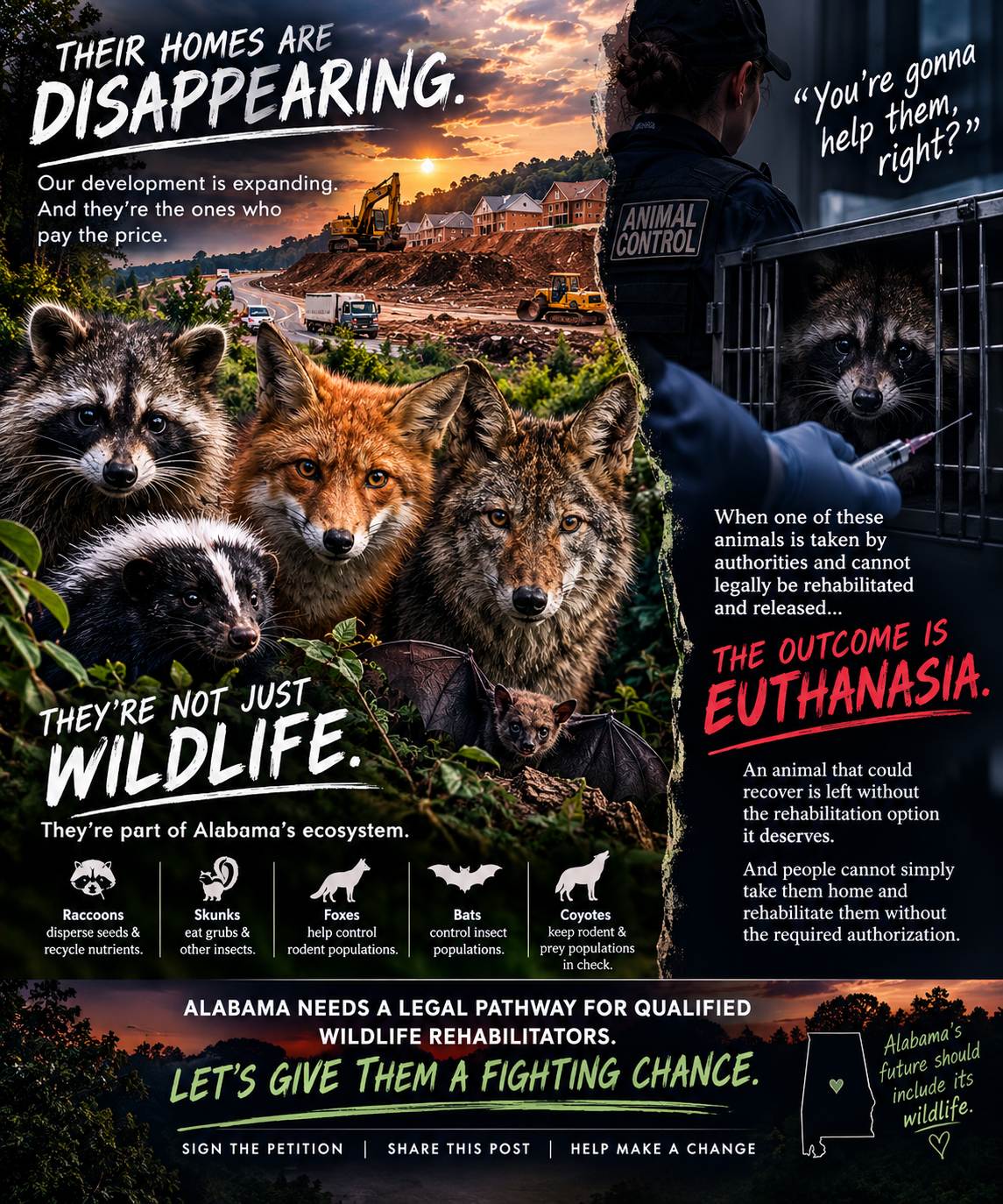
I didn't grow up in Alabama, but this is where I live, and it's heartbreaking to watch what is happening to our wildlife as our state continues to grow. Woodlands are cleared for new neighborhoods, roads expand into natural habitats, and the animals that have lived here long before us are left trying to survive in an environment that keeps changing around them.
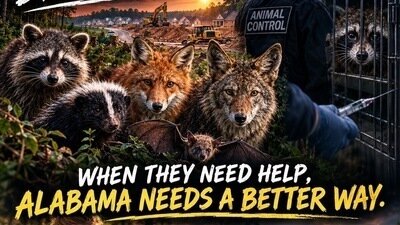
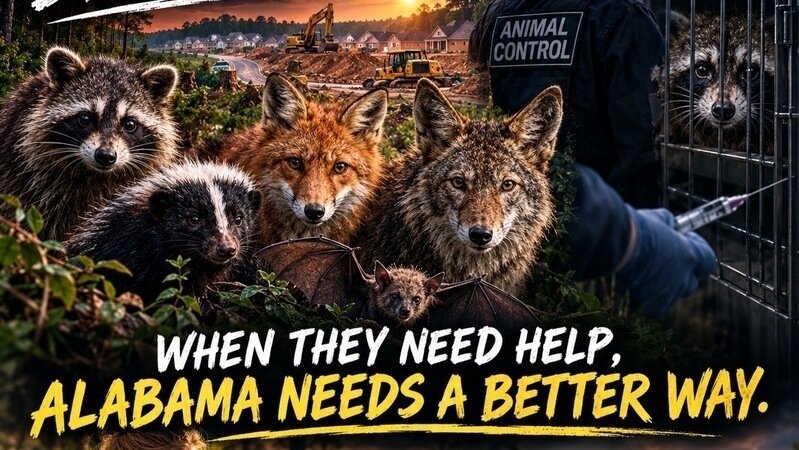
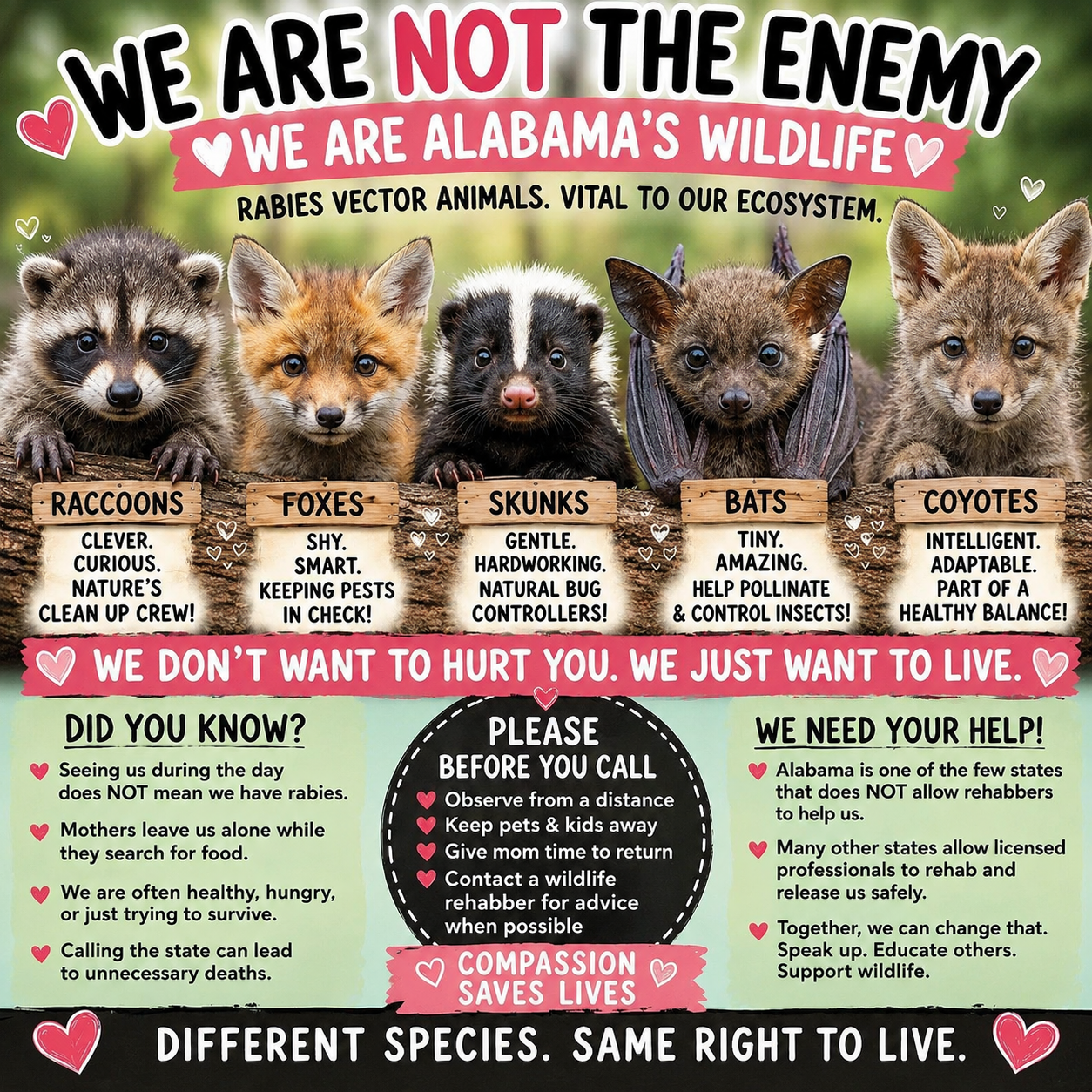
Raccoons, skunks, foxes, bats, and coyotes all have a place in Alabama's ecosystem. Yet when these animals become injured, orphaned, or displaced, there is a serious problem: Alabama does not provide an ordinary legal pathway for qualified wildlife rehabilitators to care for these species and release them back into the wild.
Think about an animal struck by a vehicle, an orphaned baby that still has a chance to grow up, or a wild animal injured while trying to survive as its habitat disappears. These animals may need professional care, but under Alabama's current system, qualified rehabilitators do not have the ordinary legal authorization needed to take these species in, rehabilitate them, and release them. When authorities take in an animal that cannot legally be rehabilitated and released, the outcome is euthanasia.
And people cannot simply take these animals home and try to save them on their own without the required authorization. That leaves a heartbreaking gap between an animal that needs help and a person who may have the knowledge and ability to provide it.
This is what I want to change.
I'm asking Alabama to establish a clear, legal pathway for properly trained and authorized rehabilitators to care for raccoons, skunks, foxes, bats, and coyotes. With appropriate training, secure enclosures, veterinary oversight, disease precautions, and responsible release standards, Alabama can protect public safety while giving these animals a genuine opportunity to recover.
This isn't about ignoring the risks associated with wildlife. It's about recognizing that those risks can be addressed through responsible regulations instead of leaving these species without a normal rehabilitation pathway.
It's also about the bigger picture. Bats help control insect populations. Skunks consume grubs and other insects. Foxes and coyotes help control rodents and other prey populations. Raccoons contribute to seed dispersal and nutrient recycling. These animals are part of a much larger natural balance, and losing them—or needlessly losing animals that could recover—doesn't benefit our environment.
As development continues, wildlife will inevitably encounter more roads, neighborhoods, and human activity. We cannot keep changing the landscape around these animals without asking how we can respond when they are hurt or displaced.
I know I ran my yapper about this a few months ago, but I've been thinking about something: What if we could actually change this?
What if, instead of accepting that these animals have no ordinary legal rehabilitation pathway, we came together and demanded one? What if Alabama gave qualified people the ability to do this work legally, safely, and responsibly?
That's why I'm starting this petition. I'm asking the Alabama Legislature and the Alabama Department of Conservation and Natural Resources to take this issue seriously and work toward a solution.
You don't have to love raccoons, skunks, foxes, bats, or coyotes to understand that they have a place in our world. They don't have a voice in our laws, so we have to be willing to speak up for them.
Alabama's future should include its wildlife, not come at the expense of it.
Please sign and share this petition. Let's push for a change that gives Alabama's wildlife a fighting chance and gives qualified rehabilitators a lawful way to help.

47
The Issue
Give Alabama's Wildlife a Fighting Chance
I didn't grow up in Alabama, but this is where I live, and it's heartbreaking to watch what is happening to our wildlife as our state continues to grow. Woodlands are cleared for new neighborhoods, roads expand into natural habitats, and the animals that have lived here long before us are left trying to survive in an environment that keeps changing around them.
Raccoons, skunks, foxes, bats, and coyotes all have a place in Alabama's ecosystem. Yet when these animals become injured, orphaned, or displaced, there is a serious problem: Alabama does not provide an ordinary legal pathway for qualified wildlife rehabilitators to care for these species and release them back into the wild.
Think about an animal struck by a vehicle, an orphaned baby that still has a chance to grow up, or a wild animal injured while trying to survive as its habitat disappears. These animals may need professional care, but under Alabama's current system, qualified rehabilitators do not have the ordinary legal authorization needed to take these species in, rehabilitate them, and release them. When authorities take in an animal that cannot legally be rehabilitated and released, the outcome is euthanasia.
And people cannot simply take these animals home and try to save them on their own without the required authorization. That leaves a heartbreaking gap between an animal that needs help and a person who may have the knowledge and ability to provide it.
This is what I want to change.
I'm asking Alabama to establish a clear, legal pathway for properly trained and authorized rehabilitators to care for raccoons, skunks, foxes, bats, and coyotes. With appropriate training, secure enclosures, veterinary oversight, disease precautions, and responsible release standards, Alabama can protect public safety while giving these animals a genuine opportunity to recover.
This isn't about ignoring the risks associated with wildlife. It's about recognizing that those risks can be addressed through responsible regulations instead of leaving these species without a normal rehabilitation pathway.
It's also about the bigger picture. Bats help control insect populations. Skunks consume grubs and other insects. Foxes and coyotes help control rodents and other prey populations. Raccoons contribute to seed dispersal and nutrient recycling. These animals are part of a much larger natural balance, and losing them—or needlessly losing animals that could recover—doesn't benefit our environment.
As development continues, wildlife will inevitably encounter more roads, neighborhoods, and human activity. We cannot keep changing the landscape around these animals without asking how we can respond when they are hurt or displaced.
I know I ran my yapper about this a few months ago, but I've been thinking about something: What if we could actually change this?
What if, instead of accepting that these animals have no ordinary legal rehabilitation pathway, we came together and demanded one? What if Alabama gave qualified people the ability to do this work legally, safely, and responsibly?
That's why I'm starting this petition. I'm asking the Alabama Legislature and the Alabama Department of Conservation and Natural Resources to take this issue seriously and work toward a solution.
You don't have to love raccoons, skunks, foxes, bats, or coyotes to understand that they have a place in our world. They don't have a voice in our laws, so we have to be willing to speak up for them.
Alabama's future should include its wildlife, not come at the expense of it.
Please sign and share this petition. Let's push for a change that gives Alabama's wildlife a fighting chance and gives qualified rehabilitators a lawful way to help.
The Decision Makers

Supporter Voices
Petition Updates
Share this petition
Petition created on October 22, 2026