
Recent legislation across multiple states reflects growing recognition of systemic failures:
- New Hampshire – House Bill 1422 & Senate Bill 141
Expands mechanisms to identify wrongful convictions and allows individuals to file motions based on newly discovered evidence after three years.
2. New York – Challenging Wrongful Convictions Act (S.7548 / A.2878-A)
Would:
Allow claims of innocence without DNA evidence
Provide a right to post-conviction discovery
Guarantee the right to counsel for wrongful conviction claims
Status: Vetoed in 2023 but remains a major advocacy priority in 2025–2026.
3. Tennessee – House Bill (Rep. Bob Freeman)
Simplifies the introduction of non-scientific evidence, such as witness testimony and video, in post-conviction proceedings.
Status: Pending
4. Wisconsin – Bipartisan Compensation Bill
Proposes increasing compensation from $5,000 to $50,000 per year, with a $1 million cap.
Status: Introduced January 2026
5. Oregon – Bipartisan Reform Bill (2025)
Requires the state to meaningfully consider new evidence rather than defaulting to defending prior convictions.
Status: Active
6. California – AB 1959
Establishes a Post-Conviction Justice Unit within the Department of Justice to investigate wrongful convictions.
Status: Implementation protocols expected by July 2026
California - AB 1645 (Gonzalez), the HUGS Act, would limit correctional officer discretion by clarifying what constitutes "excessive contact" in California Department of Corrections and Rehabilitation (CDCR) prison visiting rooms. The bill would establish in statute that the following do not qualify as “excessive contact” during visits: holding hands, hugging and kissing, holding and feeding children, and other reasonable, transitory physical contact.
7. Kentucky – House Bill 206
Introduces compensation for individuals wrongfully incarcerated or supervised.
Status: Pending
8. Federal – Justice for All Act
Supports funding for innocence organizations and conviction integrity units nationwide.
9. Maryland – Walter Lomax Act (2021)
Expanded compensation eligibility, but requires exonerees to prove innocence by “clear and convincing evidence,” a standard widely criticized as excessively burdensome.
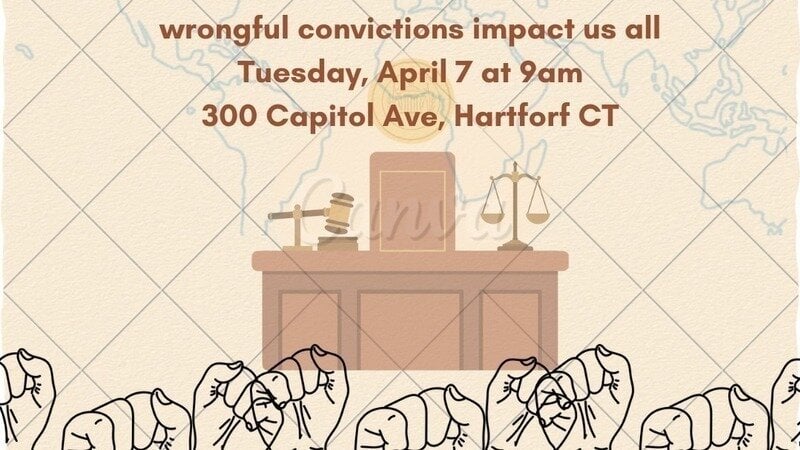
10. Connecticut has an opportunity to join this national movement by enacting comprehensive wrongful conviction reform. The proposed Connecticut Wrongful Conviction Relief Act would address critical gaps in the state’s current system by updating standards for evidence reconsideration.