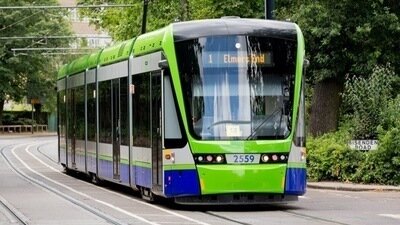

Extend London Trams from Addiscombe to Norwood Junction to Fix Croydon’s Transport Gap
The Issue
We, the residents, commuters, and businesses of Croydon, are calling on Transport for London (TfL), the Mayor of London, and Croydon Council to investigate and fund a London Trams extension from Addiscombe to Norwood Junction.
Currently, traveling between Addiscombe and Norwood Junction requires backtracking through East Croydon or relying on local single decker buses that are notoriously overcrowded and slow.
Commuters wanting to use Norwood Junction are forced onto the 130 or 312 bus routes. These buses routinely get caught in gridlock along Shirley Road, Woodside Green, and the narrow approaches to the South Norwood Clock Tower, crawling at average speeds of just 8 to 9 mph during peak hours, much slower than times stated on apps like Google Maps or CityMapper, misleading commuters [London Assembly Bus Speed News].
This creates a frustrating transport bottleneck. Once a commuter finally reaches Norwood Junction Station, fast rail services can whisk them to London Bridge in just 12 to 14 minutes, alongside direct links to Victoria and the London Overground network. It makes no sense that a local bus trip to the station often takes twice as long as the train journey into Central London.
Connecting Addiscombe’s tram network directly to Norwood Junction would bypass road gridlock entirely.
Why this matters:
- Bypassing the Traffic: A direct tram link provides a reliable, rapid route to the station, completely immune to the congestion that paralyzes the 130 and 312 buses.
- Unlocking Faster Commutes: It bridges a major north-south public transport gap, allowing Addiscombe residents to seamlessly access Norwood Junction’s high-speed Central London rail links.
Green Infrastructure: A direct light-rail alternative will take cars off local roads like the A215, reducing emissions and improving local air quality.
Sign this petition to demand that TfL conducts a formal feasibility study into an Addiscombe-to-Norwood Junction tram service
44
The Issue
We, the residents, commuters, and businesses of Croydon, are calling on Transport for London (TfL), the Mayor of London, and Croydon Council to investigate and fund a London Trams extension from Addiscombe to Norwood Junction.
Currently, traveling between Addiscombe and Norwood Junction requires backtracking through East Croydon or relying on local single decker buses that are notoriously overcrowded and slow.
Commuters wanting to use Norwood Junction are forced onto the 130 or 312 bus routes. These buses routinely get caught in gridlock along Shirley Road, Woodside Green, and the narrow approaches to the South Norwood Clock Tower, crawling at average speeds of just 8 to 9 mph during peak hours, much slower than times stated on apps like Google Maps or CityMapper, misleading commuters [London Assembly Bus Speed News].
This creates a frustrating transport bottleneck. Once a commuter finally reaches Norwood Junction Station, fast rail services can whisk them to London Bridge in just 12 to 14 minutes, alongside direct links to Victoria and the London Overground network. It makes no sense that a local bus trip to the station often takes twice as long as the train journey into Central London.
Connecting Addiscombe’s tram network directly to Norwood Junction would bypass road gridlock entirely.
Why this matters:
- Bypassing the Traffic: A direct tram link provides a reliable, rapid route to the station, completely immune to the congestion that paralyzes the 130 and 312 buses.
- Unlocking Faster Commutes: It bridges a major north-south public transport gap, allowing Addiscombe residents to seamlessly access Norwood Junction’s high-speed Central London rail links.
Green Infrastructure: A direct light-rail alternative will take cars off local roads like the A215, reducing emissions and improving local air quality.
Sign this petition to demand that TfL conducts a formal feasibility study into an Addiscombe-to-Norwood Junction tram service

Petition Updates
Share this petition
Petition created on 22 October 2026