Establish the Earned Second Chance Program: A Sentence Should Have an Ending
The Issue
Across Mississippi and throughout the United States, millions of people continue to face punishment long after completing their court-imposed sentences. A felony conviction can create lifelong barriers to employment, occupational licensing, housing, education, business ownership, and other opportunities necessary to build a stable and productive life.
These barriers do not affect only individuals. They affect children, spouses, families, employers, communities, and the economy. When people have accepted responsibility, completed their sentences, remained law-abiding, and demonstrated meaningful change, they deserve a fair opportunity to have that rehabilitation considered.
The U.S. Government Accountability Office identified 641 federal collateral consequences associated with nonviolent drug convictions. According to the GAO, 497—or 78 percent—could potentially remain in effect for life.
The Sentence Ends Movement proposes the creation of an Earned Second Chance Program. Record relief would not be automatic. Eligible applicants would be required to remain free from new convictions for an established period and provide reliable evidence of rehabilitation.
Proposed waiting periods would be five, seven, ten, or fifteen years, depending on the offense, harm caused, criminal history, and evidence of personal change. More serious eligible cases would undergo strict, individualized judicial review. Narrowly defined exceptionally serious and predatory offenses would remain excluded.
Evidence of rehabilitation could include sustained lawful conduct, employment, education, treatment, recovery, family responsibility, community service, caregiving, business ownership, and medical compliance. Financial hardship, disability, serious illness, dialysis, transplantation, or reliance on public assistance should not automatically prevent an otherwise eligible person from requesting review.
This proposal would not erase accountability, disregard victims, automatically restore firearm rights, or guarantee relief to every applicant. It would establish a regulated and responsible pathway allowing federal and state leaders, courts, or other authorized officials to consider both the original offense and the person’s conduct in the years afterward.
This movement speaks for people who have accepted responsibility, served their sentences, changed their lives, supported their families, and contributed to their communities—yet continue to be judged only by their past.
We are asking federal and state leaders to establish an Earned Second Chance Program that recognizes demonstrated rehabilitation and provides eligible individuals with a meaningful opportunity for record relief.
We have accepted responsibility.
We have served our sentences.
We have demonstrated change.
Now we are asking for a fair opportunity to move forward.
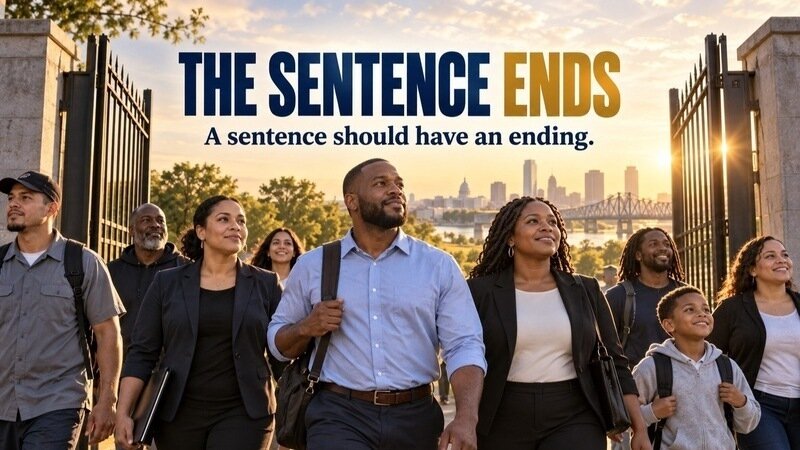
A sentence should have an ending.
Founded by Derrick Shorter
The Sentence Ends Movement
Vicksburg, Mississippi
Source: U.S. Government Accountability Office, “Nonviolent Drug Convictions: Stakeholders’ Views on Potential Actions to Address Collateral Consequences”
https://www.gao.gov/products/gao-17-691

78
The Issue
Across Mississippi and throughout the United States, millions of people continue to face punishment long after completing their court-imposed sentences. A felony conviction can create lifelong barriers to employment, occupational licensing, housing, education, business ownership, and other opportunities necessary to build a stable and productive life.
These barriers do not affect only individuals. They affect children, spouses, families, employers, communities, and the economy. When people have accepted responsibility, completed their sentences, remained law-abiding, and demonstrated meaningful change, they deserve a fair opportunity to have that rehabilitation considered.
The U.S. Government Accountability Office identified 641 federal collateral consequences associated with nonviolent drug convictions. According to the GAO, 497—or 78 percent—could potentially remain in effect for life.
The Sentence Ends Movement proposes the creation of an Earned Second Chance Program. Record relief would not be automatic. Eligible applicants would be required to remain free from new convictions for an established period and provide reliable evidence of rehabilitation.
Proposed waiting periods would be five, seven, ten, or fifteen years, depending on the offense, harm caused, criminal history, and evidence of personal change. More serious eligible cases would undergo strict, individualized judicial review. Narrowly defined exceptionally serious and predatory offenses would remain excluded.
Evidence of rehabilitation could include sustained lawful conduct, employment, education, treatment, recovery, family responsibility, community service, caregiving, business ownership, and medical compliance. Financial hardship, disability, serious illness, dialysis, transplantation, or reliance on public assistance should not automatically prevent an otherwise eligible person from requesting review.
This proposal would not erase accountability, disregard victims, automatically restore firearm rights, or guarantee relief to every applicant. It would establish a regulated and responsible pathway allowing federal and state leaders, courts, or other authorized officials to consider both the original offense and the person’s conduct in the years afterward.
This movement speaks for people who have accepted responsibility, served their sentences, changed their lives, supported their families, and contributed to their communities—yet continue to be judged only by their past.
We are asking federal and state leaders to establish an Earned Second Chance Program that recognizes demonstrated rehabilitation and provides eligible individuals with a meaningful opportunity for record relief.
We have accepted responsibility.
We have served our sentences.
We have demonstrated change.
Now we are asking for a fair opportunity to move forward.
A sentence should have an ending.
Founded by Derrick Shorter
The Sentence Ends Movement
Vicksburg, Mississippi
Source: U.S. Government Accountability Office, “Nonviolent Drug Convictions: Stakeholders’ Views on Potential Actions to Address Collateral Consequences”
https://www.gao.gov/products/gao-17-691
Supporter Voices
Petition Updates
Share this petition
Petition created on September 9, 2026