Establish a Scotland-Based Seasonal Aerial Wildfire Response Capability
The Issue
Strengthen Scotland’s Wildfire Resilience: Establish a Scotland-Based Seasonal Aerial Wildfire Response Capability
The Issue
Every minute counts when a wildfire starts. Scotland needs a dedicated seasonal aerial wildfire response capability that is ready to fly when our landscapes, wildlife and communities are under threat.
Scotland’s natural environment, heritage and rural communities are increasingly vulnerable to severe wildfires. Home to nearly two-thirds of the UK’s peatlands, Scotland’s peatlands, native woodlands and upland habitats are of international importance. They store vast amounts of carbon, support rare and threatened species, improve water quality, reduce flood risk and form one of Europe’s most significant natural landscapes. Protecting them is not only a national responsibility - it contributes to global climate resilience and biodiversity.
As hotter, drier conditions become more frequent, the risk of severe wildfires continues to grow. In 2025, Scotland experienced its most severe wildfire season on record, with the Scottish Fire and Rescue Service responding to 241 wildfires (with nearly half occurring in April alone), including the largest wildfire ever recorded in the UK. The Carrbridge and Dava Moor wildfire burned almost 25,000 acres of peatland, woodland and moorland, devastating wildlife habitats, releasing thousands of tonnes of stored carbon and requiring a major multi-day emergency response.
The Scottish Government has rightly recognised this growing challenge through its Strategic Action Plan on Wildfires, which strengthens prevention, preparedness, training and multi-agency working. We welcome these commitments. Prevention through responsible land management, habitat restoration, public awareness and early intervention must always remain Scotland’s first line of defence against wildfire.
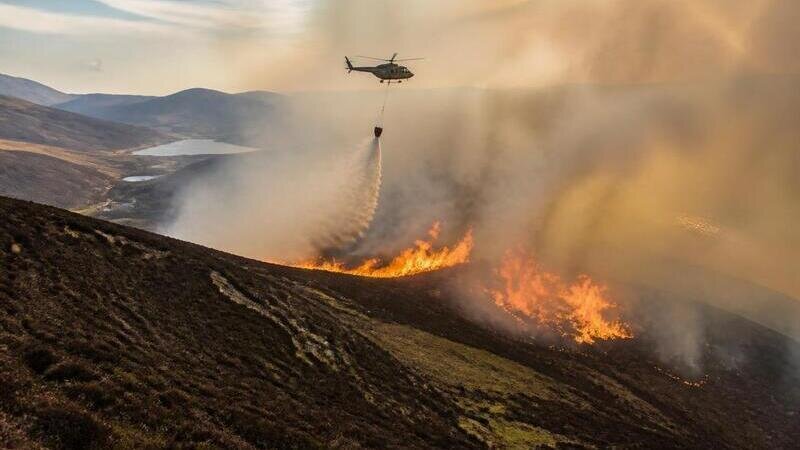
However, even the very best prevention measures cannot eliminate wildfire risk. When severe fires do occur, rapid aerial support can provide a vital additional tool to help contain fires before they escalate.
Scotland’s geography presents unique challenges. Many wildfires occur across vast, remote landscapes where difficult terrain and limited access can delay ground operations. In these environments, the difference between containing a fire within hours and fighting it for days can be enormous.
Scotland has highly skilled firefighters, volunteers, land managers and emergency services who work tirelessly in extremely difficult conditions and deserve the best tools available to support them.
The Scottish Government has also recognised that helicopter availability during the wildfire season requires further review. While Scotland can currently request aerial support when required, it does not yet have a dedicated Scotland-based seasonal aerial wildfire response capability.
The recent Cairngorms wildfire has highlighted concerns about the availability of aerial firefighting assets during periods when aircraft are committed to simultaneous incidents elsewhere in the UK. The Cairngorms fire was first reported around midday on Wednesday 15 July. While firefighters, specialist wildfire units and vehicles were deployed, helicopter water-bombing operations were not publicly confirmed until Friday 17 July, the third day after the fire was reported. Media reports also noted that RSPB Scotland and others had called for helicopter support while the fire was still in its early stages, and that helicopter availability was affected because aircraft were committed to other wildfires in England.
When minutes matter, Scotland should not have to wait for aerial firefighting support to become available.
The Proposal
The Scottish Government’s commitment to reviewing current aerial firefighting arrangements is welcome. This review should lead to the establishment of a Scotland-based seasonal aerial wildfire response capability.
The most practical way to begin would be through the seasonal leasing of a bucket-equipped helicopter based in Scotland during periods of highest wildfire risk, ensuring that a trained aerial firefighting asset is available when and where it is needed most. Other delivery models identified through the Government’s review should also be fully considered, provided they achieve the same objective: reliable, rapid aerial wildfire response for Scotland.
A Scotland-based seasonal aerial capability would:
- provide rapid initial attack on remote wildfires before they escalate;
- support firefighters on the ground in difficult and inaccessible terrain;
- help protect internationally important peatlands, native woodlands, wildlife and rural communities;
- reduce the environmental and financial costs of prolonged wildfire incidents through earlier intervention;
- strengthen Scotland’s resilience to an increasing wildfire risk.
No single helicopter will prevent every wildfire from becoming a major incident, and aircraft can only operate when conditions allow. However, guaranteeing that a dedicated seasonal aerial firefighting capability is available within Scotland during periods of highest wildfire risk would significantly improve our ability to respond quickly when every minute matters.
Funding
The most appropriate funding model should be developed by the Scottish Government in partnership with emergency services, environmental organisations, land managers and aviation providers.
Potential funding could include a combination of public investment, environmental funding, partnerships with land managers and voluntary public support. Consideration could also be given to directing appropriate revenue from increased penalties for illegal fire-setting during periods of wildfire restrictions, alongside contributions from activities that carry a recognised wildfire risk, into a dedicated wildfire prevention and response fund.
People across Scotland already choose to support organisations such as Scotland’s Charity Air Ambulance, mountain rescue teams and the Scottish SPCA because they recognise the importance of protecting lives, animals and communities. Many people across Scotland would likely welcome the opportunity to support efforts to protect Scotland’s internationally important landscapes from the growing threat of wildfire.
A Call for Action
Scotland’s wild places are among our greatest national treasures. They are not just places on a map; they are part of our identity, our heritage and our responsibility to future generations. They shape our culture, sustain biodiversity, store carbon, support rural livelihoods and inspire millions of people every year.
Investment in rapid aerial wildfire response is not an alternative to prevention - it is an essential part of a comprehensive wildfire resilience strategy. Together, prevention, preparedness and rapid response give Scotland the best chance of protecting its people, wildlife and landscapes as wildfire risk continues to grow.
The Scottish Government should work with the Scottish Fire and Rescue Service, land managers, environmental organisations and aviation providers to ensure that its ongoing review of aerial wildfire response results in a Scotland-based seasonal aerial wildfire response capability.
We cannot afford to wait until another wildfire season has passed before strengthening Scotland’s resilience.
We have the knowledge. We have the expertise. We have recognised the challenge.
Now let us ensure Scotland has the capability to meet it - before the next wildfire starts.

1,145
The Issue
Strengthen Scotland’s Wildfire Resilience: Establish a Scotland-Based Seasonal Aerial Wildfire Response Capability
The Issue
Every minute counts when a wildfire starts. Scotland needs a dedicated seasonal aerial wildfire response capability that is ready to fly when our landscapes, wildlife and communities are under threat.
Scotland’s natural environment, heritage and rural communities are increasingly vulnerable to severe wildfires. Home to nearly two-thirds of the UK’s peatlands, Scotland’s peatlands, native woodlands and upland habitats are of international importance. They store vast amounts of carbon, support rare and threatened species, improve water quality, reduce flood risk and form one of Europe’s most significant natural landscapes. Protecting them is not only a national responsibility - it contributes to global climate resilience and biodiversity.
As hotter, drier conditions become more frequent, the risk of severe wildfires continues to grow. In 2025, Scotland experienced its most severe wildfire season on record, with the Scottish Fire and Rescue Service responding to 241 wildfires (with nearly half occurring in April alone), including the largest wildfire ever recorded in the UK. The Carrbridge and Dava Moor wildfire burned almost 25,000 acres of peatland, woodland and moorland, devastating wildlife habitats, releasing thousands of tonnes of stored carbon and requiring a major multi-day emergency response.
The Scottish Government has rightly recognised this growing challenge through its Strategic Action Plan on Wildfires, which strengthens prevention, preparedness, training and multi-agency working. We welcome these commitments. Prevention through responsible land management, habitat restoration, public awareness and early intervention must always remain Scotland’s first line of defence against wildfire.
However, even the very best prevention measures cannot eliminate wildfire risk. When severe fires do occur, rapid aerial support can provide a vital additional tool to help contain fires before they escalate.
Scotland’s geography presents unique challenges. Many wildfires occur across vast, remote landscapes where difficult terrain and limited access can delay ground operations. In these environments, the difference between containing a fire within hours and fighting it for days can be enormous.
Scotland has highly skilled firefighters, volunteers, land managers and emergency services who work tirelessly in extremely difficult conditions and deserve the best tools available to support them.
The Scottish Government has also recognised that helicopter availability during the wildfire season requires further review. While Scotland can currently request aerial support when required, it does not yet have a dedicated Scotland-based seasonal aerial wildfire response capability.
The recent Cairngorms wildfire has highlighted concerns about the availability of aerial firefighting assets during periods when aircraft are committed to simultaneous incidents elsewhere in the UK. The Cairngorms fire was first reported around midday on Wednesday 15 July. While firefighters, specialist wildfire units and vehicles were deployed, helicopter water-bombing operations were not publicly confirmed until Friday 17 July, the third day after the fire was reported. Media reports also noted that RSPB Scotland and others had called for helicopter support while the fire was still in its early stages, and that helicopter availability was affected because aircraft were committed to other wildfires in England.
When minutes matter, Scotland should not have to wait for aerial firefighting support to become available.
The Proposal
The Scottish Government’s commitment to reviewing current aerial firefighting arrangements is welcome. This review should lead to the establishment of a Scotland-based seasonal aerial wildfire response capability.
The most practical way to begin would be through the seasonal leasing of a bucket-equipped helicopter based in Scotland during periods of highest wildfire risk, ensuring that a trained aerial firefighting asset is available when and where it is needed most. Other delivery models identified through the Government’s review should also be fully considered, provided they achieve the same objective: reliable, rapid aerial wildfire response for Scotland.
A Scotland-based seasonal aerial capability would:
- provide rapid initial attack on remote wildfires before they escalate;
- support firefighters on the ground in difficult and inaccessible terrain;
- help protect internationally important peatlands, native woodlands, wildlife and rural communities;
- reduce the environmental and financial costs of prolonged wildfire incidents through earlier intervention;
- strengthen Scotland’s resilience to an increasing wildfire risk.
No single helicopter will prevent every wildfire from becoming a major incident, and aircraft can only operate when conditions allow. However, guaranteeing that a dedicated seasonal aerial firefighting capability is available within Scotland during periods of highest wildfire risk would significantly improve our ability to respond quickly when every minute matters.
Funding
The most appropriate funding model should be developed by the Scottish Government in partnership with emergency services, environmental organisations, land managers and aviation providers.
Potential funding could include a combination of public investment, environmental funding, partnerships with land managers and voluntary public support. Consideration could also be given to directing appropriate revenue from increased penalties for illegal fire-setting during periods of wildfire restrictions, alongside contributions from activities that carry a recognised wildfire risk, into a dedicated wildfire prevention and response fund.
People across Scotland already choose to support organisations such as Scotland’s Charity Air Ambulance, mountain rescue teams and the Scottish SPCA because they recognise the importance of protecting lives, animals and communities. Many people across Scotland would likely welcome the opportunity to support efforts to protect Scotland’s internationally important landscapes from the growing threat of wildfire.
A Call for Action
Scotland’s wild places are among our greatest national treasures. They are not just places on a map; they are part of our identity, our heritage and our responsibility to future generations. They shape our culture, sustain biodiversity, store carbon, support rural livelihoods and inspire millions of people every year.
Investment in rapid aerial wildfire response is not an alternative to prevention - it is an essential part of a comprehensive wildfire resilience strategy. Together, prevention, preparedness and rapid response give Scotland the best chance of protecting its people, wildlife and landscapes as wildfire risk continues to grow.
The Scottish Government should work with the Scottish Fire and Rescue Service, land managers, environmental organisations and aviation providers to ensure that its ongoing review of aerial wildfire response results in a Scotland-based seasonal aerial wildfire response capability.
We cannot afford to wait until another wildfire season has passed before strengthening Scotland’s resilience.
We have the knowledge. We have the expertise. We have recognised the challenge.
Now let us ensure Scotland has the capability to meet it - before the next wildfire starts.
Supporter Voices
Petition Updates
Share this petition
Petition created on 22 July 2026