Glengarnock Ironworks Steel Mark on Boxted Bridge, 1897

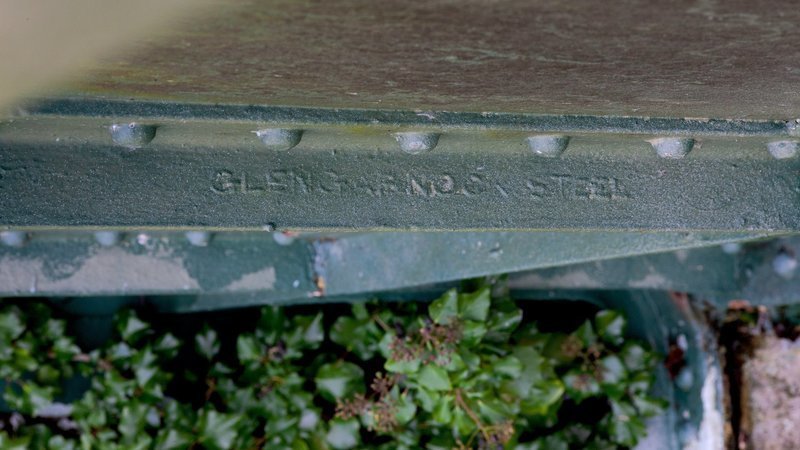
A steel girder on one of the exterior side plates on the north side of the bridge has revealed the name ‘Glengarnock Steel’. Glengarnock Ironworks in North Ayrshire, founded in 1843, pioneered the rolling of steel joists, which acquired a high reputation among structural engineers. One of the directors of the company was E Windsor Richards, one of the leading iron and steel masters of the day. Glengarnock Iron and Steel co was one of the first in Scotland to move into making H-beams for structures and bridges.
A member of the South Yorkshire Industrial History Society has identified a second steel foundry mark on the bridge, that of Consett Iron Works in County Durham. “ Consett was one of the largest ironworks in the world in the late 19th century and production included brackets and sections which would have been used on your bridge".
The implication of at least 2 different manufacturers products being involved is that the builder was using off the peg components to achieve the design. Anthony Ball, President of the S.Y.I.H.S says “I don’t think I’ve seen another road bridge like Boxted which just appears to be off-the-shelf girders. The idea of also having a hump as if it was still an old stone arch bridge makes it most unusual.”
George Double's redoubtable reputation as a bridge builder is once again demonstrated as the hump on the bridge has a practical purpose as well as being aesthetically pleasing: A smooth long radius curve to take the road up over and down would be less disruptive for traffic than three straightish segments with sharp breaks either side of a horizontal section.