
End discrimination against First Responder & Veteran PTSD service dogs in Ontario
The Issue
Why Ontario Needs "The Havoc Act, 2026"
Every single day, Ontario’s police officers, firefighters, paramedics, search-and-rescue personnel, and military veterans step up to protect our communities. They run toward danger so that the rest of us can stay safe.
Tragically, that service often comes at a devastating cost. Years of responding to catastrophic emergencies leave many of our frontline heroes with severe physical injuries and complex Post-Traumatic Stress Disorder (PTSD).
In recent months alone, Ontario has lost approximately eight first responders to suicide a heartbreaking reminder of the silent battle so many are fighting.
For many traumatized first responders and veterans, a medically prescribed PTSD Service Dog is literally a lifesaver. These dogs are not pets; they are essential medical devices trained to interrupt severe flashbacks, prevent panic attacks, provide physical grounding, and give handlers the confidence to step outside their front doors.
Yet, Ontarios provincial laws have not been updated in decades, leaving our injured heroes to fall through severe legal and financial cracks.
The Problem: How Outdated Laws Are Punishment, Not Support
An Unfair Legal Double Standard: Under current Ontario social assistance rules (OW/ODSP), an individual who relies on a guide dog for visual impairment receives a dedicated monthly allowance to help cover food and veterinary care.
But a first responder with a medically prescribed PTSD service dog receives $0.00.
Depriving a disabled hero of animal care funding simply because their injury is psychological rather than visual is unfair and discriminatory.
The $30,000 to $50,000 Barrier:
Because Ontario lacks an official provincial classification for PTSD service dogs, handlers are often forced to pay upwards of $30,000 to $50,000 for pre-trained commercial dogs, or face constant exclusion from housing, public spaces, and even first-responder therapy programs that demand commercial certifications beyond a doctor's prescription.
Dangerous Parking Hazards: Current rules for Accessible Parking Permits (APPs) cover physical devices like wheelchairs, but completely ignore service dog handlers. Trying to safely deploy and maneuver a working service dog alongside groceries in an icy, high-traffic parking lot presents extreme physical and mental hazards for a disabled handler.
The Volunteer WSIB Trap: Volunteer firefighters, paramedics, and search-and-rescue workers provide essential emergency coverage across Ontario. Because occupational PTSD often surfaces years after active service ends, volunteer heroes face horrific, uphill bureaucratic battles trying to access WSIB coverage, frequently driving them into deep poverty.
The Solution: What "The Havoc Act" Will Do
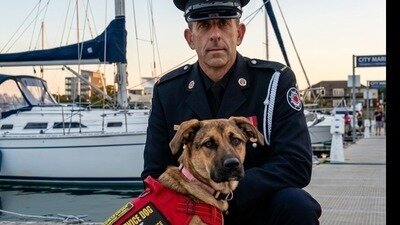
Named in honour of Havoc a working PTSD service dog partnered with an injured Ontario first responders The Havoc Act, 2026 is a proposed Private Members Bill designed to modernize provincial laws and ensure no hero is left behind.
Official Legal Recognition:
Grants formal recognition and public access rights to PTSD Service Dogs across Ontario based on a written prescription from a Regulated Health Professional without forcing handlers into $50,000 commercial monopolies.
Clear Public Safety Standards:
Establishes a fair, practical baseline where service dogs are expected to demonstrate socially acceptable baseline behavior and public obedience (such as passing a standard Canine Good Citizen evaluation).
Equal Benefit Allowances:
Amends social assistance rules so that PTSD service dog handlers receive the exact same monthly food and veterinary care allowance as vision-guide dog handlers.
Accessible Parking Access:
Amends the Highway Traffic Act to extend Accessible Parking Permits to service dog handlers for safe loading and proximity.
Fair Protections for Volunteers:
Amends the Workplace Safety and Insurance Act (WSIB) to create an expedited, presumptive claims pathway for volunteer emergency personnel who develop occupational PTSD after their service ends.
Why We Need Your Signature Today
Our first responders and veterans stood up for us when we needed them most. Now, it is our turn to stand up for them.
We are calling on Premier Doug Ford, MPP Chris Glover, and all Members of Provincial Parliament at Queens Park to support, introduce, and pass The Havoc Act, 2026.
Please sign and share this petition today. By adding your name, you are helping us show Ontario's leaders that our injured heroes deserve dignity, equal access, and equal protection under the law.
My name is Scott Hembruff, and I have proudly served Ontario as a Volunteer First Responder, dedicating my life to the safety and wellbeing of our community. However, serving in these roles comes with significant risks, both physically and mentally. Like many of my colleagues, I have faced the unseen battle of PTSD, a condition that has significantly impacted my life. My service dog has been an indispensable lifeline for me, offering not just emotional support but helping me navigate everyday challenges that PTSD brings.
Sadly, despite the sacrifices made by First Responders and Veterans, Ontario still lacks stringent legal protections for the service dogs that provide critical support to us. Too often, prejudice and ignorance impede access to necessary public spaces and services for individuals like me and our loyal companions. This lack of recognition and respect for PTSD service dogs not only hinders our daily lives but ostracizes those who have already sacrificed so much.
Consider the statistics: According to a 2019 report from Veterans Affairs Canada, an estimated 10-20% of First Responders and military personnel will develop PTSD. Many of these individuals rely on service dogs as a part of their coping and recovery strategies—a method proven effective in numerous studies, including one by the American Psychiatric Association, which highlighted how service dogs can significantly diminish PTSD symptoms.
Draft Legislation discussion
DISCUSSION DRAFT — PREPARED TO SUPPORT A CHANGE.ORG PETITION AND PRIVATE MEMBER'S BILL SPONSORSHIP
NOT OFFICIAL LEGISLATIVE TEXT. RECOMMEND REVIEW BY THE LEGISLATIVE COUNSEL OFFICE OR THE SPONSORING MEMBER'S OFFICE BEFORE FIRST READING.
Bill ___, 2026
An Act to amend the Human Rights Code, the Blind Persons’ Rights Act, the Accessibility for Ontarians with Disabilities Act, 2005, the Ontario Works Act, 1997, the Ontario Disability Support Program Act, 1997, the Highway Traffic Act and the Workplace Safety and Insurance Act, 1997, to recognize First Responder and Veteran PTSD Service Dogs, eliminate disability-based discrimination in provincial accessibility and social assistance programs, and protect volunteer emergency personnel
THE HAVOC ACT, 2026
Named in honor of Havoc, a working PTSD service dog partnered with an injured Ontario first responder.
EXPLANATORY NOTE
This Act adds a definition of “First Responder and Veteran PTSD Service Dog,” based on a written statement from a Regulated Health Professional following a clinical evaluation, with no requirement that the dog be trained or certified by a particular organization. It makes amendments in seven schedules. Schedule 1 amends the Human Rights Code to protect handlers of these dogs from discrimination in services, housing, contracts and employment. Schedule 2 amends the Blind Persons’ Rights Act to extend its dedicated public-access protections, currently limited to blind persons accompanied by a guide dog, to First Responders and Veterans accompanied by a First Responder and Veteran PTSD Service Dog. Schedule 3 amends Ontario Regulation 191/11 (Integrated Accessibility Standards) under the Accessibility for Ontarians with Disabilities Act, 2005 to deem these dogs “service animals” for the purposes of that Regulation. Schedule 4 amends the general regulations under the Ontario Works Act, 1997 and the Ontario Disability Support Program Act, 1997 to remove the accredited-training-facility requirement for these dogs and provide the same monthly Guide Dog Benefit on the basis of the written statement alone. Schedule 5 amends the accessible parking permit regulation under the Highway Traffic Act to extend eligibility to handlers of certified service dogs. Schedule 6 amends the Workplace Safety and Insurance Act, 1997 to create a presumptive, expedited claims pathway for volunteer firefighters, paramedics and search and rescue personnel who develop occupational PTSD after their service ends. Schedule 7 sets out commencement and the short title.
CONTENTS
Definitions, Basis of Recognition and Purpose Schedule 1 — Human Rights Code Schedule 2 — Blind Persons’ Rights Act Schedule 3 — Accessibility for Ontarians with Disabilities Act, 2005 Schedule 4 — Ontario Works Act, 1997 and Ontario Disability Support Program Act, 1997 Schedule 5 — Highway Traffic Act Schedule 6 — Workplace Safety and Insurance Act, 1997 Schedule 7 — Commencement and Short Title
Whereas police officers, firefighters, paramedics, search and rescue volunteers and other first responders, and the members and veterans of the Canadian Armed Forces, place themselves at risk of catastrophic physical injury and occupational post-traumatic stress disorder in service to the people of Ontario; and
Whereas volunteer firefighters, volunteer paramedics and volunteer search and rescue personnel provide the same essential protection as their full-time counterparts, often in smaller and rural communities, and are equally at risk of occupational post-traumatic stress disorder; and
Whereas a medically prescribed psychiatric service dog is, for the person who relies on it, an essential medical assistive device in the same manner as a guide dog is for a person who is blind or has low vision; and
Whereas the Blind Persons’ Rights Act provides a blind person accompanied by a guide dog with a dedicated, enforceable right of public access and housing that is not extended to other Ontarians who rely on a medically necessary service dog; and
Whereas Ontario law provides a monthly Guide Dog Benefit under the Ontario Works Act, 1997 and the Ontario Disability Support Program Act, 1997 to recipients with a guide, hearing or service dog, but conditions that benefit on certification by an accredited training facility, a requirement that is impractical or unattainable for many First Responders and Veterans and that has no equivalent basis in the Accessibility for Ontarians with Disabilities Act, 2005, under which a written statement from a physician or nurse is already sufficient to establish a service animal; and
Whereas the eligibility rules for accessible parking permits under the Highway Traffic Act do not account for the physical and safety demands of handling a working service dog; and
Whereas the absence of a standardized provincial framework for recognizing First Responder and Veteran PTSD Service Dogs has led to inconsistent, and at times discriminatory, treatment of their handlers by publicly funded programs; and
Whereas it is in the public interest to eliminate arbitrary distinctions between physical, sensory and psychological disabilities in provincial law, and to ensure that no first responder, veteran or volunteer emergency responder is left without support because of the nature of their injury, or because they cannot afford the cost of third-party dog certification;
Therefore, His Majesty, by and with the advice and consent of the Legislative Assembly of the Province of Ontario, enacts as follows:
Definitions
1 In this Act, “First Responder” means a police officer, firefighter, paramedic, or search and rescue worker, whether employed or serving as a volunteer, who in the course of that role may be exposed to a traumatic event; “Veteran” means a former member of the Canadian Armed Forces or the Royal Canadian Mounted Police who was honorably released or discharged; “Volunteer Emergency Personnel” means a volunteer firefighter, volunteer paramedic or volunteer search and rescue worker; “Occupational PTSD” means post-traumatic stress disorder or an operational stress injury arising out of and in the course of a person’s duties as a First Responder, Veteran or member of Volunteer Emergency Personnel; “Regulated Health Professional” means a person authorized under the laws of Ontario to diagnose or treat post-traumatic stress disorder or an operational stress injury, and includes a physician (including a family physician), a nurse practitioner, a psychiatrist, a psychologist and a registered psychotherapist; “First Responder and Veteran PTSD Service Dog” means a dog for which a Regulated Health Professional has, based on a clinical evaluation of a First Responder or Veteran, provided a written statement that the person would benefit from the dog’s support in managing Occupational PTSD or an associated operational stress injury.
Basis of recognition
2 (1) The written statement described in the definition of “First Responder and Veteran PTSD Service Dog” in section 1 is, on its own, sufficient to establish the dog’s status for all purposes of this Act. (2) No person shall require, as a condition of a right or benefit under this Act, that a First Responder and Veteran PTSD Service Dog be trained, certified or accredited by a particular organization, or that its handler pay a fee or incur a cost beyond obtaining the written statement described in subsection (1).
Reasonable behavior of the dog
3 (1) Nothing in this Act prevents the exclusion of a First Responder and Veteran PTSD Service Dog from a place or service where the dog’s behavior poses a direct risk to health or safety that cannot be addressed by a reasonable modification, but an exclusion shall not be based solely on the absence of a training certificate or accreditation. (2) Although a First Responder and Veteran PTSD Service Dog is not required to be trained or certified by a specific organization, the dog must be able, upon request, to demonstrate socially acceptable behavior and obedience that meets the bare minimum standards of a general public access course, such as those offered by programs like PetSmart.
Purpose
4 The purposes of this Act are, (a) to recognize a First Responder and Veteran PTSD Service Dog as an essential medical assistive device on the basis of a Regulated Health Professional’s written statement alone; (b) to eliminate distinctions between physical, sensory and psychological disabilities in the administration of provincial human rights, accessibility, social assistance and transportation law; and (c) to ensure that First Responders, Veterans and Volunteer Emergency Personnel who develop Occupational PTSD, and the service dogs that assist them, are entitled to equal treatment, in law and in practice, with persons who have a physical or sensory disability.
SCHEDULE 1
AMENDMENTS TO THE HUMAN RIGHTS CODE
Non-discrimination — First Responder and Veteran PTSD Service Dogs
1 The Human Rights Code is amended by adding the following section: Discrimination re First Responder and Veteran PTSD Service Dogs X.1 (1) Every person has a right to equal treatment with respect to services, goods, facilities, accommodation, contracts and employment, without discrimination because that person is, or will be, accompanied by a First Responder and Veteran PTSD Service Dog. (2) No landlord, employer, service provider or program described in subsection (3) shall, (a) refuse to admit, serve or employ a person because that person is accompanied by a First Responder and Veteran PTSD Service Dog; or (b) require certification, documentation or a fee in respect of that dog beyond the written statement described in the definition of “First Responder and Veteran PTSD Service Dog” in the Havoc Act, 2026. (3) Subsection (2) applies to a first responder or veteran peer support, treatment or therapy program that receives funding from the Government of Ontario or that is delivered under the authority of a provincial ministry, agency or Crown corporation.
SCHEDULE 2
AMENDMENTS TO THE BLIND PERSONS’ RIGHTS ACT
Extension to First Responder and Veteran PTSD Service Dogs
1 The Blind Persons’ Rights Act is amended by adding the following section: Application to First Responder and Veteran PTSD Service Dogs 2.1 (1) Sections 2 and 4, with necessary modifications, apply to a First Responder or Veteran, as those terms are defined in the Havoc Act, 2026, who is accompanied by a First Responder and Veteran PTSD Service Dog, as if that person were a blind person accompanied by a guide dog, and every reference in those sections to a guide dog shall be read to include a First Responder and Veteran PTSD Service Dog. (2) A First Responder or Veteran is not required to hold an identification card issued under section 4 in order to exercise a right under this section; the written statement described in the definition of “First Responder and Veteran PTSD Service Dog” in the Havoc Act, 2026 is sufficient proof of the dog’s status for that purpose. (3) For greater certainty, this section does not limit any right that a First Responder or Veteran may otherwise have under the Human Rights Code or the Accessibility for Ontarians with Disabilities Act, 2005.
SCHEDULE 3
AMENDMENTS TO THE ACCESSIBILITY FOR ONTARIANS WITH DISABILITIES ACT, 2005
Service animal — deemed status
1 For the purposes of section 80.45 of Ontario Regulation 191/11 (Integrated Accessibility Standards) made under the Accessibility for Ontarians with Disabilities Act, 2005, a First Responder and Veteran PTSD Service Dog, as defined in the Havoc Act, 2026, is deemed to be a service animal within the meaning of that section, and the written statement described in that definition satisfies subsection 80.45(4) of that Regulation without further documentation.
Review of existing standards
2 The Minister shall, within one year after this section comes into force, direct the relevant Standards Development Committee to review existing accessibility standards and recommend any amendments needed to remove distinctions between physical, sensory and psychiatric service animals.
SCHEDULE 4
AMENDMENTS TO THE ONTARIO WORKS ACT, 1997 AND THE ONTARIO DISABILITY SUPPORT PROGRAM ACT, 1997
Guide Dog Benefit — parity and removal of accredited-facility requirement
1 Ontario Regulation 134/98 (General) made under the Ontario Works Act, 1997 is amended to provide that, for a First Responder and Veteran PTSD Service Dog, the requirement that a dog be trained and certified by an accredited training facility in order to qualify a member of a benefit unit for the monthly allowance for the care of a guide, hearing or service dog does not apply, and that the written statement described in the definition of “First Responder and Veteran PTSD Service Dog” in the Havoc Act, 2026 is sufficient, on its own, to establish eligibility for that allowance at the same monthly rate.
2 Ontario Regulation 222/98 (General) made under the Ontario Disability Support Program Act, 1997 is amended in the same manner as set out in section 1.
Non-discrimination in administration
3 An administrator under the Ontario Works Act, 1997 or the Ontario Disability Support Program Act, 1997 shall not distinguish between a visual, physical or psychological disability, or apply a higher standard of proof to one than to the other, in determining a person’s eligibility for, or the amount of, the benefit described in sections 1 and 2.
SCHEDULE 5
AMENDMENTS TO THE HIGHWAY TRAFFIC ACT
Accessible parking permits — service dogs
1 Ontario Regulation 581 (Accessible Parking for Persons with Disabilities), made under the Highway Traffic Act, is amended to provide that a person who relies on a certified service dog, including a First Responder and Veteran PTSD Service Dog, is eligible for an accessible parking permit for general use on the same basis as a person described in section 1 of that Regulation, in recognition of the physical and safety demands of handling a working dog while parking, loading and travelling.
SCHEDULE 6
AMENDMENTS TO THE WORKPLACE SAFETY AND INSURANCE ACT, 1997
Presumption — volunteer emergency personnel
1 The Workplace Safety and Insurance Act, 1997 is amended by adding the following section: Presumption re Occupational PTSD, volunteer emergency personnel X.1 (1) Occupational PTSD diagnosed in a person who is or was a member of Volunteer Emergency Personnel is presumed to be a personal injury by accident arising out of and in the course of the person’s employment or service, unless the contrary is shown. (2) The presumption in subsection (1) applies regardless of the length of time between the end of the person’s service and the diagnosis. (3) The Board shall establish an expedited process for adjudicating a claim to which subsection (1) applies.
SCHEDULE 7
COMMENCEMENT AND SHORT TITLE
Commencement
1 (1) Subject to subsection (2), this Act comes into force on the day it receives Royal Assent. (2) The Schedules to this Act come into force as provided in each Schedule.
Short title
2 The short title of this Act is the Havoc Act, 2026.
In British Columbia, Manitoba, and other provinces, legislative frameworks acknowledge the significance of PTSD service dogs, providing protections and ensuring handlers are not subject to unfair treatment. It's time for Ontario to follow suit and enact comprehensive legislation to fortify the rights of service dog handlers. Such laws would not only guarantee access to public spaces and services without harassment or discrimination but also recognize the essential role these animals play in mental health.
By signing this petition, you are lending your voice to all who defend our freedoms and keep our communities safe. You are taking a stand against discrimination and advocating for justice and dignity for First Responders, Veterans, and their service dogs in Ontario. We ask the Ontario government to prioritize and pass legislation specifically the proposed "HAVOC Act "protecting the rights of First Responder & Veteran PTSD service dog handlers, ensuring that no barrier exists between them and the lives they strive to rebuild.
Please, join this cause to show your support and make Ontario a leader in First Responder & PTSD service dog advocacy. Your signature is more than just a name; it's a step towards real change. Sign the petition today and help us end the discrimination against First Responders, Veterans, and their PTSD service dogs.
31
The Issue
Why Ontario Needs "The Havoc Act, 2026"
Every single day, Ontario’s police officers, firefighters, paramedics, search-and-rescue personnel, and military veterans step up to protect our communities. They run toward danger so that the rest of us can stay safe.
Tragically, that service often comes at a devastating cost. Years of responding to catastrophic emergencies leave many of our frontline heroes with severe physical injuries and complex Post-Traumatic Stress Disorder (PTSD).
In recent months alone, Ontario has lost approximately eight first responders to suicide a heartbreaking reminder of the silent battle so many are fighting.
For many traumatized first responders and veterans, a medically prescribed PTSD Service Dog is literally a lifesaver. These dogs are not pets; they are essential medical devices trained to interrupt severe flashbacks, prevent panic attacks, provide physical grounding, and give handlers the confidence to step outside their front doors.
Yet, Ontarios provincial laws have not been updated in decades, leaving our injured heroes to fall through severe legal and financial cracks.
The Problem: How Outdated Laws Are Punishment, Not Support
An Unfair Legal Double Standard: Under current Ontario social assistance rules (OW/ODSP), an individual who relies on a guide dog for visual impairment receives a dedicated monthly allowance to help cover food and veterinary care.
But a first responder with a medically prescribed PTSD service dog receives $0.00.
Depriving a disabled hero of animal care funding simply because their injury is psychological rather than visual is unfair and discriminatory.
The $30,000 to $50,000 Barrier:
Because Ontario lacks an official provincial classification for PTSD service dogs, handlers are often forced to pay upwards of $30,000 to $50,000 for pre-trained commercial dogs, or face constant exclusion from housing, public spaces, and even first-responder therapy programs that demand commercial certifications beyond a doctor's prescription.
Dangerous Parking Hazards: Current rules for Accessible Parking Permits (APPs) cover physical devices like wheelchairs, but completely ignore service dog handlers. Trying to safely deploy and maneuver a working service dog alongside groceries in an icy, high-traffic parking lot presents extreme physical and mental hazards for a disabled handler.
The Volunteer WSIB Trap: Volunteer firefighters, paramedics, and search-and-rescue workers provide essential emergency coverage across Ontario. Because occupational PTSD often surfaces years after active service ends, volunteer heroes face horrific, uphill bureaucratic battles trying to access WSIB coverage, frequently driving them into deep poverty.
The Solution: What "The Havoc Act" Will Do
Named in honour of Havoc a working PTSD service dog partnered with an injured Ontario first responders The Havoc Act, 2026 is a proposed Private Members Bill designed to modernize provincial laws and ensure no hero is left behind.
Official Legal Recognition:
Grants formal recognition and public access rights to PTSD Service Dogs across Ontario based on a written prescription from a Regulated Health Professional without forcing handlers into $50,000 commercial monopolies.
Clear Public Safety Standards:
Establishes a fair, practical baseline where service dogs are expected to demonstrate socially acceptable baseline behavior and public obedience (such as passing a standard Canine Good Citizen evaluation).
Equal Benefit Allowances:
Amends social assistance rules so that PTSD service dog handlers receive the exact same monthly food and veterinary care allowance as vision-guide dog handlers.
Accessible Parking Access:
Amends the Highway Traffic Act to extend Accessible Parking Permits to service dog handlers for safe loading and proximity.
Fair Protections for Volunteers:
Amends the Workplace Safety and Insurance Act (WSIB) to create an expedited, presumptive claims pathway for volunteer emergency personnel who develop occupational PTSD after their service ends.
Why We Need Your Signature Today
Our first responders and veterans stood up for us when we needed them most. Now, it is our turn to stand up for them.
We are calling on Premier Doug Ford, MPP Chris Glover, and all Members of Provincial Parliament at Queens Park to support, introduce, and pass The Havoc Act, 2026.
Please sign and share this petition today. By adding your name, you are helping us show Ontario's leaders that our injured heroes deserve dignity, equal access, and equal protection under the law.
My name is Scott Hembruff, and I have proudly served Ontario as a Volunteer First Responder, dedicating my life to the safety and wellbeing of our community. However, serving in these roles comes with significant risks, both physically and mentally. Like many of my colleagues, I have faced the unseen battle of PTSD, a condition that has significantly impacted my life. My service dog has been an indispensable lifeline for me, offering not just emotional support but helping me navigate everyday challenges that PTSD brings.
Sadly, despite the sacrifices made by First Responders and Veterans, Ontario still lacks stringent legal protections for the service dogs that provide critical support to us. Too often, prejudice and ignorance impede access to necessary public spaces and services for individuals like me and our loyal companions. This lack of recognition and respect for PTSD service dogs not only hinders our daily lives but ostracizes those who have already sacrificed so much.
Consider the statistics: According to a 2019 report from Veterans Affairs Canada, an estimated 10-20% of First Responders and military personnel will develop PTSD. Many of these individuals rely on service dogs as a part of their coping and recovery strategies—a method proven effective in numerous studies, including one by the American Psychiatric Association, which highlighted how service dogs can significantly diminish PTSD symptoms.
Draft Legislation discussion
DISCUSSION DRAFT — PREPARED TO SUPPORT A CHANGE.ORG PETITION AND PRIVATE MEMBER'S BILL SPONSORSHIP
NOT OFFICIAL LEGISLATIVE TEXT. RECOMMEND REVIEW BY THE LEGISLATIVE COUNSEL OFFICE OR THE SPONSORING MEMBER'S OFFICE BEFORE FIRST READING.
Bill ___, 2026
An Act to amend the Human Rights Code, the Blind Persons’ Rights Act, the Accessibility for Ontarians with Disabilities Act, 2005, the Ontario Works Act, 1997, the Ontario Disability Support Program Act, 1997, the Highway Traffic Act and the Workplace Safety and Insurance Act, 1997, to recognize First Responder and Veteran PTSD Service Dogs, eliminate disability-based discrimination in provincial accessibility and social assistance programs, and protect volunteer emergency personnel
THE HAVOC ACT, 2026
Named in honor of Havoc, a working PTSD service dog partnered with an injured Ontario first responder.
EXPLANATORY NOTE
This Act adds a definition of “First Responder and Veteran PTSD Service Dog,” based on a written statement from a Regulated Health Professional following a clinical evaluation, with no requirement that the dog be trained or certified by a particular organization. It makes amendments in seven schedules. Schedule 1 amends the Human Rights Code to protect handlers of these dogs from discrimination in services, housing, contracts and employment. Schedule 2 amends the Blind Persons’ Rights Act to extend its dedicated public-access protections, currently limited to blind persons accompanied by a guide dog, to First Responders and Veterans accompanied by a First Responder and Veteran PTSD Service Dog. Schedule 3 amends Ontario Regulation 191/11 (Integrated Accessibility Standards) under the Accessibility for Ontarians with Disabilities Act, 2005 to deem these dogs “service animals” for the purposes of that Regulation. Schedule 4 amends the general regulations under the Ontario Works Act, 1997 and the Ontario Disability Support Program Act, 1997 to remove the accredited-training-facility requirement for these dogs and provide the same monthly Guide Dog Benefit on the basis of the written statement alone. Schedule 5 amends the accessible parking permit regulation under the Highway Traffic Act to extend eligibility to handlers of certified service dogs. Schedule 6 amends the Workplace Safety and Insurance Act, 1997 to create a presumptive, expedited claims pathway for volunteer firefighters, paramedics and search and rescue personnel who develop occupational PTSD after their service ends. Schedule 7 sets out commencement and the short title.
CONTENTS
Definitions, Basis of Recognition and Purpose Schedule 1 — Human Rights Code Schedule 2 — Blind Persons’ Rights Act Schedule 3 — Accessibility for Ontarians with Disabilities Act, 2005 Schedule 4 — Ontario Works Act, 1997 and Ontario Disability Support Program Act, 1997 Schedule 5 — Highway Traffic Act Schedule 6 — Workplace Safety and Insurance Act, 1997 Schedule 7 — Commencement and Short Title
Whereas police officers, firefighters, paramedics, search and rescue volunteers and other first responders, and the members and veterans of the Canadian Armed Forces, place themselves at risk of catastrophic physical injury and occupational post-traumatic stress disorder in service to the people of Ontario; and
Whereas volunteer firefighters, volunteer paramedics and volunteer search and rescue personnel provide the same essential protection as their full-time counterparts, often in smaller and rural communities, and are equally at risk of occupational post-traumatic stress disorder; and
Whereas a medically prescribed psychiatric service dog is, for the person who relies on it, an essential medical assistive device in the same manner as a guide dog is for a person who is blind or has low vision; and
Whereas the Blind Persons’ Rights Act provides a blind person accompanied by a guide dog with a dedicated, enforceable right of public access and housing that is not extended to other Ontarians who rely on a medically necessary service dog; and
Whereas Ontario law provides a monthly Guide Dog Benefit under the Ontario Works Act, 1997 and the Ontario Disability Support Program Act, 1997 to recipients with a guide, hearing or service dog, but conditions that benefit on certification by an accredited training facility, a requirement that is impractical or unattainable for many First Responders and Veterans and that has no equivalent basis in the Accessibility for Ontarians with Disabilities Act, 2005, under which a written statement from a physician or nurse is already sufficient to establish a service animal; and
Whereas the eligibility rules for accessible parking permits under the Highway Traffic Act do not account for the physical and safety demands of handling a working service dog; and
Whereas the absence of a standardized provincial framework for recognizing First Responder and Veteran PTSD Service Dogs has led to inconsistent, and at times discriminatory, treatment of their handlers by publicly funded programs; and
Whereas it is in the public interest to eliminate arbitrary distinctions between physical, sensory and psychological disabilities in provincial law, and to ensure that no first responder, veteran or volunteer emergency responder is left without support because of the nature of their injury, or because they cannot afford the cost of third-party dog certification;
Therefore, His Majesty, by and with the advice and consent of the Legislative Assembly of the Province of Ontario, enacts as follows:
Definitions
1 In this Act, “First Responder” means a police officer, firefighter, paramedic, or search and rescue worker, whether employed or serving as a volunteer, who in the course of that role may be exposed to a traumatic event; “Veteran” means a former member of the Canadian Armed Forces or the Royal Canadian Mounted Police who was honorably released or discharged; “Volunteer Emergency Personnel” means a volunteer firefighter, volunteer paramedic or volunteer search and rescue worker; “Occupational PTSD” means post-traumatic stress disorder or an operational stress injury arising out of and in the course of a person’s duties as a First Responder, Veteran or member of Volunteer Emergency Personnel; “Regulated Health Professional” means a person authorized under the laws of Ontario to diagnose or treat post-traumatic stress disorder or an operational stress injury, and includes a physician (including a family physician), a nurse practitioner, a psychiatrist, a psychologist and a registered psychotherapist; “First Responder and Veteran PTSD Service Dog” means a dog for which a Regulated Health Professional has, based on a clinical evaluation of a First Responder or Veteran, provided a written statement that the person would benefit from the dog’s support in managing Occupational PTSD or an associated operational stress injury.
Basis of recognition
2 (1) The written statement described in the definition of “First Responder and Veteran PTSD Service Dog” in section 1 is, on its own, sufficient to establish the dog’s status for all purposes of this Act. (2) No person shall require, as a condition of a right or benefit under this Act, that a First Responder and Veteran PTSD Service Dog be trained, certified or accredited by a particular organization, or that its handler pay a fee or incur a cost beyond obtaining the written statement described in subsection (1).
Reasonable behavior of the dog
3 (1) Nothing in this Act prevents the exclusion of a First Responder and Veteran PTSD Service Dog from a place or service where the dog’s behavior poses a direct risk to health or safety that cannot be addressed by a reasonable modification, but an exclusion shall not be based solely on the absence of a training certificate or accreditation. (2) Although a First Responder and Veteran PTSD Service Dog is not required to be trained or certified by a specific organization, the dog must be able, upon request, to demonstrate socially acceptable behavior and obedience that meets the bare minimum standards of a general public access course, such as those offered by programs like PetSmart.
Purpose
4 The purposes of this Act are, (a) to recognize a First Responder and Veteran PTSD Service Dog as an essential medical assistive device on the basis of a Regulated Health Professional’s written statement alone; (b) to eliminate distinctions between physical, sensory and psychological disabilities in the administration of provincial human rights, accessibility, social assistance and transportation law; and (c) to ensure that First Responders, Veterans and Volunteer Emergency Personnel who develop Occupational PTSD, and the service dogs that assist them, are entitled to equal treatment, in law and in practice, with persons who have a physical or sensory disability.
SCHEDULE 1
AMENDMENTS TO THE HUMAN RIGHTS CODE
Non-discrimination — First Responder and Veteran PTSD Service Dogs
1 The Human Rights Code is amended by adding the following section: Discrimination re First Responder and Veteran PTSD Service Dogs X.1 (1) Every person has a right to equal treatment with respect to services, goods, facilities, accommodation, contracts and employment, without discrimination because that person is, or will be, accompanied by a First Responder and Veteran PTSD Service Dog. (2) No landlord, employer, service provider or program described in subsection (3) shall, (a) refuse to admit, serve or employ a person because that person is accompanied by a First Responder and Veteran PTSD Service Dog; or (b) require certification, documentation or a fee in respect of that dog beyond the written statement described in the definition of “First Responder and Veteran PTSD Service Dog” in the Havoc Act, 2026. (3) Subsection (2) applies to a first responder or veteran peer support, treatment or therapy program that receives funding from the Government of Ontario or that is delivered under the authority of a provincial ministry, agency or Crown corporation.
SCHEDULE 2
AMENDMENTS TO THE BLIND PERSONS’ RIGHTS ACT
Extension to First Responder and Veteran PTSD Service Dogs
1 The Blind Persons’ Rights Act is amended by adding the following section: Application to First Responder and Veteran PTSD Service Dogs 2.1 (1) Sections 2 and 4, with necessary modifications, apply to a First Responder or Veteran, as those terms are defined in the Havoc Act, 2026, who is accompanied by a First Responder and Veteran PTSD Service Dog, as if that person were a blind person accompanied by a guide dog, and every reference in those sections to a guide dog shall be read to include a First Responder and Veteran PTSD Service Dog. (2) A First Responder or Veteran is not required to hold an identification card issued under section 4 in order to exercise a right under this section; the written statement described in the definition of “First Responder and Veteran PTSD Service Dog” in the Havoc Act, 2026 is sufficient proof of the dog’s status for that purpose. (3) For greater certainty, this section does not limit any right that a First Responder or Veteran may otherwise have under the Human Rights Code or the Accessibility for Ontarians with Disabilities Act, 2005.
SCHEDULE 3
AMENDMENTS TO THE ACCESSIBILITY FOR ONTARIANS WITH DISABILITIES ACT, 2005
Service animal — deemed status
1 For the purposes of section 80.45 of Ontario Regulation 191/11 (Integrated Accessibility Standards) made under the Accessibility for Ontarians with Disabilities Act, 2005, a First Responder and Veteran PTSD Service Dog, as defined in the Havoc Act, 2026, is deemed to be a service animal within the meaning of that section, and the written statement described in that definition satisfies subsection 80.45(4) of that Regulation without further documentation.
Review of existing standards
2 The Minister shall, within one year after this section comes into force, direct the relevant Standards Development Committee to review existing accessibility standards and recommend any amendments needed to remove distinctions between physical, sensory and psychiatric service animals.
SCHEDULE 4
AMENDMENTS TO THE ONTARIO WORKS ACT, 1997 AND THE ONTARIO DISABILITY SUPPORT PROGRAM ACT, 1997
Guide Dog Benefit — parity and removal of accredited-facility requirement
1 Ontario Regulation 134/98 (General) made under the Ontario Works Act, 1997 is amended to provide that, for a First Responder and Veteran PTSD Service Dog, the requirement that a dog be trained and certified by an accredited training facility in order to qualify a member of a benefit unit for the monthly allowance for the care of a guide, hearing or service dog does not apply, and that the written statement described in the definition of “First Responder and Veteran PTSD Service Dog” in the Havoc Act, 2026 is sufficient, on its own, to establish eligibility for that allowance at the same monthly rate.
2 Ontario Regulation 222/98 (General) made under the Ontario Disability Support Program Act, 1997 is amended in the same manner as set out in section 1.
Non-discrimination in administration
3 An administrator under the Ontario Works Act, 1997 or the Ontario Disability Support Program Act, 1997 shall not distinguish between a visual, physical or psychological disability, or apply a higher standard of proof to one than to the other, in determining a person’s eligibility for, or the amount of, the benefit described in sections 1 and 2.
SCHEDULE 5
AMENDMENTS TO THE HIGHWAY TRAFFIC ACT
Accessible parking permits — service dogs
1 Ontario Regulation 581 (Accessible Parking for Persons with Disabilities), made under the Highway Traffic Act, is amended to provide that a person who relies on a certified service dog, including a First Responder and Veteran PTSD Service Dog, is eligible for an accessible parking permit for general use on the same basis as a person described in section 1 of that Regulation, in recognition of the physical and safety demands of handling a working dog while parking, loading and travelling.
SCHEDULE 6
AMENDMENTS TO THE WORKPLACE SAFETY AND INSURANCE ACT, 1997
Presumption — volunteer emergency personnel
1 The Workplace Safety and Insurance Act, 1997 is amended by adding the following section: Presumption re Occupational PTSD, volunteer emergency personnel X.1 (1) Occupational PTSD diagnosed in a person who is or was a member of Volunteer Emergency Personnel is presumed to be a personal injury by accident arising out of and in the course of the person’s employment or service, unless the contrary is shown. (2) The presumption in subsection (1) applies regardless of the length of time between the end of the person’s service and the diagnosis. (3) The Board shall establish an expedited process for adjudicating a claim to which subsection (1) applies.
SCHEDULE 7
COMMENCEMENT AND SHORT TITLE
Commencement
1 (1) Subject to subsection (2), this Act comes into force on the day it receives Royal Assent. (2) The Schedules to this Act come into force as provided in each Schedule.
Short title
2 The short title of this Act is the Havoc Act, 2026.
In British Columbia, Manitoba, and other provinces, legislative frameworks acknowledge the significance of PTSD service dogs, providing protections and ensuring handlers are not subject to unfair treatment. It's time for Ontario to follow suit and enact comprehensive legislation to fortify the rights of service dog handlers. Such laws would not only guarantee access to public spaces and services without harassment or discrimination but also recognize the essential role these animals play in mental health.
By signing this petition, you are lending your voice to all who defend our freedoms and keep our communities safe. You are taking a stand against discrimination and advocating for justice and dignity for First Responders, Veterans, and their service dogs in Ontario. We ask the Ontario government to prioritize and pass legislation specifically the proposed "HAVOC Act "protecting the rights of First Responder & Veteran PTSD service dog handlers, ensuring that no barrier exists between them and the lives they strive to rebuild.
Please, join this cause to show your support and make Ontario a leader in First Responder & PTSD service dog advocacy. Your signature is more than just a name; it's a step towards real change. Sign the petition today and help us end the discrimination against First Responders, Veterans, and their PTSD service dogs.
The Decision Makers

Petition Updates
Share this petition
Petition created on September 23, 2026