Disabled Kids Deserve to Play at Lou Lodati Park
The Issue
Lou Lodati Belongs to All of Us
Stop procurement and fix the design before Torsney/Lou Lodati Playground is built.
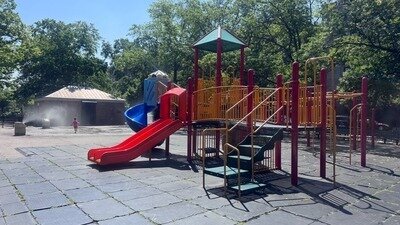
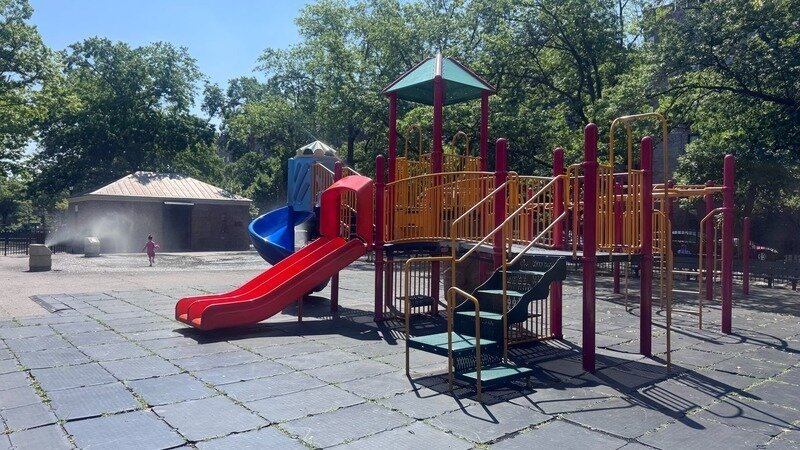
Torsney/Lou Lodati Playground is more than a playground. It is one of the places where our neighborhood becomes a community.
Children play here. Parents and caregivers meet one another here. Teenagers gather here. Grandparents and older neighbors engage, move, talk and connect here. People come with different bodies, different minds, different ways of communicating, different needs and different abilities.
A public park should be designed for the public—all of us.
That means a child should not have to possess a particular set of physical abilities to experience the joy, movement and independence a playground is meant to provide. It means a parent should be able to participate with their child. It means an older neighbor should be able to comfortably use the space. It means someone who communicates without speech, needs help with balance, cannot transfer independently, needs sensory regulation, or requires assistance with toileting should not discover that their needs were considered only after the important design decisions had already been made.
Belonging is not being allowed through the gate. Belonging is being considered from the beginning.
New York City is preparing to invest more than $7 million rebuilding Torsney/Lou Lodati Playground and its dog run. This is an extraordinary investment in our neighborhood and an opportunity to create a public space that will serve Sunnyside and Woodside and the surrounding neighborhoods for decades.
But the design moving forward does not meet the needs of our whole community.
Our community asked for accessibility.
Accessibility was not an issue raised at the last minute.
It was identified as a priority during the community process. Community Board 2 asked Parks to consider additional accessibility and neurodivergent design elements and requested continued involvement as the design advanced.
Yet the design that emerged still leaves significant barriers to meaningful participation.
Nearly all of the central physical play experiences rely on abilities such as climbing, balancing, transferring, crawling or independently navigating conventional playground equipment.
Accessible pathways are essential. Braille, sensory regulation features, and communication supports are not optional extras; they are basic access needs that allow people to move through, understand, regulate within, and communicate in a public space with dignity.
But access to the space is not the same as access to the experience.
A child can have a pathway into a playground, a communication board, or a place to regulate—and still be excluded from the central reason the playground exists: to move, explore, take risks, imagine, and play with other children.
That is the distinction this design fails to address.
- Children who move differently still deserve movement.
- Children who cannot climb still deserve physical challenge.
- Children who cannot independently transfer still deserve exhilaration.
- Children who communicate without speech still deserve ways to initiate play, make choices, make friends and be understood.
- Children who need predictability or sensory regulation still deserve to remain part of the life of the playground.
No child should be offered the edge of the experience while everyone else is offered the playground itself.
And this matters to every child.
A neighborhood playground is one of the first places children learn who belongs in their community. They should grow up playing with people whose bodies, minds and ways of communicating are different from their own—not because someone created a special program to bring them together, but because this is simply what community looks like.
Children are at the heart of every community, and they do not all move, communicate, learn, regulate or have the ability to advocate for themselves in the same way. That diversity should be reflected in the places we build for them. When public spaces are designed around a narrow idea of who a child is supposed to be, and everyone else is treated as an accommodation afterward, exclusion is built into the design itself. A truly inclusive playground starts from the reality that human beings are different and creates one shared place that anticipates those differences from the beginning, so no child is designed out of the experience.
A bathroom determines who gets to stay.
The reconstruction plans identify the existing public restroom as:
“Not Accessible & Not in Contract.”
Think about what that means.
The City is preparing to spend more than $7 million rebuilding this neighborhood public space while leaving a fundamental barrier to participation untouched.
The project does not make the existing restroom accessible. Nor does it provide a universal/adult-sized changing facility for children, teenagers and adults who cannot safely use a standard toilet or infant changing table and require assistance with toileting or changing.
For individuals and families who need those facilities, this is not an inconvenience. It can determine whether they are able to use the park at all, how long they can remain, and whether a basic human need can be met safely, privately and with dignity.
A public park cannot belong to all of us if some members of our community cannot safely use its bathroom.
Accessible toilets and appropriate changing facilities are not amenities to add if there is room in the budget.
They are part of what makes participation in public life possible.
Now we are being told the design is too far along.
After these concerns were raised, NYC Parks told us that the project had progressed beyond the point at which meaningful changes to the accessible play equipment could be made without significant cost and delay.
That is precisely why the community needs to speak now.
We do not accept that it is too late to listen to the people a public project is failing to serve when that project has not even been built.
The advancement of a design process cannot become the justification for preserving the shortcomings of that process.
If accessibility was a community priority, the people who encounter these barriers in their daily lives should have been meaningfully involved while the decisions determining participation were still being made.
If that did not happen adequately, the answer cannot be: The design has gone too far.
The answer must be: Before we spend millions of public dollars and build something that will remain for decades, how do we correct this and do better?
We already know better is possible.
Across the country and around the world, inclusive playgrounds demonstrate what happens when human difference is treated as a starting point rather than a problem to solve afterward.
- Inclusive design is not one accessible swing.
- It is not one ramp.
- It is not one sensory panel.
- It is not checking a box marked “accessible.”
- It is designing multiple ways to move, swing, sway, spin, slide, explore, imagine, communicate, retreat, take risks and play.
It is considering people who need significant physical support as thoughtfully as people who do not.
It is considering communication, sensory regulation, mobility, cognition, safety, toileting, caregiving and dignity as interconnected parts of using a public space.
And above all, it is creating one shared place—not a primary experience for some people and an accommodation for everyone else.
Stop procurement. Bring the community back to the table. Improve the design before this park is built.
We are asking New York City Parks & Recreation and our elected leaders to stop this project from moving into procurement in its current form and use this moment to address the outstanding accessibility and inclusion concerns before construction begins. It is discriminatory to knowingly build a park that does not serve disabled members of our community. We deserve better.
We are asking the City to bring together people with lived experience of disability, families, disability-rights organizations, inclusive-play experts, community representatives and officials with the authority to make changes.
We are asking them to examine the actual experiences available throughout the park—not simply whether technical accessibility requirements have been satisfied.
We are asking for meaningful opportunities for children with many different physical, cognitive, developmental, sensory and communication needs to experience movement, challenge, exploration, imagination and play together.
We are asking for communication access and spaces that support children with disabilities to engage in play with their peers.
We are asking for an accessible public restroom and a universal/adult-sized changing facility so that children and adults who need assistance with personal care can use this public space safely and with dignity.
And we are asking that the people most affected by these decisions have a meaningful voice before those decisions become concrete, contracts and construction.
We need our community.
We have spent months reviewing plans, asking questions, contacting City agencies and elected officials, meeting with advocates, speaking with disability-rights and inclusive-design experts, filing formal complaints, and asking Parks again and again to consider what can still be changed before Torsney/Lou Lodati Playground is built.
We will keep going.
This cannot be one parent's voice asking a city to remember people whose needs should never have been an afterthought.
- We need our community with us now.
- We need parents whose children use this playground.
- We need people who grew up here.
- We need older neighbors who have watched this community change.
- We need teachers, caregivers, local businesses and families.
- We need people who have never had to think about whether a playground, bathroom or public space would work for them.
And we especially need our community to stand behind children and others who cannot stand at a microphone, write an email to an agency, testify at a meeting or advocate for themselves.
That is what community is for.
- Please sign this petition.
- Then share it.
- Talk to your neighbors.
- Ask our elected representatives to stand with the community.
- Ask NYC Parks not to move this project into procurement until these issues have been meaningfully addressed.
- Speak loudly enough that our City has to listen.
Because once this park is built, we will live with the decisions being made now for decades.
- But it is not built yet.
- There is still time to listen.
- There is still time to change the design.
- To build something our neighborhood can be proud of that improves our lives.
Torsney/Lou Lodati Playground was named for a man remembered for decades of service to this community. Nearly thirty years later, we have an opportunity to decide what kind of community this public space will represent.
Torsney/Lou Lodati Playground belongs to all of us.

371
The Issue
Lou Lodati Belongs to All of Us
Stop procurement and fix the design before Torsney/Lou Lodati Playground is built.
Torsney/Lou Lodati Playground is more than a playground. It is one of the places where our neighborhood becomes a community.
Children play here. Parents and caregivers meet one another here. Teenagers gather here. Grandparents and older neighbors engage, move, talk and connect here. People come with different bodies, different minds, different ways of communicating, different needs and different abilities.
A public park should be designed for the public—all of us.
That means a child should not have to possess a particular set of physical abilities to experience the joy, movement and independence a playground is meant to provide. It means a parent should be able to participate with their child. It means an older neighbor should be able to comfortably use the space. It means someone who communicates without speech, needs help with balance, cannot transfer independently, needs sensory regulation, or requires assistance with toileting should not discover that their needs were considered only after the important design decisions had already been made.
Belonging is not being allowed through the gate. Belonging is being considered from the beginning.
New York City is preparing to invest more than $7 million rebuilding Torsney/Lou Lodati Playground and its dog run. This is an extraordinary investment in our neighborhood and an opportunity to create a public space that will serve Sunnyside and Woodside and the surrounding neighborhoods for decades.
But the design moving forward does not meet the needs of our whole community.
Our community asked for accessibility.
Accessibility was not an issue raised at the last minute.
It was identified as a priority during the community process. Community Board 2 asked Parks to consider additional accessibility and neurodivergent design elements and requested continued involvement as the design advanced.
Yet the design that emerged still leaves significant barriers to meaningful participation.
Nearly all of the central physical play experiences rely on abilities such as climbing, balancing, transferring, crawling or independently navigating conventional playground equipment.
Accessible pathways are essential. Braille, sensory regulation features, and communication supports are not optional extras; they are basic access needs that allow people to move through, understand, regulate within, and communicate in a public space with dignity.
But access to the space is not the same as access to the experience.
A child can have a pathway into a playground, a communication board, or a place to regulate—and still be excluded from the central reason the playground exists: to move, explore, take risks, imagine, and play with other children.
That is the distinction this design fails to address.
- Children who move differently still deserve movement.
- Children who cannot climb still deserve physical challenge.
- Children who cannot independently transfer still deserve exhilaration.
- Children who communicate without speech still deserve ways to initiate play, make choices, make friends and be understood.
- Children who need predictability or sensory regulation still deserve to remain part of the life of the playground.
No child should be offered the edge of the experience while everyone else is offered the playground itself.
And this matters to every child.
A neighborhood playground is one of the first places children learn who belongs in their community. They should grow up playing with people whose bodies, minds and ways of communicating are different from their own—not because someone created a special program to bring them together, but because this is simply what community looks like.
Children are at the heart of every community, and they do not all move, communicate, learn, regulate or have the ability to advocate for themselves in the same way. That diversity should be reflected in the places we build for them. When public spaces are designed around a narrow idea of who a child is supposed to be, and everyone else is treated as an accommodation afterward, exclusion is built into the design itself. A truly inclusive playground starts from the reality that human beings are different and creates one shared place that anticipates those differences from the beginning, so no child is designed out of the experience.
A bathroom determines who gets to stay.
The reconstruction plans identify the existing public restroom as:
“Not Accessible & Not in Contract.”
Think about what that means.
The City is preparing to spend more than $7 million rebuilding this neighborhood public space while leaving a fundamental barrier to participation untouched.
The project does not make the existing restroom accessible. Nor does it provide a universal/adult-sized changing facility for children, teenagers and adults who cannot safely use a standard toilet or infant changing table and require assistance with toileting or changing.
For individuals and families who need those facilities, this is not an inconvenience. It can determine whether they are able to use the park at all, how long they can remain, and whether a basic human need can be met safely, privately and with dignity.
A public park cannot belong to all of us if some members of our community cannot safely use its bathroom.
Accessible toilets and appropriate changing facilities are not amenities to add if there is room in the budget.
They are part of what makes participation in public life possible.
Now we are being told the design is too far along.
After these concerns were raised, NYC Parks told us that the project had progressed beyond the point at which meaningful changes to the accessible play equipment could be made without significant cost and delay.
That is precisely why the community needs to speak now.
We do not accept that it is too late to listen to the people a public project is failing to serve when that project has not even been built.
The advancement of a design process cannot become the justification for preserving the shortcomings of that process.
If accessibility was a community priority, the people who encounter these barriers in their daily lives should have been meaningfully involved while the decisions determining participation were still being made.
If that did not happen adequately, the answer cannot be: The design has gone too far.
The answer must be: Before we spend millions of public dollars and build something that will remain for decades, how do we correct this and do better?
We already know better is possible.
Across the country and around the world, inclusive playgrounds demonstrate what happens when human difference is treated as a starting point rather than a problem to solve afterward.
- Inclusive design is not one accessible swing.
- It is not one ramp.
- It is not one sensory panel.
- It is not checking a box marked “accessible.”
- It is designing multiple ways to move, swing, sway, spin, slide, explore, imagine, communicate, retreat, take risks and play.
It is considering people who need significant physical support as thoughtfully as people who do not.
It is considering communication, sensory regulation, mobility, cognition, safety, toileting, caregiving and dignity as interconnected parts of using a public space.
And above all, it is creating one shared place—not a primary experience for some people and an accommodation for everyone else.
Stop procurement. Bring the community back to the table. Improve the design before this park is built.
We are asking New York City Parks & Recreation and our elected leaders to stop this project from moving into procurement in its current form and use this moment to address the outstanding accessibility and inclusion concerns before construction begins. It is discriminatory to knowingly build a park that does not serve disabled members of our community. We deserve better.
We are asking the City to bring together people with lived experience of disability, families, disability-rights organizations, inclusive-play experts, community representatives and officials with the authority to make changes.
We are asking them to examine the actual experiences available throughout the park—not simply whether technical accessibility requirements have been satisfied.
We are asking for meaningful opportunities for children with many different physical, cognitive, developmental, sensory and communication needs to experience movement, challenge, exploration, imagination and play together.
We are asking for communication access and spaces that support children with disabilities to engage in play with their peers.
We are asking for an accessible public restroom and a universal/adult-sized changing facility so that children and adults who need assistance with personal care can use this public space safely and with dignity.
And we are asking that the people most affected by these decisions have a meaningful voice before those decisions become concrete, contracts and construction.
We need our community.
We have spent months reviewing plans, asking questions, contacting City agencies and elected officials, meeting with advocates, speaking with disability-rights and inclusive-design experts, filing formal complaints, and asking Parks again and again to consider what can still be changed before Torsney/Lou Lodati Playground is built.
We will keep going.
This cannot be one parent's voice asking a city to remember people whose needs should never have been an afterthought.
- We need our community with us now.
- We need parents whose children use this playground.
- We need people who grew up here.
- We need older neighbors who have watched this community change.
- We need teachers, caregivers, local businesses and families.
- We need people who have never had to think about whether a playground, bathroom or public space would work for them.
And we especially need our community to stand behind children and others who cannot stand at a microphone, write an email to an agency, testify at a meeting or advocate for themselves.
That is what community is for.
- Please sign this petition.
- Then share it.
- Talk to your neighbors.
- Ask our elected representatives to stand with the community.
- Ask NYC Parks not to move this project into procurement until these issues have been meaningfully addressed.
- Speak loudly enough that our City has to listen.
Because once this park is built, we will live with the decisions being made now for decades.
- But it is not built yet.
- There is still time to listen.
- There is still time to change the design.
- To build something our neighborhood can be proud of that improves our lives.
Torsney/Lou Lodati Playground was named for a man remembered for decades of service to this community. Nearly thirty years later, we have an opportunity to decide what kind of community this public space will represent.
Torsney/Lou Lodati Playground belongs to all of us.
The Decision Makers


Supporter Voices
Petition Updates
Share this petition
Petition created on October 2, 2026