Demand HHS Reform: No Suicide Plan Should Never Mean No Emergency Mental Health Care
The Issue
HHS: Stop Treating “No Suicide Plan” as a Reason to Deny Critical Mental Health Care
A person should not have to have a suicide plan to deserve life-saving help.
THE DEMAND
We are demanding that the U.S. Department of Health and Human Services (HHS) examine the way suicidal patients are evaluated, treated, stabilized, and discharged from emergency departments—particularly when a patient reports severe suicidal thoughts but does not have a specific or formulated suicide plan.
The absence of a suicide plan does not mean the absence of suicide risk.
A person can be profoundly suicidal without having determined exactly how, when, or where they would act.
Yet patients experiencing severe suicidal ideation can encounter a system in which the absence of a specific plan becomes a determining factor in whether they receive emergency psychiatric intervention.
That must change.
We cannot continue waiting until someone has developed a specific plan, attempted suicide, or died before recognizing that their crisis was serious enough to warrant intervention.
THIS IS A LIFE-AND-DEATH ISSUE
Suicide does not begin when someone writes down a method.
It can begin with hopelessness, overwhelming psychological pain, intrusive thoughts, feeling trapped, believing others would be better off without them, or simply reaching the point where they no longer feel capable of continuing.
A person may desperately want help while simultaneously being unable to articulate a specific plan.
That person is still in crisis.
Suicide risk is complex and can change rapidly. A single question—“Do you have a plan?”—cannot determine whether someone is safe.
A comprehensive assessment must consider the entire picture, including suicidal thoughts, intent, previous attempts, psychiatric history, impulsivity, access to lethal means, psychosis, substance use, acute stressors, protective factors, and the person’s ability to remain safe.
“No plan” cannot be allowed to become shorthand for “no danger.”
THIS PROBLEM DID NOT BEGIN WITH THE CLANCY CASE
The deaths of the Clancy children brought enormous public attention to questions surrounding severe mental illness, psychiatric crisis, postpartum mental illness, psychosis, suicide risk, and the emergency mental-health system.
But Lindsay Clancy was not the first person to experience a mental-health crisis in which the absence of a specific suicide plan affected the response to that crisis.
And the Clancy children were not the first lives lost in the broader failure to adequately recognize and respond to serious psychiatric emergencies.
This is bigger than one case.
Every day, people experiencing suicidal thoughts reach out for help.
Some are heard.
Some are not.
Some receive appropriate intervention.
Some are discharged because they do not meet a particular threshold.
And some never get another opportunity to ask for help.
We cannot wait for another tragedy to tell us that this deserves examination.
THE PROBLEM
Our emergency mental-health system can place significant emphasis on whether a suicidal patient can identify a specific plan.
That creates a dangerous gap.
A patient may say:
“I’m suicidal.”
But if that same person cannot describe exactly how they would do it, the seriousness of their crisis can be underestimated.
That is unacceptable.
A person should not have to demonstrate imminent intent before their suffering is taken seriously.
Emergency psychiatric evaluation must look beyond whether someone has a formulated plan and determine whether that individual is experiencing a level of psychological crisis that requires intervention, stabilization, monitoring, or a higher level of care.
WHAT WE DEMAND
1. HHS MUST EXAMINE THIS PRACTICE
HHS must examine whether current emergency psychiatric-care standards, policies, and practices adequately protect patients who experience severe suicidal ideation without a formulated suicide plan.
This examination must specifically address whether the absence of a plan is being improperly used as a reason to determine that a patient is safe for discharge.
2. REQUIRE COMPREHENSIVE SUICIDE-RISK ASSESSMENT
Emergency departments must evaluate the whole person, not simply whether they have a specific plan.
Assessment should consider:
Severity and persistence of suicidal thoughts
Intent and ability to maintain safety
Previous suicide attempts or self-harm
Psychiatric history
Psychosis or other severe psychiatric symptoms
Impulsivity
Substance use
Access to lethal means
Recent trauma or major life events
Protective factors
Available support
Changes in behavior or functioning
The patient’s ability to safely return to their environment
A suicide plan should be one piece of a comprehensive assessment—not the gatekeeper for receiving help.
3. PROVIDE A REAL ALTERNATIVE TO “GO HOME”
When a person is experiencing a serious psychiatric crisis but does not meet criteria for inpatient hospitalization—or when an inpatient psychiatric bed is unavailable—there must be meaningful alternatives.
Patients should not simply be discharged with a list of telephone numbers and told to follow up later when they are still experiencing significant suicidal thoughts or psychiatric distress.
HHS must examine and promote access to:
Crisis stabilization.
Emergency psychiatric treatment.
Appropriate observation.
Mobile crisis services.
Partial hospitalization or intensive outpatient services when appropriate.
Rapid psychiatric follow-up.
A lack of an inpatient bed cannot become a lack of care.
4. DISCHARGE MUST INCLUDE REAL FOLLOW-UP
When a suicidal patient is discharged, discharge cannot mean:
“Here’s a phone number. Good luck.”
Patients should leave with an individualized safety plan, appropriate crisis resources, clear instructions for returning for emergency care, and coordinated mental-health follow-up as soon as clinically appropriate.
Where clinically appropriate, the healthcare system should assist in actually connecting the patient with follow-up care rather than placing the entire burden on a person who is already in crisis.
5. EXAMINE THE LEGAL AND POLICY GAPS
HHS must examine whether federal guidance, state laws, hospital policies, and emergency psychiatric admission standards adequately protect people experiencing severe suicidal ideation before their crisis reaches the point of imminent action.
Where gaps exist, HHS must work with states, healthcare systems, mental-health professionals, patients, families, and policymakers to develop meaningful reforms.
WHY THIS MATTERS
This petition is deeply personal.
I have experienced mental illness myself, including postpartum depression. I have experienced the devastation of suicide within my family. I have also witnessed severe psychiatric illness and psychosis affecting someone close to me.
I know what it means to watch someone suffer and wonder whether the system that is supposed to protect them will recognize how serious their crisis really is.
This is not an abstract policy discussion for me.
These are real people.
Real families.
Real emergencies.
And real lives.
WE CANNOT KEEP WAITING
We should not have to wait for someone to attempt suicide before deciding that their suicidal thoughts were serious.
We should not have to wait for someone to develop a detailed plan before believing that they are in danger.
We should not have to wait for another family to bury someone they love before asking whether the system could have intervened sooner.
We need examination.
We need accountability.
A suicide plan should be one piece of a comprehensive assessment—not the gatekeeper for receiving help.
And we need it before the next tragedy—not after.
SIGN THE PETITION
I am asking you to stand behind a simple principle:
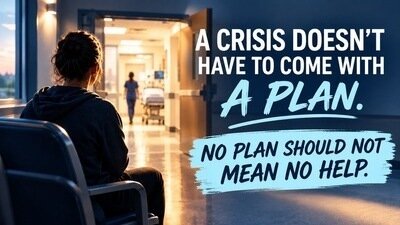
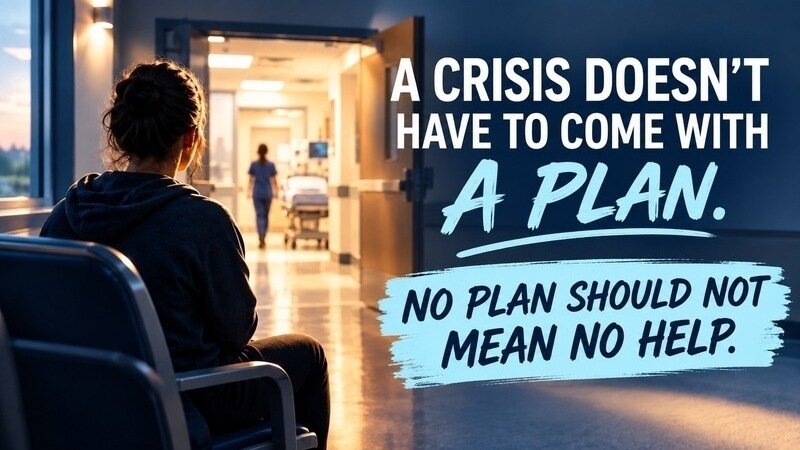
NO SUICIDE PLAN SHOULD NOT MEAN NO HELP.
Sign this petition and demand that HHS examine this issue and take meaningful action to strengthen emergency psychiatric care for people experiencing suicidal crises.
If you or someone you love has ever sought emergency help during a mental-health crisis and felt dismissed because there was no specific suicide plan, share your experience after signing.
Your experiences matter.
Your voice matters.
And your life matters before you have a plan.

25
The Issue
HHS: Stop Treating “No Suicide Plan” as a Reason to Deny Critical Mental Health Care
A person should not have to have a suicide plan to deserve life-saving help.
THE DEMAND
We are demanding that the U.S. Department of Health and Human Services (HHS) examine the way suicidal patients are evaluated, treated, stabilized, and discharged from emergency departments—particularly when a patient reports severe suicidal thoughts but does not have a specific or formulated suicide plan.
The absence of a suicide plan does not mean the absence of suicide risk.
A person can be profoundly suicidal without having determined exactly how, when, or where they would act.
Yet patients experiencing severe suicidal ideation can encounter a system in which the absence of a specific plan becomes a determining factor in whether they receive emergency psychiatric intervention.
That must change.
We cannot continue waiting until someone has developed a specific plan, attempted suicide, or died before recognizing that their crisis was serious enough to warrant intervention.
THIS IS A LIFE-AND-DEATH ISSUE
Suicide does not begin when someone writes down a method.
It can begin with hopelessness, overwhelming psychological pain, intrusive thoughts, feeling trapped, believing others would be better off without them, or simply reaching the point where they no longer feel capable of continuing.
A person may desperately want help while simultaneously being unable to articulate a specific plan.
That person is still in crisis.
Suicide risk is complex and can change rapidly. A single question—“Do you have a plan?”—cannot determine whether someone is safe.
A comprehensive assessment must consider the entire picture, including suicidal thoughts, intent, previous attempts, psychiatric history, impulsivity, access to lethal means, psychosis, substance use, acute stressors, protective factors, and the person’s ability to remain safe.
“No plan” cannot be allowed to become shorthand for “no danger.”
THIS PROBLEM DID NOT BEGIN WITH THE CLANCY CASE
The deaths of the Clancy children brought enormous public attention to questions surrounding severe mental illness, psychiatric crisis, postpartum mental illness, psychosis, suicide risk, and the emergency mental-health system.
But Lindsay Clancy was not the first person to experience a mental-health crisis in which the absence of a specific suicide plan affected the response to that crisis.
And the Clancy children were not the first lives lost in the broader failure to adequately recognize and respond to serious psychiatric emergencies.
This is bigger than one case.
Every day, people experiencing suicidal thoughts reach out for help.
Some are heard.
Some are not.
Some receive appropriate intervention.
Some are discharged because they do not meet a particular threshold.
And some never get another opportunity to ask for help.
We cannot wait for another tragedy to tell us that this deserves examination.
THE PROBLEM
Our emergency mental-health system can place significant emphasis on whether a suicidal patient can identify a specific plan.
That creates a dangerous gap.
A patient may say:
“I’m suicidal.”
But if that same person cannot describe exactly how they would do it, the seriousness of their crisis can be underestimated.
That is unacceptable.
A person should not have to demonstrate imminent intent before their suffering is taken seriously.
Emergency psychiatric evaluation must look beyond whether someone has a formulated plan and determine whether that individual is experiencing a level of psychological crisis that requires intervention, stabilization, monitoring, or a higher level of care.
WHAT WE DEMAND
1. HHS MUST EXAMINE THIS PRACTICE
HHS must examine whether current emergency psychiatric-care standards, policies, and practices adequately protect patients who experience severe suicidal ideation without a formulated suicide plan.
This examination must specifically address whether the absence of a plan is being improperly used as a reason to determine that a patient is safe for discharge.
2. REQUIRE COMPREHENSIVE SUICIDE-RISK ASSESSMENT
Emergency departments must evaluate the whole person, not simply whether they have a specific plan.
Assessment should consider:
Severity and persistence of suicidal thoughts
Intent and ability to maintain safety
Previous suicide attempts or self-harm
Psychiatric history
Psychosis or other severe psychiatric symptoms
Impulsivity
Substance use
Access to lethal means
Recent trauma or major life events
Protective factors
Available support
Changes in behavior or functioning
The patient’s ability to safely return to their environment
A suicide plan should be one piece of a comprehensive assessment—not the gatekeeper for receiving help.
3. PROVIDE A REAL ALTERNATIVE TO “GO HOME”
When a person is experiencing a serious psychiatric crisis but does not meet criteria for inpatient hospitalization—or when an inpatient psychiatric bed is unavailable—there must be meaningful alternatives.
Patients should not simply be discharged with a list of telephone numbers and told to follow up later when they are still experiencing significant suicidal thoughts or psychiatric distress.
HHS must examine and promote access to:
Crisis stabilization.
Emergency psychiatric treatment.
Appropriate observation.
Mobile crisis services.
Partial hospitalization or intensive outpatient services when appropriate.
Rapid psychiatric follow-up.
A lack of an inpatient bed cannot become a lack of care.
4. DISCHARGE MUST INCLUDE REAL FOLLOW-UP
When a suicidal patient is discharged, discharge cannot mean:
“Here’s a phone number. Good luck.”
Patients should leave with an individualized safety plan, appropriate crisis resources, clear instructions for returning for emergency care, and coordinated mental-health follow-up as soon as clinically appropriate.
Where clinically appropriate, the healthcare system should assist in actually connecting the patient with follow-up care rather than placing the entire burden on a person who is already in crisis.
5. EXAMINE THE LEGAL AND POLICY GAPS
HHS must examine whether federal guidance, state laws, hospital policies, and emergency psychiatric admission standards adequately protect people experiencing severe suicidal ideation before their crisis reaches the point of imminent action.
Where gaps exist, HHS must work with states, healthcare systems, mental-health professionals, patients, families, and policymakers to develop meaningful reforms.
WHY THIS MATTERS
This petition is deeply personal.
I have experienced mental illness myself, including postpartum depression. I have experienced the devastation of suicide within my family. I have also witnessed severe psychiatric illness and psychosis affecting someone close to me.
I know what it means to watch someone suffer and wonder whether the system that is supposed to protect them will recognize how serious their crisis really is.
This is not an abstract policy discussion for me.
These are real people.
Real families.
Real emergencies.
And real lives.
WE CANNOT KEEP WAITING
We should not have to wait for someone to attempt suicide before deciding that their suicidal thoughts were serious.
We should not have to wait for someone to develop a detailed plan before believing that they are in danger.
We should not have to wait for another family to bury someone they love before asking whether the system could have intervened sooner.
We need examination.
We need accountability.
A suicide plan should be one piece of a comprehensive assessment—not the gatekeeper for receiving help.
And we need it before the next tragedy—not after.
SIGN THE PETITION
I am asking you to stand behind a simple principle:
NO SUICIDE PLAN SHOULD NOT MEAN NO HELP.
Sign this petition and demand that HHS examine this issue and take meaningful action to strengthen emergency psychiatric care for people experiencing suicidal crises.
If you or someone you love has ever sought emergency help during a mental-health crisis and felt dismissed because there was no specific suicide plan, share your experience after signing.
Your experiences matter.
Your voice matters.
And your life matters before you have a plan.
The Decision Makers

Petition Updates
Share this petition
Petition created on September 6, 2026