署名活動についてのお知らせIn solitary confinement for over a year, a family Shepherd is denied his last days at home
Shelter Shock: Death Row is for Everyone

Gail O'ConnellSherwood, OR, アメリカ合衆国
2018/02/09
New leadership at MCAS has imposed new policies and introduced new practices that have slowly eroded transparency and also any meaningful community engagement. One may participate only on the Director’s terms. No debate or democratic participation is permitted. MCAS is not the people’s shelter. This happened gradually. When Ms Rose assumed the directorship of MCAS two years ago, changes were expected. Improvement was the hope. But those hopes were destroyed with each new administrative action.
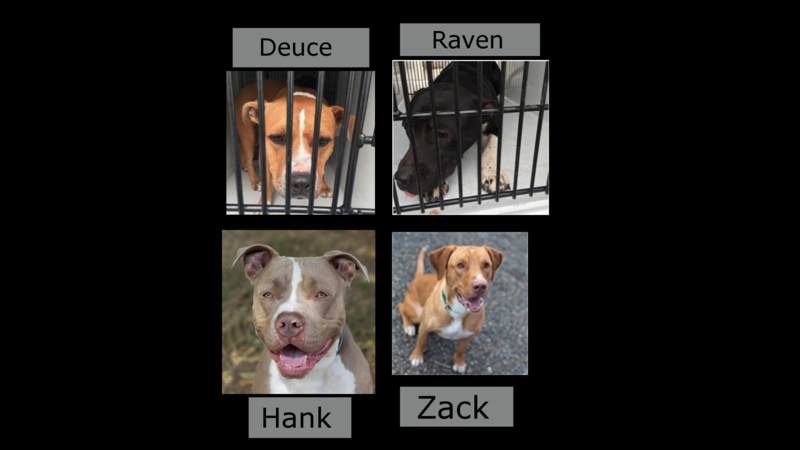
From the first days of Ms Rose’s rule, it was clear that no one could question her judgment. It was absolute. Hank was a big-hearted dog, an adoption return after killing a feral cat. The adoption should not have been approved. Hank was not a dangerous dog. Despite those facts and an alternate plan that would have saved Hank, Ms Rose stated that nothing anyone said or proposed would change her mind, claiming the full support for the decision to kill of the Shelter Review Committee, an unidentified group of MCAS employees from administration, enforcement, and animal care workers. That was not true. There were dissenters. The only concession made was to allow Hank to go home for a few days with the volunteer who had trained and loved him on condition that she provide a certificate of euthanasia. Her offer to adopt Hank was rejected. So too the offer of help from a former MCAS trainer.
It is how an authoritarian regime begins. The director was given unbridled authority. There were no checks and balances put in place from the Multnomah County Board of Commissioners or the Director of Community Services. No one was minding civil rights. No one cared about animals’ rights. The doors closed swiftly. The control of access began immediately.
The first step to control is preventing information access. Ms Rose does not answer questions about policies or animals’ status. All questions are ignored. One must obtain information through an increasingly expensive, time consuming, public records process at a cost of between $800 and $1000 a month. Every reasonable proposal to reduce costs and improve access to records about stray animals, has been denied. To Ms Rose, transparency poses security risks. The goal is to starve out public knowledge and awareness. The public’s knowledge cannot be permitted. This director simply doesn’t care nor is she focused upon the community’s needs. Only her own ego-driven agenda for control matters. The public and the animals pay the price.
In February 2017, Ms Rose told the Multnomah County Board of Commissioners that “We no longer euthanize any adoptable animals. That practice has stopped.” That claim was false.
The truth is that Ms Rose games the system, deciding what animals she is willing to allow to be adopted and which are to be killed. The in-house Shelter Review Committee whose membership is never disclosed, makes decisions without any publicly accessible documentation, no reasoning outlined. All animals killed are described as “unhealthy/untreatable,” even when the little information on record suggests otherwise. Very often what is measured is normal behavioral responses to catastrophic levels of agency stress. It is the agency that is “unhealthy/untreatable;” the agency that needs to change. The few animals who are “under behavior modification” have in available public records no specific listed goals, no plans, nothing seemly implemented, overall the triumph of impression management over fact. Animals are killed as “untreatable’ when no good faith treatment has been tried and rescue options are refused.
The population most failed by MCAS is the demographic most needing help, low income, minorities, and homeless, and individuals in life crises. MCAS is unprepared to deal with these populations. It offers no resources, no extensive outreaches into the communities of need, no network of services, and little to no interest in locating places where abandoned dogs can go to recover.
Zack, MCAS 102354, provides yet another example of this disservice. He belonged to a homeless person. His life had been chaotic and he was sometimes left chained to the back of an RV. He entered MCAS as a stray on September 06, 2017 and was killed January 19, 2018 as “DB-UU-2”. That label, unhealthy/untreatable, was affixed following an incident when a leash wrapped around and under his body became tangled as it was released, trapping him as he tried to get out. It frightened him and he bit the leash and the volunteer’s hand in reaction. It was a defensive reaction to stress not aggression. His increasing anxiety from constant confinement and his fears around leashing were observed over his long stay but not treated. The behavior modification plan reported to be in place clearly wasn’t implemented.
Zack was set up to fail. MCAS’s interpretation of the Asilomar Accord definition for DB-UU- 2 is “unhealthy/untreatable with aggressive or anxiety conditions with intensity level 3. “Intensity anxiety level 3 is defined as “animal is sustaining self -injury, its welfare is compromised or inflicting serious damage putting others at risk”; for aggression it is defined as “Bite with significant wound/blood drawn; single or multiple bites, also includes animals with barriers in place to prevent contact that exhibit ...warnings then actively attack (bite/swat) the barrier.” The latter behavior is also known as barrier aggression, a very common behavior. It doesn’t describe Zack. His stressors could be identified and treated. They just didn’t. Never has behavior been more minutely described without any accompanying predictability research. It is an act of convenience; designations are easily manipulated. The goal becomes to put everything in boxes of excuses even if the boxes don’t fit.
Emma MCAS 28439 (described in a previous post) entered MCAS on July 17, 2017, surrendered due to the health of her owner who had had her for 7 years ever since she was a puppy. The owner surrender record states “Friendly with people of all ages familiar and unfamiliar, Lived with a male and female pit bull (unaltered) and was friendly. Would do best in an adult only home as an only pet. Was left alone for 4-8 hours a day and was free to roam the house. Likes to be petted. Knows sit, down, stay, and come. Plays gentle. Favorite toy is her stuffed shoe.”
Emma was adopted once, on November 17, 2017, an adoption lasting one day. She was adopted to a family with a cat, but then returned on November 18 for an attack leading to the death of the adopter’s cat, the result of fatal carelessness on the part of both MCAS and the adopter. The incident could easily have been avoided with a thoughtful interview but now Emma had a history. Emma was doomed. After an unnoticed 20-pound weight loss, discovered in December at the end of her stay and a behavior modification program with no apparent plan, the Shelter Review Committee recommended euthanasia “due to Behavior.” Behavior is a broad category but no details were provided. Emma was killed as a result of MCAS incompetence. It wasn’t Emma that was unhealthy/untreatable. It was MCAS.
Just as MCAS refuses effective meaningful behavioral programs, so too does it now deny medical care once offered as part of the MCAS foster program’s hospice options. Dolly’s Fund, voluntarily funded by citizens for just such a purpose, covers costs. Dogs that once went into hospice are now put to death, no fosters or rescues sought. No one is permitted to volunteer, suggest a plan.
Slim Jim, a senior Labrador mix, had been found walking down the street never straying from the side of his dog partner who was also lost. He was killed because he was “unsteady on his feet and had a problem with right hind leg/hip.” That is not a “severe medical condition.” It does not require killing. There are options. Had MCAS just enlisted the resources in this community it would have known that. Dogs with the same conditions as Slim Jim, often benefit from a combination of pain medication and physical rehabilitation. MCAS has the funds, money given specifically for these types of treatment. It is about caring to seek out options. They don’t. There is an absolutist view that only they decide.
Only they give permission to destroy life they believe unworthy of living.
The poor among whom minorities are over represented and the homeless are denied rights as well. MCAS exploits poverty. MCAS’s enforcement and management are entirely recruited from Caucasian populations despite the diversity of the populations they serve. They have little understanding of the problems these populations experience. Instead of helping minorities and impoverished citizens by directing them to resources, MCAS demands the unachievable, often with short deadlines and unaffordable fines. MCAS kills the animals of the poor without any thought of providing help. To MCAS, this population deserves to be treated as nuisances, pests and liabilities, not people.
Deuce MCAS 120840 and Raven, MCAS 120839 were found at large and impounded on January 04, 2018 after apparently escaping their yard through a hole in the fence. Nothing excuses what happened next. On January 12, one of the owners called and said he would be in to redeem. He called again on January 12 to say he could not make it until Sunday [ the 14th]. On January 14th he called in again about redeeming his dogs reporting that he had very limited transportation and it was a hardship for him to make multiple trips both to assert ownership and to reclaim. On the 14th he was finally told he would need a secure enclosure by January 23rd. No help was offered, not even a referral to a local non-profit, Fences for Fido, just a deadline. On January 25, one of the owners called in again. He was referred to Officer Eder. He had continued to try to reach to officers in question.
On January 25, despite knowing that Deuce and Raven had families who were trying to get them back, the SR Committee recommended Deuce and Raven be killed due to “dog aggression,” based on a November incident report noting possible involvement in a dog aggressive incident. The MCAS record dated 1/31/ 18 reported that the author “spoke with Officer Wammack and Officer Eder before [dogs were] euthanized to confirm that [ the owners] did not reach out to them to reclaim dogs.” That was a lie, one belied by MCAS’s own records.
Both Raven and Deuce were gentle dogs. They scored well within the adoptable ranges (records attached). The records document the agency’s cover up, the lie that no efforts were made to redeem them. Raven and Deuce were not unhealthy and untreatable. All they needed was a good fence. They lived with children who have been emotionally devastated by MCAS’s cruelty.”
In a February 2017 presentation to the Multnomah County Board of Commissioners, Ms. Rose stated that “no adoptable animals are ever killed at MCAS,” claiming that “every single day it is about saving lives and that is what we do every day.” The Commissioners may have accepted that assurance. They should not. Both the statement and the claim are absolutely false.
----------------
MCAS Asilomar Accord Diagnosis-Prognosis Guidelines:
https://drive.google.com/open?id=1eYUoFaOrKdCmqgPVeDKcXnstOpNM3_t_
Deuce’s MCAS Records:
https://drive.google.com/open?id=1zSKILWr5sICgQjm95Ya4MU8LQuXKiG-6
Raven’s MCAS Records:
https://drive.google.com/open?id=1uRyMnuGorO3JbbLPmMeF0W9bd1re3iZq
Slim Jim’s MCAS Found Report:
https://drive.google.com/open?id=1jytwriwF49KSLQEQY5QTMiepCobeyFuA
声を届けよう
今すぐ賛同
リンクをコピー
Facebook
WhatsApp
X(旧:Twitter)
Eメール