Stop selling literary child pornography
The Issue
Several months ago, I sent the following letter to Canada's Minister of Justice, as well as the Attorney General of Ontario:
I am writing to you with a query regarding the apparent contradiction between the laws in this province surrounding child pornography, and the manner in which such matters are actually being handled. As I am confident that you know, in Canada child pornography is defined in the following way:
(a) a photographic, film, video or other visual representation, whether or not it was made by electronic or mechanical means,
(i) that shows a person who is or is depicted as being under the age of eighteen years and is engaged in or is depicted as engaged in explicit sexual activity, or
(ii) the dominant characteristic of which is the depiction, for a sexual purpose, of a sexual organ or the anal region of a person under the age of eighteen years;
(b) any written material, visual representation or audio recording that advocates or counsels sexual activity with a person under the age of eighteen years that would be an offence under this Act;
(c) any written material whose dominant characteristic is the description, for a sexual purpose, of sexual activity with a person under the age of eighteen years that would be an offence under this Act; or
(d) any audio recording that has as its dominant characteristic the description, presentation or representation, for a sexual purpose, of sexual activity with a person under the age of eighteen years that would be an offence under this Act. (Canadian Criminal Code, Section 163.1 Subsection 1; Definition of child pornography)
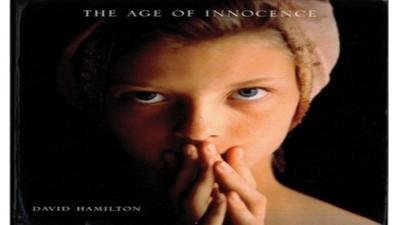
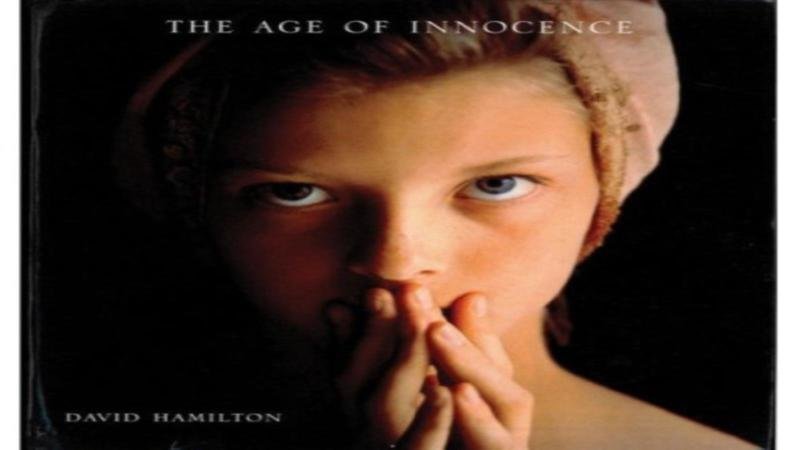
Although I believe that this definition is a suitable basis to work from, I cannot help but feel that we as a province are not remaining true to it. Novels such as The Age of Innocence by David Hamilton and Notes by Jock Sturges (along with several of Struges’ other works, I might add), which feature pictures of nude children are sold without issue by reputable retailers such as Amazon and Chapters. The authors of such works have, in the past, openly stated that they created these books for erotic purposes, and although they assure people who are uncomfortable with these images that there is a difference between erotica and pornography, this argument is seriously weakened once the opposing party pulls out a thesaurus and discovers that “erotica” and “pornography” are, in fact, synonyms.
I do understand that some people would argue that the creation, distribution, and possession of these books are protected by the freedom of expression laid out in the Canadian Charter of Rights and Freedoms. However, I very strongly believe that the Reasonable Limits Clause from that same Charter makes it clear that in cases such as these, where clutching our rights too tightly could lead to others in our country coming to harm (in this case, the children being depicted in these photographs as well as those who might, in the future, become the victims of pedophiles), our rights and freedoms can justifiably be limited.
I would like to know why these books can be sold in our country, despite the fact that, technically, these retailers are distributing child pornography, which is illegal.
Sincerely,
Tabitha Louise Di Giacomo
The response I received was less than satisfactory.
We need to make our laws consistent. If we discourage people from looking at erotic pictures of children on the internet, but allow them to buy these same pictures in bookstores, we are not really enforcing these laws. I urge you all to sign my petition so that bookstores in Canada will stop selling these kinds of books. There is a fine line, at times, between art and pornography, and some of these pictures cross that line.
If the government of Canada will not take responsibility for this inconsistency, maybe our bookstores will.

Petition Closed
The Issue
Several months ago, I sent the following letter to Canada's Minister of Justice, as well as the Attorney General of Ontario:
I am writing to you with a query regarding the apparent contradiction between the laws in this province surrounding child pornography, and the manner in which such matters are actually being handled. As I am confident that you know, in Canada child pornography is defined in the following way:
(a) a photographic, film, video or other visual representation, whether or not it was made by electronic or mechanical means,
(i) that shows a person who is or is depicted as being under the age of eighteen years and is engaged in or is depicted as engaged in explicit sexual activity, or
(ii) the dominant characteristic of which is the depiction, for a sexual purpose, of a sexual organ or the anal region of a person under the age of eighteen years;
(b) any written material, visual representation or audio recording that advocates or counsels sexual activity with a person under the age of eighteen years that would be an offence under this Act;
(c) any written material whose dominant characteristic is the description, for a sexual purpose, of sexual activity with a person under the age of eighteen years that would be an offence under this Act; or
(d) any audio recording that has as its dominant characteristic the description, presentation or representation, for a sexual purpose, of sexual activity with a person under the age of eighteen years that would be an offence under this Act. (Canadian Criminal Code, Section 163.1 Subsection 1; Definition of child pornography)
Although I believe that this definition is a suitable basis to work from, I cannot help but feel that we as a province are not remaining true to it. Novels such as The Age of Innocence by David Hamilton and Notes by Jock Sturges (along with several of Struges’ other works, I might add), which feature pictures of nude children are sold without issue by reputable retailers such as Amazon and Chapters. The authors of such works have, in the past, openly stated that they created these books for erotic purposes, and although they assure people who are uncomfortable with these images that there is a difference between erotica and pornography, this argument is seriously weakened once the opposing party pulls out a thesaurus and discovers that “erotica” and “pornography” are, in fact, synonyms.
I do understand that some people would argue that the creation, distribution, and possession of these books are protected by the freedom of expression laid out in the Canadian Charter of Rights and Freedoms. However, I very strongly believe that the Reasonable Limits Clause from that same Charter makes it clear that in cases such as these, where clutching our rights too tightly could lead to others in our country coming to harm (in this case, the children being depicted in these photographs as well as those who might, in the future, become the victims of pedophiles), our rights and freedoms can justifiably be limited.
I would like to know why these books can be sold in our country, despite the fact that, technically, these retailers are distributing child pornography, which is illegal.
Sincerely,
Tabitha Louise Di Giacomo
The response I received was less than satisfactory.
We need to make our laws consistent. If we discourage people from looking at erotic pictures of children on the internet, but allow them to buy these same pictures in bookstores, we are not really enforcing these laws. I urge you all to sign my petition so that bookstores in Canada will stop selling these kinds of books. There is a fine line, at times, between art and pornography, and some of these pictures cross that line.
If the government of Canada will not take responsibility for this inconsistency, maybe our bookstores will.
The Decision Makers
Petition Updates
Share this petition
Petition created on June 11, 2015