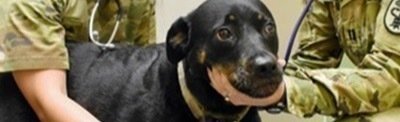

Bring Veterinary Nurses into the Army Veterinary Corps
The Issue
The United States Army Veterinary Corps has been a shining light of pride for both the American military and our veterinary community since 1916. This grouping of medical personnel includes DVMs commissioned as officers and enlisted veterinary assistants, or “animal care specialists (68T).” However, there is one major player clearly missing from the team and that is the veterinary nurse, also known as the credentialed veterinary technician or technologist. Anyone in the veterinary industry knows that surviving off of our wonderful assistants alone simply isn’t possible. DVMs need the immense number of benefits that come with having a credentialed technician or technologist on their staff. So, why should America’s military be any different?
What is a Credentialed Veterinary Technician/Nurse?
- Education Level: Associate's Degree
- Program Requirement: AVMA/CVTEA Accreditation
- Board Exams Required: National (VTNE), State (varies)
- Titles Held by State: RVT, LVT, CVT, LVMT
- Human Healthcare Equivalent: ADN or ASN, RN
What is a Credentialed Veterinary Technologist/Nurse?
- Education Level: Bachelor's or Master's Degree
- Program Requirement: AVMA/CVTEA Accreditation
- Board Exams Required: National (VTNE), State (varies)
- Titles Held by State: RVTg, LVTg, CVTg, LVMTg
- Human Healthcare Equivalent: BSN or MSN, RN
What do Credentialed Veterinary Technicians and Technologists study?
- Surgical & Anesthetic Nursing
- Small Animal Nursing (e.g. canine/feline)
- Large Animal Nursing (e.g. equine, camilids, farm animal/hoofstock, etc.)
- Exotic Animal Nursing (e.g. rodents, avian, reptiles, amphibians, etc.)
- Lab Animal Nursing (e.g. rodents, fish, primates, etc.)
- Aquatic Animal Nursing
- Zoo Animal/Wildlife Nursing
- Integrative Nursing
- Laboratory Procedures
- Animal Anatomy & Physiology
- Emergency & Critical Care
- Dentistry
- Neonatal Care
- Hospice Care
- Anesthesia & Analgesia
- Clinical Procedures
- Phlebotomy
- Pharmacology
- Rehabilitation
- Diagnostic Imagining
- Hospital & Team Management
- Externship/Clinical Hours: 400-500
Commissioning as an officer requires the minimum of having a bachelor’s degree, which is a need easily met by thousands of veterinary technologists across the country this very moment. Plus, thousands more of credentialed veterinary technicians with associate’s degrees can quickly return to school in-person or online to upgrade their diploma within as little as 1.5 years. Additionally, the Army Veterinary Corps could potentially mimic what the Navy Nursing Corps did in the early 1990s by allowing human nurses (RNs) with an associate's degree to commission as Warrant Officers instead.
Respectfully, enlisted animal care specialists that attend an 11 week program simply cannot meet the same standard as a credentialed veterinary technician or technologist working in the field today. We are backed by 2 to 6 years of a standardized AVMA accredited education, along with a well-earned and maintained medical license. It would be similar to comparing an enlisted Navy Hospital Corpsman’s 19 week program to a commissioned registered nurse’s 2 to 6 year degree and licensure. They simply are not the same, which is why once an animal care specialist’s (68T) time in the military comes to a close, they cannot sit for the Veterinary Technician National Exam (VTNE), also seen as the baseline for becoming credentialed in any part of the US. If the Veterinary Corps prides themselves on their high-end treatment facilities, shouldn’t they have the credentialed staff that knows how to properly use it to its fullest?
How the Army Veterinary Corps Benefits:
- Filling open officer recruitment spaces in the Veterinary Corps quickly, efficiently, and less costly than acquiring additional DVMs saving the Veterinary Corps millions.
- Increase in Army veterinary treatment facility (VTF) revenue because recent AVMA research shows civilian vet hospitals making as much as 30% more annually when hiring at least one credentialed vet tech/nurse.
- Immediate added help for DVMs in all Veterinary Corps divisions (e.g. food inspection, field service, lab animal, pathology, clinical, deployment, humanitarian, research, etc.).
- Dramatically increased DVM and overall Veterinary Corps operational sufficiency.
- Additional 68T Animal Care Specialist MOS School Instructors who are less costly than DVMs.
- Gaining experienced help despite commissioning new college graduates due to the baseline clinical externship requirement (400-500hrs).
- Gaining versatile help due to the incredible amount of knowledge all credentialed veterinary technicians and technologists have (see course example list above).
- Eased introduction of the new warrant officer or officer veterinary technician/technologist role by mimicking the Nurse Corps rank and responsibility structure amongst MDs.
- Greatly decreased need for DoD contracted civilian DVMs and animal care assistants also saving the Veterinary Corps millions.
- Public websites estimate there are ~700 officer DVMs and ~1,800 enlisted care specialists apart of the Army Veterinary Corps. However, it is recommended for veterinary facilities to operate sufficiently every 1 veterinarian requires at least 3 support staff members to adequately aid them. Therefore, if the Army contains ~700 DVMs, they require ~2,100 support staff members, leaving automatically needed room for ~300 credentialed veterinary technicians and technologists.
How the Veterinary Community Benefits:
- Dramatically increased pay opportunities for credentialed veterinary techs/nurses causing less of these invaluable professionals to leave the field and increasing civilian hospital pay rates due to employer competition for those who do not choose to serve (civilian avg $30-$38k VS the potential Army $47k-$74k).
- Large reward and recognition for progression additionally attracting more credentialed veterinary techs/nurses to stay in the field (e.g. promotion, able to seek additional training and degrees, etc.).
- Skill utilization dramatically increasing credentialed vet tech/nurse job satisfaction.
- Clear ranking and responsibility structure and title use while serving, because enlisted and officers cannot blur lines which will subsequently be mimicked more clearly in the civilian world of vet med, and therefore, increase the number of credentialed vet techs/nurses staying in the field.
- A dramatically large increase in non-credentialed veterinary assistants and veterinary-outsiders in general able to become educated and credentialed vet techs/nurses due to military tuition assistance or loan repayment.
- An end to the National Vet Tech/Nurse Shortage because once time in the Army is served, these now veterans will enter the civilian world as fully credentialed veterinary technicians and technologists.
- Veterinary Nurse Initiative (VNI) support by potentially titling the new Officer and/or Warrant Officer roles as "Veterinary Nurses."
How Future-Serving Veterinary Techs/Nurses Benefit:
- Officer pay rates starting at O-1 ($63,284 to $74,062 annually) or W-1 ($47,988 to $$63,482 annually) depending on potential ranking structure.
- Opportunity for educational scholarship and/or loan repayment programs covering all to almost all program costs.
- Opportunity to seek higher education for free while serving (ex: bachelor's or master's degree).
- Opportunity for CE requirements and licensure renewal fees to be paid for by the military.
- Opportunity to work with military animals (e.g. K-9s, ceremonial horses, dolphins, and sea lions) as well as military-owned house pets.
- Estimated bonuses for as much as $30,000.
- Basic housing allowance or BAH (also known as provided living quarters).
- High quality, low or no cost health care.
- Better rates on home loans.
- Retirement and pension plan options.
- Up to full college tuition covered with GI Bill accruement.
- Active duty or reservist opportunities (also known as full time or part time).
- 30 days paid time off yearly for full-time soldiers.
- Family benefits, like paid parental leave.
- Perks and incentives from travel discounts to everyday veteran's savings.
- World travel and living opportunities.
- Potentially actively serving for as little as 3 years.
- Officers attend Officer Candidate School (OCS) rather than traditional enlisted boot camp.
Across the pond in the UK, the King’s Royal Army also has a Veterinary Corps, which includes registered veterinary nurses as officers amongst their ranks. Similarly, Canada is preparing for the inclusion of registered veterinary technologists as they are in the process of reactivating their own Army Veterinary Corps. Upon speaking with several anonymous active-duty DVMs in the US Army, they explained that the officer shortage in the military is uncanny, but the lack of recruited personnel to the Veterinary Corps as a whole is nearly crippling. In fact, if anyone is to call an Army VTF, the introduction or voicemail message will at some point review how understaffed and overwhelmed their facilities are no matter the time of year or their location. Bringing in credentialed veterinary technicians and/or technologists would end the added strain placed upon these veterinarians by easing their current workload and aiding in the training of the animal care specialists (68Ts). Credentialed vet techs/nurses are certified to preform many tasks that exceed a veterinary assistant’s education, and arrive with experience prior to joining the military due to the requirement of completing several hundred hours of externship prior to graduation. We would be the same valuable asset in both clinic and deployment settings, because similar to veterinarians, credentialed veterinary technicians and/or technologists are trained to work in all types of terrains and medical situations while in school. Whether it be on a snowy farm, fish-filled tank, desert wildlife refuge, zoo enclosure, or emergency hospital, credentialed veterinary technicians and technologists are a versatile member of the medical community that cannot be ignored.
Further details about this topic: https://todaysveterinarybusiness.com/veterinary-corps-0622/
Further details about the VNI: https://veterinarynurse.org

14
The Issue
The United States Army Veterinary Corps has been a shining light of pride for both the American military and our veterinary community since 1916. This grouping of medical personnel includes DVMs commissioned as officers and enlisted veterinary assistants, or “animal care specialists (68T).” However, there is one major player clearly missing from the team and that is the veterinary nurse, also known as the credentialed veterinary technician or technologist. Anyone in the veterinary industry knows that surviving off of our wonderful assistants alone simply isn’t possible. DVMs need the immense number of benefits that come with having a credentialed technician or technologist on their staff. So, why should America’s military be any different?
What is a Credentialed Veterinary Technician/Nurse?
- Education Level: Associate's Degree
- Program Requirement: AVMA/CVTEA Accreditation
- Board Exams Required: National (VTNE), State (varies)
- Titles Held by State: RVT, LVT, CVT, LVMT
- Human Healthcare Equivalent: ADN or ASN, RN
What is a Credentialed Veterinary Technologist/Nurse?
- Education Level: Bachelor's or Master's Degree
- Program Requirement: AVMA/CVTEA Accreditation
- Board Exams Required: National (VTNE), State (varies)
- Titles Held by State: RVTg, LVTg, CVTg, LVMTg
- Human Healthcare Equivalent: BSN or MSN, RN
What do Credentialed Veterinary Technicians and Technologists study?
- Surgical & Anesthetic Nursing
- Small Animal Nursing (e.g. canine/feline)
- Large Animal Nursing (e.g. equine, camilids, farm animal/hoofstock, etc.)
- Exotic Animal Nursing (e.g. rodents, avian, reptiles, amphibians, etc.)
- Lab Animal Nursing (e.g. rodents, fish, primates, etc.)
- Aquatic Animal Nursing
- Zoo Animal/Wildlife Nursing
- Integrative Nursing
- Laboratory Procedures
- Animal Anatomy & Physiology
- Emergency & Critical Care
- Dentistry
- Neonatal Care
- Hospice Care
- Anesthesia & Analgesia
- Clinical Procedures
- Phlebotomy
- Pharmacology
- Rehabilitation
- Diagnostic Imagining
- Hospital & Team Management
- Externship/Clinical Hours: 400-500
Commissioning as an officer requires the minimum of having a bachelor’s degree, which is a need easily met by thousands of veterinary technologists across the country this very moment. Plus, thousands more of credentialed veterinary technicians with associate’s degrees can quickly return to school in-person or online to upgrade their diploma within as little as 1.5 years. Additionally, the Army Veterinary Corps could potentially mimic what the Navy Nursing Corps did in the early 1990s by allowing human nurses (RNs) with an associate's degree to commission as Warrant Officers instead.
Respectfully, enlisted animal care specialists that attend an 11 week program simply cannot meet the same standard as a credentialed veterinary technician or technologist working in the field today. We are backed by 2 to 6 years of a standardized AVMA accredited education, along with a well-earned and maintained medical license. It would be similar to comparing an enlisted Navy Hospital Corpsman’s 19 week program to a commissioned registered nurse’s 2 to 6 year degree and licensure. They simply are not the same, which is why once an animal care specialist’s (68T) time in the military comes to a close, they cannot sit for the Veterinary Technician National Exam (VTNE), also seen as the baseline for becoming credentialed in any part of the US. If the Veterinary Corps prides themselves on their high-end treatment facilities, shouldn’t they have the credentialed staff that knows how to properly use it to its fullest?
How the Army Veterinary Corps Benefits:
- Filling open officer recruitment spaces in the Veterinary Corps quickly, efficiently, and less costly than acquiring additional DVMs saving the Veterinary Corps millions.
- Increase in Army veterinary treatment facility (VTF) revenue because recent AVMA research shows civilian vet hospitals making as much as 30% more annually when hiring at least one credentialed vet tech/nurse.
- Immediate added help for DVMs in all Veterinary Corps divisions (e.g. food inspection, field service, lab animal, pathology, clinical, deployment, humanitarian, research, etc.).
- Dramatically increased DVM and overall Veterinary Corps operational sufficiency.
- Additional 68T Animal Care Specialist MOS School Instructors who are less costly than DVMs.
- Gaining experienced help despite commissioning new college graduates due to the baseline clinical externship requirement (400-500hrs).
- Gaining versatile help due to the incredible amount of knowledge all credentialed veterinary technicians and technologists have (see course example list above).
- Eased introduction of the new warrant officer or officer veterinary technician/technologist role by mimicking the Nurse Corps rank and responsibility structure amongst MDs.
- Greatly decreased need for DoD contracted civilian DVMs and animal care assistants also saving the Veterinary Corps millions.
- Public websites estimate there are ~700 officer DVMs and ~1,800 enlisted care specialists apart of the Army Veterinary Corps. However, it is recommended for veterinary facilities to operate sufficiently every 1 veterinarian requires at least 3 support staff members to adequately aid them. Therefore, if the Army contains ~700 DVMs, they require ~2,100 support staff members, leaving automatically needed room for ~300 credentialed veterinary technicians and technologists.
How the Veterinary Community Benefits:
- Dramatically increased pay opportunities for credentialed veterinary techs/nurses causing less of these invaluable professionals to leave the field and increasing civilian hospital pay rates due to employer competition for those who do not choose to serve (civilian avg $30-$38k VS the potential Army $47k-$74k).
- Large reward and recognition for progression additionally attracting more credentialed veterinary techs/nurses to stay in the field (e.g. promotion, able to seek additional training and degrees, etc.).
- Skill utilization dramatically increasing credentialed vet tech/nurse job satisfaction.
- Clear ranking and responsibility structure and title use while serving, because enlisted and officers cannot blur lines which will subsequently be mimicked more clearly in the civilian world of vet med, and therefore, increase the number of credentialed vet techs/nurses staying in the field.
- A dramatically large increase in non-credentialed veterinary assistants and veterinary-outsiders in general able to become educated and credentialed vet techs/nurses due to military tuition assistance or loan repayment.
- An end to the National Vet Tech/Nurse Shortage because once time in the Army is served, these now veterans will enter the civilian world as fully credentialed veterinary technicians and technologists.
- Veterinary Nurse Initiative (VNI) support by potentially titling the new Officer and/or Warrant Officer roles as "Veterinary Nurses."
How Future-Serving Veterinary Techs/Nurses Benefit:
- Officer pay rates starting at O-1 ($63,284 to $74,062 annually) or W-1 ($47,988 to $$63,482 annually) depending on potential ranking structure.
- Opportunity for educational scholarship and/or loan repayment programs covering all to almost all program costs.
- Opportunity to seek higher education for free while serving (ex: bachelor's or master's degree).
- Opportunity for CE requirements and licensure renewal fees to be paid for by the military.
- Opportunity to work with military animals (e.g. K-9s, ceremonial horses, dolphins, and sea lions) as well as military-owned house pets.
- Estimated bonuses for as much as $30,000.
- Basic housing allowance or BAH (also known as provided living quarters).
- High quality, low or no cost health care.
- Better rates on home loans.
- Retirement and pension plan options.
- Up to full college tuition covered with GI Bill accruement.
- Active duty or reservist opportunities (also known as full time or part time).
- 30 days paid time off yearly for full-time soldiers.
- Family benefits, like paid parental leave.
- Perks and incentives from travel discounts to everyday veteran's savings.
- World travel and living opportunities.
- Potentially actively serving for as little as 3 years.
- Officers attend Officer Candidate School (OCS) rather than traditional enlisted boot camp.
Across the pond in the UK, the King’s Royal Army also has a Veterinary Corps, which includes registered veterinary nurses as officers amongst their ranks. Similarly, Canada is preparing for the inclusion of registered veterinary technologists as they are in the process of reactivating their own Army Veterinary Corps. Upon speaking with several anonymous active-duty DVMs in the US Army, they explained that the officer shortage in the military is uncanny, but the lack of recruited personnel to the Veterinary Corps as a whole is nearly crippling. In fact, if anyone is to call an Army VTF, the introduction or voicemail message will at some point review how understaffed and overwhelmed their facilities are no matter the time of year or their location. Bringing in credentialed veterinary technicians and/or technologists would end the added strain placed upon these veterinarians by easing their current workload and aiding in the training of the animal care specialists (68Ts). Credentialed vet techs/nurses are certified to preform many tasks that exceed a veterinary assistant’s education, and arrive with experience prior to joining the military due to the requirement of completing several hundred hours of externship prior to graduation. We would be the same valuable asset in both clinic and deployment settings, because similar to veterinarians, credentialed veterinary technicians and/or technologists are trained to work in all types of terrains and medical situations while in school. Whether it be on a snowy farm, fish-filled tank, desert wildlife refuge, zoo enclosure, or emergency hospital, credentialed veterinary technicians and technologists are a versatile member of the medical community that cannot be ignored.
Further details about this topic: https://todaysveterinarybusiness.com/veterinary-corps-0622/
Further details about the VNI: https://veterinarynurse.org
Petition Updates
Share this petition
Petition created on November 30, 2022