
Beyond Stabilization: A Call for Recovery-Focused Mental Health Reform
The Issue
Recovery Takes More Than Stabilization
Every day across America, individuals living with serious mental illness and their families find themselves trapped in a revolving door of crisis, hospitalization, discharge, relapse, homelessness, incarceration, and repeated emergency interventions.
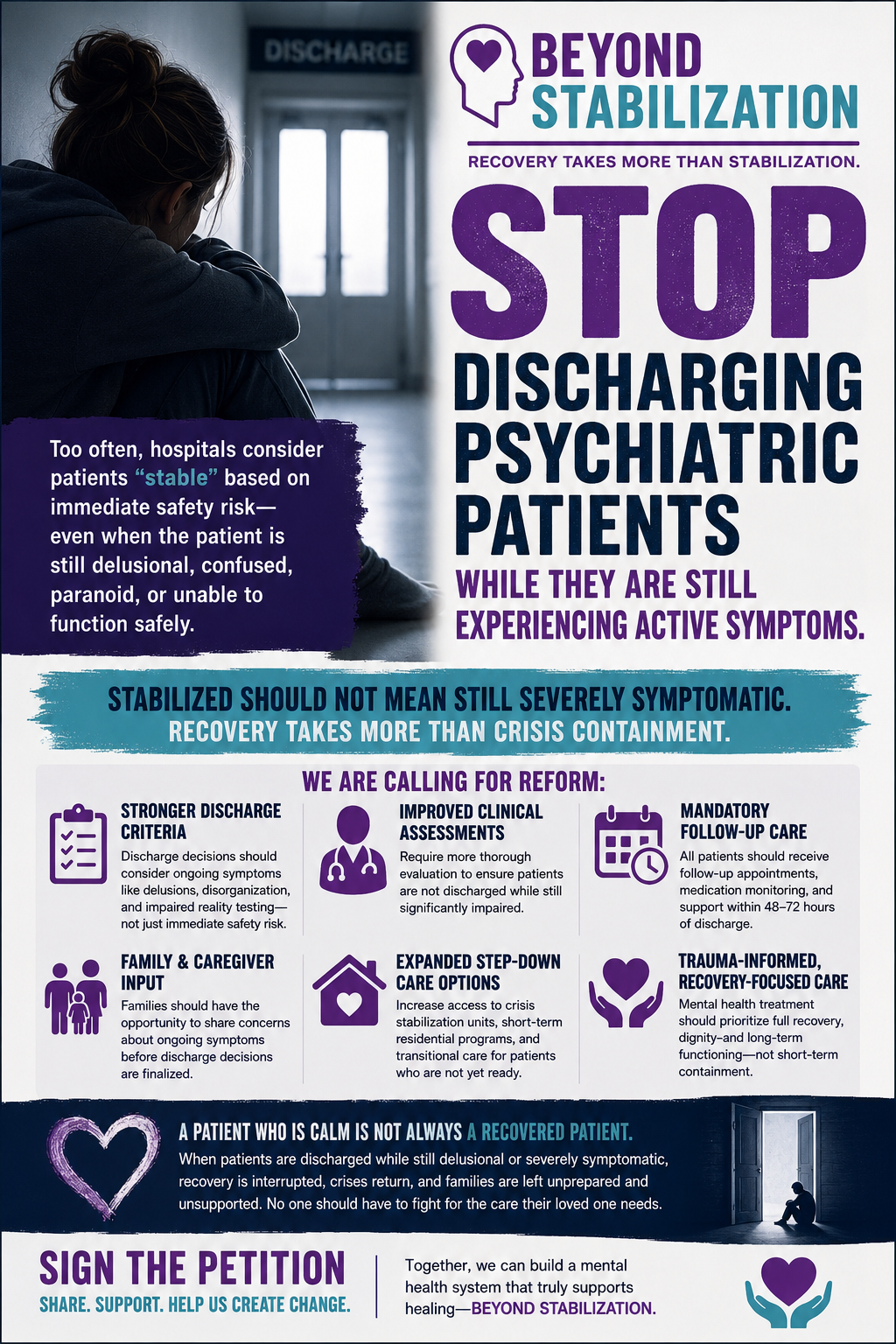
While psychiatric hospitals play a critical role in managing acute crises, stabilization alone is not recovery.
Too often, individuals are discharged with a prescription, a list of phone numbers, and instructions to schedule their own follow-up care—even when they are still struggling with severe symptoms, impaired judgment, housing instability, or barriers to treatment engagement.
Families are left to navigate impossible situations with little support.
We believe there is a better way.
The Problem
Our mental health system is largely designed around crisis intervention rather than long-term recovery.
For many individuals living with schizophrenia, schizoaffective disorder, bipolar disorder, severe depression, co-occurring substance use disorders, and other serious mental illnesses, recovery requires more than a short hospital stay.
The greatest gap in our system is what many families call "the missing middle"—the lack of structured support between hospitalization and independent living.
As a result:
• Individuals cycle through repeated psychiatric hospitalizations
• Families become overwhelmed and exhausted
• Emergency rooms become revolving doors
• Jails and homelessness become default treatment settings
• Opportunities for recovery are lost
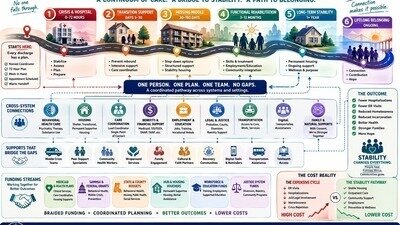
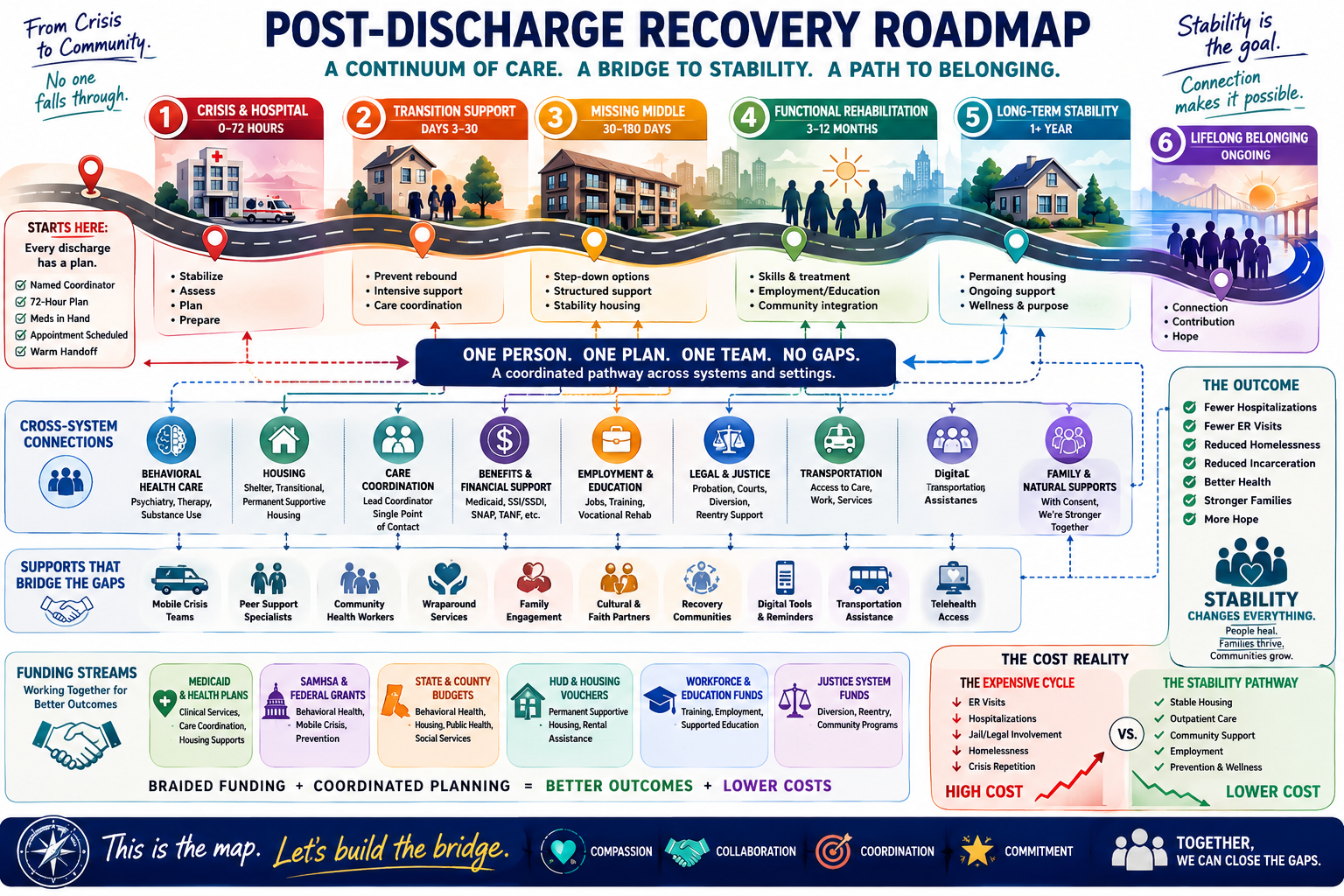
Our Vision: The Recovery Continuum Roadmap
Beyond Stabilization advocates for a recovery-focused continuum of care that supports individuals through every stage of recovery.
Phase 1: Crisis to Discharge (0–72 Hours)
No individual should leave a psychiatric facility without:
✔ A named discharge coordinator
✔ A written stabilization plan
✔ Medication in hand
✔ Follow-up appointments scheduled before discharge
✔ A confirmed destination and support plan
Discharge should include a direct staff-to-staff handoff, not simply a referral.
Phase 2: Transitional Support (Days 3–30)
The highest risk for relapse often occurs immediately after discharge.
Every individual should have access to:
✔ Mobile crisis and community-based support teams
✔ Medication monitoring and symptom tracking
✔ Care coordination
✔ Peer support services
✔ Transportation and benefits assistance
✔ Family support resources when appropriate
Phase 3: The Missing Middle (30–180 Days)
We advocate for expanded access to:
✔ Transitional residential programs
✔ Therapeutic recovery communities
✔ Supervised supportive housing
✔ Step-down treatment programs
✔ Intensive community stabilization services
Stability should be treated as a phase of care—not a personal responsibility.
Phase 4: Functional Rehabilitation (3–12 Months)
Recovery should include:
✔ Supported employment programs
✔ Vocational training
✔ Educational opportunities
✔ Trauma-informed therapy
✔ Life-skills development
✔ Peer-led recovery communities
Phase 5: Long-Term Stability (1+ Year)
Long-term recovery requires:
✔ Permanent supportive housing
✔ Ongoing peer support
✔ Employment sustainability services
✔ Community integration
✔ Continuity of relationships and support systems
Key Principles
We believe meaningful mental health reform should include:
✔ No discharge without a placement plan
✔ Expanded transitional and residential treatment options
✔ Stronger continuity of care after hospitalization
✔ Housing as essential recovery infrastructure
✔ Family involvement when appropriate
✔ Greater access to Assertive Community Treatment (ACT) and Intensive Case Management (ICM)
✔ Recovery-focused services rather than crisis-focused systems
Why This Matters
Families across the country are asking the same questions:
What happens when someone is too ill to live independently but does not qualify for long-term hospitalization?
What happens when a person cannot recognize their illness or engage in treatment?
What happens after stabilization?
The answer should not be another crisis.
The answer should be a pathway to recovery.
Join the Movement
Beyond Stabilization was created to advocate for a mental health system that supports recovery, dignity, hope, and long-term success.
If you believe recovery takes more than stabilization, please sign this petition and help us advocate for meaningful mental health reform.
Together, we can build a system that doesn't stop at crisis management—but continues through recovery.
💙 Recovery Takes More Than Stabilization.
Founder:
Tammy Willoughby
Beyond Stabilization
🖊️ Sign the petition:

621
The Issue
Recovery Takes More Than Stabilization
Every day across America, individuals living with serious mental illness and their families find themselves trapped in a revolving door of crisis, hospitalization, discharge, relapse, homelessness, incarceration, and repeated emergency interventions.
While psychiatric hospitals play a critical role in managing acute crises, stabilization alone is not recovery.
Too often, individuals are discharged with a prescription, a list of phone numbers, and instructions to schedule their own follow-up care—even when they are still struggling with severe symptoms, impaired judgment, housing instability, or barriers to treatment engagement.
Families are left to navigate impossible situations with little support.
We believe there is a better way.
The Problem
Our mental health system is largely designed around crisis intervention rather than long-term recovery.
For many individuals living with schizophrenia, schizoaffective disorder, bipolar disorder, severe depression, co-occurring substance use disorders, and other serious mental illnesses, recovery requires more than a short hospital stay.
The greatest gap in our system is what many families call "the missing middle"—the lack of structured support between hospitalization and independent living.
As a result:
• Individuals cycle through repeated psychiatric hospitalizations
• Families become overwhelmed and exhausted
• Emergency rooms become revolving doors
• Jails and homelessness become default treatment settings
• Opportunities for recovery are lost
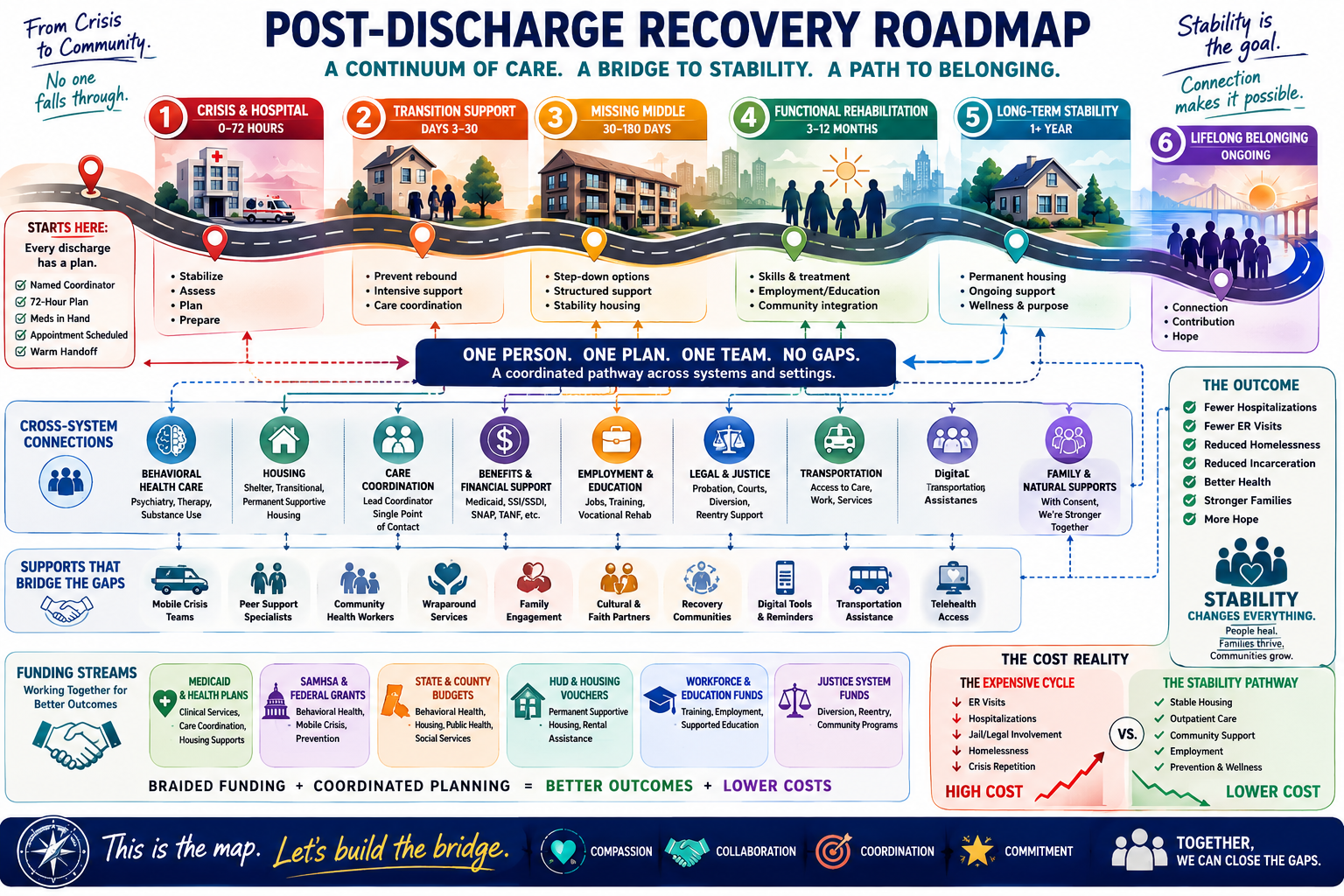
Our Vision: The Recovery Continuum Roadmap
Beyond Stabilization advocates for a recovery-focused continuum of care that supports individuals through every stage of recovery.
Phase 1: Crisis to Discharge (0–72 Hours)
No individual should leave a psychiatric facility without:
✔ A named discharge coordinator
✔ A written stabilization plan
✔ Medication in hand
✔ Follow-up appointments scheduled before discharge
✔ A confirmed destination and support plan
Discharge should include a direct staff-to-staff handoff, not simply a referral.
Phase 2: Transitional Support (Days 3–30)
The highest risk for relapse often occurs immediately after discharge.
Every individual should have access to:
✔ Mobile crisis and community-based support teams
✔ Medication monitoring and symptom tracking
✔ Care coordination
✔ Peer support services
✔ Transportation and benefits assistance
✔ Family support resources when appropriate
Phase 3: The Missing Middle (30–180 Days)
We advocate for expanded access to:
✔ Transitional residential programs
✔ Therapeutic recovery communities
✔ Supervised supportive housing
✔ Step-down treatment programs
✔ Intensive community stabilization services
Stability should be treated as a phase of care—not a personal responsibility.
Phase 4: Functional Rehabilitation (3–12 Months)
Recovery should include:
✔ Supported employment programs
✔ Vocational training
✔ Educational opportunities
✔ Trauma-informed therapy
✔ Life-skills development
✔ Peer-led recovery communities
Phase 5: Long-Term Stability (1+ Year)
Long-term recovery requires:
✔ Permanent supportive housing
✔ Ongoing peer support
✔ Employment sustainability services
✔ Community integration
✔ Continuity of relationships and support systems
Key Principles
We believe meaningful mental health reform should include:
✔ No discharge without a placement plan
✔ Expanded transitional and residential treatment options
✔ Stronger continuity of care after hospitalization
✔ Housing as essential recovery infrastructure
✔ Family involvement when appropriate
✔ Greater access to Assertive Community Treatment (ACT) and Intensive Case Management (ICM)
✔ Recovery-focused services rather than crisis-focused systems
Why This Matters
Families across the country are asking the same questions:
What happens when someone is too ill to live independently but does not qualify for long-term hospitalization?
What happens when a person cannot recognize their illness or engage in treatment?
What happens after stabilization?
The answer should not be another crisis.
The answer should be a pathway to recovery.
Join the Movement
Beyond Stabilization was created to advocate for a mental health system that supports recovery, dignity, hope, and long-term success.
If you believe recovery takes more than stabilization, please sign this petition and help us advocate for meaningful mental health reform.
Together, we can build a system that doesn't stop at crisis management—but continues through recovery.
💙 Recovery Takes More Than Stabilization.
Founder:
Tammy Willoughby
Beyond Stabilization
🖊️ Sign the petition:
The Decision Makers

Supporter Voices
Petition Updates
Share this petition
Petition created on May 25, 2026