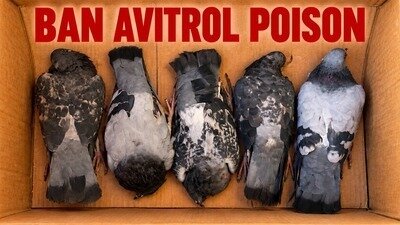
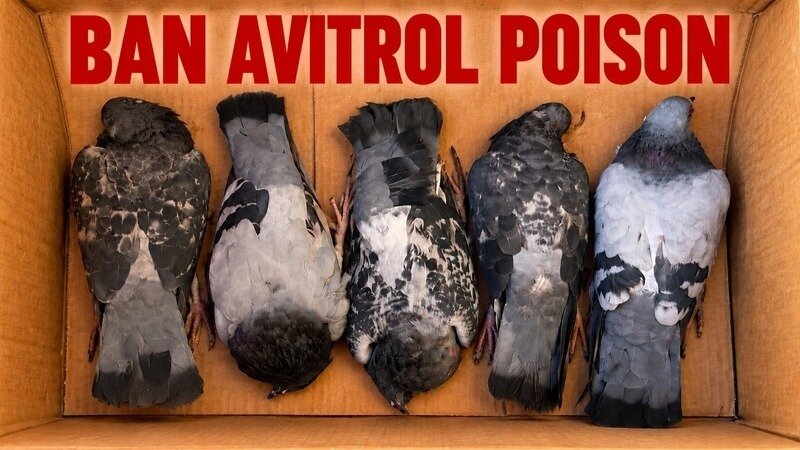
Ban Avitrol Poison For Pigeon Control In Nevada
The Issue
BAN AVITROL IN NEVADA: End the Poisoning of Pigeons and Other Birds
Petition to: Nevada state legislators, the Nevada Department of Agriculture (NDA), the U.S. Environmental Protection Agency (EPA), and City of Las Vegas and Clark County officials.
The Time for Regulation Is Over. We Need a Complete Ban.
For decades, residents in Las Vegas and the surrounding valley have raised concerns about Avitrol: a toxic pesticide used to control bird populations by poisoning birds and using their distress to frighten the rest of the flock away.
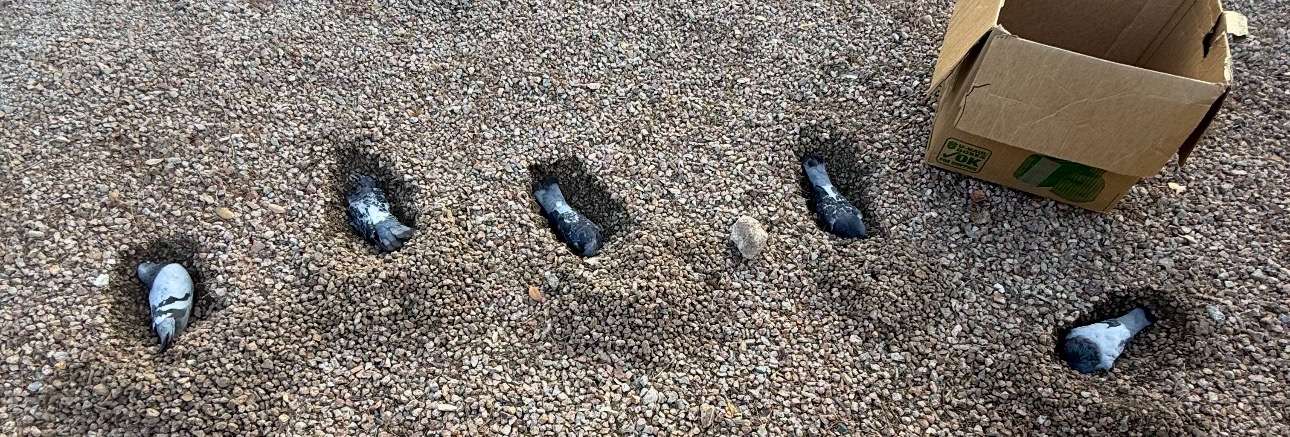
Avitrol contains 4-aminopyridine, a chemical that disrupts the nervous system. Birds that consume treated bait can experience severe neurological distress, including loss of coordination, tremors, muscle spasms, convulsions, and collapse. The birds that consume the bait typically die.
This is not simply a bird deterrent. It is a poisoning method that deliberately uses a bird's distress as a means of controlling other birds.
Decades of Complaints in Las Vegas
This problem is not new.
1999 - Public housing in Las Vegas: The Las Vegas Sun reported residents' accounts of pigeons and songbirds suffering prolonged death struggles after Avitrol bait was placed at Robert Gordon Plaza and other public housing complexes. One resident described birds convulsing for hours. Residents raised concerns about the unnecessary suffering and the availability of humane alternatives. Sources: Las Vegas Sun — Woman's Fight to Save Pigeons Leads to Evict
2001- Cypress Springs Apartments: PETA reported receiving multiple complaints from residents about Avitrol being used to poison pigeons. Following intervention, the property's poisoning program was reportedly canceled. Source: PETA — Las Vegas Apartment Complex Stops Poisoning Pigeons
2003 - Henderson apartment complex: The Las Vegas Sun reported on a family lawsuit alleging exposure to Avitrol at Galleria Palms. A state inspection reportedly found treated kernels near the residential yard and examined a poisoned pigeon. The family alleged that exposure contributed to their illnesses; those health claims were disputed and should not be treated as conclusively established. The report also documented previous citizen complaints about leftover bait and dead pigeons, as well as state fines for pesticide violations. Source: Las Vegas Sun — Family Files Suit Alleging Exposure to Pigeon Poison
2007–2008- Nevada Department of Agriculture: The NDA acknowledged receiving numerous public complaints about Avitrol, including concerns about the erratic behavior and deaths of pigeons, effects on non-target birds, and careless or incomplete applications. Its June 2008 letter documented violations involving uncollected dead and dying birds, non-target bird mortality, improper baiting, and public exposure to treated bait. Sources: NDA — December 2007 Avitrol Users Letter |NDA — June 2008 Avitrol Users Letter
2026- Solstice Apartment Homes: A man documented dozens of pigeons exhibiting severe neurological distress, flying into walls, convulsing, seizing, and dying. Poisoned bait and dead or dying pigeons were reportedly left accessible to other wildlife, pets, and children. The incident sparked widespread public outrage following a viral TikTok video. Source: Tiktok- Vegas Man Horrified By Mass Poisoning Of Pigeons
These are documented examples, not an exhaustive count of every complaint made over the past two decades. Together, they establish that serious concerns about Avitrol in Southern Nevada have persisted for years.
The response has focused on regulating licensed users, improving application procedures, and collecting dead birds and unused bait. Yet the underlying problem remains: Avitrol continues to be used to poison birds.
We believe this approach has run its course. We should not need another decade of complaints before choosing a different path.
The Suffering Is Unnecessary
Avitrol's intended effect depends on poisoned birds displaying distress that frightens the rest of the flock. The symptoms are not harmless behavior. They are consequences of a toxic neurological reaction.
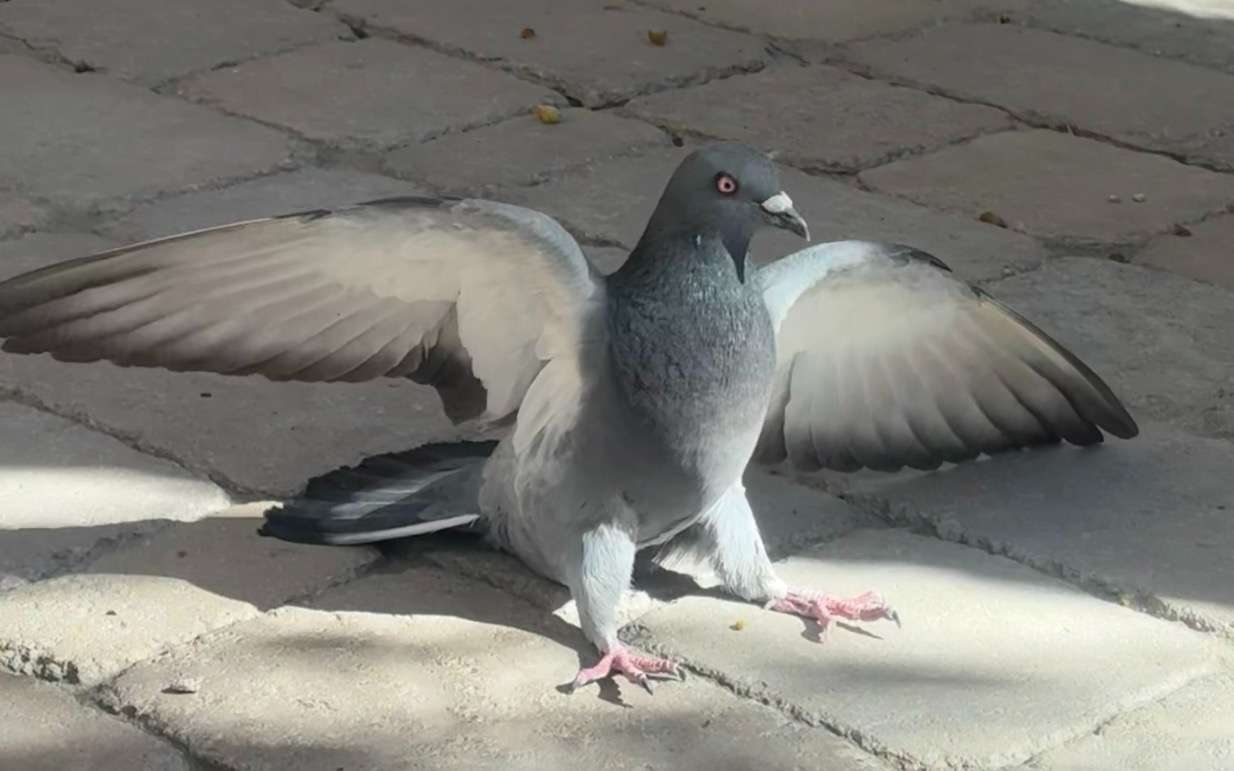
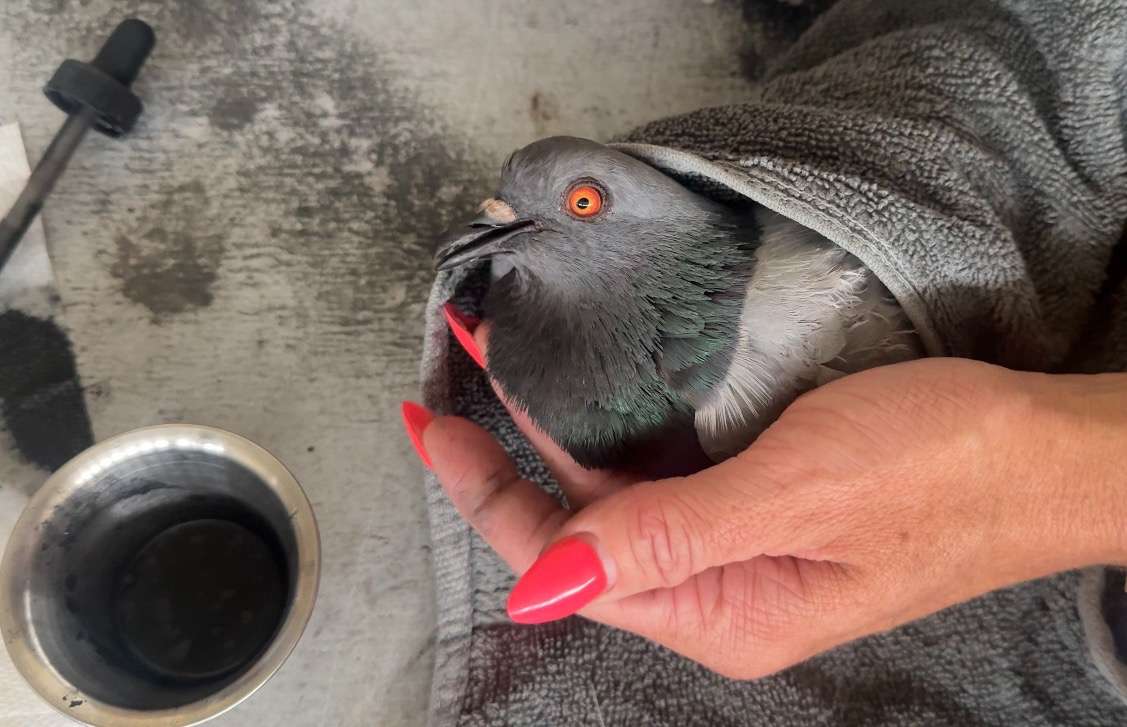
Affected birds may lose coordination, stumble, fall, flap uncontrollably, experience tremors or convulsions, and struggle to stand or fly. These symptoms can leave them vulnerable to collisions, falls, and attacks by other animals. The birds typically die after consuming a sufficient dose.
The EPA's documentation recognizes the deaths of birds exposed to 4-aminopyridine and the risks to non-target wildlife. Source: EPA — Reregistration Eligibility Decision for 4-Aminopyridine
A bird's suffering should never be treated as a tool for frightening other animals away. Even when an applicator follows the product label, the intended mechanism still involves poisoning individual birds. Better application procedures cannot eliminate that fundamental problem.
The Risks Extend Beyond Pigeons
Avitrol-treated corn can be consumed by unintended bird species sharing the same feeding areas. The EPA has identified acute risks to non-target terrestrial animals, including potential secondary poisoning of predatory species. It also requires safeguards intended to prevent exposure to pets, children, and other wildlife.
Treated corn left on the ground may be accessible to animals and people. Dead or dying poisoned birds may also be encountered by pets, scavengers, and other wildlife.
Children playing in residential courtyards, parks, sidewalks, and landscaped areas may encounter bait that resembles ordinary corn kernels. Accidental ingestion of a toxic substance is a serious concern, particularly where treated bait is accessible to the public.
The EPA's documentation specifically requires that treated bait and affected birds be kept away from children, pets, and non-target species. The need for these precautions underscores the risks that make public access and proper cleanup so important. Source: EPA — 4-Aminopyridine Risk Assessment and Mitigation Measures
We should not have to depend on perfect compliance at every application site to protect the animals and people who share our neighborhoods.
What We Demand: A Complete Ban
We call on the following officials to act within their respective legal authority:
Nevada state legislators: Introduce and pass legislation prohibiting the use of Avitrol throughout Nevada for bird control, rather than relying on further restrictions on licensed applicators.
The Nevada Department of Agriculture: Pursue all available state regulatory measures to prohibit Avitrol use and support a permanent statewide ban.
The U.S. Environmental Protection Agency: Review the evidence and pursue cancellation of relevant federal registrations and uses of Avitrol, including pigeon-control uses, as warranted under federal law.
City of Las Vegas and Clark County officials: Pursue local prohibitions within their legal authority and adopt humane bird-management policies on public property.
Our goal is not another investigation, another warning letter, or another promise to enforce existing rules more carefully. Our goal is to end Avitrol use for bird control in Nevada.
Humane Alternatives Exist
Businesses and property owners can address bird-related concerns through OvoControl bird contraceptive, physical deterrents, habitat modification, responsible food-waste management, and other non-lethal approaches.
These methods address the overpopulation, as well as the conditions that attract birds or allow them to roost without relying on poisoning animals to "frighten their flock away".
The choice is not between Avitrol and doing nothing. We can protect buildings, maintain public spaces, and manage wildlife conflicts without accepting the suffering caused by toxic bait.
Help Us End Avitrol Use in Nevada
As a Las Vegas pigeon rescuer and advocate, I am asking our community to stand together for pigeons and other wildlife.
Residents have raised concerns for decades. Nevada's own records document complaints and violations. The risks to non-target animals and the need to keep toxic bait away from children and pets are recognized in federal pesticide documentation.
It is time to stop treating this as a problem that can be solved through better application procedures. It is time to ban Avitrol.
Please sign and share this petition and call on Nevada's decision-makers to end the use of Avitrol for bird control throughout our state.
🐦💗 BAN AVITROL. Protect our birds, protect our wildlife, and choose humane solutions.

1,038
The Issue
BAN AVITROL IN NEVADA: End the Poisoning of Pigeons and Other Birds
Petition to: Nevada state legislators, the Nevada Department of Agriculture (NDA), the U.S. Environmental Protection Agency (EPA), and City of Las Vegas and Clark County officials.
The Time for Regulation Is Over. We Need a Complete Ban.
For decades, residents in Las Vegas and the surrounding valley have raised concerns about Avitrol: a toxic pesticide used to control bird populations by poisoning birds and using their distress to frighten the rest of the flock away.
Avitrol contains 4-aminopyridine, a chemical that disrupts the nervous system. Birds that consume treated bait can experience severe neurological distress, including loss of coordination, tremors, muscle spasms, convulsions, and collapse. The birds that consume the bait typically die.
This is not simply a bird deterrent. It is a poisoning method that deliberately uses a bird's distress as a means of controlling other birds.
Decades of Complaints in Las Vegas
This problem is not new.
1999 - Public housing in Las Vegas: The Las Vegas Sun reported residents' accounts of pigeons and songbirds suffering prolonged death struggles after Avitrol bait was placed at Robert Gordon Plaza and other public housing complexes. One resident described birds convulsing for hours. Residents raised concerns about the unnecessary suffering and the availability of humane alternatives. Sources: Las Vegas Sun — Woman's Fight to Save Pigeons Leads to Evict
2001- Cypress Springs Apartments: PETA reported receiving multiple complaints from residents about Avitrol being used to poison pigeons. Following intervention, the property's poisoning program was reportedly canceled. Source: PETA — Las Vegas Apartment Complex Stops Poisoning Pigeons
2003 - Henderson apartment complex: The Las Vegas Sun reported on a family lawsuit alleging exposure to Avitrol at Galleria Palms. A state inspection reportedly found treated kernels near the residential yard and examined a poisoned pigeon. The family alleged that exposure contributed to their illnesses; those health claims were disputed and should not be treated as conclusively established. The report also documented previous citizen complaints about leftover bait and dead pigeons, as well as state fines for pesticide violations. Source: Las Vegas Sun — Family Files Suit Alleging Exposure to Pigeon Poison
2007–2008- Nevada Department of Agriculture: The NDA acknowledged receiving numerous public complaints about Avitrol, including concerns about the erratic behavior and deaths of pigeons, effects on non-target birds, and careless or incomplete applications. Its June 2008 letter documented violations involving uncollected dead and dying birds, non-target bird mortality, improper baiting, and public exposure to treated bait. Sources: NDA — December 2007 Avitrol Users Letter |NDA — June 2008 Avitrol Users Letter
2026- Solstice Apartment Homes: A man documented dozens of pigeons exhibiting severe neurological distress, flying into walls, convulsing, seizing, and dying. Poisoned bait and dead or dying pigeons were reportedly left accessible to other wildlife, pets, and children. The incident sparked widespread public outrage following a viral TikTok video. Source: Tiktok- Vegas Man Horrified By Mass Poisoning Of Pigeons
These are documented examples, not an exhaustive count of every complaint made over the past two decades. Together, they establish that serious concerns about Avitrol in Southern Nevada have persisted for years.
The response has focused on regulating licensed users, improving application procedures, and collecting dead birds and unused bait. Yet the underlying problem remains: Avitrol continues to be used to poison birds.
We believe this approach has run its course. We should not need another decade of complaints before choosing a different path.
The Suffering Is Unnecessary
Avitrol's intended effect depends on poisoned birds displaying distress that frightens the rest of the flock. The symptoms are not harmless behavior. They are consequences of a toxic neurological reaction.
Affected birds may lose coordination, stumble, fall, flap uncontrollably, experience tremors or convulsions, and struggle to stand or fly. These symptoms can leave them vulnerable to collisions, falls, and attacks by other animals. The birds typically die after consuming a sufficient dose.
The EPA's documentation recognizes the deaths of birds exposed to 4-aminopyridine and the risks to non-target wildlife. Source: EPA — Reregistration Eligibility Decision for 4-Aminopyridine
A bird's suffering should never be treated as a tool for frightening other animals away. Even when an applicator follows the product label, the intended mechanism still involves poisoning individual birds. Better application procedures cannot eliminate that fundamental problem.
The Risks Extend Beyond Pigeons
Avitrol-treated corn can be consumed by unintended bird species sharing the same feeding areas. The EPA has identified acute risks to non-target terrestrial animals, including potential secondary poisoning of predatory species. It also requires safeguards intended to prevent exposure to pets, children, and other wildlife.
Treated corn left on the ground may be accessible to animals and people. Dead or dying poisoned birds may also be encountered by pets, scavengers, and other wildlife.
Children playing in residential courtyards, parks, sidewalks, and landscaped areas may encounter bait that resembles ordinary corn kernels. Accidental ingestion of a toxic substance is a serious concern, particularly where treated bait is accessible to the public.
The EPA's documentation specifically requires that treated bait and affected birds be kept away from children, pets, and non-target species. The need for these precautions underscores the risks that make public access and proper cleanup so important. Source: EPA — 4-Aminopyridine Risk Assessment and Mitigation Measures
We should not have to depend on perfect compliance at every application site to protect the animals and people who share our neighborhoods.
What We Demand: A Complete Ban
We call on the following officials to act within their respective legal authority:
Nevada state legislators: Introduce and pass legislation prohibiting the use of Avitrol throughout Nevada for bird control, rather than relying on further restrictions on licensed applicators.
The Nevada Department of Agriculture: Pursue all available state regulatory measures to prohibit Avitrol use and support a permanent statewide ban.
The U.S. Environmental Protection Agency: Review the evidence and pursue cancellation of relevant federal registrations and uses of Avitrol, including pigeon-control uses, as warranted under federal law.
City of Las Vegas and Clark County officials: Pursue local prohibitions within their legal authority and adopt humane bird-management policies on public property.
Our goal is not another investigation, another warning letter, or another promise to enforce existing rules more carefully. Our goal is to end Avitrol use for bird control in Nevada.
Humane Alternatives Exist
Businesses and property owners can address bird-related concerns through OvoControl bird contraceptive, physical deterrents, habitat modification, responsible food-waste management, and other non-lethal approaches.
These methods address the overpopulation, as well as the conditions that attract birds or allow them to roost without relying on poisoning animals to "frighten their flock away".
The choice is not between Avitrol and doing nothing. We can protect buildings, maintain public spaces, and manage wildlife conflicts without accepting the suffering caused by toxic bait.
Help Us End Avitrol Use in Nevada
As a Las Vegas pigeon rescuer and advocate, I am asking our community to stand together for pigeons and other wildlife.
Residents have raised concerns for decades. Nevada's own records document complaints and violations. The risks to non-target animals and the need to keep toxic bait away from children and pets are recognized in federal pesticide documentation.
It is time to stop treating this as a problem that can be solved through better application procedures. It is time to ban Avitrol.
Please sign and share this petition and call on Nevada's decision-makers to end the use of Avitrol for bird control throughout our state.
🐦💗 BAN AVITROL. Protect our birds, protect our wildlife, and choose humane solutions.
The Decision Makers

Supporter Voices
Petition Updates
Share this petition
Petition created on October 14, 2026