
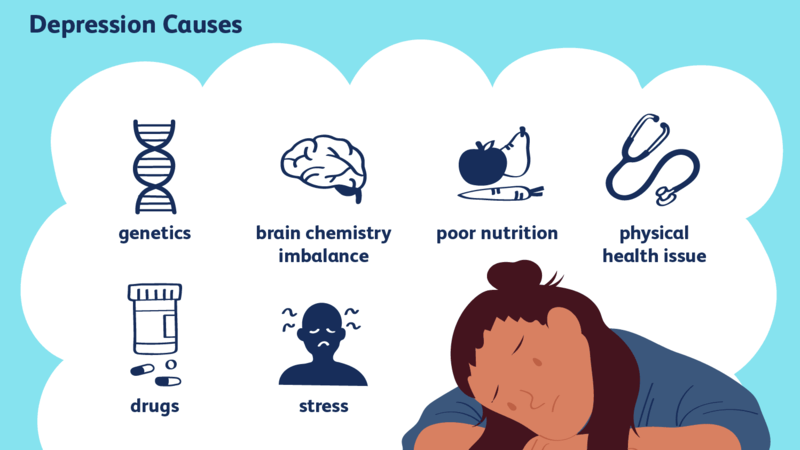
Causes:
Depression is known to run in families, suggesting that genetic factors contribute to the risk of developing this disease. However, research into the genetics of depression is in its early stages, and very little is known for certain about the genetic basis of the disease. Studies suggest that variations in many genes, each with a small effect, combine to increase the risk of developing depression.
Determining the genetic risk factors for depression is challenging for several reasons. It is possible that what is currently considered to be a single disease called "depression" is actually multiple disorders with similar signs and symptoms; these disorders could have different genetic risk factors. The genetic variations related to depression may also be somewhat different between men and women. Researchers suspect that studies with many more people will be required to pinpoint the genetic variations that influence the risk of depression.
The genes thought to be associated with depression have diverse functions in the brain. Some of these genes may control the production (synthesis), transport, and activity of chemicals called neurotransmitters, which relay chemical signals that allow nerve cells (neurons) to communicate with one another. Other genes that may influence the risk of depression are involved in the growth, maturation, and maintenance of neurons, as well as the ability of the connections between neurons (synapses) to change and adapt over time in response to experience, a characteristic known as synaptic plasticity.
Nongenetic (environmental) factors also play critical roles in a person's risk of developing depression. The disorder can be triggered by substance abuse, certain medications, or stressful life events (such as divorce or the death of a loved one). Other risk factors include difficulties in relationships or social isolation, unemployment, financial problems, and childhood abuse or neglect. Some physical illnesses, such as cancer, thyroid disease, and chronic pain, are also associated with an increased risk of developing depression. It is likely that environmental conditions interact with genetic factors to determine the overall risk of developing this disease.
Inheritance Pattern:
Depression does not have a clear pattern of inheritance in families. People who have a first-degree relative (for example, a parent or sibling) with depression appear to have a two to three times greater risk of developing the condition than the general public.
URL: https://ghr.nlm.nih.gov/condition/depression#genes
Courtesy of Neville C. Bardoliwalla OBE