Proton Therapy Recognised in Major National Rare Cancer Report

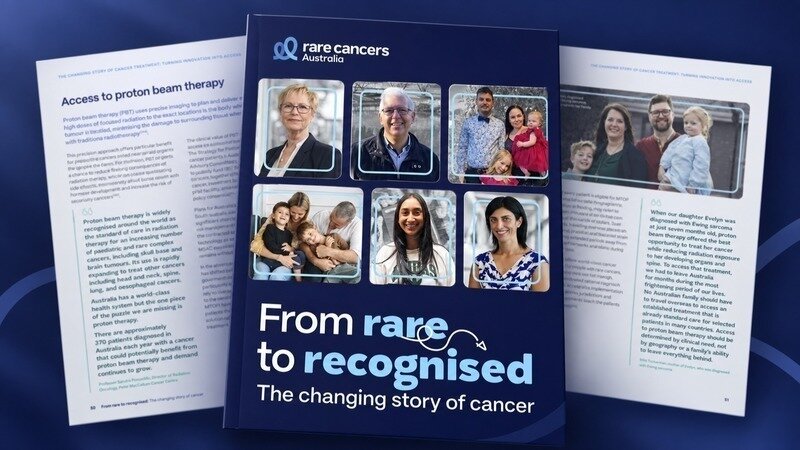
On Tuesday night, Rare Cancers Australia released its 2026 policy report, From rare to recognised: The changing story of cancer.
I was honoured to be at the policy report launch in Canberra, alongside a number of Members of Parliament, people living with rare cancers, their families and carers, industry representatives, advocates, researchers and healthcare professionals. It was a powerful reminder of what can happen when lived experience, clinical expertise and policy come together in the same room.
I was also incredibly proud to see proton beam therapy given a dedicated section in this important national report.
The report clearly explains why proton therapy matters, particularly for children and people with rare and complex cancers where tumours are located close to the brain, spine or other vital organs. It notes that approximately 370 Australians each year could potentially benefit from proton beam therapy, with demand continuing to grow.
It also acknowledges the reality we have been advocating about for so long: despite broad clinical and policy consensus supporting proton therapy, Australia still does not have a domestic service, and sending patients overseas through the Medical Treatment Overseas Program is a temporary solution, not a substitute for Australian treatment capacity.
I am incredibly grateful to Rare Cancers Australia for giving this issue such prominence and for continuing to raise awareness of the inequities faced by people diagnosed with rare cancers.
But I also really encourage everyone who has supported this petition to read the whole report.
Proton therapy is only one part of it.
The report looks at diagnosis, genomics, access to new treatments and clinical trials, survivorship, long-term effects of treatment, financial impacts, supportive care and the very different experience of navigating a health system when your cancer does not fit neatly into an established pathway.
It is also a powerful reminder that rare cancers collectively affect a significant number of Australian families. More than 205,000 Australians are living with a rare or less common cancer diagnosed within the previous decade.
Most people understandably do not spend much time thinking about rare cancer until it touches their family.
I hope you will take some time to read this report, because one day this information may matter enormously to you, a friend, a colleague or someone you love.
Read the full report here: From rare to recognised: the changing story of cancer
Thank you to Rare Cancers Australia for continuing to turn rare into recognised, and for ensuring these conversations are being heard by decision-makers across Australia.
Recognition matters, because without recognition, there can be no action.