Camels versus Goods: STOP discrimination - Amend PCA Act, 1960.

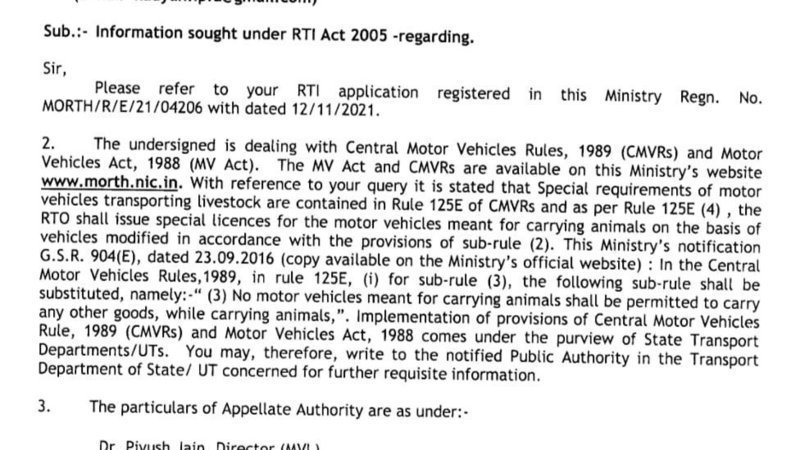
Naresh Kadyan, Convener of Animal Welfare Party, retired Commissioner of Bharat Scouts and Guides, Haryana, Chief National Commissioner of the Scouts and Guides for Animal and Birds www.scoutingindia.in along with OIPA: Indian People for Animals, Member of the IUCN Commission for Education and Communication, observed discrimination among the definition of animal, because:
Section 2 of the Biological Diversity Act, 2002:
(c) Biological resources, means plants, animals and micro-organisms or parts thereof, their genetic material and by-products (excluding value added products) with actual or potential use or value, but does not include human genetic material.
(f) Commercial utilization, means end uses of biological resources for commercial utilisation such as drugs, industrial enzymes, food flavours, fragrance, cosmetics, emulsifiers, oleoresins, colours, extracts and genes used for improving crops and livestock through genetic intervention, but does not include conventional breeding or traditional practices in use in any agriculture, horticulture, poultry, dairy farming, animal husbandry or bee keeping.
Prevention and Control of Infectious and Contagious Diseases in Animals Act, 2009:
Section 2: Definitions: In this Act, unless the context otherwise requires:
(a) Animal means, (i) cattle, buffalo, sheep, goat, yak, mithun; (ii) dog, cat, pig, horse, camel, ass, mule, poultry, bees; and (iii) any other animal or bird as the Central Government may, by notification, specify.
Section 2 of the Central Goods and Services Tax Act, 2017:
(52). Goods, means every kind of movable property other than money and securities but includes actionable claim, growing crops, grass and things attached to or forming part of the land which are agreed to be severed before supply or under a contract of supply.
Insecticides Act, 1968:
Section 3 - Definitions: In this Act, unless the context otherwise requires: Animals, means animals useful to human beings and includes fish and fowl, and such kinds of wild life as the Central Government may, by notification in the Official Gazette, specify, being kinds which, in its opinions, it is desirable to protect or preserve.
Section 2 of the Motor Vehicles Act, 1988:
(13). GOODS, includes live-stock, and anything (other than equipment ordinarily used with the vehicle) carried by a vehicle except living persons, but does not include luggage or personal effects carried in a motor car or in a trailer attached to a motor car or the personal luggage of passengers travelling in the vehicle.
(14). Goods carriage, means any motor vehicle constructed or adapted for use solely for the carriage of goods, or any motor vehicle not so constructed or adapted when used for the carriage of goods.
Section 2 of the PCA Act, 1960:
(a) Animal, means any living creature other than a human being.
(c) Captive animal, means any animal (not being a domestic animal) which is in captivity or confinement, whether permanent or temporary, or which is subjected to any appliance or contrivance for the purpose of hindering or preventing its escape from captivity or confinement or which is pinioned or which is or appears to be maimed.
(d) Domestic animal, means any animal which is tamed or which has been or is being sufficiently tamed to serve some purpose for the use of man or which, although it neither has been nor is being nor is intended to be so tamed, is or has become in fact wholly or partly tamed.
Section 2 of the Wild Life (Protection) Act, 1972:
(1) Animal, includes amphibians, birds, mammals and reptiles and their young, and also includes, in the cases of birds and reptiles, their eggs.
(2) Animal article, means an article made from any captive animal or wild animal, other than vermin, and includes an article or object in which the whole or any part of such animal has been used, and ivory imported into India and an article made therefrom.
(5) Captive animal, means any animal, specified in Schedule I, Schedule II, Schedule III or Schedule IV, which is captured or kept or bred in captivity.
(18A) Livestock, means farm animals and includes buffaloes, bulls, bullocks, camels, cows, donkeys, goats, sheep, horses, mules, yaks, pigs, ducks, geese, poultry and their young but does not include any animal specified in Schedules I to V.
Extracts of some Para’s of Supreme Court order dated 7.5.2014 in SLP (C) No.11686 of 2007:
51. When we look at the rights of animals from the national and international perspective, what emerges is that every species has an inherent right to live and shall be protected by law, subject to the exception provided out of necessity. Animal has also honour and dignity which cannot be arbitrarily deprived of and its rights and privacy have to be respected and protected from unlawful attacks.
52. Universal Declaration of Animal Welfare (UDAW) is a campaign led by World Society for the Protection of Animals (WSPA) in an attempt to secure international recognition for the principles of animal welfare. UDAW has had considerable support from various countries, including India. WSPA believes that the world should look to the success of the Universal Declaration of Human Rights (UDHR) to set out what UDAW can achieve for animals. Five freedoms referred to in UDAW, which we will deal with in latter part of the judgment, find support in PCA Act and the rules framed thereunder to a great extent.
53. World Health Organization of Animal Health (OIE), of which India is a member, acts as the international reference organisation for animal health and animal welfare. OIE has been recognised as a reference organisation by the World Trade Organisation (WTO) and, in the year 2013, it has a total of 178 member countries. On animal welfare, OIE says that an animal is in good state of welfare if (as indicated by Scientific evidence) it is healthy, comfortable, well nourished, safe, able to express innate behaviour and if it is not suffering from unpleasant states such as pain, fear and distress.
FREEDOM:
54. Chapter 7.1.2 of the guidelines of OIE, recognizes five internationally recognized freedoms for animals, such as:
(i) freedom from hunger, thirst and malnutrition;
(ii) freedom from fear and distress;
(iii) freedom from physical and thermal discomfort;
(iv) freedom from pain, injury and disease; and
(v) freedom to express normal patterns of behaviour.
Food and Agricultural Organisation (FAO) in its “Legislative and Regulatory Options for Animal Welfare” indicated that these five freedoms found their place in Farm Welfare Council 2009 U.K. and is also called Brambell’s Five Freedoms. These five freedoms, as already indicated, are considered to be the fundamental principles of animal welfare and we can say that these freedoms find a place in Sections 3 and 11 of PCA Act and they are for animals like the rights guaranteed to the citizens of this country under Part III of the Constitution of India.
55. Animals are world-wide legally recognised as ‘property’ that can be possessed by humans. On deletion of Article 19(1)(f) from the Indian Constitution, right to property is more a fundamental right in India, this gives the Parliament more a leeway to pass laws protecting the rights of animals. Right to hold on to a property which includes animals also, is now only a legal right not a fundamental right. We have also to see the rights of animals in that perspective as well.
56. Rights guaranteed to the animals under Sections 3, 11, etc. are only statutory rights. The same have to be elevated to the status of fundamental rights, as has been done by few countries around the world, so as to secure their honour and dignity. Rights and freedoms guaranteed to the animals under Sections 3 and 11 have to be read along with Article 51A(g)(h) of the Constitution, which is the magna carta of animal rights.
COMPASSION:
57. Article 51A (g) states that it shall be the duty of citizens to have compassion for living creatures. In State of Gujarat v. Mirzapur Moti Kureshi Kassab Jamat and Others (2005) 8 SCC 534, this Court held that by enacting Article 51A (g) and giving it the status of a fundamental duty, one of the objects sought to be achieved by Parliament is to ensure that the spirit and message of Articles 48 and 48-A are honoured as a fundamental duty of every citizen. Article 51A(g), therefore, enjoins that it was a fundamental duty of every citizen “to have compassion for living creatures”, which means concern for suffering, sympathy, kindliness etc., which has to be read along with Sections 3, 11(1)(a) & (m), 22 etc. of PCA Act.
HUMANISM:
58. Article 51A (h) says that it shall be the duty of every citizen to develop the scientific temper, humanism and the spirit of inquiry and reform. Particular emphasis has been made to the expression “humanism” which has a number of meanings, but increasingly designates as an inclusive sensibility for our species. Humanism also means, understand benevolence, compassion, mercy etc. Citizens should, therefore, develop a spirit of compassion and humanism which is reflected in the Preamble of PCA Act as well as in Sections 3 and 11 of the Act. To look after the welfare and well-being of the animals and the duty to prevent the infliction of pain or suffering on animals highlights the principles of humanism in Article 51A (h). Both Articles 51A (g) and (h) have to be read into the PCA Act, especially into Section 3 and Section 11 of the PCA Act and be applied and enforced.
RIGHT TO LIFE:
62. Every species has a right to life and security, subject to the law of the land, which includes depriving its life, out of human necessity. Article 21 of the Constitution, while safeguarding the rights of humans, protects life and the word “life” has been given an expanded definition and any disturbance from the basic environment which includes all forms of life, including animal life, which are necessary for human life, fall within the meaning of Article 21 of the Constitution. So far as animals are concerned, in our view, “life” means something more than mere survival or existence or instrumental value for human-beings, but to lead a life with some intrinsic worth, honour and dignity. Animals’ well-being and welfare have been statutorily recognised under Sections 3 and 11 of the Act and the rights framed under the Act. Right to live in a healthy and clean atmosphere and right to get protection from human beings against inflicting unnecessary pain or suffering is a right guaranteed to the animals under Sections 3 and 11 of the PCA Act read with Article 51A(g) of the Constitution. Right to get food, shelter is also a guaranteed right under Sections 3 and 11 of the PCA Act and the Rules framed thereunder, especially when they are domesticated. Right to dignity and fair treatment is, therefore, not confined to human beings alone, but to animals as well. Right, not to be beaten, kicked, over ridder, over-loading is also a right recognized by Section 11 read with Section 3 of the PCA Act. Animals have also a right against the human beings not to be tortured and against infliction of unnecessary pain or suffering. Penalty for violation of those rights are insignificant, since laws are made by humans. Punishment prescribed in Section 11(1) is not commensurate with the gravity of the offence, hence being violated with impunity defeating the very object and purpose of the Act, hence the necessity of taking disciplinary action against those officers who fail to discharge their duties to safeguard the statutory rights of animals under the PCA Act.
With Scouting spirit ………
Naresh Kadyan,
Convener, AWP,
C- 38, Rose Apartment, sector – 14,
Prashant Vihar, Rohini,
Delhi – 110085.