“I am here and ready, Sir”

The inadequacies of the Special Immigrant Visa (SIV) process pose a threat not just to individual Afghan/Iraqi interpreters, but to the overall national security of the United States. In failing to effectively honor commitments to its allies, the United States appears to be a purely transactional partner, content to quickly discard those it no longer deems useful. This perceived lack of reliability, materialized through the failings of the SIV program, will bear negative geopolitical consequences for the US, which finds itself in a world where countries are increasingly forced to choose between the Chinese and US models of governance. In such an existence, the US cannot afford to be seen as a self-interested and unreliable partner.
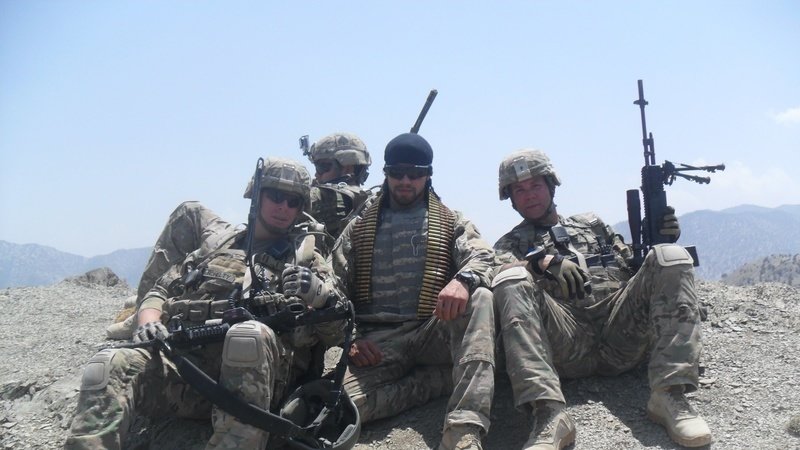
Shamshad Frotan (“JR”) served as my interpreter when I led a rifle platoon in Afghanistan in 2013. As an interpreter, JR proved to be the most valuable asset I had at my disposal as a platoon leader. JR’s commitment to the mission was evident in the fact that, on several occasions, he enthusiastically carried water and ammunition up the steep Paktia mountains while still observing his Ramadan fast. During an insider attack on our outpost, JR’s personal courage was exemplary. “I am here and ready, Sir” is the line I remember from JR as he joined my soldiers and me in clearing buildings and sorting out the chaos with nearby Afghan soldiers. Without JR’s efforts, the situation could have easily escalated out of control with potentially catastrophic results.
Despite his commendable service, JR was not afforded much consideration for his future. After our combat outpost closed, I was told the interpreters had been reassigned to another base in Paktia. However, as I soon found out from JR, they had not been reassigned, but released from employment. JR already found his personal security in a precarious situation, as his family regularly received threats about his service with coalition forces. Originally, this threat was mitigated by his continued employment and the visa sponsorship I began with him. But now, with nowhere to go and no one to rely on, JR was left to his own devices.
After a few communications with the State Department regarding the status of JR’s visa, I soon realized I required greater support to effectively expedite the approval. Shortly thereafter, I contacted the office of my then Congressman, Chris Murphy from Connecticut, and explained the situation. Much to their credit, Congressman Murphy’s office dedicated significant resources to seeing the approval through. While the process took months, and often found JR in dangerous situations, it ultimately proved successful in that he was able to safely immigrate to the US in late 2014.
While the effort was a success, it was entirely unnecessary. That both JR and I consider him to be lucky, and that it required a Congressman’s intervention, illustrates the grave inefficiencies of the SIV process. Unless the process is improved, its shortcomings will continue to serve as a propaganda victory for enemies of the United States.
- Jim Gordon