
A Common-Sense Code Update Would Boost Gresham’s Food Resilience
The Issue
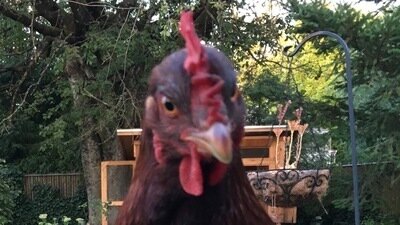
When grocery bills rise and economic uncertainty looms, community resilience begins right in our own backyards. For many Gresham families, urban agriculture—from raised-bed vegetable gardens to small backyard hen flocks—provides an affordable, sustainable way to put fresh, healthy food on the dinner table.
Yet, Gresham’s current municipal regulations are quietly stifling these modest efforts. Under Gresham Revised Code Article 7.17, residents are restricted to keeping no more than three adult hens, and those birds must remain locked inside an enclosed coop or run 24 hours a day.
It is time for Gresham to modernize its urban agriculture rules and align them with neighboring communities across the Portland metropolitan area.
A growing coalition of local residents is petitioning the Gresham City Council to update Article 7.17 with two sensible adjustments: increase the basic flock limit from three to four hens (and up to six on lots measuring 10,000 square feet or larger), and allow hens to free-range within a securely fenced rear yard during daylight hours.
This is not a radical experiment; it is a standard policy that has worked successfully just across our city borders for years. Jurisdictions like Portland and Beaverton allow four to six hens and daytime yard access without municipal headaches or a surge in code enforcement complaints.
These minor adjustments make a significant difference for local families and flock health:
- Animal Welfare & Social Dynamics:
Chickens are social flock animals. When one bird in a three-hen flock dies of natural causes, the remaining pair often suffers from severe social stress. Establishing a baseline of four hens ensures a far more stable flock hierarchy. - Healthier Yards & Natural Pest Control:
Continuous confinement in a coop run causes stress and behavioral issues. Allowing hens to forage in an enclosed back yard lets them engage in natural behaviors like dust bathing and hunting down ticks, grubs, and stink bugs. In return, hens provide organic pest control, rich soil compost, and fresh eggs.
Understandably, neighbors might wonder about potential disruptions. However, this proposal maintains every strict community safeguard already on the books. Roosters remain completely prohibited. Hens must still be locked inside predator-proof coops from dusk until dawn. Existing city ordinances governing noise, odor, waste cleanup, and rodent-proof feed storage remain fully active and enforceable. Hens generate minimal noise—roughly 60 decibels, the volume of a normal human conversation—and a fenced yard prevents stray birds.
Gresham takes pride in being a practical, forward-thinking community that supports family self-reliance and sustainable living. Modernizing our backyard poultry code costs the city nothing while delivering real benefits for local households, soil health, and animal welfare.
If you support sustainable neighborhoods, local food resilience, and sensible municipal policy, we need your voice. Please join your neighbors in signing our petition and reaching out to the Mayor and City Council members to ask that this code amendment be placed on an upcoming agenda.
Let’s give Gresham families the freedom to build a more sustainable community together.

168
The Issue
When grocery bills rise and economic uncertainty looms, community resilience begins right in our own backyards. For many Gresham families, urban agriculture—from raised-bed vegetable gardens to small backyard hen flocks—provides an affordable, sustainable way to put fresh, healthy food on the dinner table.
Yet, Gresham’s current municipal regulations are quietly stifling these modest efforts. Under Gresham Revised Code Article 7.17, residents are restricted to keeping no more than three adult hens, and those birds must remain locked inside an enclosed coop or run 24 hours a day.
It is time for Gresham to modernize its urban agriculture rules and align them with neighboring communities across the Portland metropolitan area.
A growing coalition of local residents is petitioning the Gresham City Council to update Article 7.17 with two sensible adjustments: increase the basic flock limit from three to four hens (and up to six on lots measuring 10,000 square feet or larger), and allow hens to free-range within a securely fenced rear yard during daylight hours.
This is not a radical experiment; it is a standard policy that has worked successfully just across our city borders for years. Jurisdictions like Portland and Beaverton allow four to six hens and daytime yard access without municipal headaches or a surge in code enforcement complaints.
These minor adjustments make a significant difference for local families and flock health:
- Animal Welfare & Social Dynamics:
Chickens are social flock animals. When one bird in a three-hen flock dies of natural causes, the remaining pair often suffers from severe social stress. Establishing a baseline of four hens ensures a far more stable flock hierarchy. - Healthier Yards & Natural Pest Control:
Continuous confinement in a coop run causes stress and behavioral issues. Allowing hens to forage in an enclosed back yard lets them engage in natural behaviors like dust bathing and hunting down ticks, grubs, and stink bugs. In return, hens provide organic pest control, rich soil compost, and fresh eggs.
Understandably, neighbors might wonder about potential disruptions. However, this proposal maintains every strict community safeguard already on the books. Roosters remain completely prohibited. Hens must still be locked inside predator-proof coops from dusk until dawn. Existing city ordinances governing noise, odor, waste cleanup, and rodent-proof feed storage remain fully active and enforceable. Hens generate minimal noise—roughly 60 decibels, the volume of a normal human conversation—and a fenced yard prevents stray birds.
Gresham takes pride in being a practical, forward-thinking community that supports family self-reliance and sustainable living. Modernizing our backyard poultry code costs the city nothing while delivering real benefits for local households, soil health, and animal welfare.
If you support sustainable neighborhoods, local food resilience, and sensible municipal policy, we need your voice. Please join your neighbors in signing our petition and reaching out to the Mayor and City Council members to ask that this code amendment be placed on an upcoming agenda.
Let’s give Gresham families the freedom to build a more sustainable community together.
The Decision Makers



Petition Updates
Share this petition
Petition created on September 4, 2026