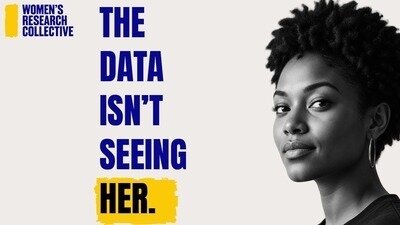

9 Years Behind: Fund Women's Health Research Now
Das Anliegen
On average, women spend 25% more of their lives in poor health than men losing roughly nine years to conditions that are underdiagnosed, under-treated, and under-researched.
For decades, medical research has been designed largely around male bodies, male symptoms, and male patients, while less than 1% of global research funding for major diseases goes toward conditions that affect only women, such as endometriosis, PMS, or menopause.
This isn't a niche issue.
Half of humanity, and their loved ones, are affected: mothers, daughters, sisters, partners, colleagues. And it isn't only a health issue: closing the gender health gap could add more than $1 trillion a year to the global economy by 2040.
Meanwhile, only 31.4% of researchers worldwide are women, meaning the people best positioned to ask the right questions about women's bodies are still underrepresented in the rooms where research gets funded and designed.
Some progress is happening. For example, the Gates Foundation recently committed $2.5 billion to women's health research, after decades in which barely 1% of health research funding reached women-specific conditions. But voluntary commitments from a handful of funders are not enough to close a gap this size.
We, the Women's Research Collective, call on governments, universities, and research funders worldwide to commit to one simple standard: no disease that affects primarily women should receive less research funding, relative to the burden it causes, than a comparable disease that affects primarily men.
That's it. Not a quota. Not a slogan. But a baseline of fairness that medical research has never actually had to meet until now.
This isn't a fight against anyone. Men are affected too by the health of the women in their lives, and by an economy that's leaving a trillion dollars on the table every year. We welcome every ally who believes research should follow evidence, not habit.
Sign this petition to tell governments, universities, and research funders: measure the gap, publish it, and close it. Nine years is too many to lose to a problem we already know how to fix.

49
Das Anliegen
On average, women spend 25% more of their lives in poor health than men losing roughly nine years to conditions that are underdiagnosed, under-treated, and under-researched.
For decades, medical research has been designed largely around male bodies, male symptoms, and male patients, while less than 1% of global research funding for major diseases goes toward conditions that affect only women, such as endometriosis, PMS, or menopause.
This isn't a niche issue.
Half of humanity, and their loved ones, are affected: mothers, daughters, sisters, partners, colleagues. And it isn't only a health issue: closing the gender health gap could add more than $1 trillion a year to the global economy by 2040.
Meanwhile, only 31.4% of researchers worldwide are women, meaning the people best positioned to ask the right questions about women's bodies are still underrepresented in the rooms where research gets funded and designed.
Some progress is happening. For example, the Gates Foundation recently committed $2.5 billion to women's health research, after decades in which barely 1% of health research funding reached women-specific conditions. But voluntary commitments from a handful of funders are not enough to close a gap this size.
We, the Women's Research Collective, call on governments, universities, and research funders worldwide to commit to one simple standard: no disease that affects primarily women should receive less research funding, relative to the burden it causes, than a comparable disease that affects primarily men.
That's it. Not a quota. Not a slogan. But a baseline of fairness that medical research has never actually had to meet until now.
This isn't a fight against anyone. Men are affected too by the health of the women in their lives, and by an economy that's leaving a trillion dollars on the table every year. We welcome every ally who believes research should follow evidence, not habit.
Sign this petition to tell governments, universities, and research funders: measure the gap, publish it, and close it. Nine years is too many to lose to a problem we already know how to fix.
Updates zur Petition
Diese Petition teilen
Petition am 6. September 2026 erstellt