あなたの個人情報が漏れても、企業への制裁金は0円。個人情報保護法の改正を求めます
The issue
Scroll to the bottom for English version.
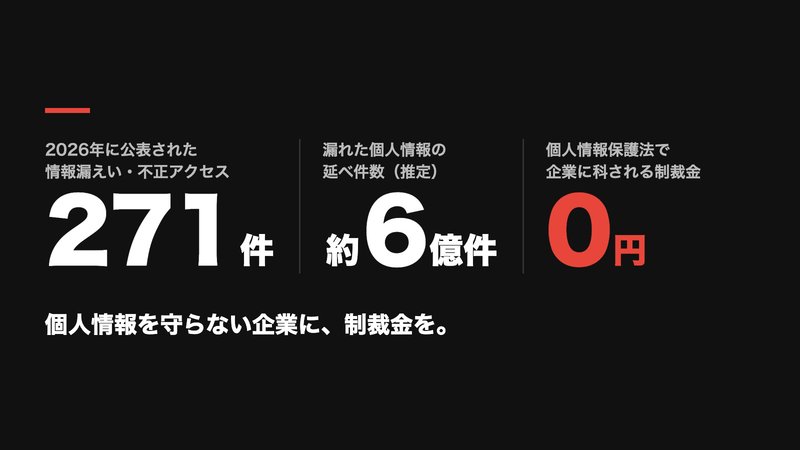
2026年に日本の企業や団体が公表した個人情報の漏えいや不正アクセスは、私が確認できただけで271件あります。各社が公表した件数を合計すると、推定で延べ約6億件にのぼります。日本の人口の5倍近くで、同じ人の情報がいくつもの会社から漏れていることになります。あなたの情報も、このどれかに含まれているかもしれません。
一部の企業だけの問題ではありません。日経平均株価を構成する225社のうち217社(96.4%)で、過去3年間に、社員のIDやパスワードなどがダークウェブ(盗まれた情報が売買されるサイト)などに流出していたことが確認されています(ジョーシス調べ)。
現在の個人情報保護法では、このうち1社にも制裁金は科されません。
何が起きたか
楽天証券は11月、最大約447万口座分の氏名、住所、電話番号、勤務先、年収、金融資産などが漏えいしたおそれがあると公表しました。誰がどこに住み、どこに勤め、いくら持っているかが分かる情報です。詐欺グループの手に渡れば、資産のある人を選び、本人しか知らないはずの情報を使った電話やメールでだますことができます。
この情報が置かれていたのは、本番ではなくテスト用のシステムでした。テスト用のシステムに本物の顧客情報を置かないのは、開発の基本です。しかも、漏えいのおそれに気づくまでに5日かかりました。
KDDIは、約761万人分のメールのパスワードを、暗号化などの保護をしないまま保管していて、それが流出しました。パスワードは、盗まれても読めない形に変換して保管するのが基本です。そのまま保管されていたため、盗んだ側は利用者のメールを読める状態でした。メールには、銀行や通販サイトのパスワードを再設定するための通知も届きます。
無印良品(良品計画)は、2021年に使わなくなったMUJI Cardのカード番号約109万件を、番号の一部を伏せることも暗号化することもせずに5年間保管し続け、不正アクセスを受けました。カード番号が他人に渡れば、勝手に買い物に使われるおそれがあります。使わなくなった時点で消していれば、その心配はありませんでした。
どれも、基本的な対策をしていれば被害を小さくできた事例です。エンジニアとして私が勤めてきた企業では、こうしたミスはあり得ませんでした。
一度漏れた情報は取り戻せません。パスワードは変えられても、住所や生年月日、勤務先は変えられません。
そもそも、集めすぎています
日本の企業は、サービスに必要のない個人情報まで集めます。メールを送るだけの会員登録でも、氏名、生年月日、性別、住所、電話番号の入力を求められます。楽天証券と無印良品の漏えいには、すでに退会した人の情報も含まれていました。
企業は個人情報をタダで手に入るものだと思っているようです。しかし実際は、私たちから預かっている借り物で、企業にとっては「負債」です。預かった以上、消去するまで守り続ける責任があります。企業がそう考えているようには見えません。
集めた個人情報を売ることも、日本では認められています。国に届け出た業者は、本人が止めるよう求めないかぎり、同意がなくても個人情報を第三者に売ることができます。届け出ている業者は261あります。個人情報保護委員会の調査では、2025年に実際に売っていた129業者のうち33業者が、売る相手が誰なのかを確認していませんでした。買い手が詐欺グループでも、気づけないということです。売るのをやめさせるには、本人が業者を1社ずつ探して頼むしかありません。
集めた情報が多いほど、漏れたときの被害は大きくなります。持っていない情報は漏れません。
EUでは、必要な情報しか集めてはならないと法律で決まっています。日本の個人情報保護法には、この決まりがありません。
なぜ制裁金がないのか
個人情報保護法は、企業に個人データの安全管理を義務づけています。しかし、この義務を怠った企業に個人情報保護委員会ができるのは、勧告と命令だけです。制裁金を科す権限はありません。
2026年7月の改正で、違反した企業に国がお金を納めさせる「課徴金」の制度ができました。しかし施行は遅くとも2028年7月で、まだ始まっていません。始まっても、対象は不適正な利用や同意のない第三者提供など4種類に限られ、安全管理の不備は入っていません。金額も「違反で得た利益」が基準なので、漏えいでは0円になります。
EUでは、同じ義務に違反した企業に、最大で2000万ユーロ(約35億円)か、全世界の年間売上高の4%の、どちらか高いほうの制裁金が科されます。たとえば年間売上高が1兆円の企業なら、上限は400億円です。
政府は11月6日、相次ぐ漏えいを受けて約100億円の緊急対策を決めました。被害のおそれがある企業に国が自ら連絡し、専門家を派遣する仕組みも含まれています。費用を負担するのは納税者です。漏えいを起こした企業への罰則は、ここにも入っていません。
過失で漏えいを起こした企業の費用は、納税者ではなくその企業が負担すべきだと考えます。対策を怠っても制裁金がないかぎり、セキュリティへの投資は後回しにされ続けます。
求めること
個人情報保護委員会と国会に、次の3点を求めます。
1. 安全管理を怠った企業を、課徴金の対象にすること
2. 課徴金の額を、違反で得た利益ではなく、売上高を基準に決めること
3. サービスに必要のない個人情報を集めることを禁じること
271件の一覧と出典は、こちらの記事にまとめています。
https://khirota.com/writing/japan-software-cybersecurity-ja
この3点に賛同いただける方は、署名をお願いします。
------------------------------------------------------------------------------
Japanese companies ask for personal information they don't need, and then leak it left and right. When they do, the fine is ¥0.
Do you know how many of Japan's 225 leading listed companies have had employee IDs and passwords turn up on the dark web in the past 3 years?
96.4% (according to Josys).
In 2026 alone, I counted 271 announced leaks and break-ins. Added up, that's an estimated 600 million records, close to 5 times Japan's population. Some of them:
- Kyushu Electric (Jun 8): up to 13.54 million customer records on a backup drive that went missing
- KDDI (Jun 23): 12.2 million email addresses, 7.6 million of them with passwords
- Aflac (Jun 30): PII of 4.38 million customers, ~230k of them with bank account details
- Gyazo (Sep 16): 23.6 million user records
- Times Car (Sep 28): 6.6 million accounts, including driver's licence images
- Yakiniku King (Oct 5): 10.8 million app members
- Sagawa Express (Oct 23): up to 53.2 million sender and recipient records
- Muji (Oct 30): up to 27.3 million members, plus 1.09 million full card numbers
- Nitori (Nov 9): up to 37.6 million records
- Rakuten Securities (Nov 17): up to 4.47 million accounts, with addresses, employers, incomes and assets
Most of the incidents whose cause has been disclosed come down to basic failures.
- KDDI stored passwords without encryption or any other protection.
- Rakuten Securities kept real customer data in a test environment, and took 5 days to notice.
- Muji kept card numbers for 5 years after it stopped using them, unmasked and unencrypted.
- Kyushu Electric kept its unencrypted backup drive in an unlocked cabinet.
- At JAL, one contractor employee could both delete data and rewrite the logs that record it.
At every tech company I have worked at, any of these would have been unthinkable.
Not one of these companies will be fined. Here is why.
- Japan's privacy law requires companies to protect personal data. If they don't, the regulator can only issue recommendations and orders. It has no power to fine them.
- A "surcharge" was added in July 2026. It starts in July 2028 at the latest, covers only 4 kinds of misuse, and leaves out poor security.
- Its amount is whatever the company gained from the violation. For a leak, that's ¥0.
- Nothing bans collecting data a service doesn't need. Registered businesses can even sell personal data without consent. 261 are registered, and 33 of the 129 that sold data in 2025 didn't check who the buyer was (Personal Information Protection Commission survey).
In the EU, the same failure can cost a company up to €20 million (about ¥3.5 billion) or 4% of its worldwide annual revenue, whichever is higher.
Japan's answer so far is an emergency package of about ¥10 billion, announced on Nov 6. Taxpayers pay for it. It has no penalty for the companies that leaked.
Companies treat personal data as free. It isn't. It's on loan from us, and they owe us its protection until the day they delete it. A company that leaks through negligence should pay for it, not taxpayers.
We ask the Personal Information Protection Commission and the Diet for three things:
1. Make companies that neglect security subject to the surcharge
2. Base the surcharge on revenue, not on what the company gained
3. Ban the collection of personal data a service does not need
The full list of 271 incidents, with sources:
https://khirota.com/writing/japan-software-cybersecurity
If you agree, please sign.

16
The issue
Scroll to the bottom for English version.
2026年に日本の企業や団体が公表した個人情報の漏えいや不正アクセスは、私が確認できただけで271件あります。各社が公表した件数を合計すると、推定で延べ約6億件にのぼります。日本の人口の5倍近くで、同じ人の情報がいくつもの会社から漏れていることになります。あなたの情報も、このどれかに含まれているかもしれません。
一部の企業だけの問題ではありません。日経平均株価を構成する225社のうち217社(96.4%)で、過去3年間に、社員のIDやパスワードなどがダークウェブ(盗まれた情報が売買されるサイト)などに流出していたことが確認されています(ジョーシス調べ)。
現在の個人情報保護法では、このうち1社にも制裁金は科されません。
何が起きたか
楽天証券は11月、最大約447万口座分の氏名、住所、電話番号、勤務先、年収、金融資産などが漏えいしたおそれがあると公表しました。誰がどこに住み、どこに勤め、いくら持っているかが分かる情報です。詐欺グループの手に渡れば、資産のある人を選び、本人しか知らないはずの情報を使った電話やメールでだますことができます。
この情報が置かれていたのは、本番ではなくテスト用のシステムでした。テスト用のシステムに本物の顧客情報を置かないのは、開発の基本です。しかも、漏えいのおそれに気づくまでに5日かかりました。
KDDIは、約761万人分のメールのパスワードを、暗号化などの保護をしないまま保管していて、それが流出しました。パスワードは、盗まれても読めない形に変換して保管するのが基本です。そのまま保管されていたため、盗んだ側は利用者のメールを読める状態でした。メールには、銀行や通販サイトのパスワードを再設定するための通知も届きます。
無印良品(良品計画)は、2021年に使わなくなったMUJI Cardのカード番号約109万件を、番号の一部を伏せることも暗号化することもせずに5年間保管し続け、不正アクセスを受けました。カード番号が他人に渡れば、勝手に買い物に使われるおそれがあります。使わなくなった時点で消していれば、その心配はありませんでした。
どれも、基本的な対策をしていれば被害を小さくできた事例です。エンジニアとして私が勤めてきた企業では、こうしたミスはあり得ませんでした。
一度漏れた情報は取り戻せません。パスワードは変えられても、住所や生年月日、勤務先は変えられません。
そもそも、集めすぎています
日本の企業は、サービスに必要のない個人情報まで集めます。メールを送るだけの会員登録でも、氏名、生年月日、性別、住所、電話番号の入力を求められます。楽天証券と無印良品の漏えいには、すでに退会した人の情報も含まれていました。
企業は個人情報をタダで手に入るものだと思っているようです。しかし実際は、私たちから預かっている借り物で、企業にとっては「負債」です。預かった以上、消去するまで守り続ける責任があります。企業がそう考えているようには見えません。
集めた個人情報を売ることも、日本では認められています。国に届け出た業者は、本人が止めるよう求めないかぎり、同意がなくても個人情報を第三者に売ることができます。届け出ている業者は261あります。個人情報保護委員会の調査では、2025年に実際に売っていた129業者のうち33業者が、売る相手が誰なのかを確認していませんでした。買い手が詐欺グループでも、気づけないということです。売るのをやめさせるには、本人が業者を1社ずつ探して頼むしかありません。
集めた情報が多いほど、漏れたときの被害は大きくなります。持っていない情報は漏れません。
EUでは、必要な情報しか集めてはならないと法律で決まっています。日本の個人情報保護法には、この決まりがありません。
なぜ制裁金がないのか
個人情報保護法は、企業に個人データの安全管理を義務づけています。しかし、この義務を怠った企業に個人情報保護委員会ができるのは、勧告と命令だけです。制裁金を科す権限はありません。
2026年7月の改正で、違反した企業に国がお金を納めさせる「課徴金」の制度ができました。しかし施行は遅くとも2028年7月で、まだ始まっていません。始まっても、対象は不適正な利用や同意のない第三者提供など4種類に限られ、安全管理の不備は入っていません。金額も「違反で得た利益」が基準なので、漏えいでは0円になります。
EUでは、同じ義務に違反した企業に、最大で2000万ユーロ(約35億円)か、全世界の年間売上高の4%の、どちらか高いほうの制裁金が科されます。たとえば年間売上高が1兆円の企業なら、上限は400億円です。
政府は11月6日、相次ぐ漏えいを受けて約100億円の緊急対策を決めました。被害のおそれがある企業に国が自ら連絡し、専門家を派遣する仕組みも含まれています。費用を負担するのは納税者です。漏えいを起こした企業への罰則は、ここにも入っていません。
過失で漏えいを起こした企業の費用は、納税者ではなくその企業が負担すべきだと考えます。対策を怠っても制裁金がないかぎり、セキュリティへの投資は後回しにされ続けます。
求めること
個人情報保護委員会と国会に、次の3点を求めます。
1. 安全管理を怠った企業を、課徴金の対象にすること
2. 課徴金の額を、違反で得た利益ではなく、売上高を基準に決めること
3. サービスに必要のない個人情報を集めることを禁じること
271件の一覧と出典は、こちらの記事にまとめています。
https://khirota.com/writing/japan-software-cybersecurity-ja
この3点に賛同いただける方は、署名をお願いします。
------------------------------------------------------------------------------
Japanese companies ask for personal information they don't need, and then leak it left and right. When they do, the fine is ¥0.
Do you know how many of Japan's 225 leading listed companies have had employee IDs and passwords turn up on the dark web in the past 3 years?
96.4% (according to Josys).
In 2026 alone, I counted 271 announced leaks and break-ins. Added up, that's an estimated 600 million records, close to 5 times Japan's population. Some of them:
- Kyushu Electric (Jun 8): up to 13.54 million customer records on a backup drive that went missing
- KDDI (Jun 23): 12.2 million email addresses, 7.6 million of them with passwords
- Aflac (Jun 30): PII of 4.38 million customers, ~230k of them with bank account details
- Gyazo (Sep 16): 23.6 million user records
- Times Car (Sep 28): 6.6 million accounts, including driver's licence images
- Yakiniku King (Oct 5): 10.8 million app members
- Sagawa Express (Oct 23): up to 53.2 million sender and recipient records
- Muji (Oct 30): up to 27.3 million members, plus 1.09 million full card numbers
- Nitori (Nov 9): up to 37.6 million records
- Rakuten Securities (Nov 17): up to 4.47 million accounts, with addresses, employers, incomes and assets
Most of the incidents whose cause has been disclosed come down to basic failures.
- KDDI stored passwords without encryption or any other protection.
- Rakuten Securities kept real customer data in a test environment, and took 5 days to notice.
- Muji kept card numbers for 5 years after it stopped using them, unmasked and unencrypted.
- Kyushu Electric kept its unencrypted backup drive in an unlocked cabinet.
- At JAL, one contractor employee could both delete data and rewrite the logs that record it.
At every tech company I have worked at, any of these would have been unthinkable.
Not one of these companies will be fined. Here is why.
- Japan's privacy law requires companies to protect personal data. If they don't, the regulator can only issue recommendations and orders. It has no power to fine them.
- A "surcharge" was added in July 2026. It starts in July 2028 at the latest, covers only 4 kinds of misuse, and leaves out poor security.
- Its amount is whatever the company gained from the violation. For a leak, that's ¥0.
- Nothing bans collecting data a service doesn't need. Registered businesses can even sell personal data without consent. 261 are registered, and 33 of the 129 that sold data in 2025 didn't check who the buyer was (Personal Information Protection Commission survey).
In the EU, the same failure can cost a company up to €20 million (about ¥3.5 billion) or 4% of its worldwide annual revenue, whichever is higher.
Japan's answer so far is an emergency package of about ¥10 billion, announced on Nov 6. Taxpayers pay for it. It has no penalty for the companies that leaked.
Companies treat personal data as free. It isn't. It's on loan from us, and they owe us its protection until the day they delete it. A company that leaks through negligence should pay for it, not taxpayers.
We ask the Personal Information Protection Commission and the Diet for three things:
1. Make companies that neglect security subject to the surcharge
2. Base the surcharge on revenue, not on what the company gained
3. Ban the collection of personal data a service does not need
The full list of 271 incidents, with sources:
https://khirota.com/writing/japan-software-cybersecurity
If you agree, please sign.
The Decision Makers
Petition Updates
Share this petition
Petition created on 18 November 2026