Urge LBB to change classification of Foxes from Pests to Wild Mammals in line with DEFRA
The Issue
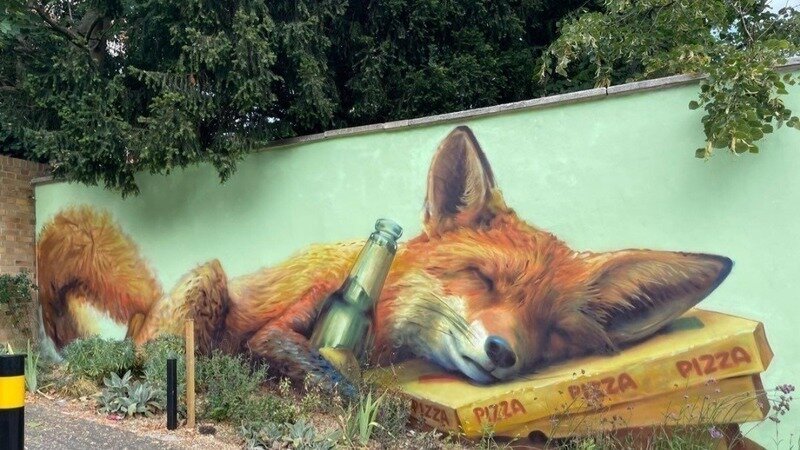
Despite the endearing Fox Mural adorning the Penge gate at Crystal Palace Park, Bromley Council are still classifying Foxes as "Common Pests,"
Bromley has the largest fox population per square km in London, but the Council's own Environmental Health page currently lists Foxes under "common pests" alongside rats and cockroaches.
This petition will be presented to the Environment Committee; requesting LBB to change their erroneous classification.
LBB's classification is factually incorrect. Under UK law, foxes are protected under the Wildlife and Countryside Act 1981, Protection of Animals Act, and Wild Mammals Protection Act 1996. They can not legally be listed as a pest to be exterminated. Government guidance (DEFRA) classes them as wild mammals, not pests.
Indeed, foxes are a native species and classified as alpha predators of pest species. Bromley council need to acknowledge that Foxes provide an ecosystem service, thus controlling rodent populations.
Classifying Foxes as a common pest - misleads residents into thinking the Council should remove them and emboldens Fox unfriendly residents to take eradication measures into their own hands - by way of poisoning or self locking snaring. Both are illegal in England.
It creates more problems for the Council
as the wording promotes residents to believe Foxes are a Council pest-control obligation. As such, hundreds of residents a year call Environmental Health for assistance. LBB patently states it does not offer a fox control service - so labelling Foxes as a pest encourages calls the council do not have the capacity to handle.
London councils that changed the wording i.e. Hackney, Islington, Lewisham - saw a drop in fox complaints because they replaced it with prevention advice.
One urban Fox eats ∼5,000 rats, mice, and cockchafers a year, plus carrion. Encouraging foxes as natural rodent controllers is in line with LBB's pesticide reduction policy.
Moreover, the common pest label, encourages illegal activity. Notably, within the borough of Bromley, there have been prosecutions for fox poisoning and illegal snares. Our leader has tragically witnessed Foxes falling victim to both, and it is truly distressing and heartbreaking.
Better Bromley are also aware from the judiciary -that LBB labelling Foxes as pests has been cited in defence cases "I thought I was allowed". Changing the language helps the police and the judiciary to enforce and apply animal cruelty laws.
Bromley's Biodiversity Plan 2021-2026 commits to "promoting coexistence with urban mammals" and protecting green corridors. Listing foxes alongside rats - directly contradicts that undertaking.
Petition
We, the undersigned, call on Bromley Council to remove Red Foxes (Vulpes vulpes) from the 'Common Pests' section of its website and public communications, and reclassify them as 'Wild Mammals' or 'Urban Wildlife'.
We request the Council :
1. To move foxes to the Wildlife / Biodiversity advice pages
2. Replace pest-control language with humane deterrence advice already used by the RSPCA, BPCA, Fox Project, and London Wildlife Trust. Clarify that Bromley does not provide fox culling, in line with DEFRA guidance.
This is simply a respectful and magnanimous call to urge LBB to employ accurate, legal, and ecologically sound communication, commensurate to DEFRA's classification. This will reduce unnecessary service requests and support Bromley's own Biodiversity Strategy. Indeed, Bromley publishes a Mammal Species Action table as part of its Biodiversity Plan. For Foxes it says: Foxes (vulpes vulpes) - Ongoing action to enhance existing habitats: Conserve the existing habitats. Treat the species as part of the ecosystem". The Local Plan - Policy 70 states under Wildlife Features: "Where development cannot avoid damage, the Council will seek mitigation and creation, enhancement, and management of wildlife habitats... to contribute towards the Bromley Biodiversity Action Plan".
The Bromley Biodiversity Plan itself is described as "a guidance document for anyone who has an interest in, or an impact upon the borough's biodiversity... We can all contribute to protecting and enhancing biodiversity in Bromley, first by recognising the wealth of habitats and species we have".
Bromley also states it manages 41 woodland sites covering 553 hectares and the borough contains one third of London's ancient woodlands; defining biodiversity as "the diversity of life on Earth; incorporating mammals, birds, reptiles... and the complex relationships between different species".
A resident - reading the Biodiversity Plan, who then happens to glean the classification on the Environmental Health section - would undoubtedly stumble upon a glaring contradiction - as Bromley Council's Biodiversity Plan says for foxes: "Treat the species as part of the ecosystem" and "Conserve the existing habitats". However, its Environmental Health page states foxes are "Common Pests" alongside rats. So we as a resident led organisation, need to ask LBB to make up their mind - as both cannot be true.
It could be the case that LBB are not cognisant they are contradicting their own adopted Local Plan Policy 70.
Equally concerning is the fact that the policy is used to decide planning applications. As such, if LBB consider foxes as pests in one department and protected ecosystem members in another, it could well be deemed legally incoherent and may render green belt planning rejections open to legal challenges based on the contradiction. The Mayor of London has been endowed with emergency powers to overrule planning rejections on green belt land. LBB needs to fortify their biodiversity argument not contradict it.

Victory
The Issue
Despite the endearing Fox Mural adorning the Penge gate at Crystal Palace Park, Bromley Council are still classifying Foxes as "Common Pests,"
Bromley has the largest fox population per square km in London, but the Council's own Environmental Health page currently lists Foxes under "common pests" alongside rats and cockroaches.
This petition will be presented to the Environment Committee; requesting LBB to change their erroneous classification.
LBB's classification is factually incorrect. Under UK law, foxes are protected under the Wildlife and Countryside Act 1981, Protection of Animals Act, and Wild Mammals Protection Act 1996. They can not legally be listed as a pest to be exterminated. Government guidance (DEFRA) classes them as wild mammals, not pests.
Indeed, foxes are a native species and classified as alpha predators of pest species. Bromley council need to acknowledge that Foxes provide an ecosystem service, thus controlling rodent populations.
Classifying Foxes as a common pest - misleads residents into thinking the Council should remove them and emboldens Fox unfriendly residents to take eradication measures into their own hands - by way of poisoning or self locking snaring. Both are illegal in England.
It creates more problems for the Council
as the wording promotes residents to believe Foxes are a Council pest-control obligation. As such, hundreds of residents a year call Environmental Health for assistance. LBB patently states it does not offer a fox control service - so labelling Foxes as a pest encourages calls the council do not have the capacity to handle.
London councils that changed the wording i.e. Hackney, Islington, Lewisham - saw a drop in fox complaints because they replaced it with prevention advice.
One urban Fox eats ∼5,000 rats, mice, and cockchafers a year, plus carrion. Encouraging foxes as natural rodent controllers is in line with LBB's pesticide reduction policy.
Moreover, the common pest label, encourages illegal activity. Notably, within the borough of Bromley, there have been prosecutions for fox poisoning and illegal snares. Our leader has tragically witnessed Foxes falling victim to both, and it is truly distressing and heartbreaking.
Better Bromley are also aware from the judiciary -that LBB labelling Foxes as pests has been cited in defence cases "I thought I was allowed". Changing the language helps the police and the judiciary to enforce and apply animal cruelty laws.
Bromley's Biodiversity Plan 2021-2026 commits to "promoting coexistence with urban mammals" and protecting green corridors. Listing foxes alongside rats - directly contradicts that undertaking.
Petition
We, the undersigned, call on Bromley Council to remove Red Foxes (Vulpes vulpes) from the 'Common Pests' section of its website and public communications, and reclassify them as 'Wild Mammals' or 'Urban Wildlife'.
We request the Council :
1. To move foxes to the Wildlife / Biodiversity advice pages
2. Replace pest-control language with humane deterrence advice already used by the RSPCA, BPCA, Fox Project, and London Wildlife Trust. Clarify that Bromley does not provide fox culling, in line with DEFRA guidance.
This is simply a respectful and magnanimous call to urge LBB to employ accurate, legal, and ecologically sound communication, commensurate to DEFRA's classification. This will reduce unnecessary service requests and support Bromley's own Biodiversity Strategy. Indeed, Bromley publishes a Mammal Species Action table as part of its Biodiversity Plan. For Foxes it says: Foxes (vulpes vulpes) - Ongoing action to enhance existing habitats: Conserve the existing habitats. Treat the species as part of the ecosystem". The Local Plan - Policy 70 states under Wildlife Features: "Where development cannot avoid damage, the Council will seek mitigation and creation, enhancement, and management of wildlife habitats... to contribute towards the Bromley Biodiversity Action Plan".
The Bromley Biodiversity Plan itself is described as "a guidance document for anyone who has an interest in, or an impact upon the borough's biodiversity... We can all contribute to protecting and enhancing biodiversity in Bromley, first by recognising the wealth of habitats and species we have".
Bromley also states it manages 41 woodland sites covering 553 hectares and the borough contains one third of London's ancient woodlands; defining biodiversity as "the diversity of life on Earth; incorporating mammals, birds, reptiles... and the complex relationships between different species".
A resident - reading the Biodiversity Plan, who then happens to glean the classification on the Environmental Health section - would undoubtedly stumble upon a glaring contradiction - as Bromley Council's Biodiversity Plan says for foxes: "Treat the species as part of the ecosystem" and "Conserve the existing habitats". However, its Environmental Health page states foxes are "Common Pests" alongside rats. So we as a resident led organisation, need to ask LBB to make up their mind - as both cannot be true.
It could be the case that LBB are not cognisant they are contradicting their own adopted Local Plan Policy 70.
Equally concerning is the fact that the policy is used to decide planning applications. As such, if LBB consider foxes as pests in one department and protected ecosystem members in another, it could well be deemed legally incoherent and may render green belt planning rejections open to legal challenges based on the contradiction. The Mayor of London has been endowed with emergency powers to overrule planning rejections on green belt land. LBB needs to fortify their biodiversity argument not contradict it.
The Decision Makers

Supporter Voices
Petition Updates
Share this petition
Petition created on 18 August 2026