
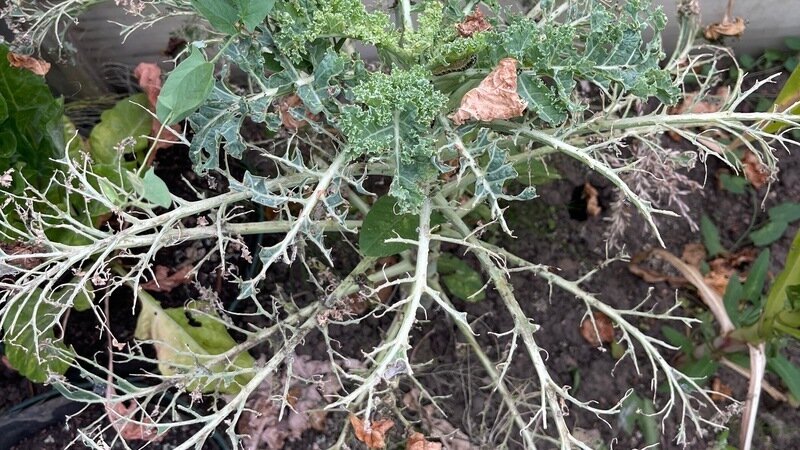
Cutlass and hoe are not what is making the Yoruba farmer poor. Cutlass and hoe are not the Yoruba farmer’s biggest impediments to productivity. That distinction is held by crop disease, pests and weeds, which destroy growing and harvested crops, and make seeds unviable for the next round of planting. To combat these impediments, the farmer uses chemicals, which are expensive to buy and technical to apply, and which eat into profitability. In addition, the chemicals damage the environment, and poison him and his consumers.
GMO provides the Yoruba farmer with alternative to chemicals. GMO means using genes to modify the genetic make-up of a crop for a specific purpose like resistance to disease or pest.
The GMO science is not difficult to understand. An organism is made up of millions and millions of particles called cells. Each cell is made up of two parts: an inner part called the nucleus and an outer surround called cytoplasm. The cytoplasm is the factory floor where all the materials that make up the organism are manufactured. The nucleus is the management centre from which orders are issued to the factory floor. Genes, chemical name DNA, are the messengers carrying the orders. In GMO, a new gene is inserted into the nucleus. The nucleus is not easy to penetrate though because the wall is very robust and the genes are packaged in tough bags called chromosomes. Human cells have 23 pairs of chromosomes.
The GMO process is lengthy. It takes 10 - 15 years and costs upwards of $100 million to modify a crop like maize, for example. 6 steps are involved.
Identify the desired trait.
Isolate the gene from an unrelated species (transgenic) or make it in the lab (non-transgenic).
Attach the gene to a carrier, such as bacteria, virus or metal particle.
Insert the gene into the target organism.
Grow the modified organism.
Test the modified organism for the presence of the new trait and problems.
Human beings have engaged in the practice of modifying the genetic makeup of organisms since time immemorial. It is called cross-breeding. Farmers do it. Dog breeders do it. Cross breeding differs from GMO only in the fact that GMO is done in the laboratory whilst cross-breeding is done out in the fields. GMO is a more precise and more predictable breeding technique than cross-breeding.
The GMO story is the story of people scrambling to close the stable door after the horse had bolted and long gone. GMO crops have been grown commercially for at least 4 decades. Every processed food now contains GMO. Every cooking oil contains GMO. Cosmetics, wound dressings, sanitary towels etc all contain GMO. It is not possible to escape from GMO. Millions of tons of grains distributed worldwide by USAID are 90% GMO. Between 1996 and 2014, GMO agriculture grew from about 2 million hectares to about 200 million hectares but only a handful of countries are engaged in large-scale GMO agriculture - America, Brazil, Canada and India. Nigeria has had GMO crops for about 2 decades.
Pressurised by activists, particularly social media activists, many countries across the continents including Africa oppose GMO or have banned GMO. They accuse GMO companies of hiding data or providing inadequate data. They claim that GMO causes cancer but no new cancers have been identified whilst claimed increase incidence is not backed up with epidemiological data. Data from laboratory animals are often cited forgetting that laboratory animals are not human and are themselves nor normal animals. Potential for leakage of GMO genes has been suggested but no proof has been provided. Finally, GMO companies have been accused of weaponising GMO against Africa and using GMO to reduce Africa’s population. There is no actual data to support this assertion. The anti-GMO activists are the same people who oppose vaccination.
Unlike governments, African farmers do not object to GMO. They can see the benefits – less spent on chemicals, increased yield, and storable produce and seeds. Burkina Faso farmers saw increased yield of 20% in GMO cotton resulting in about 60% profit. Hawaii farmers saw GMO rescue papaya which was becoming extinct, decimated by pests. Farmers elsewhere saw GMO used to fortify rice with B-carotene, a Vitamin A precursor, to prevent blindness in children. Others saw GMO improve food quality and nutritional content, which is useful for tackling malnutrition and related diseases.
The population of Africa today is 1.5 billion, projected to reach 2.5 billion by 2050. Additional 60-80% of food supply will be needed than what is currently available. How to feed this teeming population should be our priority. Food beggars cannot be choosers. We don’t want to beg. Africa needs to use all available food technologies. Africa has no capacity to produce its own GMO but there are other ways of contributing to the GMO knowledge. Cost-benefit analysis and epidemiological surveys are within Africa’s resources.
For more like this article, join and support the Yoruba Party in the UK (YPUK): www.yorubapartyuk.org