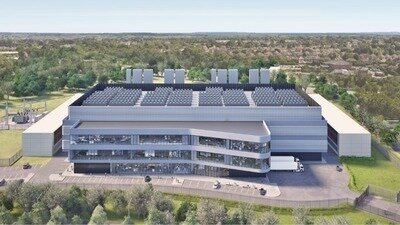
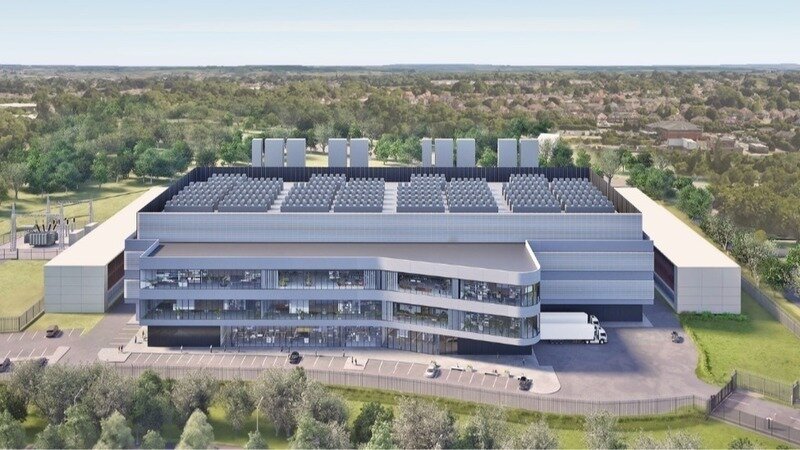
Thames Valley Park 72MW IT Data Centre - STOP construction
The Issue
I am writing to you to object to the proposed data centre at Thames Valley Park. I do not believe this is in the public’s interest. Below, are quotes from the TVP data centre brochure, and I have explained why and how these do not benefit the community.
“The data centre would support UK data sovereignty by providing domestic capacity to store and process information securely, and reduce reliance on overseas infrastructure.”
The public consultation confirmed that if this data centre is to be built, it could be leased by ANY company that needs a data storage facility. The UK has legislation when it comes to processing data: mainly the Data Protection Act (2018) and UK GDPR. However, some foreign data integrity procedures conflict with UK GDPR and the Data Protection Act, because they require back-end entrance into any data that is collected e.g. Facebook, Instagram and TikTok. It would be impossible to enforce UK legislation with international companies, therefore it is a data security risk to the UK public to have a shared infrastructure.
Wokingham and the surrounding area is functioning in the digital age without issue: good internet coverage and access to 'cloud services', 'internet banking' and 'digital health care services'. Amazon AWS, Microsoft Azure and Google Cloud, the three largest cloud providers, already have dedicated capacity in England. So, there is no shortage of computer capacity on UK soil. What is this data centre offering that we don’t already have?
“The UK Government has identified digital infrastructure as a key driver of economic growth and designated data centres as Critical National Infrastructure. This recognises their importance to the country’s economy and resilience, placing them alongside essential services such as water, energy and transport.”
Water, energy and transport are essential. Data centres, however, are not essential to our lives as humans, and it is ludicrous to even suggest. In fact, given the detrimental impact to the environmental infrastructure and ecology, they are actively harmful to humans. The UK Government put a report to the House of Commons forecasting a loss of £25 billion to the economy as a result of water shortages and health impacts directly linked to data centres [1].
Furthermore, Bloomberg reports that nearly half of data centre builds have been abandoned, left half-finished or scrapped, including Microsoft data centres [2]. Evidently, the number of centres currently being built far exceeds the requirements. With data centres in Swindon, Slough and Didcot, is there really a reason to have another in such close proximity? With the increase in chip prices and the uncertainty over the energy market, the building of new data centres is becoming increasingly expensive and more likely to be abandoned or unprofitable.
“The project team will continue to review opportunities to increase the use of grid electricity as capacity becomes available. The fuel cells would use natural gas to generate electricity through a chemical reaction rather than conventional combustion, helping to reduce emissions, enabling this critical infrastructure to support the UK’s growing digital economy.”
This year, regions in America, which had newly built data centres saw an increase of residential electricity bills of up to 70%. Similarly, the UK government is offering significantly discounted electricity to data centres with discounts between 10% – 20%, the cost of which is footed by taxpayers. The instability of the energy market and capacity of the current network will be taxed more so with the addition of a power-hungry data centre. People living paycheque to paycheque should not be subsidising the power bills of a trillion-dollar company.
“They would also be future-fuel ready, meaning they could adapt to lower-carbon fuels such as biomethane and hydrogen as these become more widely available. We are actively exploring carbon offsetting options, including supporting biogas generation projects. The data centre would use air-cooled chillers, helping to minimise water consumption.”
This is a lot of ideas but no certainty. The data centre in Lanarkshire, Scotland has not been able to secure enough energy to run[3], and other proposed data centres are having issues with securing enough power to run because what they need to run is too much to take from the grid. [1][4]
Furthermore, “future-fuel ready” does not mean clean energy. You may be hoping people think this is the case, but it is not. Therefore, these future-fuel ready cells are still polluting.
Equally, this centre poses a risk to water supplies. Air-cooled chillers may “minimise water consumption”, but we do not know how this impacts water consumption in an already overstretched area. Thames Water already struggles with supply and has been fined on multiple occasions for poor service. Furthermore, half of UK water companies are already enforcing water usage restrictions of millions on customers. The average data centre requires 110 million gallons of water per year and in a restricted water environment, water supplies should be prioritised for humans and the environment over machines. The environmental agency published a report where they expect a 5 billion litre shortage in UK water supply if data centres are not halted.
“Boosting biodiversity: The development would deliver at least 10% Biodiversity Net Gain.”
While at the public consultation I enquired about this. I was told this 10% would come from planting trees. Yes, trees are good for biodiversity but only if they support the habitat of native wildlife and flora. Data centres are known to be noisy [4][5] and increase the heat of the surrounding area [6], both of which will plummet any biodiversity, so planting a few trees will do nothing to help biodiversity. Moreover, the trees may not even survive given the extra heat emitted from the data centre. Therefore, the data centre itself will cause a net loss of biodiversity in the area.
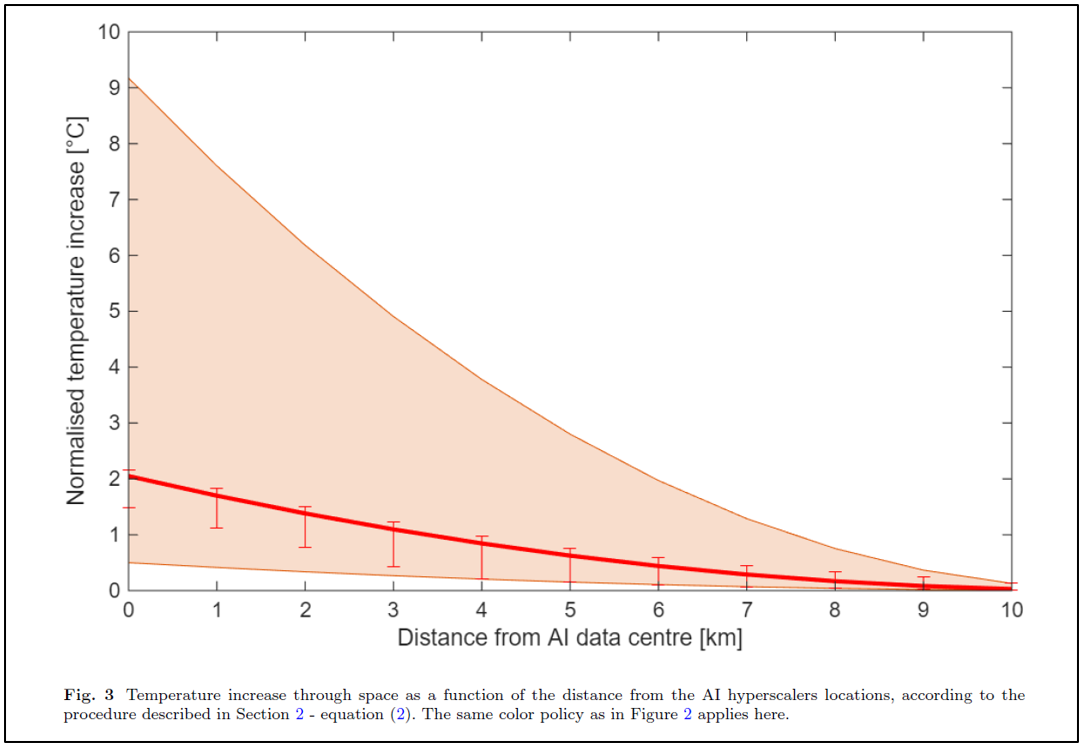
This brings me onto a majorly overlooked issue with this proposal: Human health. A worldwide study of data centres by Marinoni et al. (2026)6 found that on average land surface temperature increased by 2°C, with a range between 0.5°C – 9.1°C, once data centre operations begin. This temperature increase has an affect up to 9 km/5.6 miles away from the data centres. See graph below taken from the paper by Marinoni et al.
2°C may not seem like much, however, in the Paris Agreement by the United Nations on Climate Change reported back in 2015 that we need to keep the global average temperature to well below 2°C and limit it to 1.5°C6. If this is not adhered to, we will experience more frequent and severe droughts, heatwaves and rainfall [7]. With data centres being built all over this will be impossible to achieve. We are already experiencing more severe, erratic and unseasonal weather in the UK.
Heat is an issue for health, even those who are usually healthy – heat stroke, heat exhaustion. This can have long-term effects on cardiovascular and respiratory health6. The UK is experiencing heat related deaths every year, which are now on the rise. [8][9][10][11]
Vulnerable people, such as children and the elderly, are especially at risk. Extreme heat can lead to premature death; around 70,000 Europeans died due to a major heatwave that struck the continent in 2003. Also, a recent study using data from 43 countries found that between 1991 and 2018, 37% of heat-related deaths were attributable to human-driven climate change. [12]
Furthermore, France estimated nearly 3,000 excess deaths due to heat this year [13], while Germany estimated more than 5,000 deaths due to heat [14].
As you can see, heat related deaths are significant and this is not going to improve with building the proposed data centre, which will put strain on the already struggling NHS. The more energy this centre uses, the worse the heat output will be and the more people will suffer with negative health outcomes. Also, see how the data centre in Slough has affected those living and working nearby [15]. The weather stations in Slough are already measuring significant temperature increases since the installation of the data centre.
I’m aware you have proposed: “Reusing heat: Opportunities to reuse heat for nearby businesses are being assessed.”
What is the plan for the generation of this extra heat prior to any provision as heating nearby businesses? Pending assessment is not enough. We need clear solutions. Why should people suffer just so companies can make more money. Essentially, it’s about money and we know it’s not about helping people or contributing to communities and it really is naïve to think otherwise.
“Local benefits: 115 full-time jobs”
The economic impact of increased demand on electricity and water supplies is a poor ROI of 115 jobs; especially in comparison to other commercial uses which offer vastly more employment prospects. In addition, the operation of the AI data centre will increase the usage of AI, this will lead to job losses as more people are laid off from their current positions to be replaced with AI. Therefore, this would be an economic net negative to the community.
“Generation of business rates that could be reinvested into local services”
“Strengthening Wokingham’s business offer: The proposals would support growth sectors including health, telecoms and technology.”
Again, any minor growth in health, telecom and technology sectors from this centre will not outweigh the increased demand on electricity and water, nor the additional heat and the associated health issues on the local community.
“…long-term future for the existing underused office campus, responding to falling demand for office space while supporting the area’s business cluster and strengthening its economic future.”
If office space is not in demand, can it be converted to something actually in demand? What does Reading and Wokingham need? Affordable housing, affordable schools and community spaces. Reading and Wokingham do not need to replace employment opportunities, as is the current business model of TVP, with anti-human prospects such as data centres.
The return on investment on this proposed centre is between negligible to negative to the community and it should not go ahead. I urge you to reconsider.
REFERENCES
4. https://netzeroinsights.com/resources/data-centers-environmental-cost/
5. https://www.sciencedirect.com/science/article/pii/S2772985025000262
6. https://arxiv.org/abs/2603.20897
7. https://unfccc.int/process-and-meetings/the-paris-agreement
12. https://stories.ecmwf.int/urban-heat-islands-and-heat-mortality/
14. https://www.rnz.co.nz/news/world/695612/heatwave-linked-to-more-than-5000-deaths-in-germany-rki-says

483
The Issue
I am writing to you to object to the proposed data centre at Thames Valley Park. I do not believe this is in the public’s interest. Below, are quotes from the TVP data centre brochure, and I have explained why and how these do not benefit the community.
“The data centre would support UK data sovereignty by providing domestic capacity to store and process information securely, and reduce reliance on overseas infrastructure.”
The public consultation confirmed that if this data centre is to be built, it could be leased by ANY company that needs a data storage facility. The UK has legislation when it comes to processing data: mainly the Data Protection Act (2018) and UK GDPR. However, some foreign data integrity procedures conflict with UK GDPR and the Data Protection Act, because they require back-end entrance into any data that is collected e.g. Facebook, Instagram and TikTok. It would be impossible to enforce UK legislation with international companies, therefore it is a data security risk to the UK public to have a shared infrastructure.
Wokingham and the surrounding area is functioning in the digital age without issue: good internet coverage and access to 'cloud services', 'internet banking' and 'digital health care services'. Amazon AWS, Microsoft Azure and Google Cloud, the three largest cloud providers, already have dedicated capacity in England. So, there is no shortage of computer capacity on UK soil. What is this data centre offering that we don’t already have?
“The UK Government has identified digital infrastructure as a key driver of economic growth and designated data centres as Critical National Infrastructure. This recognises their importance to the country’s economy and resilience, placing them alongside essential services such as water, energy and transport.”
Water, energy and transport are essential. Data centres, however, are not essential to our lives as humans, and it is ludicrous to even suggest. In fact, given the detrimental impact to the environmental infrastructure and ecology, they are actively harmful to humans. The UK Government put a report to the House of Commons forecasting a loss of £25 billion to the economy as a result of water shortages and health impacts directly linked to data centres [1].
Furthermore, Bloomberg reports that nearly half of data centre builds have been abandoned, left half-finished or scrapped, including Microsoft data centres [2]. Evidently, the number of centres currently being built far exceeds the requirements. With data centres in Swindon, Slough and Didcot, is there really a reason to have another in such close proximity? With the increase in chip prices and the uncertainty over the energy market, the building of new data centres is becoming increasingly expensive and more likely to be abandoned or unprofitable.
“The project team will continue to review opportunities to increase the use of grid electricity as capacity becomes available. The fuel cells would use natural gas to generate electricity through a chemical reaction rather than conventional combustion, helping to reduce emissions, enabling this critical infrastructure to support the UK’s growing digital economy.”
This year, regions in America, which had newly built data centres saw an increase of residential electricity bills of up to 70%. Similarly, the UK government is offering significantly discounted electricity to data centres with discounts between 10% – 20%, the cost of which is footed by taxpayers. The instability of the energy market and capacity of the current network will be taxed more so with the addition of a power-hungry data centre. People living paycheque to paycheque should not be subsidising the power bills of a trillion-dollar company.
“They would also be future-fuel ready, meaning they could adapt to lower-carbon fuels such as biomethane and hydrogen as these become more widely available. We are actively exploring carbon offsetting options, including supporting biogas generation projects. The data centre would use air-cooled chillers, helping to minimise water consumption.”
This is a lot of ideas but no certainty. The data centre in Lanarkshire, Scotland has not been able to secure enough energy to run[3], and other proposed data centres are having issues with securing enough power to run because what they need to run is too much to take from the grid. [1][4]
Furthermore, “future-fuel ready” does not mean clean energy. You may be hoping people think this is the case, but it is not. Therefore, these future-fuel ready cells are still polluting.
Equally, this centre poses a risk to water supplies. Air-cooled chillers may “minimise water consumption”, but we do not know how this impacts water consumption in an already overstretched area. Thames Water already struggles with supply and has been fined on multiple occasions for poor service. Furthermore, half of UK water companies are already enforcing water usage restrictions of millions on customers. The average data centre requires 110 million gallons of water per year and in a restricted water environment, water supplies should be prioritised for humans and the environment over machines. The environmental agency published a report where they expect a 5 billion litre shortage in UK water supply if data centres are not halted.
“Boosting biodiversity: The development would deliver at least 10% Biodiversity Net Gain.”
While at the public consultation I enquired about this. I was told this 10% would come from planting trees. Yes, trees are good for biodiversity but only if they support the habitat of native wildlife and flora. Data centres are known to be noisy [4][5] and increase the heat of the surrounding area [6], both of which will plummet any biodiversity, so planting a few trees will do nothing to help biodiversity. Moreover, the trees may not even survive given the extra heat emitted from the data centre. Therefore, the data centre itself will cause a net loss of biodiversity in the area.
This brings me onto a majorly overlooked issue with this proposal: Human health. A worldwide study of data centres by Marinoni et al. (2026)6 found that on average land surface temperature increased by 2°C, with a range between 0.5°C – 9.1°C, once data centre operations begin. This temperature increase has an affect up to 9 km/5.6 miles away from the data centres. See graph below taken from the paper by Marinoni et al.
2°C may not seem like much, however, in the Paris Agreement by the United Nations on Climate Change reported back in 2015 that we need to keep the global average temperature to well below 2°C and limit it to 1.5°C6. If this is not adhered to, we will experience more frequent and severe droughts, heatwaves and rainfall [7]. With data centres being built all over this will be impossible to achieve. We are already experiencing more severe, erratic and unseasonal weather in the UK.
Heat is an issue for health, even those who are usually healthy – heat stroke, heat exhaustion. This can have long-term effects on cardiovascular and respiratory health6. The UK is experiencing heat related deaths every year, which are now on the rise. [8][9][10][11]
Vulnerable people, such as children and the elderly, are especially at risk. Extreme heat can lead to premature death; around 70,000 Europeans died due to a major heatwave that struck the continent in 2003. Also, a recent study using data from 43 countries found that between 1991 and 2018, 37% of heat-related deaths were attributable to human-driven climate change. [12]
Furthermore, France estimated nearly 3,000 excess deaths due to heat this year [13], while Germany estimated more than 5,000 deaths due to heat [14].
As you can see, heat related deaths are significant and this is not going to improve with building the proposed data centre, which will put strain on the already struggling NHS. The more energy this centre uses, the worse the heat output will be and the more people will suffer with negative health outcomes. Also, see how the data centre in Slough has affected those living and working nearby [15]. The weather stations in Slough are already measuring significant temperature increases since the installation of the data centre.
I’m aware you have proposed: “Reusing heat: Opportunities to reuse heat for nearby businesses are being assessed.”
What is the plan for the generation of this extra heat prior to any provision as heating nearby businesses? Pending assessment is not enough. We need clear solutions. Why should people suffer just so companies can make more money. Essentially, it’s about money and we know it’s not about helping people or contributing to communities and it really is naïve to think otherwise.
“Local benefits: 115 full-time jobs”
The economic impact of increased demand on electricity and water supplies is a poor ROI of 115 jobs; especially in comparison to other commercial uses which offer vastly more employment prospects. In addition, the operation of the AI data centre will increase the usage of AI, this will lead to job losses as more people are laid off from their current positions to be replaced with AI. Therefore, this would be an economic net negative to the community.
“Generation of business rates that could be reinvested into local services”
“Strengthening Wokingham’s business offer: The proposals would support growth sectors including health, telecoms and technology.”
Again, any minor growth in health, telecom and technology sectors from this centre will not outweigh the increased demand on electricity and water, nor the additional heat and the associated health issues on the local community.
“…long-term future for the existing underused office campus, responding to falling demand for office space while supporting the area’s business cluster and strengthening its economic future.”
If office space is not in demand, can it be converted to something actually in demand? What does Reading and Wokingham need? Affordable housing, affordable schools and community spaces. Reading and Wokingham do not need to replace employment opportunities, as is the current business model of TVP, with anti-human prospects such as data centres.
The return on investment on this proposed centre is between negligible to negative to the community and it should not go ahead. I urge you to reconsider.
REFERENCES
4. https://netzeroinsights.com/resources/data-centers-environmental-cost/
5. https://www.sciencedirect.com/science/article/pii/S2772985025000262
6. https://arxiv.org/abs/2603.20897
7. https://unfccc.int/process-and-meetings/the-paris-agreement
12. https://stories.ecmwf.int/urban-heat-islands-and-heat-mortality/
14. https://www.rnz.co.nz/news/world/695612/heatwave-linked-to-more-than-5000-deaths-in-germany-rki-says
The Decision Makers

Supporter Voices
Petition Updates
Share this petition
Petition created on 16 July 2026