‘The snowdrop and primrose our woodlands adorn….’ [Robert Burns]

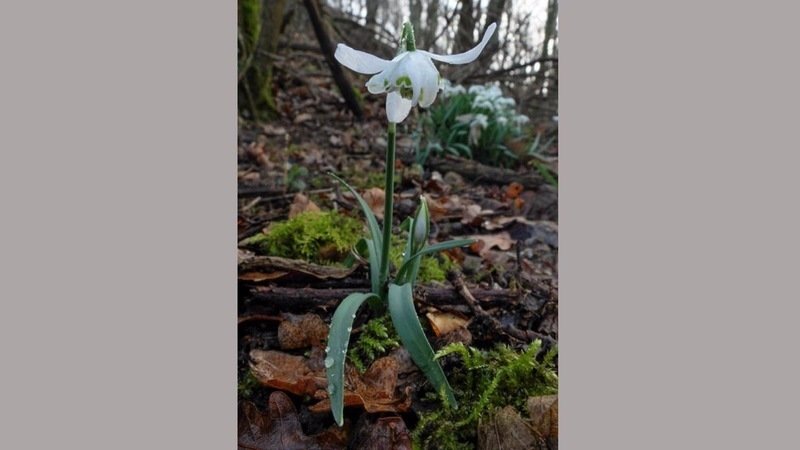
A walk on the common reveals there are still plenty of snowdrops to see.
In cold spells you will often see snowdrops collapse to the ground, only to resurrect themselves once the temperature rises.Plant tissue is often damaged by ice crystals forming in the cells during freezing.
However, many plants, including snowdrops, have ‘anti-freeze’ proteins that help inhibit ice crystals forming and limit their growth, protecting the plant cells from damage. Snowdrop leaves have specially hardened tips to help them break through frozen soil.
The outer segments of snowdrops move in response to changes in temperature. When air temperatures are above 10°C, pollinating insects such as bees are likely to be flying, and the petals move upwards and outwards, opening the flower for them.