

Stop felling 4,500+ trees in Dighal Pahari for coal mining
The Issue
THE ECOLOGICAL, SOCIAL, AND CULTURAL COST OF THE DIGHAL PAHARI PROJECT
If allowed to proceed, the felling of over 4,500 trees across 115 hectares of forest land in the Dighal Pahari tract will trigger a multi-layered disaster for the environment, local wildlife, and the indigenous population. This is not just a loss of numbers; it is the total eradication of a functioning, ancient ecosystem.
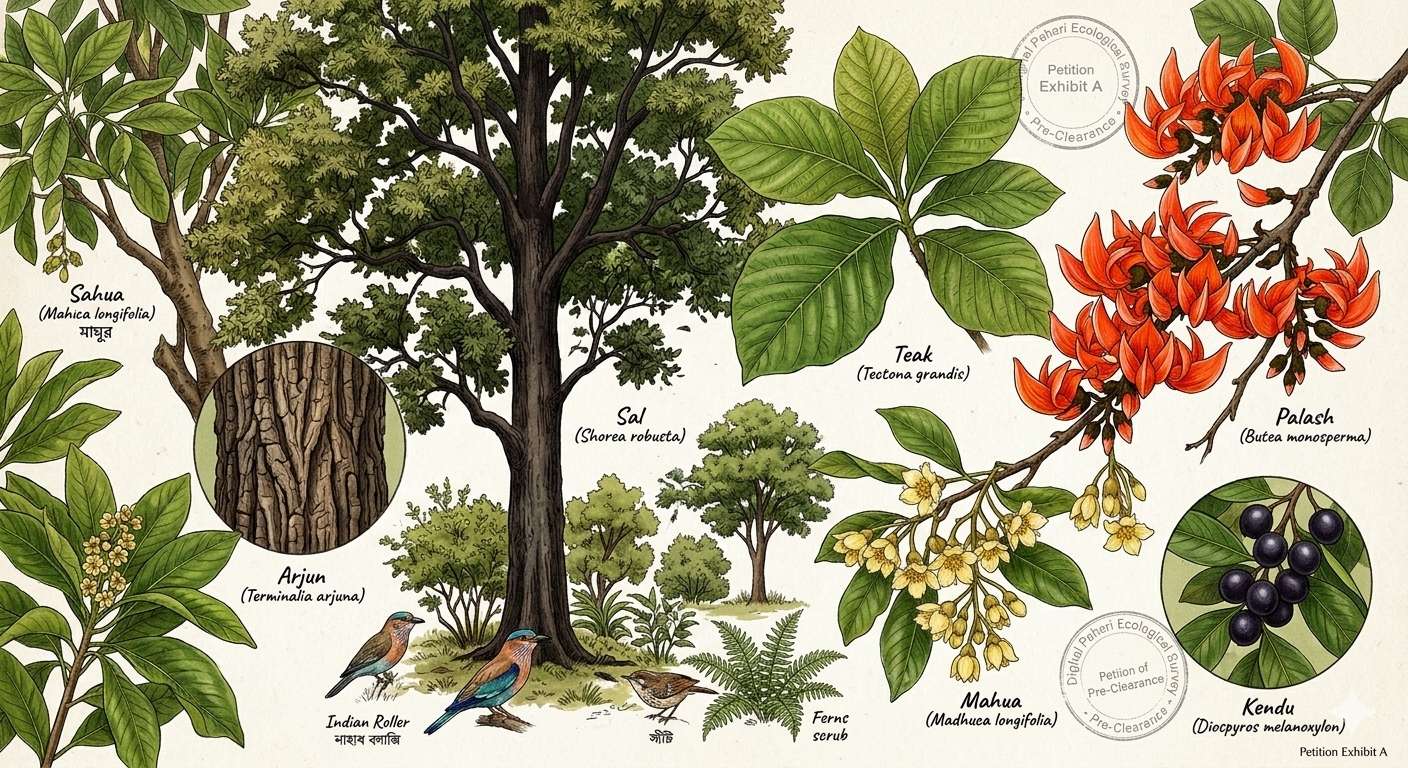
1. DESTRUCTION OF PRICELESS OLD GROWTH CANOPY AND FLORA
The forest tract of Dighal Pahari consists of a rich, dry deciduous ecosystem native to the laterite belt of West Bengal. The trees facing the axe are mature, slow-growing species that cannot simply be replaced by saplings planted elsewhere:
The Canopy Guardians: Hundreds of ancient Sal (Shorea robusta) and Segun (Tectona grandis) trees form the structural backbone of this forest, acting as massive local carbon sinks.
Eco-Vital Fast Growers: Dense stands of Siris (Albizia lebbeck) and Akashmoni (Acacia auriculiformis) shield the fragile laterite topsoil from severe erosion.
Sacred and Medicinal Trees: The forest is rich with Mahua (Madhuca longifolia), Palash (Butea monosperma), Arjun (Terminalia arjuna), and Kendu (Diospyros melanoxylon).
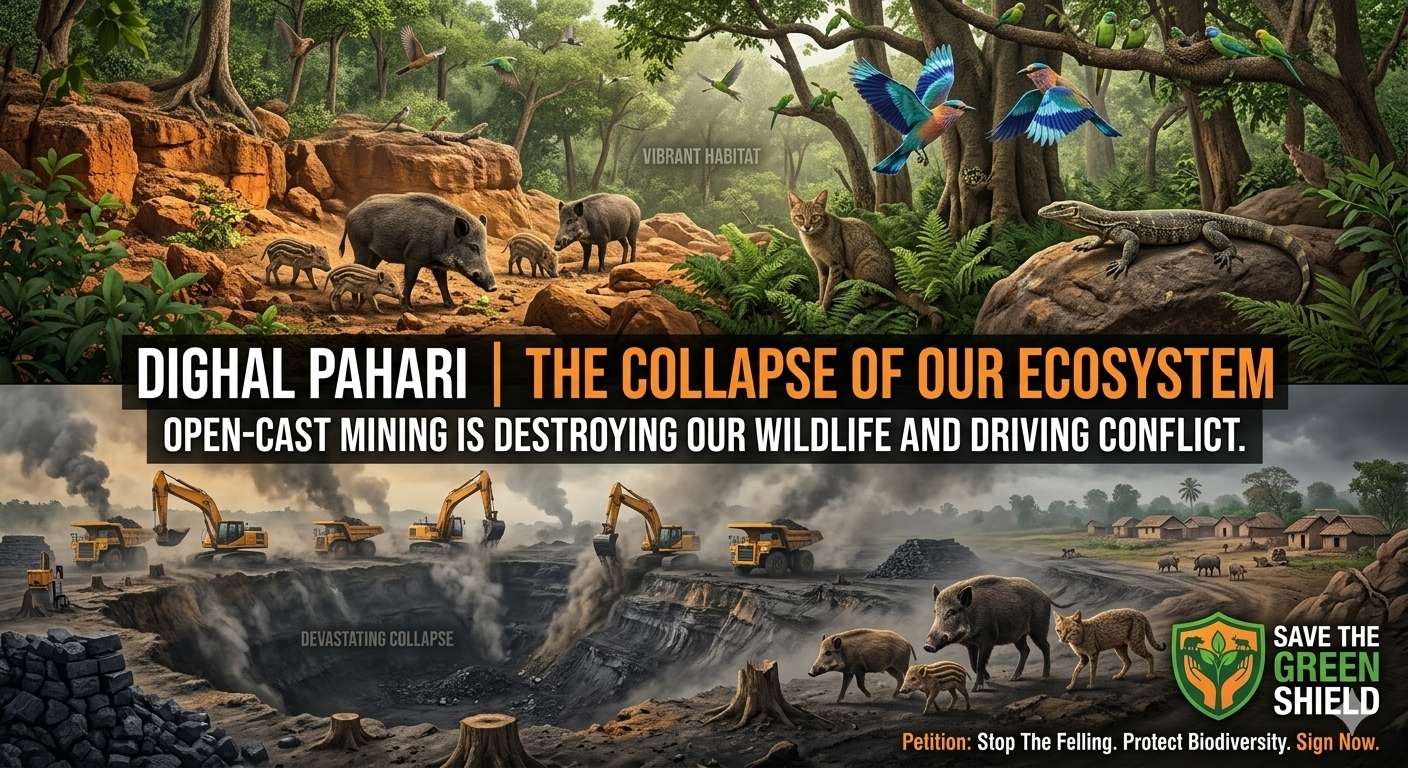
2. WILDLIFE DISPLACED AND ECOSYSTEM COLLAPSE
While proponents frame this area as simple "scrubland" or standard timber forest, it is a vital, thriving habitat for local biodiversity. Clear-cutting this forest means:
Total Habitat Loss: Decisive displacement of resident wildlife, including herds of wild boars, jackals, jungle cats, monitor lizards, and diverse snake species native to the rocky laterite terrain.
Disruption of Avian Corridors: Dighal Pahari acts as a crucial nesting ground and rest stop for hundreds of local and migratory bird species traveling through the Paschim Bardhaman district.
Escalating Man-Animal Conflict: With their natural habitat completely bulldozed by open-cast mining, displaced animals will inevitably wander into the surrounding villages of Baraboni block, leading to dangerous encounters and destruction of local crops.
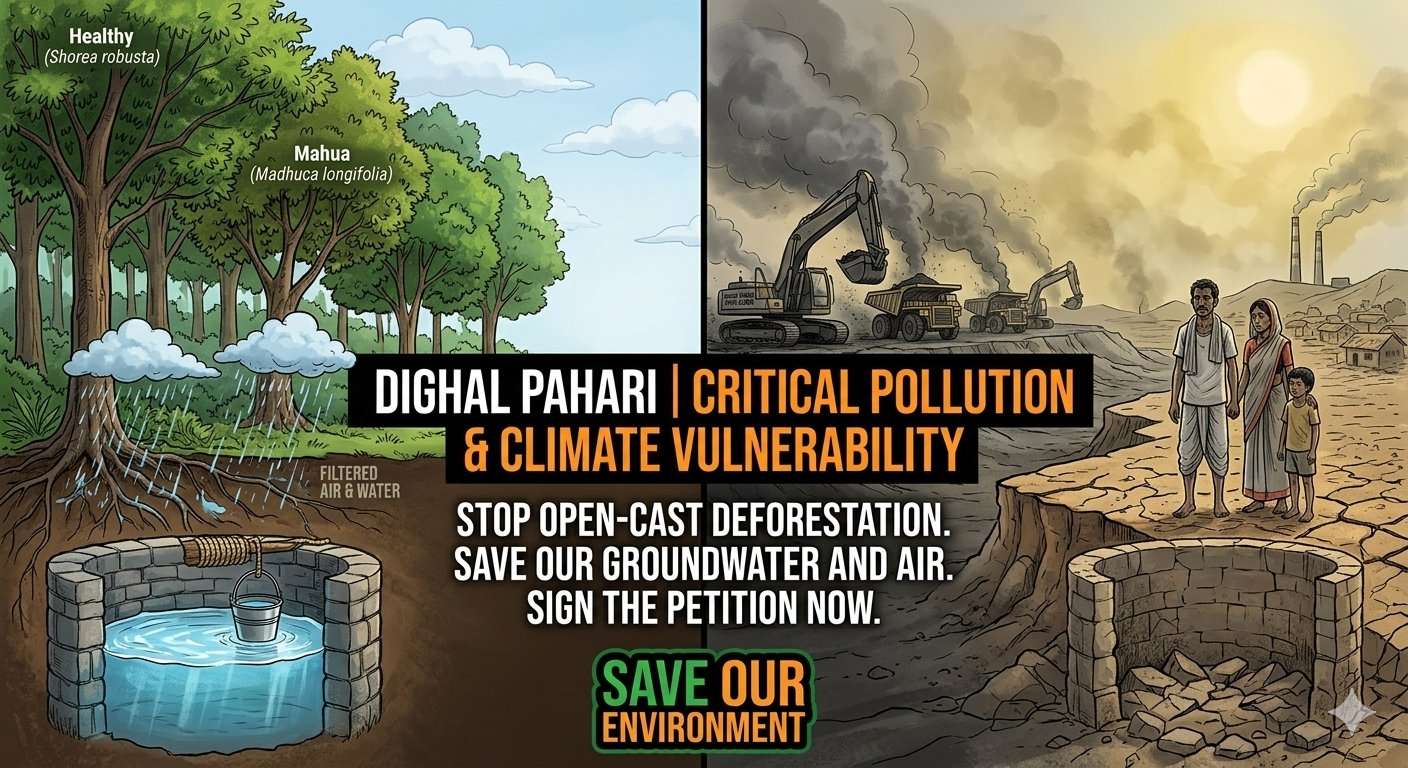
3. CRITICAL POLLUTION AND CLIMATE VULNERABILITY
The Asansol-Durgapur belt is already a recognized critically polluted zone. Removing these 4,500+ trees will strip away the final natural defense mechanism the community has:
Spike in Air Pollution: The forest currently acts as a giant particulate filter, trapping toxic coal dust, PM2.5, and PM10 emissions from existing industries. Without it, respiratory illnesses like black lung and asthma will skyrocket among local families.
Severe Ground Water Depletion: A dry laterite region relies heavily on tree roots to retain seasonal rainwater and recharge underground aquifers. Open-cast mining combined with deforestation will turn this zone into an absolute dust bowl, drying up village wells.
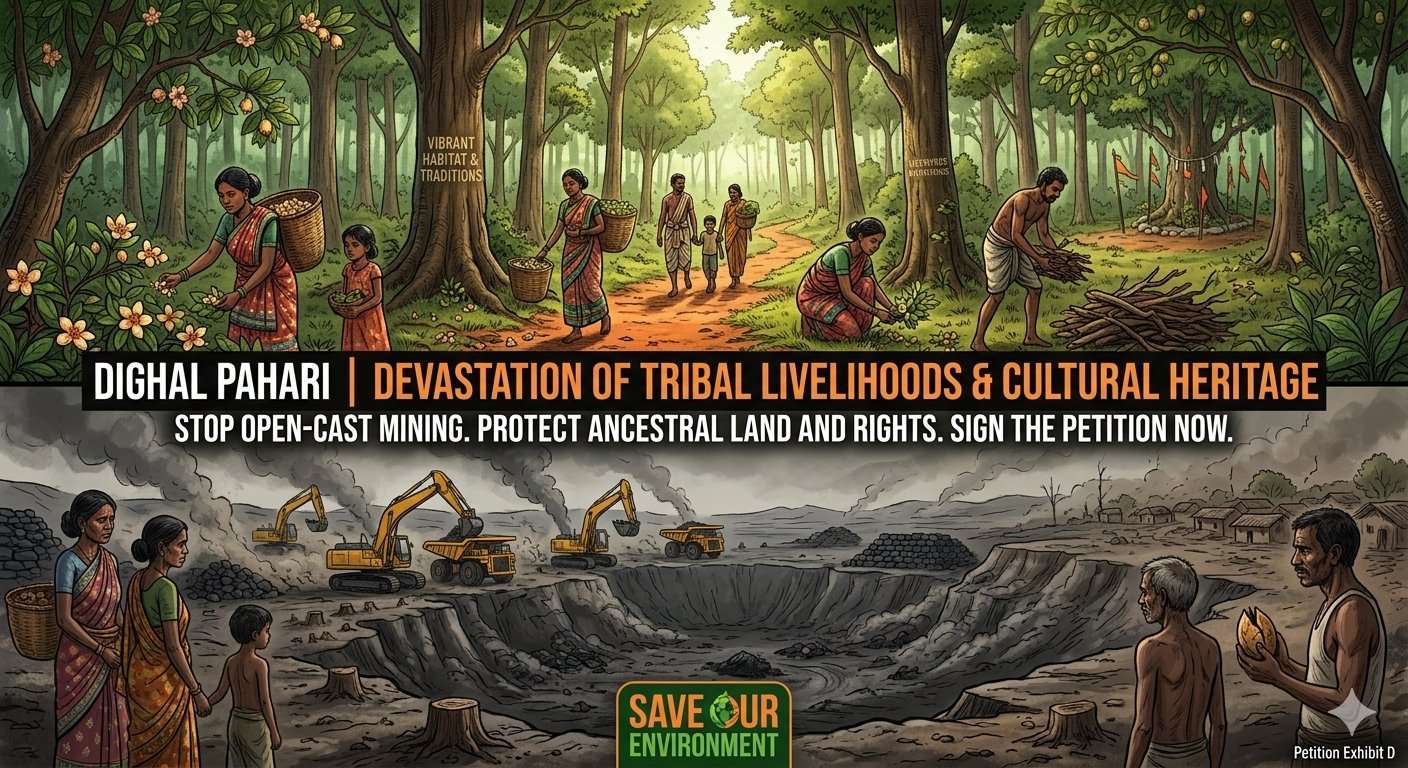
4. DEVASTATION OF TRIBAL LIVELIHOODS AND CULTURAL HERITAGE
For the local Santhal and other tribal/rural communities living in and around Dighal Pahari, the forest is not a commercial resource—it is their lifeblood and heritage:
Economic Ruin: Hundreds of families depend entirely on Non-Timber Forest Produce (NTFP). Gathering Mahua flowers for brewing, collecting Kendu leaves for local trade, and harvesting natural firewood and medicinal herbs provides their primary seasonal income.
Cultural Disconnection: The planned destruction ignores the deep spiritual bond the local indigenous people share with their groves. Shifting the replacement trees to Birbhum district completely disregards the local community's historical connection to their ancestral land.
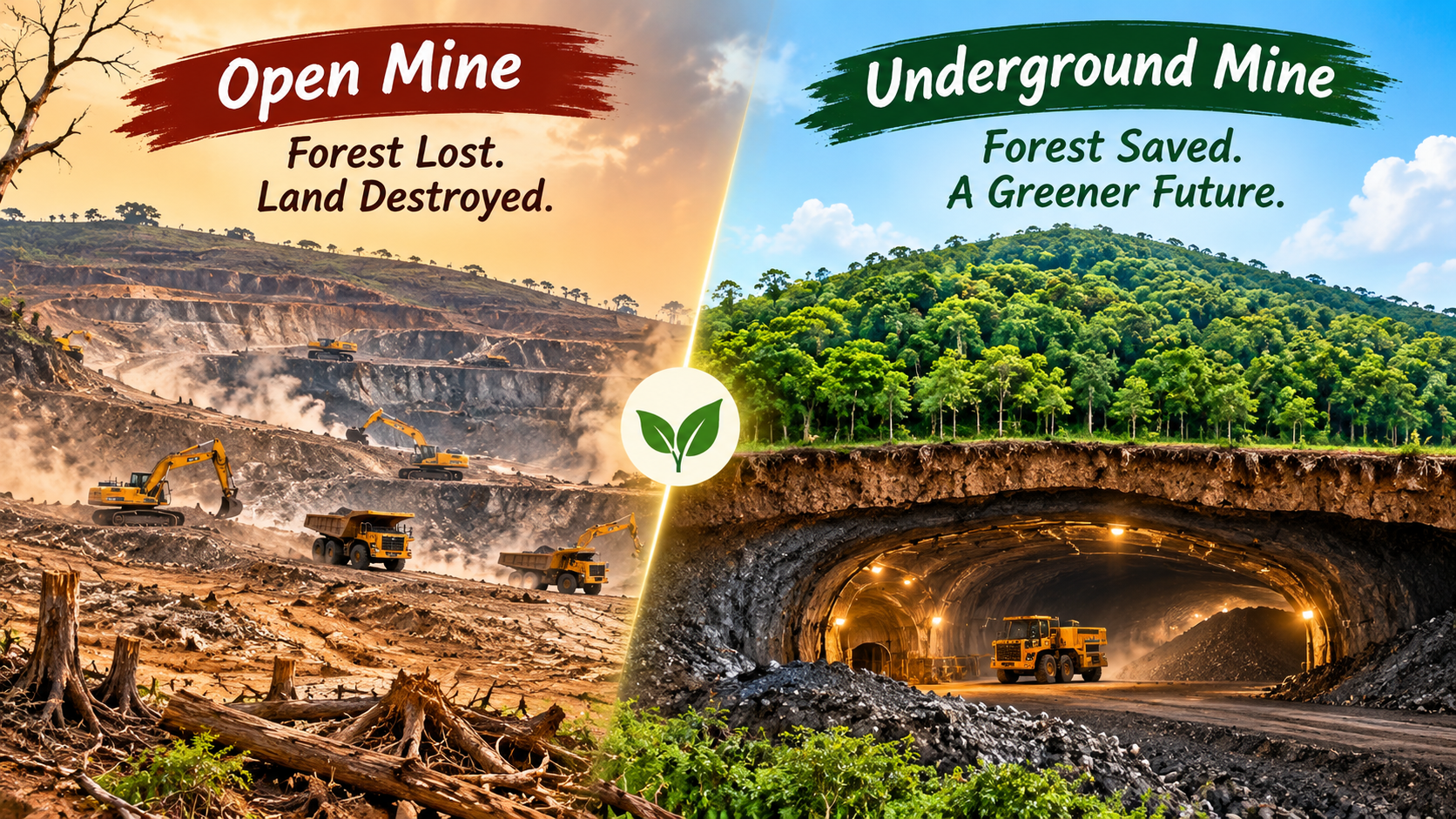
THE SOLUTION: A Transition to Underground Mining (Stop the Pit, Save the Forest)
We are not asking the government to compromise on regional energy security or halt economic development. We are demanding a responsible, modern, and ecologically sustainable execution of the project. The coal reserves beneath Dighal Pahari can be safely accessed through Underground Mining rather than the highly destructive open-cast method.
By boring subterranean shafts and utilizing advanced underground tunneling instead of digging a massive surface pit:
The Canopy and Topsoil Remain Intact: The 4,500+ mature Sal, Teak, and Mahua trees will remain standing, continuing to act as the final natural air filtration shield for the critically polluted Asansol-Durgapur industrial belt.
Village Water Tables are Shielded: Surface aquifers that supply the surrounding rural communities will be protected from dry-pit evaporation and deep mining drainage, preventing a severe ground water crisis.
Zero Displacement of Tribal Communities: The local Santhal villages can retain their ancestral lands, maintain their cultural connection to their sacred groves, and safely continue gathering seasonal forest produce overhead while the state accesses the energy resources below.
Expanding the Alternatives: Hybrid Mining & Tree Translocation
If complete underground mining faces immediate technical constraints, the authorities must implement a combination of advanced conservation practices:
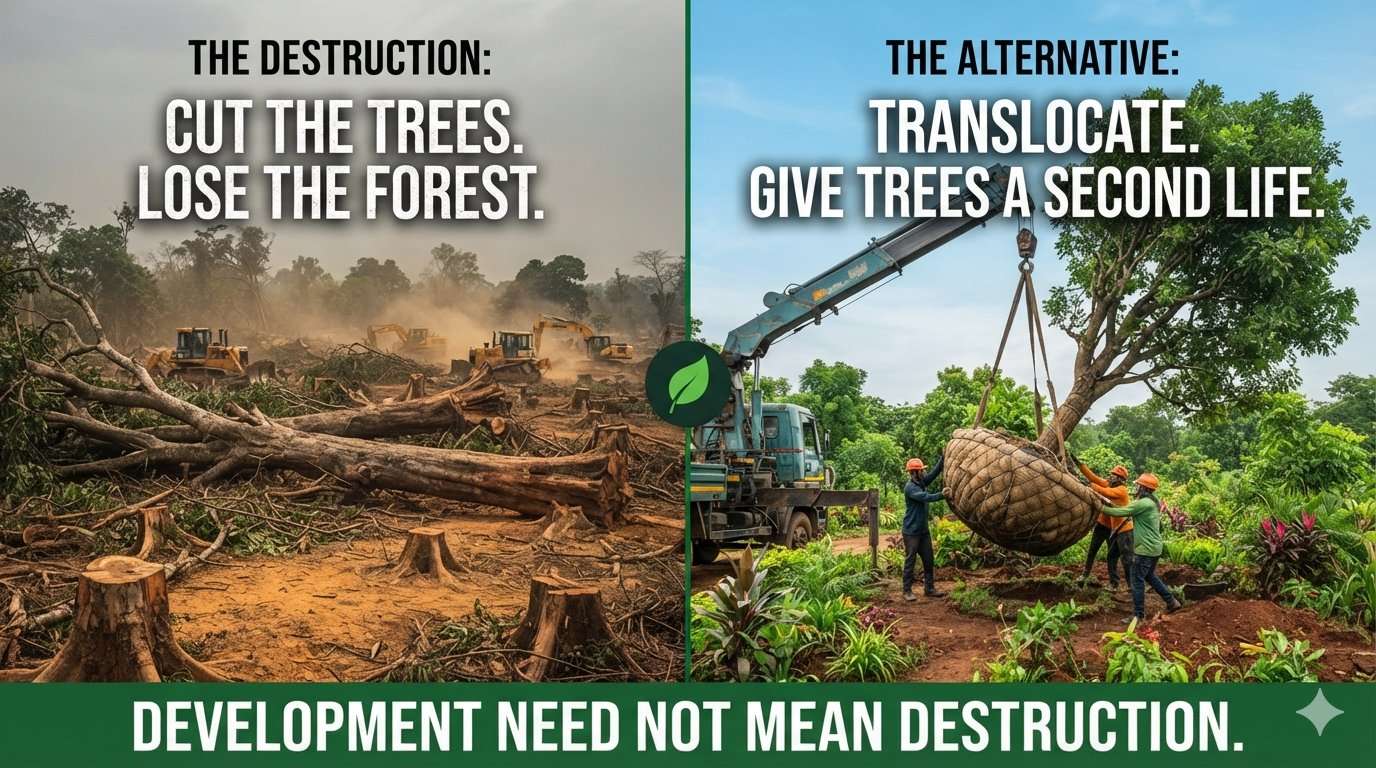
HYBRID MINING: (The Compromise for Shallow Seams): In areas where coal seams are too close to the surface for standard tunneling, a hybrid mining approach must be deployed. This method restricts highly destructive open-cast extraction strictly to degraded or non-forested zones, while transitioning immediately to underground methods as the extraction moves beneath the dense canopy of the Dighal Pahari forest. This keeps the vast majority of the old-growth forest untouched.
SCIENTIFIC TREE TRANSLOCATION: For any peripheral areas where forest diversion is deemed absolutely unavoidable, mature trees must not be chopped down. Instead, WBMDTC must mandate specialized, high-success-rate Tree Translocation—a process where mature trees (such as younger Sal or Arjun) are scientifically uprooted with their root balls intact and carefully replanted in a prepared, contiguous zone within Paschim Bardhaman. This ensures we do not lose decades of canopy growth to a chainsaw.
OUR FORMAL REQUEST TO THE AUTHORITIES
We respectfully urge the West Bengal Mineral Development and Trading Corporation (WBMDTC), the West Bengal Department of Forests, and the District Administration of Paschim Bardhaman to immediately suspend the scheduled tree felling.
We request that the authorities:
Halt the November 2026 timeline to allow for a transparent independent review of the project's localized environmental impact.
Convene an expert panel to assess the technical feasibility of shifting to underground or hybrid mining models for the Dighal Pahari coal block.
Mandate a strict "No-Chop" policy by enforcing scientific tree translocation frameworks for unavoidable peripheral clearances.
Development should never come at the absolute cost of our community’s health, heritage, and survival. We demand an energy strategy that respects both the land and its people.
Please sign this petition today to send a direct message to the decision-makers. Your signature is a vote for breathable air, preserved livelihoods, and a sustainable future for Paschim Bardhaman!
12
The Issue
THE ECOLOGICAL, SOCIAL, AND CULTURAL COST OF THE DIGHAL PAHARI PROJECT
If allowed to proceed, the felling of over 4,500 trees across 115 hectares of forest land in the Dighal Pahari tract will trigger a multi-layered disaster for the environment, local wildlife, and the indigenous population. This is not just a loss of numbers; it is the total eradication of a functioning, ancient ecosystem.
1. DESTRUCTION OF PRICELESS OLD GROWTH CANOPY AND FLORA
The forest tract of Dighal Pahari consists of a rich, dry deciduous ecosystem native to the laterite belt of West Bengal. The trees facing the axe are mature, slow-growing species that cannot simply be replaced by saplings planted elsewhere:
The Canopy Guardians: Hundreds of ancient Sal (Shorea robusta) and Segun (Tectona grandis) trees form the structural backbone of this forest, acting as massive local carbon sinks.
Eco-Vital Fast Growers: Dense stands of Siris (Albizia lebbeck) and Akashmoni (Acacia auriculiformis) shield the fragile laterite topsoil from severe erosion.
Sacred and Medicinal Trees: The forest is rich with Mahua (Madhuca longifolia), Palash (Butea monosperma), Arjun (Terminalia arjuna), and Kendu (Diospyros melanoxylon).
2. WILDLIFE DISPLACED AND ECOSYSTEM COLLAPSE
While proponents frame this area as simple "scrubland" or standard timber forest, it is a vital, thriving habitat for local biodiversity. Clear-cutting this forest means:
Total Habitat Loss: Decisive displacement of resident wildlife, including herds of wild boars, jackals, jungle cats, monitor lizards, and diverse snake species native to the rocky laterite terrain.
Disruption of Avian Corridors: Dighal Pahari acts as a crucial nesting ground and rest stop for hundreds of local and migratory bird species traveling through the Paschim Bardhaman district.
Escalating Man-Animal Conflict: With their natural habitat completely bulldozed by open-cast mining, displaced animals will inevitably wander into the surrounding villages of Baraboni block, leading to dangerous encounters and destruction of local crops.
3. CRITICAL POLLUTION AND CLIMATE VULNERABILITY
The Asansol-Durgapur belt is already a recognized critically polluted zone. Removing these 4,500+ trees will strip away the final natural defense mechanism the community has:
Spike in Air Pollution: The forest currently acts as a giant particulate filter, trapping toxic coal dust, PM2.5, and PM10 emissions from existing industries. Without it, respiratory illnesses like black lung and asthma will skyrocket among local families.
Severe Ground Water Depletion: A dry laterite region relies heavily on tree roots to retain seasonal rainwater and recharge underground aquifers. Open-cast mining combined with deforestation will turn this zone into an absolute dust bowl, drying up village wells.
4. DEVASTATION OF TRIBAL LIVELIHOODS AND CULTURAL HERITAGE
For the local Santhal and other tribal/rural communities living in and around Dighal Pahari, the forest is not a commercial resource—it is their lifeblood and heritage:
Economic Ruin: Hundreds of families depend entirely on Non-Timber Forest Produce (NTFP). Gathering Mahua flowers for brewing, collecting Kendu leaves for local trade, and harvesting natural firewood and medicinal herbs provides their primary seasonal income.
Cultural Disconnection: The planned destruction ignores the deep spiritual bond the local indigenous people share with their groves. Shifting the replacement trees to Birbhum district completely disregards the local community's historical connection to their ancestral land.
THE SOLUTION: A Transition to Underground Mining (Stop the Pit, Save the Forest)
We are not asking the government to compromise on regional energy security or halt economic development. We are demanding a responsible, modern, and ecologically sustainable execution of the project. The coal reserves beneath Dighal Pahari can be safely accessed through Underground Mining rather than the highly destructive open-cast method.
By boring subterranean shafts and utilizing advanced underground tunneling instead of digging a massive surface pit:
The Canopy and Topsoil Remain Intact: The 4,500+ mature Sal, Teak, and Mahua trees will remain standing, continuing to act as the final natural air filtration shield for the critically polluted Asansol-Durgapur industrial belt.
Village Water Tables are Shielded: Surface aquifers that supply the surrounding rural communities will be protected from dry-pit evaporation and deep mining drainage, preventing a severe ground water crisis.
Zero Displacement of Tribal Communities: The local Santhal villages can retain their ancestral lands, maintain their cultural connection to their sacred groves, and safely continue gathering seasonal forest produce overhead while the state accesses the energy resources below.
Expanding the Alternatives: Hybrid Mining & Tree Translocation
If complete underground mining faces immediate technical constraints, the authorities must implement a combination of advanced conservation practices:
HYBRID MINING: (The Compromise for Shallow Seams): In areas where coal seams are too close to the surface for standard tunneling, a hybrid mining approach must be deployed. This method restricts highly destructive open-cast extraction strictly to degraded or non-forested zones, while transitioning immediately to underground methods as the extraction moves beneath the dense canopy of the Dighal Pahari forest. This keeps the vast majority of the old-growth forest untouched.
SCIENTIFIC TREE TRANSLOCATION: For any peripheral areas where forest diversion is deemed absolutely unavoidable, mature trees must not be chopped down. Instead, WBMDTC must mandate specialized, high-success-rate Tree Translocation—a process where mature trees (such as younger Sal or Arjun) are scientifically uprooted with their root balls intact and carefully replanted in a prepared, contiguous zone within Paschim Bardhaman. This ensures we do not lose decades of canopy growth to a chainsaw.
OUR FORMAL REQUEST TO THE AUTHORITIES
We respectfully urge the West Bengal Mineral Development and Trading Corporation (WBMDTC), the West Bengal Department of Forests, and the District Administration of Paschim Bardhaman to immediately suspend the scheduled tree felling.
We request that the authorities:
Halt the November 2026 timeline to allow for a transparent independent review of the project's localized environmental impact.
Convene an expert panel to assess the technical feasibility of shifting to underground or hybrid mining models for the Dighal Pahari coal block.
Mandate a strict "No-Chop" policy by enforcing scientific tree translocation frameworks for unavoidable peripheral clearances.
Development should never come at the absolute cost of our community’s health, heritage, and survival. We demand an energy strategy that respects both the land and its people.
Please sign this petition today to send a direct message to the decision-makers. Your signature is a vote for breathable air, preserved livelihoods, and a sustainable future for Paschim Bardhaman!
Petition Updates
Share this petition
Petition created on 5 November 2026