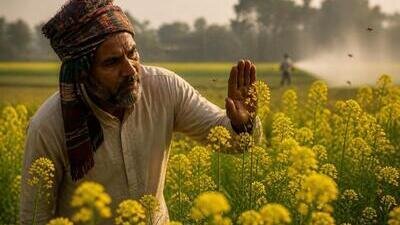
Silent Skies, Empty Plates: The Pesticide Threat to Our Bees
The Issue
### 1. Nature’s Unsung Architects
One out of every three bites of food on our plates exists thanks to the tireless work of bees. From staples like mustard and vegetables to high-value fruits like mangoes and lychees, our food security rests heavily on these microscopic pollinators. Without them, pollination grinds to a halt, crop yields plummet, and global nutrition takes a devastating hit.
### 2. The Threat: A Deluge of Neurotoxins
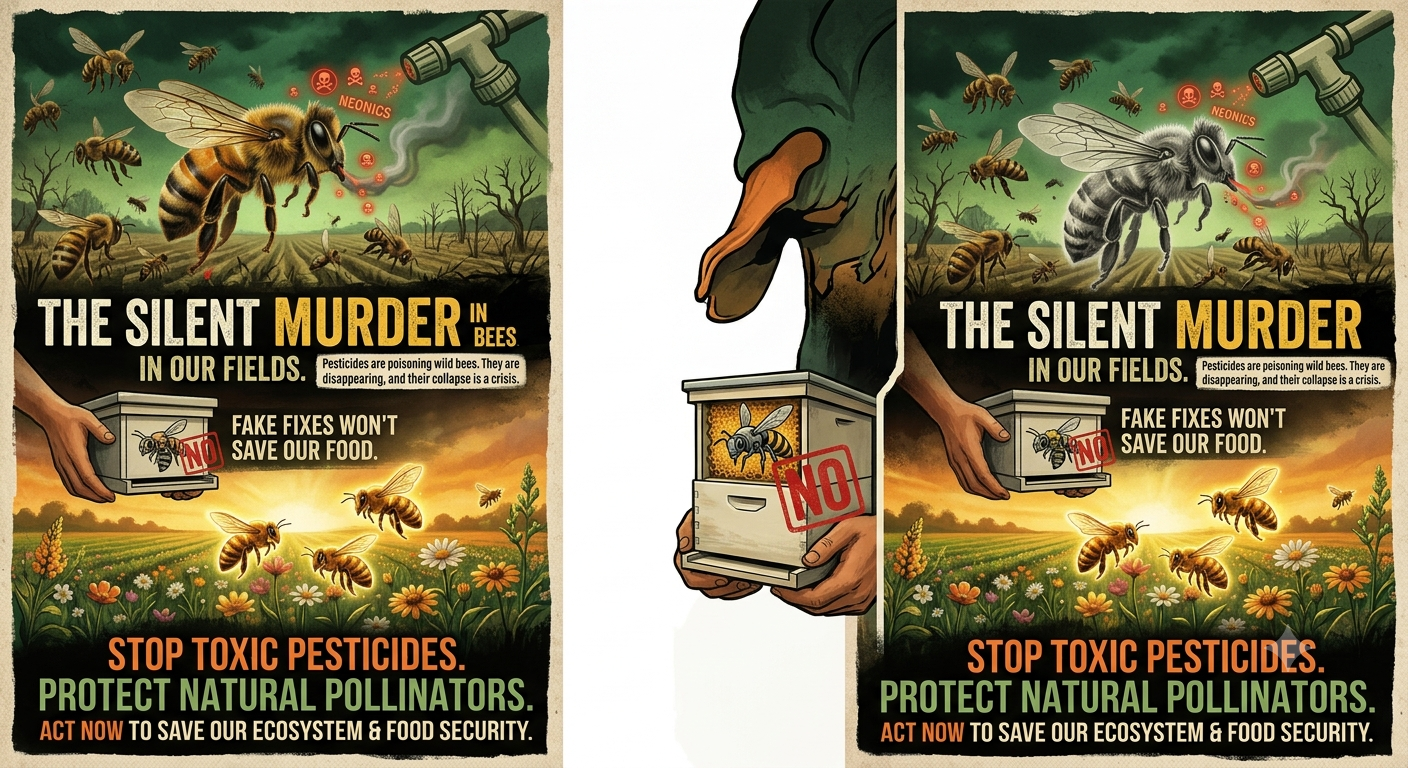
To maximize short-term yield, modern agriculture has become increasingly reliant on aggressive chemical cocktails—most notably neurotoxic neonicotinoids. This unchecked overuse has transformed crop fields into lethal zones for wild pollinators.
* **Instant Field Deaths:** Foraging bees that come into contact with freshly sprayed crops drop dead almost immediately.
* **Colony Annihilation:** Bees carrying poison-laced nectar and pollen back to their hives unwittingly contaminate the entire colony, causing swift, mass die-offs.
### 3. The Illusion of Artificial Hive Solutions
As wild bee habitats shrink under chemical exposure, commercial box-bee farming (apiculture) is being pushed as a fix. While managed hives are great for honey harvesting and targeted farm pollination, **they can never replace the ecological power of wild bees**. Managed colonies cannot match the biodiversity or raw resilience of wild populations. Simply deploying more commercial boxes cannot offset the destruction of natural ecosystems.
### 4. The Domino Effect on Our Ecosystem
* **Agricultural Crisis:** Declining pollination directly lowers harvest output, triggering food inflation and widespread nutritional deficits.
* **Loss of Wild Flora:** Countless wild plants relying on insect pollination will fail to reproduce, permanently altering local landscapes.
* **Food Web Collapse:** The loss of insects starves birds and small wildlife, triggering a cascade failure across the food chain.
### 5. Turning the Tide: Actionable Steps
> **"Saving bees isn't an act of charity for an insect; it's an insurance policy for our own survival."**
>
To halt the collapse of our natural pollinators, immediate shifts are required:
* **Shift to Bio-Pesticides:** Transition farmers from harsh synthetic chemicals toward botanical alternatives, such as neem-based solutions.
* **Enforce Strict Regulations:** Hold chemical manufacturers accountable through strict oversight, banning high-toxicity and non-essential formulations.
* **Optimize Spray Timing:** When chemical application is unavoidable, mandate evening spraying when bee foraging activity is at zero.
* **Grassroots Education:** Conduct field workshops to show farmers how protecting pollinators directly boosts their bottom line through higher crop yields.
### The Bottom Line
Protecting wild pollinators is not an environmental luxury—it is a condition for human survival. While commercial apiculture has its place, it must complement natural ecosystems, not substitute them. By reining in toxic pesticides and committing to sustainable agriculture, we can safeguard these essential creatures before the buzz fades for good.

88
The Issue
### 1. Nature’s Unsung Architects
One out of every three bites of food on our plates exists thanks to the tireless work of bees. From staples like mustard and vegetables to high-value fruits like mangoes and lychees, our food security rests heavily on these microscopic pollinators. Without them, pollination grinds to a halt, crop yields plummet, and global nutrition takes a devastating hit.
### 2. The Threat: A Deluge of Neurotoxins
To maximize short-term yield, modern agriculture has become increasingly reliant on aggressive chemical cocktails—most notably neurotoxic neonicotinoids. This unchecked overuse has transformed crop fields into lethal zones for wild pollinators.
* **Instant Field Deaths:** Foraging bees that come into contact with freshly sprayed crops drop dead almost immediately.
* **Colony Annihilation:** Bees carrying poison-laced nectar and pollen back to their hives unwittingly contaminate the entire colony, causing swift, mass die-offs.
### 3. The Illusion of Artificial Hive Solutions
As wild bee habitats shrink under chemical exposure, commercial box-bee farming (apiculture) is being pushed as a fix. While managed hives are great for honey harvesting and targeted farm pollination, **they can never replace the ecological power of wild bees**. Managed colonies cannot match the biodiversity or raw resilience of wild populations. Simply deploying more commercial boxes cannot offset the destruction of natural ecosystems.
### 4. The Domino Effect on Our Ecosystem
* **Agricultural Crisis:** Declining pollination directly lowers harvest output, triggering food inflation and widespread nutritional deficits.
* **Loss of Wild Flora:** Countless wild plants relying on insect pollination will fail to reproduce, permanently altering local landscapes.
* **Food Web Collapse:** The loss of insects starves birds and small wildlife, triggering a cascade failure across the food chain.
### 5. Turning the Tide: Actionable Steps
> **"Saving bees isn't an act of charity for an insect; it's an insurance policy for our own survival."**
>
To halt the collapse of our natural pollinators, immediate shifts are required:
* **Shift to Bio-Pesticides:** Transition farmers from harsh synthetic chemicals toward botanical alternatives, such as neem-based solutions.
* **Enforce Strict Regulations:** Hold chemical manufacturers accountable through strict oversight, banning high-toxicity and non-essential formulations.
* **Optimize Spray Timing:** When chemical application is unavoidable, mandate evening spraying when bee foraging activity is at zero.
* **Grassroots Education:** Conduct field workshops to show farmers how protecting pollinators directly boosts their bottom line through higher crop yields.
### The Bottom Line
Protecting wild pollinators is not an environmental luxury—it is a condition for human survival. While commercial apiculture has its place, it must complement natural ecosystems, not substitute them. By reining in toxic pesticides and committing to sustainable agriculture, we can safeguard these essential creatures before the buzz fades for good.
The Decision Makers

Petition Updates
Share this petition
Petition created on 23 July 2026