
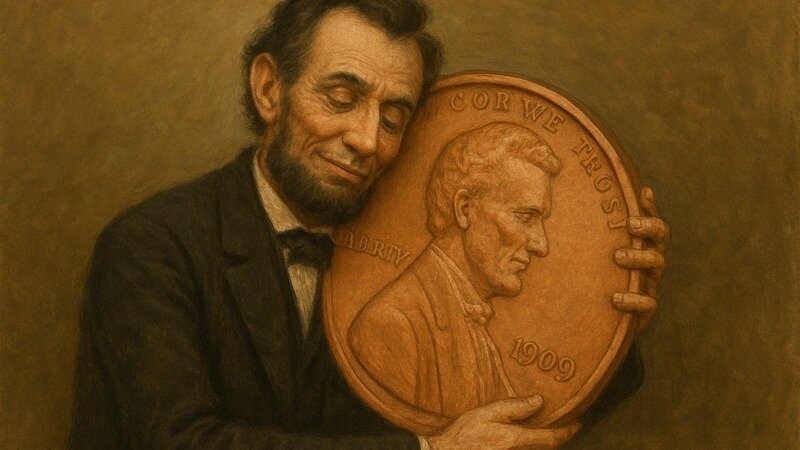
Save the Penny
The Issue
Today the U.S. Mint ended production of the penny. This is a petition to bring it back (it's like pluto, who cares how small it is).
It’s true that you can’t shove pennies into vending machines or toll booths — but that doesn’t make them “useless.” The majority of in-person cash transactions still happen between people and businesses, where pennies are accepted every day. The fact that machines don’t take them says more about the machines than about the coin itself. Should we really let convenience dictate our entire currency system? Emotionally speaking, pennies still mean something to people. They’re a tangible connection to value — to saving, collecting, or even that little thrill of finding “a penny, pick it up.” When we start erasing these small, simple parts of our daily lives just because they’re inconvenient, we risk erasing a sense of shared history and small gratitude. Not everything needs to be optimized to the second.
Yes, inflation has lowered the penny’s purchasing power. But that’s true of every currency denomination over time — not just the penny. We don’t throw away the dollar bill just because it buys less than it did in 1970. Currency naturally evolves with the economy, and the penny still serves as the smallest unit for precise transactions. Eliminating it would force rounding, which can subtly disadvantage consumers — particularly in low-income communities where cash is used most often. The penny symbolizes fairness and accuracy. Every cent counts — especially for people living paycheck to paycheck. Saying “just round up” sounds harmless to the wealthy, but to someone carefully counting cash for groceries, every cent does matter. Keeping the penny means respecting the principle that every bit of effort, every bit of value, counts.
Maybe transactions involving pennies take a few extra seconds, but framing that as a massive national “time loss” oversimplifies reality. People waste far more time waiting for receipts to print, fiddling with card readers, or waiting for Wi-Fi. The Bureau of Labor Statistics doesn’t measure the “hours lost” to those daily inefficiencies — so why single out the penny? Those few seconds can even be meaningful. Think of a child paying for candy with saved-up change, proudly counting out coins — pennies included. That’s not “wasted time.” That’s learning value, math, patience, and pride. We can’t measure everything in seconds saved; some moments of slowness have real worth.
It’s true that pennies currently cost more to make than they’re worth — but that’s a solvable problem, not a reason to destroy an entire denomination. The U.S. Mint could easily change the metal composition (as has been done before) or reduce production volume. Eliminating pennies altogether would cost hundreds of millions in system overhauls, price recalibrations, and software updates across the country. In other words, the short-term “savings” could actually lead to massive, hidden costs. The penny isn’t just a coin — it’s a symbol of humility and persistence. It’s the smallest measure of value, yet together, pennies add up to something meaningful. “A penny saved is a penny earned” has taught generations the power of small savings. Getting rid of it sends the wrong message: that the little things — and by extension, little efforts — no longer matter.
Eliminating the penny could disrupt pricing systems, charity donations, and consumer trust. Charities like the Salvation Army rely heavily on small change donations; removing the penny might discourage spontaneous giving. Psychologically, people donate more when the “barrier” to giving feels small — a single coin, a simple gesture. There’s something poetic about the penny. It’s not about its monetary worth — it’s about what it represents: effort, optimism, and connection. Pennies carry stories — wedding-day “lucky pennies,” memorial coins, keepsakes from a first allowance. You can’t assign a cost-benefit ratio to meaning.
Eliminating the penny may sound efficient, but it’s an emotionally hollow, economically shortsighted move. It would simplify machines, yes — but complicate fairness. It would save a few seconds — but cost us a century-old symbol of value. It would shave a few cents off minting — but erase a reminder that small things matter.
Sometimes progress isn’t about speeding up — it’s about holding onto what keeps us human.

4
The Issue
Today the U.S. Mint ended production of the penny. This is a petition to bring it back (it's like pluto, who cares how small it is).
It’s true that you can’t shove pennies into vending machines or toll booths — but that doesn’t make them “useless.” The majority of in-person cash transactions still happen between people and businesses, where pennies are accepted every day. The fact that machines don’t take them says more about the machines than about the coin itself. Should we really let convenience dictate our entire currency system? Emotionally speaking, pennies still mean something to people. They’re a tangible connection to value — to saving, collecting, or even that little thrill of finding “a penny, pick it up.” When we start erasing these small, simple parts of our daily lives just because they’re inconvenient, we risk erasing a sense of shared history and small gratitude. Not everything needs to be optimized to the second.
Yes, inflation has lowered the penny’s purchasing power. But that’s true of every currency denomination over time — not just the penny. We don’t throw away the dollar bill just because it buys less than it did in 1970. Currency naturally evolves with the economy, and the penny still serves as the smallest unit for precise transactions. Eliminating it would force rounding, which can subtly disadvantage consumers — particularly in low-income communities where cash is used most often. The penny symbolizes fairness and accuracy. Every cent counts — especially for people living paycheck to paycheck. Saying “just round up” sounds harmless to the wealthy, but to someone carefully counting cash for groceries, every cent does matter. Keeping the penny means respecting the principle that every bit of effort, every bit of value, counts.
Maybe transactions involving pennies take a few extra seconds, but framing that as a massive national “time loss” oversimplifies reality. People waste far more time waiting for receipts to print, fiddling with card readers, or waiting for Wi-Fi. The Bureau of Labor Statistics doesn’t measure the “hours lost” to those daily inefficiencies — so why single out the penny? Those few seconds can even be meaningful. Think of a child paying for candy with saved-up change, proudly counting out coins — pennies included. That’s not “wasted time.” That’s learning value, math, patience, and pride. We can’t measure everything in seconds saved; some moments of slowness have real worth.
It’s true that pennies currently cost more to make than they’re worth — but that’s a solvable problem, not a reason to destroy an entire denomination. The U.S. Mint could easily change the metal composition (as has been done before) or reduce production volume. Eliminating pennies altogether would cost hundreds of millions in system overhauls, price recalibrations, and software updates across the country. In other words, the short-term “savings” could actually lead to massive, hidden costs. The penny isn’t just a coin — it’s a symbol of humility and persistence. It’s the smallest measure of value, yet together, pennies add up to something meaningful. “A penny saved is a penny earned” has taught generations the power of small savings. Getting rid of it sends the wrong message: that the little things — and by extension, little efforts — no longer matter.
Eliminating the penny could disrupt pricing systems, charity donations, and consumer trust. Charities like the Salvation Army rely heavily on small change donations; removing the penny might discourage spontaneous giving. Psychologically, people donate more when the “barrier” to giving feels small — a single coin, a simple gesture. There’s something poetic about the penny. It’s not about its monetary worth — it’s about what it represents: effort, optimism, and connection. Pennies carry stories — wedding-day “lucky pennies,” memorial coins, keepsakes from a first allowance. You can’t assign a cost-benefit ratio to meaning.
Eliminating the penny may sound efficient, but it’s an emotionally hollow, economically shortsighted move. It would simplify machines, yes — but complicate fairness. It would save a few seconds — but cost us a century-old symbol of value. It would shave a few cents off minting — but erase a reminder that small things matter.
Sometimes progress isn’t about speeding up — it’s about holding onto what keeps us human.
Petition Updates
Share this petition
Petition created on November 12, 2025