
Thank you!
Our voices are heard
A day before the 8 September parliament session, MND issued a press statement about 'Building a city for both people and nature'. It was the first time Minister Chee Hong Tat personally said something in response to the public outcry; ever since new development projects impacting Maju and Gillman were announced on 10 July.
Parliament focus this round
Some MPs continued to raise follow-up questions on Singapore's planned deforestations. Unfortunately most questions were deferred to the next parliament sitting as this month's focus had shifted to other national matters.
But I learnt something and maybe you saw it too. In recent news, ST reported that every ministers' variable salary is tied to '"4 socio-economic indicators". Applied to all ministers are the same 4 salary KPIs – and all four are income driven (regardless of ministry mandate). Two NMPs requested for quality of life indicators and I agree with them. Measurement of a successful country certainly needs KPIs beyond the dollar signs.
How is this related?
Well, one of the 4 salary KPIs for all ministers is Gross Domestic Product. Now I am no longer surprised why Singapore's Ministry of Sustainability & Environment isn't more interested in preserving existing ecological benefits.
As you may know, GDP only measures man-made production outputs. Existing ecological systems are not man-made outputs hence don't count. Ironically the human activities of bulldozing and cutting down forests will in fact increase GDP.
Spending more and building more supports GDP growth.
Even in newly-announced 2026 Climate Adaptation Planning, existing forests are not identified as an adaptation asset or climate defense system. MSE's recent projects are green building solutions, innovative food farming, planting new trees – all of which increase GDP through spending. Also according to Google: 'Singapore's participation in carbon credit schemes acts as a multi-billion dollar catalyst for long term GDP growth'.
To be clear, I am not against economic growth. Of course GDP is important! But Singapore must be careful to select the correct metric for the intended mandate.
What Singapore needs too: GPI and GEP
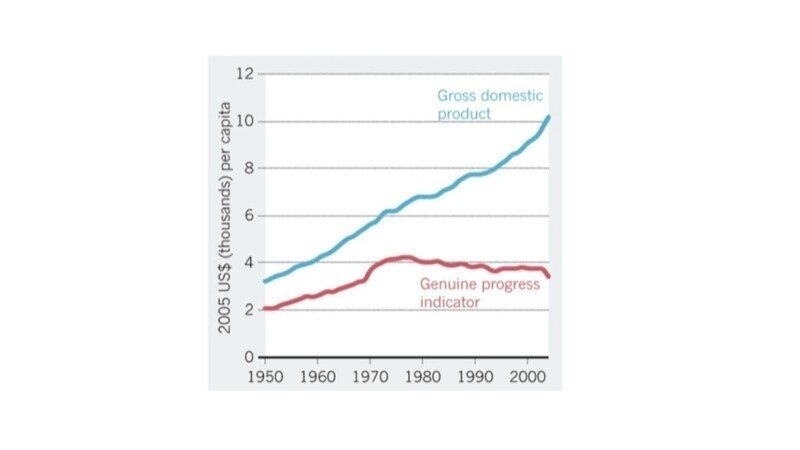
GDP isn't suitable as a Ministerial socio-economic indicator. Why? Because it is a pure economic indicator. For the intention of measuring positive impact to society, this salary KPI needs to be replaced by GPI Genuine Progress Indicator which tracks economic GDP gains, while subtracting the social & environmental costs that result from it. See graph chart. GPI would be the true socio-economic metric.
How to calculate intangible social and environmental value? Since 2021, there's a global standard GEP Gross Ecosystems Product and SEEA-EA accounting that provides a method of quantifying natural assets and other intangible public benefits. This global standard has been adopted by over 30 countries including fast paced economic-driven nations. Shenzhen China is often cited as a prime example of GEP in action: a high-dense economic powerhouse found it essential to adopt a more accurate framework in development planning.
So there is a better, smarter way.
Spend 20 minutes to improve ministerial direction for the next decade? Fixing incorrect and incomplete salary KPIs is key. Ministers salary metrics matter. It shapes top-down directives to each and every gov agency.
👉 Write to Minister Chan Chun Sing and PM Wong who respectively coordinated the salary review and hold the highest executive decision on ministerial matters. Please consider writing soon, while the matter is still somewhat being debated.
This morning, the CNA published an opinion piece that agreed with adding new KPI targets for “demographic sustainability, climate adaptation and social cohesion”. Support the writer and the Nominated MPs who raised this point on quality-of-life indicators, who may be compelled to follow up further.
👉 Kindly highlight GPI and GEP and adding better KPI metrics for a Better Singapore. Please help spread the word too if you can. Thank you!
The CNA article emphasised linking higher salary to 'a more challenging set of KPIs that is directly related to a minister’s performance' and I agree with that. Personally I would like to see Healthcare affordability tracking and Ambient Temperature tracking against rising urban heat.
This goes beyond Gillman and Maju. Yes we have done our part for individual land sites – THANK YOU SO MUCH, we could not have come this far without your support and efforts! This ask is about the country's general direction. Ministers salary KPIs matter. It shapes all top-down directives from cabinet ministers that trickles down to the gov agencies.
Better national planning must begin now. Not after the next salary review.
In response to Salary Review Committee's recommendation for additional KPIs, as well as Nominated MPs request for quality-of-life metrics, Minister Chan said that the government will study the possibility. But can the country really afford to function with incorrect and incomplete KPIs for the next 5 years, or more?
Hidden risks (and hidden losses) masked by over-reliance on the GDP metric mustn't be brushed off and postponed for too long. Global uncertainty has evolved, and so has the competitive landscapes and needs of a future SG.
As Singapore embarks on a multitude of new development projects involving trade-offs in social and natural assets, it is increasingly important that such development decisions are made with the best tools and frameworks available.
Higher salary means higher accountability.
Besides economic growth, how does a successful Singapore look like?