

Protecting Pets on Nextdoor: A Call for Stronger Safeguards, Oversight, and Accountability
The Issue
For nearly two decades, I've worked professionally in canine training and behavior, rescue, education, and animal welfare. During that time, I've witnessed firsthand what happens when good intentions aren't supported by knowledge, structure, responsible practices, and accountability.
Since relocating from the DC/Northern Virginia area to Southern California nearly three years ago, what I've witnessed unfolding daily within my local Nextdoor communities has been genuinely gut-wrenching.
Posts involving unwanted litters, backyard breeding, lost and found animals, and dogs needing new homes appear with alarming frequency. On most days, they seem to dominate the neighborhood conversation.
Dogs being given away to complete strangers without meaningful screening or verification. Irresponsible rehoming. Backyard breeding. Pet flipping, where animals may be acquired through theft, free or low-cost adoption events (including "Clear the Shelters" initiatives), deceptive rehoming arrangements, or fraudulent lost-and-found claims, then resold for profit. The list goes on and on.
Fake profiles, impersonation, and scams used to acquire pets or solicit money under false pretenses. Individuals falsely presenting themselves as legitimate rescues, sometimes using misleading identities, unverifiable credentials, or fabricated stories to gain trust.
Dogs being pulled from shelter euthanasia lists without the resources, behavioral understanding, appropriate foster environments, or responsible placement plans needed to protect them. Lost-and-found pets being handled without adequate ownership verification or meaningful efforts toward reunification.
I've seen what happens when dogs are placed in unsuitable foster environments, their behavioral needs and distress signals are misunderstood, ignored, or completely missed altogether, and escalating conflicts are met with inadequate human intervention. I've seen dogs subjected to further trauma and instability by the very people and systems intended to save them.
I've also witnessed heartbreaking situations involving pets whose safety and wellbeing appear to fall through the cracks of irresponsible rehoming practices.
Luna's Story: When a Dog's Safety Falls Through the Cracks
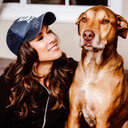
One such case involved a dog named Luna, pictured above.
Luna's owner had been attempting to rehome her through Nextdoor. When those efforts were unsuccessful, Luna was subsequently found wandering in the middle of a road, visibly distressed, hungry, and thirsty.
The woman who found Luna had her scanned for a microchip. The information identified Luna as the same dog whose owner had been attempting to rehome her through Nextdoor. Her microchip was still registered to that owner.
How Luna ended up alone in the middle of that road remains an important unanswered question. But the circumstances raise deeply troubling concerns about abandonment, responsibility, and what happens when attempts to rehome an animal fail.
And this is precisely why responsible rehoming cannot be reduced to posting a photograph, asking whether someone wants a dog, and hoping everything works out.
These are living, feeling beings whose lives depend on the decisions people make on their behalf. When those decisions are made without responsibility, preparation, or accountability, the consequences can be devastating.
Luna wasn't just another Nextdoor post. She was a life at risk.
These aren't harmless online exchanges. There are living, feeling beings on the other side of these transactions, and they're part of our lives and communities.
Poorly safeguarded transfers can expose pets to neglect, exploitation, irresponsible breeding, and, in some cases, deliberate cruelty. Risks may include animals being acquired for use as bait dogs in dogfighting rings, experimentation, target practice, or other abusive purposes. While the outcome of any individual online exchange may be unknown, the absence of meaningful safeguards creates opportunities for harm.
When Moderation Becomes Part of the Problem
Equally concerning is the inconsistency in how pet-related content is moderated.
I've personally experienced educational posts being removed or hidden while questionable rehoming, breeding, and other pet-related posts remain visible. I've repeatedly raised concerns through Nextdoor's support channels, questioned moderation decisions, and requested escalation - all without obtaining meaningful resolution.
These experiences have led me to question not only how Nextdoor enforces its policies, but also how the people entrusted with helping enforce those policies are selected, prepared, and held accountable.
Who Is Reviewing the Reviewers?
In correspondence with Nextdoor Support in October 2026, I raised concerns about the qualifications, selection, training, oversight, and accountability of its Review Team members.
Nextdoor's response indicated that it could not disclose internal details about its moderator selection and training procedures.
More recently, a Review Team member described how she was selected. She said she received an unexpected email invitation to join the team, without knowing what criteria had been used to select her.
While this account doesn't establish that Nextdoor lacks screening or training procedures, it reinforces the need for transparency about what those procedures involve, how reviewers are evaluated, and how their conduct is monitored.
And a recent incident has made these questions even more urgent.
Screenshots document a member of Nextdoor's Review Team publicly promoting a litter of six puppies, privately quoting a selling price of $2,000 to an interested party, and dismissing legitimate questions about responsible breeding and animal welfare - even going so far as to personally attack those who questioned her.
She subsequently removed her original post and created a listing for the puppies in Nextdoor's For Sale & Free marketplace, displaying an absurdly exaggerated price that appeared intended to make a mockery of the situation and the legitimate concerns being raised.
This raises serious questions about Nextdoor's enforcement of its animal sales policies, particularly when public posts are used to generate interest in animals and discussions about selling them move into private messages.
Even more troubling is the conduct, judgment, and accountability of individuals entrusted with helping uphold those very standards.
And this is not the first time I've encountered troubling conduct involving a Nextdoor Review Team member.
In a previous incident, another Review Team member - who also happens to be a professional dog trainer - repeatedly hid or removed my educational posts. I raised concerns with Nextdoor Support about what I believed to be inappropriate and potentially biased moderation, particularly given our shared professional field and the nature of the content being suppressed.
Despite reaching out and requesting assistance from Nextdoor Support, I did not receive a meaningful resolution or follow-up.
These experiences raise questions that Nextdoor's leadership should be prepared to answer:
What qualifications are required to serve on the Review Team, and what screening or vetting takes place before members are appointed?
What training do reviewers receive regarding platform policies, conflicts of interest, impartiality, and responsible moderation?
How does Nextdoor monitor reviewer conduct, identify potential bias or misuse of moderation privileges, and ensure consistent enforcement?
Who investigates complaints involving Review Team members, and what independent oversight exists?
What consequences apply when reviewers themselves violate platform policies or misuse their positions?
Despite repeatedly raising these concerns, I've received no meaningful explanation of how Nextdoor ensures its Review Team members are qualified, appropriately trained, impartially supervised, and held accountable.
I'm not suggesting that every reviewer is unqualified or that no oversight exists.
I'm asking Nextdoor to demonstrate that meaningful safeguards are in place, that those safeguards apply equally to everyone, and that complaints involving individuals with moderation responsibilities receive appropriate scrutiny.
If members of Nextdoor's own Review Team are engaging in activities that violate its policies - or using their positions to unfairly suppress legitimate community content - who is holding THEM accountable?
When a platform entrusts community members with the responsibility of helping moderate their neighbors' content, transparency, fairness, and accountability should be foundational to that responsibility.
A community cannot trust its moderation system if it cannot trust the people responsible for enforcing its standards - or the processes intended to hold those people accountable.
What We're Asking Nextdoor to Change
We're not asking Nextdoor to manage adoptions, screen prospective owners, or assume responsibility for individual placements.
We're asking it to strengthen the policies, security measures, reporting mechanisms, and safeguards governing its own platform.
1. Clear animal-welfare and anti-fraud policies
Establish specific, enforceable guidelines addressing unsafe rehoming, irresponsible breeding, pet flipping, fraudulent profiles, impersonation, rescue misrepresentation, scams, and lost-and-found pet situations. Clarify how restrictions on animal sales apply when public posts are used to initiate private transactions.
2. Stronger identity verification and account security
Strengthen safeguards during profile creation, improve account authenticity verification, and implement measures to identify fraudulent accounts, impersonation, duplicate profiles used for deception, and suspicious activity. Apply additional verification when accounts repeatedly seek pets, claim to represent rescues, or engage in potentially high-risk pet-related activity, while protecting legitimate users' privacy.
3. Dedicated animal-welfare reporting
Create specific complaint categories for suspected animal exploitation, cruelty, neglect, unsafe transfers, fraudulent rescue activity, fake profiles, pet-related scams, irresponsible breeding, and suspicious lost-and-found claims.
In my local Southern California Nextdoor communities, animal-related posts - including (backyard) breeding announcements, rehoming requests, lost-and-found animals, requests for donations, and questionable transfers - make up an astonishing amount of the content I encounter. Yet the platform lacks sufficiently specific reporting options to distinguish legitimate animal welfare concerns from ordinary community disagreements.
When these issues are such a frequent part of neighborhood activity, why aren't there dedicated reporting mechanisms and safeguards designed to address them?
Members should be able to report suspected animal welfare violations accurately, with those reports routed for appropriate review rather than dismissed, misclassified, or lost within generic moderation categories.
4. Informed, consistent moderation
Improve reviewer selection, training, policy alignment, and enforcement so potentially harmful activity receives appropriate scrutiny while legitimate educational content is not unnecessarily suppressed.
5. Meaningful complaint escalation
Establish transparent procedures for reviewing serious concerns, repeated violations, disputed moderation decisions, and complaints involving individuals with moderation responsibilities.
6. Lost-and-found pet safeguards
Provide clear guidance on responsible reunification, ownership verification, and preventing improper transfers.
7. Protection for animal-welfare education
Recognize and support responsible educational efforts that help community members understand risks, recognize potentially harmful practices, and make informed decisions.
8. Transparency and animal-welfare expertise
Engage qualified animal-welfare professionals in policy development and establish meaningful communication, oversight, and accountability regarding reported concerns.
9. Independent Review Team oversight and accountability
Establish and communicate clear standards for Review Team selection, screening, training, conduct, conflicts of interest, and ongoing performance. Implement impartial procedures for investigating complaints involving Review Team members, with appropriate corrective action when violations are substantiated.
Why This Matters
Nextdoor was created to connect neighbors and strengthen communities.
Our pets are part of those communities, too. Their safety, wellbeing, and lives depend on the decisions people make and the safeguards in place to protect them.
This petition isn't intended to discourage responsible, ethical rescue efforts, responsible fostering, adoption, or rehoming. It's about ensuring compassion is accompanied by knowledge, preparation, and accountability.
Getting a dog out of immediate danger isn't the same as ensuring that dog is safe afterward.
What happens next matters just as much.
And when social media platforms provide the space where these decisions and transactions begin, they have a responsibility to establish and meaningfully enforce standards that help protect their communities.
We're calling on Nextdoor's founders and leadership to recognize these risks, address the documented concerns, and take meaningful steps toward safer, more informed, and more accountable pet-related activity.
A community cannot thrive without trust. And trust cannot exist without accountability.
Please sign and share this petition. Help us demand stronger safeguards, meaningful oversight, and real accountability.
Our pets deserve better. And so do our communities.
430
The Issue
For nearly two decades, I've worked professionally in canine training and behavior, rescue, education, and animal welfare. During that time, I've witnessed firsthand what happens when good intentions aren't supported by knowledge, structure, responsible practices, and accountability.
Since relocating from the DC/Northern Virginia area to Southern California nearly three years ago, what I've witnessed unfolding daily within my local Nextdoor communities has been genuinely gut-wrenching.
Posts involving unwanted litters, backyard breeding, lost and found animals, and dogs needing new homes appear with alarming frequency. On most days, they seem to dominate the neighborhood conversation.
Dogs being given away to complete strangers without meaningful screening or verification. Irresponsible rehoming. Backyard breeding. Pet flipping, where animals may be acquired through theft, free or low-cost adoption events (including "Clear the Shelters" initiatives), deceptive rehoming arrangements, or fraudulent lost-and-found claims, then resold for profit. The list goes on and on.
Fake profiles, impersonation, and scams used to acquire pets or solicit money under false pretenses. Individuals falsely presenting themselves as legitimate rescues, sometimes using misleading identities, unverifiable credentials, or fabricated stories to gain trust.
Dogs being pulled from shelter euthanasia lists without the resources, behavioral understanding, appropriate foster environments, or responsible placement plans needed to protect them. Lost-and-found pets being handled without adequate ownership verification or meaningful efforts toward reunification.
I've seen what happens when dogs are placed in unsuitable foster environments, their behavioral needs and distress signals are misunderstood, ignored, or completely missed altogether, and escalating conflicts are met with inadequate human intervention. I've seen dogs subjected to further trauma and instability by the very people and systems intended to save them.
I've also witnessed heartbreaking situations involving pets whose safety and wellbeing appear to fall through the cracks of irresponsible rehoming practices.
Luna's Story: When a Dog's Safety Falls Through the Cracks
One such case involved a dog named Luna, pictured above.
Luna's owner had been attempting to rehome her through Nextdoor. When those efforts were unsuccessful, Luna was subsequently found wandering in the middle of a road, visibly distressed, hungry, and thirsty.
The woman who found Luna had her scanned for a microchip. The information identified Luna as the same dog whose owner had been attempting to rehome her through Nextdoor. Her microchip was still registered to that owner.
How Luna ended up alone in the middle of that road remains an important unanswered question. But the circumstances raise deeply troubling concerns about abandonment, responsibility, and what happens when attempts to rehome an animal fail.
And this is precisely why responsible rehoming cannot be reduced to posting a photograph, asking whether someone wants a dog, and hoping everything works out.
These are living, feeling beings whose lives depend on the decisions people make on their behalf. When those decisions are made without responsibility, preparation, or accountability, the consequences can be devastating.
Luna wasn't just another Nextdoor post. She was a life at risk.
These aren't harmless online exchanges. There are living, feeling beings on the other side of these transactions, and they're part of our lives and communities.
Poorly safeguarded transfers can expose pets to neglect, exploitation, irresponsible breeding, and, in some cases, deliberate cruelty. Risks may include animals being acquired for use as bait dogs in dogfighting rings, experimentation, target practice, or other abusive purposes. While the outcome of any individual online exchange may be unknown, the absence of meaningful safeguards creates opportunities for harm.
When Moderation Becomes Part of the Problem
Equally concerning is the inconsistency in how pet-related content is moderated.
I've personally experienced educational posts being removed or hidden while questionable rehoming, breeding, and other pet-related posts remain visible. I've repeatedly raised concerns through Nextdoor's support channels, questioned moderation decisions, and requested escalation - all without obtaining meaningful resolution.
These experiences have led me to question not only how Nextdoor enforces its policies, but also how the people entrusted with helping enforce those policies are selected, prepared, and held accountable.
Who Is Reviewing the Reviewers?
In correspondence with Nextdoor Support in October 2026, I raised concerns about the qualifications, selection, training, oversight, and accountability of its Review Team members.
Nextdoor's response indicated that it could not disclose internal details about its moderator selection and training procedures.
More recently, a Review Team member described how she was selected. She said she received an unexpected email invitation to join the team, without knowing what criteria had been used to select her.
While this account doesn't establish that Nextdoor lacks screening or training procedures, it reinforces the need for transparency about what those procedures involve, how reviewers are evaluated, and how their conduct is monitored.
And a recent incident has made these questions even more urgent.
Screenshots document a member of Nextdoor's Review Team publicly promoting a litter of six puppies, privately quoting a selling price of $2,000 to an interested party, and dismissing legitimate questions about responsible breeding and animal welfare - even going so far as to personally attack those who questioned her.
She subsequently removed her original post and created a listing for the puppies in Nextdoor's For Sale & Free marketplace, displaying an absurdly exaggerated price that appeared intended to make a mockery of the situation and the legitimate concerns being raised.
This raises serious questions about Nextdoor's enforcement of its animal sales policies, particularly when public posts are used to generate interest in animals and discussions about selling them move into private messages.
Even more troubling is the conduct, judgment, and accountability of individuals entrusted with helping uphold those very standards.
And this is not the first time I've encountered troubling conduct involving a Nextdoor Review Team member.
In a previous incident, another Review Team member - who also happens to be a professional dog trainer - repeatedly hid or removed my educational posts. I raised concerns with Nextdoor Support about what I believed to be inappropriate and potentially biased moderation, particularly given our shared professional field and the nature of the content being suppressed.
Despite reaching out and requesting assistance from Nextdoor Support, I did not receive a meaningful resolution or follow-up.
These experiences raise questions that Nextdoor's leadership should be prepared to answer:
What qualifications are required to serve on the Review Team, and what screening or vetting takes place before members are appointed?
What training do reviewers receive regarding platform policies, conflicts of interest, impartiality, and responsible moderation?
How does Nextdoor monitor reviewer conduct, identify potential bias or misuse of moderation privileges, and ensure consistent enforcement?
Who investigates complaints involving Review Team members, and what independent oversight exists?
What consequences apply when reviewers themselves violate platform policies or misuse their positions?
Despite repeatedly raising these concerns, I've received no meaningful explanation of how Nextdoor ensures its Review Team members are qualified, appropriately trained, impartially supervised, and held accountable.
I'm not suggesting that every reviewer is unqualified or that no oversight exists.
I'm asking Nextdoor to demonstrate that meaningful safeguards are in place, that those safeguards apply equally to everyone, and that complaints involving individuals with moderation responsibilities receive appropriate scrutiny.
If members of Nextdoor's own Review Team are engaging in activities that violate its policies - or using their positions to unfairly suppress legitimate community content - who is holding THEM accountable?
When a platform entrusts community members with the responsibility of helping moderate their neighbors' content, transparency, fairness, and accountability should be foundational to that responsibility.
A community cannot trust its moderation system if it cannot trust the people responsible for enforcing its standards - or the processes intended to hold those people accountable.
What We're Asking Nextdoor to Change
We're not asking Nextdoor to manage adoptions, screen prospective owners, or assume responsibility for individual placements.
We're asking it to strengthen the policies, security measures, reporting mechanisms, and safeguards governing its own platform.
1. Clear animal-welfare and anti-fraud policies
Establish specific, enforceable guidelines addressing unsafe rehoming, irresponsible breeding, pet flipping, fraudulent profiles, impersonation, rescue misrepresentation, scams, and lost-and-found pet situations. Clarify how restrictions on animal sales apply when public posts are used to initiate private transactions.
2. Stronger identity verification and account security
Strengthen safeguards during profile creation, improve account authenticity verification, and implement measures to identify fraudulent accounts, impersonation, duplicate profiles used for deception, and suspicious activity. Apply additional verification when accounts repeatedly seek pets, claim to represent rescues, or engage in potentially high-risk pet-related activity, while protecting legitimate users' privacy.
3. Dedicated animal-welfare reporting
Create specific complaint categories for suspected animal exploitation, cruelty, neglect, unsafe transfers, fraudulent rescue activity, fake profiles, pet-related scams, irresponsible breeding, and suspicious lost-and-found claims.
In my local Southern California Nextdoor communities, animal-related posts - including (backyard) breeding announcements, rehoming requests, lost-and-found animals, requests for donations, and questionable transfers - make up an astonishing amount of the content I encounter. Yet the platform lacks sufficiently specific reporting options to distinguish legitimate animal welfare concerns from ordinary community disagreements.
When these issues are such a frequent part of neighborhood activity, why aren't there dedicated reporting mechanisms and safeguards designed to address them?
Members should be able to report suspected animal welfare violations accurately, with those reports routed for appropriate review rather than dismissed, misclassified, or lost within generic moderation categories.
4. Informed, consistent moderation
Improve reviewer selection, training, policy alignment, and enforcement so potentially harmful activity receives appropriate scrutiny while legitimate educational content is not unnecessarily suppressed.
5. Meaningful complaint escalation
Establish transparent procedures for reviewing serious concerns, repeated violations, disputed moderation decisions, and complaints involving individuals with moderation responsibilities.
6. Lost-and-found pet safeguards
Provide clear guidance on responsible reunification, ownership verification, and preventing improper transfers.
7. Protection for animal-welfare education
Recognize and support responsible educational efforts that help community members understand risks, recognize potentially harmful practices, and make informed decisions.
8. Transparency and animal-welfare expertise
Engage qualified animal-welfare professionals in policy development and establish meaningful communication, oversight, and accountability regarding reported concerns.
9. Independent Review Team oversight and accountability
Establish and communicate clear standards for Review Team selection, screening, training, conduct, conflicts of interest, and ongoing performance. Implement impartial procedures for investigating complaints involving Review Team members, with appropriate corrective action when violations are substantiated.
Why This Matters
Nextdoor was created to connect neighbors and strengthen communities.
Our pets are part of those communities, too. Their safety, wellbeing, and lives depend on the decisions people make and the safeguards in place to protect them.
This petition isn't intended to discourage responsible, ethical rescue efforts, responsible fostering, adoption, or rehoming. It's about ensuring compassion is accompanied by knowledge, preparation, and accountability.
Getting a dog out of immediate danger isn't the same as ensuring that dog is safe afterward.
What happens next matters just as much.
And when social media platforms provide the space where these decisions and transactions begin, they have a responsibility to establish and meaningfully enforce standards that help protect their communities.
We're calling on Nextdoor's founders and leadership to recognize these risks, address the documented concerns, and take meaningful steps toward safer, more informed, and more accountable pet-related activity.
A community cannot thrive without trust. And trust cannot exist without accountability.
Please sign and share this petition. Help us demand stronger safeguards, meaningful oversight, and real accountability.
Our pets deserve better. And so do our communities.
The Decision Makers
Petition Updates
Share this petition
Petition created on October 24, 2026