Make India's pilgrimage sites accessible for all
The Issue
Make India’s Major Pilgrimage Destinations Truly Accessible — From the Journey to the Darshan
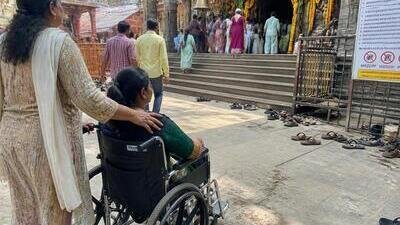
A wheelchair at the entrance is not accessibility.
Imagine travelling hundreds of kilometres to a sacred place, only to discover that your wheelchair can take you only part of the way.
Imagine being told, “A wheelchair is available,” but still having to depend on someone to lift you over stairs, take a separate route, or miss an important part of the religious or cultural experience.
For millions of persons with disabilities, this can be the reality of pilgrimage in India.
Faith should never have a physical barrier.
India is a land of faith and pilgrimage. Millions of people travel every year to visit temples, shrines and sacred destinations.
But for a person who uses a wheelchair or has a mobility disability, the pilgrimage can become a journey of barriers.
A temple may have a wheelchair.
There may be a ramp at one entrance.
There may be priority darshan.
But what happens after that?
Can the person reach the temple safely from the parking area?
Can they use the surrounding footpaths?
Can they stay in an accessible hotel?
Can they use a restaurant and public toilet?
Can they experience the same important religious, architectural and cultural spaces as other pilgrims?
And most importantly — can they find accurate information about accessibility BEFORE travelling?
ACCESSIBILITY SHOULD NOT END AT THE TEMPLE GATE.
A pilgrimage destination is an entire journey:
TRANSPORT → PARKING/DROP-OFF → FOOTPATHS → HOTEL → TEMPLE ENTRANCE → SECURITY → QUEUE → DARSHAN → CORRIDORS & CULTURAL SPACES → TOILETS → RESTAURANTS → NEARBY ATTRACTIONS → RETURN JOURNEY
If any essential part of this journey is inaccessible, the pilgrimage remains difficult or impossible for many persons with disabilities.
ASSISTANCE IS NOT THE SAME AS ACCESSIBILITY
A wheelchair being available does not automatically make a destination accessible.
If someone has to be physically lifted over stairs, that is assistance — not barrier-free access.
If a wheelchair user is given a separate route, that route should provide an equivalent opportunity to experience the significant religious, cultural and architectural spaces available to other visitors.
ASSISTANCE SHOULD SUPPLEMENT ACCESSIBILITY, NOT SUBSTITUTE FOR IT.
WHY DO WE NEED INDEPENDENT ACCESSIBILITY AUDITS?
Major pilgrimage destinations across India — including Ram Mandir, Mahakaleshwar, Somnath, Kashi Vishwanath, Tirumala Tirupati, Jagannath Puri, Meenakshi Amman Temple, Dwarkadhish, Shirdi, Vaishno Devi, Kedarnath, Badrinath, Golden Temple, Akshardham and many others — should undergo professional, independent accessibility audits.
These examples are not intended to accuse individual temples or authorities of being inaccessible.
They demonstrate why India needs a standardised and transparent system to establish what is actually accessible.
MAHAKALESHWAR, UJJAIN
Wheelchair assistance and designated access arrangements are available.
However, questions have been raised about whether wheelchair users following an alternative route receive equivalent access to the Mahakal Lok Corridor and other significant visitor areas.
We are not making an unverified allegation.
We are asking the Government to independently audit the route and publicly establish whether wheelchair users receive an equivalent experience.
SOMNATH
Wheelchair facilities and accessibility arrangements exist, but reports of steps near the final point of access highlight an important question:
CAN A WHEELCHAIR USER REACH THE DESTINATION WITHOUT BEING PHYSICALLY LIFTED OVER STAIRS?
Where heritage or architectural constraints make conventional modifications difficult, safe and dignified alternatives should be explored wherever technically feasible.
OUR SIX DEMANDS
1. CONDUCT NATIONWIDE INDEPENDENT ACCESSIBILITY AUDITS
Audit major pilgrimage destinations using qualified accessibility professionals and involving persons with disabilities.
2. ENSURE END-TO-END ACCESSIBILITY
Accessibility must cover temples and shrines as well as:
• Parking and drop-offs
• Roads and footpaths
• Local transport
• Hotels and accommodation
• Restaurants
• Public toilets
• Important tourist and cultural attractions
3. ENSURE EQUIVALENT ACCESS
Persons with disabilities should, wherever reasonably feasible, be able to experience the same significant religious, cultural and architectural spaces as other pilgrims.
4. PUBLISH ACCURATE ACCESSIBILITY INFORMATION BEFORE TRAVEL
Every major pilgrimage destination should clearly state:
• Where wheelchair access begins and ends
• Whether stairs exist
• Whether lifts/platform lifts are available
• Whether assistance is required
• Whether a separate route is used
• Whether important corridors and cultural spaces are accessible
• Accessible toilet availability
• Accessible parking
• Accessible accommodation
• Accessible local transport
“WHEELCHAIR AVAILABLE” IS NOT ENOUGH.
People should know exactly how far their wheelchair can go BEFORE they travel.
5. CREATE AN ACCESSIBLE PILGRIMAGE DESTINATION CERTIFICATION SYSTEM
Destinations should be independently assessed and transparently classified:
🟢 END-TO-END ACCESSIBLE
🟡 PARTIALLY ACCESSIBLE
🟠 ACCESSIBLE WITH ASSISTANCE
🔴 SIGNIFICANT BARRIERS REMAIN
A clear classification will help persons with disabilities make informed decisions before undertaking a pilgrimage.
6. ESTABLISH CONTINUOUS MONITORING AND IMPROVEMENT
Every major pilgrimage destination should have:
• An accessibility nodal officer
• A disability-friendly feedback mechanism
• Periodic audits
• Time-bound improvement plans
• Consultation with persons with disabilities
THIS IS NOT ABOUT RELIGION.
This is about ACCESSIBILITY, DIGNITY AND EQUAL PARTICIPATION.
The principle should apply to:
TEMPLES • GURUDWARAS • CHURCHES • MOSQUES • JAIN TEMPLES • BUDDHIST SITES • HERITAGE SITES • PILGRIMAGE ROUTES • TOURIST DESTINATIONS
The benefits will extend beyond wheelchair users to elderly pilgrims, people with temporary mobility limitations, families travelling with disabled members, people recovering from injuries, and parents travelling with children in prams.
OUR DEMAND
We call upon the Government of India and concerned State Governments to establish a:
NATIONAL ACCESSIBLE PILGRIMAGE DESTINATION PROGRAMME
with independent accessibility audits, transparent accessibility ratings, time-bound improvement plans and meaningful participation of persons with disabilities.
We want India to become a country where a person with a disability can say:
“I CAN PLAN MY PILGRIMAGE BEFORE I LEAVE HOME.”
“I KNOW WHERE MY WHEELCHAIR CAN GO.”
“I DON’T HAVE TO DEPEND ON STRANGERS TO LIFT ME OVER STAIRS.”
“I DON’T HAVE TO MISS IMPORTANT PARTS OF THE EXPERIENCE BECAUSE I USE A WHEELCHAIR.”
“I CAN STAY, EAT, TRAVEL AND WORSHIP WITH DIGNITY.”
FAITH SHOULD NEVER HAVE A PHYSICAL BARRIER.
ACCESSIBILITY SHOULD NOT END AT THE TEMPLE GATE.
IT SHOULD EXTEND THROUGHOUT THE ENTIRE PILGRIMAGE JOURNEY.
Please sign this petition and share it so we can ask the Government of India to make India's major pilgrimage destinations genuinely accessible to everyone.
70
The Issue
Make India’s Major Pilgrimage Destinations Truly Accessible — From the Journey to the Darshan
A wheelchair at the entrance is not accessibility.
Imagine travelling hundreds of kilometres to a sacred place, only to discover that your wheelchair can take you only part of the way.
Imagine being told, “A wheelchair is available,” but still having to depend on someone to lift you over stairs, take a separate route, or miss an important part of the religious or cultural experience.
For millions of persons with disabilities, this can be the reality of pilgrimage in India.
Faith should never have a physical barrier.
India is a land of faith and pilgrimage. Millions of people travel every year to visit temples, shrines and sacred destinations.
But for a person who uses a wheelchair or has a mobility disability, the pilgrimage can become a journey of barriers.
A temple may have a wheelchair.
There may be a ramp at one entrance.
There may be priority darshan.
But what happens after that?
Can the person reach the temple safely from the parking area?
Can they use the surrounding footpaths?
Can they stay in an accessible hotel?
Can they use a restaurant and public toilet?
Can they experience the same important religious, architectural and cultural spaces as other pilgrims?
And most importantly — can they find accurate information about accessibility BEFORE travelling?
ACCESSIBILITY SHOULD NOT END AT THE TEMPLE GATE.
A pilgrimage destination is an entire journey:
TRANSPORT → PARKING/DROP-OFF → FOOTPATHS → HOTEL → TEMPLE ENTRANCE → SECURITY → QUEUE → DARSHAN → CORRIDORS & CULTURAL SPACES → TOILETS → RESTAURANTS → NEARBY ATTRACTIONS → RETURN JOURNEY
If any essential part of this journey is inaccessible, the pilgrimage remains difficult or impossible for many persons with disabilities.
ASSISTANCE IS NOT THE SAME AS ACCESSIBILITY
A wheelchair being available does not automatically make a destination accessible.
If someone has to be physically lifted over stairs, that is assistance — not barrier-free access.
If a wheelchair user is given a separate route, that route should provide an equivalent opportunity to experience the significant religious, cultural and architectural spaces available to other visitors.
ASSISTANCE SHOULD SUPPLEMENT ACCESSIBILITY, NOT SUBSTITUTE FOR IT.
WHY DO WE NEED INDEPENDENT ACCESSIBILITY AUDITS?
Major pilgrimage destinations across India — including Ram Mandir, Mahakaleshwar, Somnath, Kashi Vishwanath, Tirumala Tirupati, Jagannath Puri, Meenakshi Amman Temple, Dwarkadhish, Shirdi, Vaishno Devi, Kedarnath, Badrinath, Golden Temple, Akshardham and many others — should undergo professional, independent accessibility audits.
These examples are not intended to accuse individual temples or authorities of being inaccessible.
They demonstrate why India needs a standardised and transparent system to establish what is actually accessible.
MAHAKALESHWAR, UJJAIN
Wheelchair assistance and designated access arrangements are available.
However, questions have been raised about whether wheelchair users following an alternative route receive equivalent access to the Mahakal Lok Corridor and other significant visitor areas.
We are not making an unverified allegation.
We are asking the Government to independently audit the route and publicly establish whether wheelchair users receive an equivalent experience.
SOMNATH
Wheelchair facilities and accessibility arrangements exist, but reports of steps near the final point of access highlight an important question:
CAN A WHEELCHAIR USER REACH THE DESTINATION WITHOUT BEING PHYSICALLY LIFTED OVER STAIRS?
Where heritage or architectural constraints make conventional modifications difficult, safe and dignified alternatives should be explored wherever technically feasible.
OUR SIX DEMANDS
1. CONDUCT NATIONWIDE INDEPENDENT ACCESSIBILITY AUDITS
Audit major pilgrimage destinations using qualified accessibility professionals and involving persons with disabilities.
2. ENSURE END-TO-END ACCESSIBILITY
Accessibility must cover temples and shrines as well as:
• Parking and drop-offs
• Roads and footpaths
• Local transport
• Hotels and accommodation
• Restaurants
• Public toilets
• Important tourist and cultural attractions
3. ENSURE EQUIVALENT ACCESS
Persons with disabilities should, wherever reasonably feasible, be able to experience the same significant religious, cultural and architectural spaces as other pilgrims.
4. PUBLISH ACCURATE ACCESSIBILITY INFORMATION BEFORE TRAVEL
Every major pilgrimage destination should clearly state:
• Where wheelchair access begins and ends
• Whether stairs exist
• Whether lifts/platform lifts are available
• Whether assistance is required
• Whether a separate route is used
• Whether important corridors and cultural spaces are accessible
• Accessible toilet availability
• Accessible parking
• Accessible accommodation
• Accessible local transport
“WHEELCHAIR AVAILABLE” IS NOT ENOUGH.
People should know exactly how far their wheelchair can go BEFORE they travel.
5. CREATE AN ACCESSIBLE PILGRIMAGE DESTINATION CERTIFICATION SYSTEM
Destinations should be independently assessed and transparently classified:
🟢 END-TO-END ACCESSIBLE
🟡 PARTIALLY ACCESSIBLE
🟠 ACCESSIBLE WITH ASSISTANCE
🔴 SIGNIFICANT BARRIERS REMAIN
A clear classification will help persons with disabilities make informed decisions before undertaking a pilgrimage.
6. ESTABLISH CONTINUOUS MONITORING AND IMPROVEMENT
Every major pilgrimage destination should have:
• An accessibility nodal officer
• A disability-friendly feedback mechanism
• Periodic audits
• Time-bound improvement plans
• Consultation with persons with disabilities
THIS IS NOT ABOUT RELIGION.
This is about ACCESSIBILITY, DIGNITY AND EQUAL PARTICIPATION.
The principle should apply to:
TEMPLES • GURUDWARAS • CHURCHES • MOSQUES • JAIN TEMPLES • BUDDHIST SITES • HERITAGE SITES • PILGRIMAGE ROUTES • TOURIST DESTINATIONS
The benefits will extend beyond wheelchair users to elderly pilgrims, people with temporary mobility limitations, families travelling with disabled members, people recovering from injuries, and parents travelling with children in prams.
OUR DEMAND
We call upon the Government of India and concerned State Governments to establish a:
NATIONAL ACCESSIBLE PILGRIMAGE DESTINATION PROGRAMME
with independent accessibility audits, transparent accessibility ratings, time-bound improvement plans and meaningful participation of persons with disabilities.
We want India to become a country where a person with a disability can say:
“I CAN PLAN MY PILGRIMAGE BEFORE I LEAVE HOME.”
“I KNOW WHERE MY WHEELCHAIR CAN GO.”
“I DON’T HAVE TO DEPEND ON STRANGERS TO LIFT ME OVER STAIRS.”
“I DON’T HAVE TO MISS IMPORTANT PARTS OF THE EXPERIENCE BECAUSE I USE A WHEELCHAIR.”
“I CAN STAY, EAT, TRAVEL AND WORSHIP WITH DIGNITY.”
FAITH SHOULD NEVER HAVE A PHYSICAL BARRIER.
ACCESSIBILITY SHOULD NOT END AT THE TEMPLE GATE.
IT SHOULD EXTEND THROUGHOUT THE ENTIRE PILGRIMAGE JOURNEY.
Please sign this petition and share it so we can ask the Government of India to make India's major pilgrimage destinations genuinely accessible to everyone.
The Decision Makers

Petition Updates
Share this petition
Petition created on 7 August 2026