Human and horse abuse in the equestrian industry

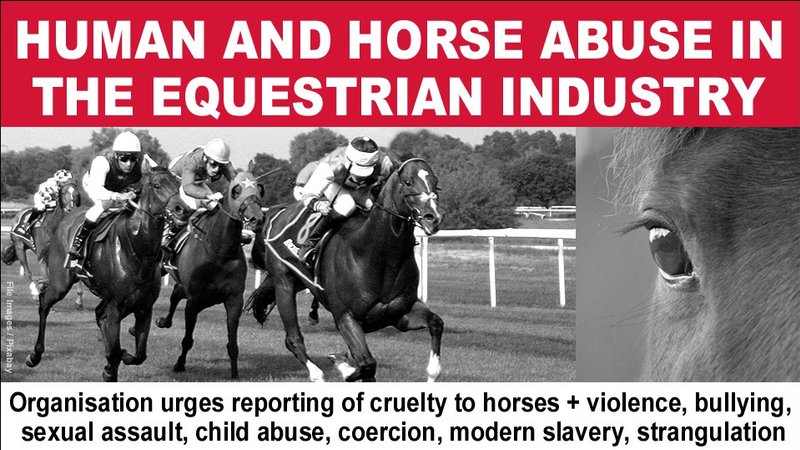
Individuals involved in the equestrian industry in Ireland and the UK are being advised to refuse any instruction from an employer to abuse horses.
An organisation set up last year to "end abuse and misconduct in the equestrian world" is reminding people that they are "never required to follow instructions that cause unnecessary suffering to an animal".
Equiss states on its website that "sometimes employers will instruct employees to engage in abusive practices towards horses in their care".
Examples of these sickening practices are presented as:
- Inflicting pain on horses such as hitting, kicking and punching
- Withholding food or water
- Riding an injured horse
- Using equipment that causes pain
- Applying harmful chemicals to a horse's body
"We know it can be difficult to refuse instructions from employers," Equiss states. "If you find yourself in this situation, refuse instructions calmly but firmly...If you witness animal abuse, it is important to collect evidence. If you can, video the abusive behaviour with the abusive person in frame."
Elsewhere on the Equiss website, other examples of cruelty to horses are provided: "Animal abuse or animal cruelty is when someone doesn’t care for or deliberately harms an animal. It can include neglect, physical harm, deliberate mental distress through environment or treatment, poisoning or inappropriately housing animals...Threats of harm to horses are sometimes used to control or coerce equestrians. Attachment to horses belonging to perpetrators can also make it more difficult for a victim–survivor to leave an abusive environment or speak out...Animal abuse is never acceptable and often forms part of a wider problem of abuse and harm."
Those who witness the abuse of horses are being encouraged to use a confidential telephone line to report it.
"For too long, equestrians have been fearful to speak out about abuse and misconduct and we exist to change that," Equiss adds, saying it is "committed to preventing harm, abuse and misconduct across the UK and Ireland".
In addition to the abuse of horses, the abuse of humans is also highlighted:
- Modern slavery in the equestrian industry ("the exploitation of individuals through coercion, control, deception, or abuse for personal or financial gain. This can include forced labour, debt bondage, human trafficking, and other forms of exploitation")
- Bullying (physical, verbal or psychological)
- Abuse of power dynamics
- Issues relating to contracts, hours and pay, and lodging and travel
Relating to lodging and travel, the Equiss website reveals that "it is common for employees and athletes to stay in horse boxes or lorries, sometimes with people in positions of power such as coaches or employers," adding that "these arrangements offer minimal privacy, and sometimes people are required to share a bed with someone they have a professional relationship with."
Noting that "many children (under 18s) work as grooms or volunteers", it goes on state that "these arrangements have resulted in children lodging with non-related adults without sufficient supervision, safeguards, or privacy".
Those who have "experienced abuse enabled by inappropriate lodging arrangements" are encouraged to come forward.
The Equiss website also focuses on rape / sexual assault, with those affected encouraged to contact a rape crisis centre, sexual assault referral centre and the police.
In a section, headed "What is abuse?" - https://equiss.org.uk/what-is-abuse - the abuses listed are:
- Physical abuse and unsafe practices - "In equestrian sports, physical abuse includes unsafe training practices, for example: forcing athletes to ride or compete with severe injuries, deliberately worsening injuries using force or violence...Denial of water, food, or rest". One example of physical abuse cited is non-fatal strangulation - "Non-fatal strangulation occurs when pressure is applied to a person's neck, restricting their breathing or blood flow without causing death. It is a serious and potentially life-threatening form of violence that can result in significant physical and psychological harm, even where there are no visible injuries." It is stressed that non-fatal strangulation is a criminal offence in the UK and Ireland.
- Sexual abuse - "Sexual exploitation can include a yard owner coercing you into engaging in sexual activity in exchange for rent or better working conditions. An experienced rider might groom a young person by establishing a relationship with them seemingly built on providing 'favours' and access to the young person – such as allowing them to care for horses. This may then be manipulated to create a false sense of intimacy or obligation which is used to exploit or abuse the young person."
- Child abuse - "It is important to be mindful of the range of adults in contact with children and young people who hold power, including parents, coaches, yard owners, employers, selectors, and judges. It is never acceptable to harm a child, physically or emotionally, or to neglect them"
- Emotional abuse, coercive control and bullying
- Domestic abuse
- Verbal abuse
- Digital or online abuse
- Economic abuse
"Horse and Hound" magazine (29 October 2026) outlines that the founder of Equiss set up the organisation "because she could not ignore the repeated and 'deeply troubling' experiences reported to her". She was quoted as saying: "Riders, grooms, employees, parents and young people were describing deeply troubling concerns to governing bodies, which may have had the alleged perpetrator on professional programmes or as a potential team member...People were describing serious sexual assault, exploitation, trafficking and other criminal activity, often at the hands of individuals who held considerable power and influence over their careers." https://www.horseandhound.co.uk/industry-news/equiss
Also quoted in the magazine article was an Irish Olympic dressage rider who commented: "There's so much that goes on beyond treatment of horses, treatment of people, that is in no way regulated...You hear things and think, 'it's probably not that bad' but in reality it's probably much worse."
If you have been subjected to abuse or assault, make contact with the police/Gardai. If you have information about cruelty to horses or other animals, also contact the police/Gardai.
The numbers are 101 (UK) and 112 (Ireland) or 999 (UK and Ireland) in an emergency.
Rape Crisis UK https://rapecrisis.org.uk/
Childline UK https://www.childline.org.uk/
Rape Crisis Ireland https://www.rapecrisisireland.ie/
Childline Ireland https://www.childline.ie/