
Introduce the No Unknown Patient Law — Protect People in Custody
The Issue
No Unknown Patient — A Call for National Change
No person should become medically invisible because they enter custody.
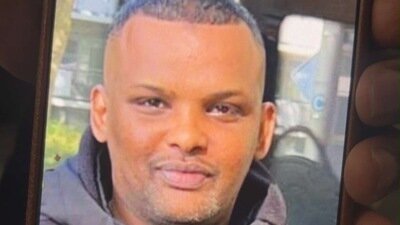
The No Unknown Patient campaign was inspired by our family’s journey following the loss of my brother, Mohamed Omar.
Mohamed came to the UK healthy, thriving and looking forward to seeing his family. He became unwell while in custody.
Our family’s journey raised a wider question that deserves a national answer:
What happens when a person becomes unwell in custody, cannot properly advocate for themselves, and vital information about their medical history, medication, treating team or family cannot immediately be established?
Existing healthcare safeguards and information systems are important. But when essential information is missing, medical uncertainty itself should trigger action.
We are calling for a mandatory No Unknown Patient safeguarding pathway across police and prison custody.
The pathway should automatically activate when a person becomes unwell and essential information about their healthcare cannot reliably be established. It should require services to:
- Urgently establish identity and medical history, including relevant physical and mental-health conditions
- Verify prescribed and essential medication and assess the clinical risks of interruption, withdrawal or changes.
- Identify and contact existing healthcare professionals, including overseas healthcare teams where necessary.
- Automatically take reasonable steps to identify and contact next of kin or an appropriate family representative when the person is too unwell to reliably communicate or advocate for themselves, subject to necessary legal and safeguarding exceptions.
- Use family information as part of safeguarding, particularly where relatives may be able to provide vital information about medication, treatment, clinicians and the person’s normal baseline.
- Treat significant gaps in medical information as a safeguarding risk in themselves, rather than waiting for further deterioration.
- Assess capacity and vulnerability where illness may affect the person’s ability to understand, communicate or make decisions about their care.
- Provide appropriate clinical assessment and monitoring while essential information is being established.
- Escalate deterioration without delay, including to emergency or hospital care where clinically required.
- Document and make auditable what information was sought, who was contacted, what risks were identified, what decisions were made and why.
The principle is simple:
The less able a person is to tell the system who they are medically, the greater the responsibility on the system to find out.
This is not about replacing existing healthcare systems or placing impossible expectations on frontline staff. It is about establishing a clear national safety net for the moment existing systems do not provide the information needed to safely care for somebody.
When the state removes a person’s liberty, that person cannot simply leave and seek help elsewhere. The responsibility to identify and respond to their healthcare needs therefore becomes even more important.
We are asking the Government to establish a national No Unknown Patient safeguarding standard across police and prison custody, with a mandatory escalation pathway when essential medical information cannot be verified, and to put that protection on the strongest enforceable footing.
Unknown should trigger action.
Unknown should trigger safeguarding.
Unknown should never mean invisible.
This campaign was inspired by our family’s journey, but the change we are asking for is for everyone — every person who may one day be too unwell or vulnerable to speak for themselves, and every family who should not have to fight simply to make sure their loved one is known.
Thank you to everyone signing, sharing and supporting No Unknown Patient. Every signature strengthens our call for national change.
For Mohamed Omar — and for those who come after him. 🤍
#NoUnknownPatient

250
The Issue
No Unknown Patient — A Call for National Change
No person should become medically invisible because they enter custody.
The No Unknown Patient campaign was inspired by our family’s journey following the loss of my brother, Mohamed Omar.
Mohamed came to the UK healthy, thriving and looking forward to seeing his family. He became unwell while in custody.
Our family’s journey raised a wider question that deserves a national answer:
What happens when a person becomes unwell in custody, cannot properly advocate for themselves, and vital information about their medical history, medication, treating team or family cannot immediately be established?
Existing healthcare safeguards and information systems are important. But when essential information is missing, medical uncertainty itself should trigger action.
We are calling for a mandatory No Unknown Patient safeguarding pathway across police and prison custody.
The pathway should automatically activate when a person becomes unwell and essential information about their healthcare cannot reliably be established. It should require services to:
- Urgently establish identity and medical history, including relevant physical and mental-health conditions
- Verify prescribed and essential medication and assess the clinical risks of interruption, withdrawal or changes.
- Identify and contact existing healthcare professionals, including overseas healthcare teams where necessary.
- Automatically take reasonable steps to identify and contact next of kin or an appropriate family representative when the person is too unwell to reliably communicate or advocate for themselves, subject to necessary legal and safeguarding exceptions.
- Use family information as part of safeguarding, particularly where relatives may be able to provide vital information about medication, treatment, clinicians and the person’s normal baseline.
- Treat significant gaps in medical information as a safeguarding risk in themselves, rather than waiting for further deterioration.
- Assess capacity and vulnerability where illness may affect the person’s ability to understand, communicate or make decisions about their care.
- Provide appropriate clinical assessment and monitoring while essential information is being established.
- Escalate deterioration without delay, including to emergency or hospital care where clinically required.
- Document and make auditable what information was sought, who was contacted, what risks were identified, what decisions were made and why.
The principle is simple:
The less able a person is to tell the system who they are medically, the greater the responsibility on the system to find out.
This is not about replacing existing healthcare systems or placing impossible expectations on frontline staff. It is about establishing a clear national safety net for the moment existing systems do not provide the information needed to safely care for somebody.
When the state removes a person’s liberty, that person cannot simply leave and seek help elsewhere. The responsibility to identify and respond to their healthcare needs therefore becomes even more important.
We are asking the Government to establish a national No Unknown Patient safeguarding standard across police and prison custody, with a mandatory escalation pathway when essential medical information cannot be verified, and to put that protection on the strongest enforceable footing.
Unknown should trigger action.
Unknown should trigger safeguarding.
Unknown should never mean invisible.
This campaign was inspired by our family’s journey, but the change we are asking for is for everyone — every person who may one day be too unwell or vulnerable to speak for themselves, and every family who should not have to fight simply to make sure their loved one is known.
Thank you to everyone signing, sharing and supporting No Unknown Patient. Every signature strengthens our call for national change.
For Mohamed Omar — and for those who come after him. 🤍
#NoUnknownPatient
The Decision Makers

Supporter Voices
Petition Updates
Share this petition
Petition created on 8 September 2026