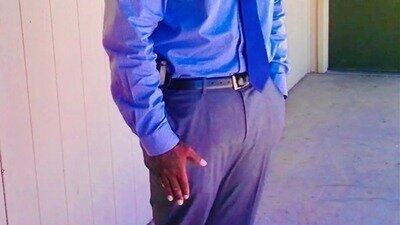
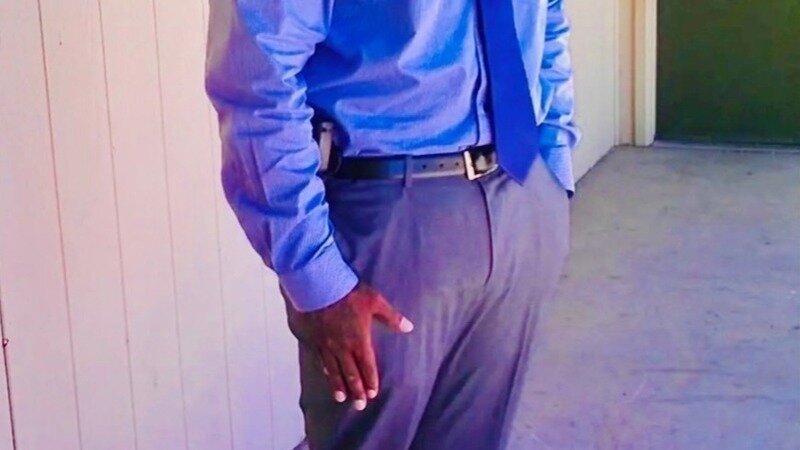
HOW MANY YEARS MUST AN INNOCENT MAN LOSE BEFORE SOMEONE LISTEN
The Issue
# A Mother’s Plea: Give Christopher Lamon Handy’s Case a Meaningful Second Look
**Seven years of a life can never be given back. But seven years is not too late to ask the question: Did we get this right?**
I am Christopher Lamon Handy’s mother.
For nearly eight years, I have watched my son lose birthdays, holidays, family milestones, relationships, opportunities, and precious years of his life behind prison walls.
Christopher was convicted in Pinal County, Arizona, in case **CR201900100** and sentenced to **16 years in prison**. He was convicted of attempted second-degree murder, two counts of aggravated assault, two counts of endangerment, and discharging a firearm at a residential structure. His sentences are 16yrs flat-time terms, meaning he must serve them in their entirety.
Christopher has maintained his innocence from the beginning.
I am not asking anyone to ignore the seriousness of the allegations. I am asking people to look closely at the evidence, the investigation, the testimony, and the questions that have remained unanswered.
## What happened on January 5, 2019?
According to the trial record, Christopher was driving through a residential neighborhood in San Tan Valley after dropping his friend off. A guy came out into the street and the witnesses said it looked like the car hit him. Chris stopped the car abruptly and upon getting out of the car, the guy ran or walked up to hin and a confrontation started. It was reported that Chris said, "Stop running upon me, You don't know me like that" and tried to push the guy back twice.
The State characterized the encounter as an act of road rage. Christopher's account has consistently been different . However, the full records of transcripts and other materials show that the State intent theory depended on later-added testimonies and that the original accounts, physical evidence and post-shot behavior support a materially different, nonhomicidal interpretation.
Christopher maintains that he did not hear J.W. tell him to slow down because loud music and bass were coming from the vehicle. He says he stopped because he believed his vehicle may have come dangerously close to J.W. and that he had a moral obligation to stop. J.W had a B.A.C. of .281 legally drunk. In previous transcripts, the witnesses said when drunk J.W. voice could barely be heard. But the State want you to believe that on 01/05/2019, in his drunkenness, he was able to scream so loud and be heard. "IT MAKES NO SENSE" was the defense opening statement.
What happened next became the foundation of a 16-year prison sentence.
The State's version was that Christopher intentionally pointed a loaded 40 caliber hollow point Glock at J.W. and fired at his head while both was facing each other. The State also told the jurors that he had a serious life -threatening injury and spent 3 days in the hospital , but the medical records show less than 36 hours which was not due to the injury but due to the fact that he had to be sedated for erratic behavior, not injury severity and the hospital didn't feel safe. The jury was misled about the seriousness of J.W. injury. J.W was aggressive throughout the ride to the hospital with the EMT also. The State's theory is inconsistent with the physical evidence and the medical narrative was misleading.
Christopher testified that the firearm discharged accidentally when he stumbled backward because of a preexisting knee injury. Christopher is right-handed and everybody said him and J.W. were facing each other when the gun went off. So how did the wound end up on J.W. right side in the back of his head-physically impossible unless it was a magic bullet that curved.
The Arizona Court of Appeals' 2021 decision recounts both the State's evidence and Christopher's testimony, including his claim that the firearm discharged accidentally. The jury ultimately rejected that defense and convicted him but not without doubts and questions. This petition does not seek relief because counsels made mistakes. This petition does not seek relief because the prosecutor acted improperly. This petition seeks relief because the evidence demonstrates that the conviction is unreliable and that no reasonable factfinder would have convicted Christopher had the complete facts been known. He has been deprived of a meaningful appeal. This failure is particularly prejudicial in light of the discovered evidence and the lack of credible evidence supporting the allegations that Christopher pointed or fired a weapon directly at J.W. head. This case rests on a central issue: The State's version of events is physically and scientifically impossible. The trajectory is physically inconsistent with the State's theory.
But the story did not end with the verdict.
## Questions remained after the trial
After Christopher was convicted, two independent investigators examined the case and prepared reports identifying issues that had not been adequately explored at trial. There is the witness contradictions analysis and the forensic trajectory inconsistencies
Those investigators raised questions about the physical evidence and whether the bullet actually struck the alleged victim. They also identified potential failures by trial counsel, including alleged failures to investigate potentially exculpatory evidence, pursue a self-defense instruction, and challenge aspects of the State's case.
Christopher has also raised claims involving ineffective assistance of counsel, prosecutorial misconduct, newly discovered evidence, and actual innocence.
These are not simply questions that disappeared because a jury returned a verdict.
They are questions that deserve to be examined.
## A conviction should not end the search for truth
Christopher has pursued post-conviction relief on his own behalf, including while representing himself.
The courts have rejected his post-conviction petitions on procedural and substantive grounds. Most recently, in March 2026, the Arizona Court of Appeals granted review but denied relief on his successive petition, finding that his claims were procedurally precluded and/or insufficiently supported under the applicable rules.
But a court ruling that a claim is procedurally barred is not the same thing as answering every factual question a family may have about what happened.
That distinction matters.
If credible questions exist about the investigation, physical evidence, witness accounts, trial representation, or whether important evidence was fully developed, shouldn't those questions receive meaningful scrutiny?
## We are asking for a second look — not special treatment
I know some people will read this and say, "A jury already decided."
I understand that.
But I also believe justice requires us to remain willing to examine a case when credible questions arise about whether all of the evidence was properly investigated and presented.
We are not asking anyone to simply take our word for it.
We are asking for transparency.
We are asking for accountability.
We are asking for an independent and meaningful review of the evidence and the circumstances surrounding Christopher's conviction.
And we are asking Arizona's elected officials to consider whether extraordinary circumstances warrant intervention.
Christopher's family previously sought clemency. In August 2025, we received a response directing him toward the Time Commutation Unit. But our position is that this case deserves more than consideration as an ordinary request for a sentence reduction.
**We believe this is a case that raises questions of actual innocence, ineffective assistance of counsel, prosecutorial conduct, due process, and the reliability of the evidence used to convict him.**
Those questions deserve to be heard.
## Behind the case number is a human being
Christopher is not a case number.
He is a human being who has watched years of his life disappear while continuing to maintain that he did not commit the crimes for which he was convicted.
And I am his mother.
I cannot get those years back for him.
I cannot replace the birthdays he missed.
I cannot give him back the family moments that happened without him.
But I can refuse to stop asking questions.
And I can ask you to help me make sure those questions are heard.
## Please stand with us
If you believe that **credible questions about a person's conviction deserve to be examined**, please sign this petition.
If you believe that **justice requires more than simply closing a file**, please sign.
If you believe that **a person's freedom is too important for unanswered questions to be ignored**, please sign.
We are asking Governor Katie Hobbs, Attorney General Kris Mayes, the Arizona Board of Executive Clemency, and the appropriate authorities to **take a meaningful second look at Christopher Lamon Handy's case and the evidence and circumstances surrounding his conviction.**I filed for clemency based on A.R.S. 31-402 and A.R.S. 12-771, together they create the legal pathway for Gov Hobbs to consider reducing or eliminating a sentence when there is strong evidence the person is actually innocent.
We ask for transparency.
We ask for accountability.
We ask for a meaningful review.
And ultimately, we ask for justice.
**Seven years is already too much time to lose if a conviction was reached without the full truth being heard.**
Please sign.
Please share Christopher's story.
Please help us make sure his voice is heard.
**Justice should never be afraid of a second look.**
**#JusticeForChristopherHandy
#SecondLookForChristopher
#WrongfulConviction
#ActualInnocence
#ClemencyForChristopherHandy**
## Even the Jury Had Questions
One of the most important parts of Christopher's trial deserves a closer look: **the questions the jurors themselves asked the judge.**
Jurors are instructed to listen to the evidence, evaluate the testimony, and determine whether the State has proven its case beyond a reasonable doubt. During Christopher's trial, jurors submitted questions to the judge concerning issues that went directly to the evidence and the events surrounding the shooting.
Those questions matter.
We are not claiming that a juror question, by itself, proves Christopher's innocence. We are asking the public to consider what those questions reveal: **the jurors were actively examining the evidence and seeking answers to important factual issues.**
When a case turns on witness testimony, the physical evidence, the trajectory of a bullet, the nature of an injury, what witnesses could actually see and hear, and what happened in the moments before the firearm discharged, those questions are not minor details.
They go to the heart of the case.
And that is precisely why we believe Christopher's case deserves another look.
The jury ultimately returned guilty verdicts. But a verdict does not erase the questions that remain afterward.
Today, there are additional investigative findings and evidence that were not fully developed at trial, including questions concerning the bullet's trajectory, the alleged victim's injury, witness accounts, and whether critical investigative steps were taken. The Arizona Court of Appeals itself acknowledged that post-trial investigators had raised questions about whether the bullet actually struck any of the alleged victims.
So we ask:
**If the evidence was clear, why do so many important questions remain?**
If the physical evidence conclusively establishes what happened, why does the physical evidence continue to warrant examination?
**If the witnesses' accounts are reliable, why do their prior statements and trial testimony need to be reconciled?**
**And if Christopher's conviction is unquestionably sound, why should an independent review of the evidence be feared?**
We are not asking anyone to overturn a jury verdict based on emotion.
We are asking for the opportunity to examine the evidence with fresh eyes.
FREE CHRISTOPHER HANDY: 7 YEARS IS TOO LONG
A Mother’s Plea for Truth, Accountability, and Justice
Imagine watching your child walk into prison knowing that you believe he did not commit the crime for which he was convicted.
Another year of life that can never be returned.
For nearly seven years, my son, Christopher Lamon Handy, has lived behind bars while our family has continued to fight for something that should never be too much to ask:
A fair examination of the evidence.
I am Christopher's mother. I am not asking anyone to take my word simply because I am his mother.
I am asking you to look at the questions in his case.
And once you see them, I am asking you to help us demand that Arizona officials do the same.
CHRISTOPHER'S STORY
On January 5, 2019, Christopher was leaving a residential area after dropping someone off.
What happened next resulted in a single gunshot and ultimately a prosecution for attempted second-degree murder, aggravated assault, endangerment, and shooting at a residential structure.
Christopher has maintained from the beginning that he did not intend to kill anyone.
The prosecution presented the incident as an act of extreme aggression and attempted murder.
But there is another side of this story—one that deserves to be examined against the physical evidence, medical records, witness statements, trial testimony, and investigative material.
That is where our questions begin.
WAS THIS REALLY "ROAD RAGE"?
The prosecution characterized the incident as road rage.
But Christopher's account, and portions of the evidence we have reviewed, raise serious questions about that characterization.
A witness described loud music and bass coming from Christopher's vehicle.
Christopher has maintained that he did not hear the person yelling at him.
The record also contains evidence concerning the victim's level of intoxication. We contend that this matters because the reliability of what was heard and understood during the confrontation becomes important.
Christopher stopped his vehicle because he believed the vehicle had come close enough to the person that he may have been struck and so did the witnesses.
According to Christopher, he believed he had a moral obligation to stop and make sure the person was okay.
But when Christopher got out of the vehicle, the encounter escalated.
Christopher has maintained that the other man approached him aggressively and that Christopher pushed him back while telling him to stop approaching him.
That context matters.
Because the question is not simply:
"Was there a gunshot?"
The question is:
"What actually happened immediately before that gunshot, and what does the evidence prove about Christopher's intent?"
THE QUESTION OF INTENT
Christopher was convicted of attempted second-degree murder.
That means the issue of intent is critical.
We believe the evidence raises serious questions about whether the State proved that Christopher intended to kill the alleged victim.
The case involved a single shot.
The physical evidence, including the location of the bullet and the circumstances surrounding the shooting, deserves to be examined alongside the testimony given at trial.
Christopher's position has always been that the State's interpretation of the physical evidence does not accurately establish an intentional attempt to kill.
We believe this is one of the most important questions in the entire case.
THE WITNESS TESTIMONY DESERVES ANOTHER LOOK
Another major concern is the testimony of witnesses.
The record contains statements that changed between the initial investigation and what was ultimately presented at trial.
Descriptions of:
where people were standing,
what they saw,
how the confrontation began,
where Christopher was positioned,
and what Christopher was allegedly aiming at
must be compared carefully against the physical evidence.
This is not about attacking witnesses simply because their testimony was unfavorable to Christopher.
It is about asking a fundamental question:
If a witness's account changed, and the changed account became important to the prosecution's theory, was the jury given the complete picture?
That question deserves an honest answer.
WHAT ABOUT THE VICTIM'S INJURIES?
There are also questions concerning how the victim's injuries were characterized to the jury.
We have reviewed medical information that, according to our understanding, indicates the victim was admitted to the hospital shortly before midnight and discharged the following day.
Yet the prosecution argued that he spent three days in the hospital.
If the medical records do not support that characterization, the discrepancy matters.
Why?
Because a prosecutors' descriptions of injuries can influence how jurors understand the seriousness of an event and the defendant's alleged intent.
We are asking for the medical records and the trial arguments to be examined side by side.
INDEPENDENT INVESTIGATORS FOUND MORE QUESTIONS
Our family did not stop looking for answers after Christopher was convicted.
Independent investigators examined aspects of the case, including witness statements and the evidence surrounding the incident.
Investigative work conducted in 2021 and 2022 raised additional issues that we believe deserve serious legal review.
The evidence we have gathered includes investigative materials from:
HSH Investigation — November 10, 2021
and
Patrick Cote Investigation — October 19, 2022
These materials are part of why we continue to believe this case deserves a meaningful examination rather than simply being dismissed as another completed conviction.
THIS IS NOT JUST ABOUT A MOTHER SAYING, "MY SON IS INNOCENT."
I understand that every defendant has a story.
I understand that a conviction is a serious matter.
And I understand that the public should not be asked to overturn a conviction simply because a family disagrees with a jury.
That is not what I am asking you to do.
I am asking for something more fundamental:
Look at the evidence.
Look at the physical evidence.
Look at the medical records.
Look at the original witness statements.
Look at the testimony given at trial.
Look at what changed.
Look at the investigative findings.
Look at what Christopher's attorneys did and did not present.
Then ask whether the conviction deserves another meaningful review.
CHRISTOPHER HAS ALREADY LOST YEARS HE CAN NEVER GET BACK
Christopher received a 16-year flat sentence with no parole.
That means time matters.
Every year that passes is another year that cannot be returned if his conviction is ultimately determined to have been wrongful.
He is not asking the clock to stop.
He is asking someone with the authority to examine whether the clock should have been running against him in the first place.
ARIZONA NEEDS TO LOOK AT THIS CASE
Pinal County does not have a Conviction Integrity Unit comparable to those operating in some other jurisdictions.
That leaves families like ours with very few avenues to obtain an independent examination of a potentially wrongful conviction.
We have pursued post-conviction remedies.
We have pursued clemency.
We have continued gathering evidence.
And we continue to ask Arizona officials to exercise the authority available to them when circumstances warrant extraordinary review.
Christopher's case presents claims involving:
Actual innocence
Ineffective assistance of counsel
Questions concerning prosecutorial conduct
Due process concerns
Inconsistent witness testimony
Physical evidence that we contend conflicts with the State's theory
These are not issues that should be ignored simply because they are difficult.
WE ARE NOT ASKING FOR SPECIAL TREATMENT.
WE ARE ASKING FOR AN HONEST LOOK.
A conviction should not be protected from examination simply because time has passed.
A family should not have to become lawyers, investigators, researchers, and advocates simply to get someone to look at the evidence.
And an innocent person should not have to spend another year in prison simply because his family could not afford to make enough noise.
That is why I am asking you to become part of Christopher's story.
WHAT WE ARE ASKING FOR
We are asking the public to help us demand:
1. An independent review of Christopher Handy's conviction.
2. A complete examination of the physical and forensic evidence.
3. A comparison of the original witness statements with their trial testimony.
4. A review of the medical records and the prosecution's characterization of the victim's injuries.
5. A review of potential ineffective assistance of counsel and prosecutorial misconduct.
6. Meaningful consideration of Christopher's actual-innocence claims.
7. Review by the appropriate Arizona authorities of whether clemency or other extraordinary relief is warranted.
TO GOVERNOR KATIE HOBBS AND ATTORNEY GENERAL KRIS MAYES:
We are asking you to look beyond the conviction itself and examine the evidence behind it.
If Christopher is guilty, an independent review should be able to withstand scrutiny.
But if there are credible questions about whether an innocent man was convicted, Arizona should want those questions answered too.
Justice is not weakened by examining a conviction.
Justice is strengthened by it.
TO EVERYONE READING THIS:
You do not have to know Christopher.
You do not have to know our family.
You do not have to agree with everything we believe about this case.
You only have to believe in one principle:
When credible questions about a person's guilt arise, the evidence deserves to be heard.
Christopher was a son before he became a prisoner.
He is a brother.
An uncle.
A family member.
A human being.
And behind his inmate number is a person who has watched nearly seven years of his life disappear.
Seven years of birthdays.
Seven years of holidays.
Seven years of hugs.
Seven years of family moments.
Seven years that his mother can never give back to him.
Seven years is too long to wait for someone to simply take another look.
SIGN THIS PETITION
By signing, you are not being asked to declare Christopher guilty or innocent.
You are asking Arizona to LOOK.
Look at the evidence.
Look at the inconsistencies.
Look at the physical evidence.
Look at the medical records.
Look at the investigative findings.
Look at the constitutional questions.
And if the evidence supports Christopher's claim of wrongful conviction, have the courage to act.
Because justice should not depend on how much money a family has.
It should not depend on how powerful their voice is.
And it should never depend on whether anyone is willing to listen.
Help us make Arizona listen.
Help us bring Christopher's case into the light.
Help us demand an independent review.
Help us stop another potentially wrongful conviction from costing an innocent man the rest of his life.
#SIGN. SHARE. SPEAK UP.
#FREE CHRISTOPHER LAMON HANDY.
#SEVEN YEARS IS TOO LONG.
#LET THE EVIDENCE BE HEARD.
90
The Issue
# A Mother’s Plea: Give Christopher Lamon Handy’s Case a Meaningful Second Look
**Seven years of a life can never be given back. But seven years is not too late to ask the question: Did we get this right?**
I am Christopher Lamon Handy’s mother.
For nearly eight years, I have watched my son lose birthdays, holidays, family milestones, relationships, opportunities, and precious years of his life behind prison walls.
Christopher was convicted in Pinal County, Arizona, in case **CR201900100** and sentenced to **16 years in prison**. He was convicted of attempted second-degree murder, two counts of aggravated assault, two counts of endangerment, and discharging a firearm at a residential structure. His sentences are 16yrs flat-time terms, meaning he must serve them in their entirety.
Christopher has maintained his innocence from the beginning.
I am not asking anyone to ignore the seriousness of the allegations. I am asking people to look closely at the evidence, the investigation, the testimony, and the questions that have remained unanswered.
## What happened on January 5, 2019?
According to the trial record, Christopher was driving through a residential neighborhood in San Tan Valley after dropping his friend off. A guy came out into the street and the witnesses said it looked like the car hit him. Chris stopped the car abruptly and upon getting out of the car, the guy ran or walked up to hin and a confrontation started. It was reported that Chris said, "Stop running upon me, You don't know me like that" and tried to push the guy back twice.
The State characterized the encounter as an act of road rage. Christopher's account has consistently been different . However, the full records of transcripts and other materials show that the State intent theory depended on later-added testimonies and that the original accounts, physical evidence and post-shot behavior support a materially different, nonhomicidal interpretation.
Christopher maintains that he did not hear J.W. tell him to slow down because loud music and bass were coming from the vehicle. He says he stopped because he believed his vehicle may have come dangerously close to J.W. and that he had a moral obligation to stop. J.W had a B.A.C. of .281 legally drunk. In previous transcripts, the witnesses said when drunk J.W. voice could barely be heard. But the State want you to believe that on 01/05/2019, in his drunkenness, he was able to scream so loud and be heard. "IT MAKES NO SENSE" was the defense opening statement.
What happened next became the foundation of a 16-year prison sentence.
The State's version was that Christopher intentionally pointed a loaded 40 caliber hollow point Glock at J.W. and fired at his head while both was facing each other. The State also told the jurors that he had a serious life -threatening injury and spent 3 days in the hospital , but the medical records show less than 36 hours which was not due to the injury but due to the fact that he had to be sedated for erratic behavior, not injury severity and the hospital didn't feel safe. The jury was misled about the seriousness of J.W. injury. J.W was aggressive throughout the ride to the hospital with the EMT also. The State's theory is inconsistent with the physical evidence and the medical narrative was misleading.
Christopher testified that the firearm discharged accidentally when he stumbled backward because of a preexisting knee injury. Christopher is right-handed and everybody said him and J.W. were facing each other when the gun went off. So how did the wound end up on J.W. right side in the back of his head-physically impossible unless it was a magic bullet that curved.
The Arizona Court of Appeals' 2021 decision recounts both the State's evidence and Christopher's testimony, including his claim that the firearm discharged accidentally. The jury ultimately rejected that defense and convicted him but not without doubts and questions. This petition does not seek relief because counsels made mistakes. This petition does not seek relief because the prosecutor acted improperly. This petition seeks relief because the evidence demonstrates that the conviction is unreliable and that no reasonable factfinder would have convicted Christopher had the complete facts been known. He has been deprived of a meaningful appeal. This failure is particularly prejudicial in light of the discovered evidence and the lack of credible evidence supporting the allegations that Christopher pointed or fired a weapon directly at J.W. head. This case rests on a central issue: The State's version of events is physically and scientifically impossible. The trajectory is physically inconsistent with the State's theory.
But the story did not end with the verdict.
## Questions remained after the trial
After Christopher was convicted, two independent investigators examined the case and prepared reports identifying issues that had not been adequately explored at trial. There is the witness contradictions analysis and the forensic trajectory inconsistencies
Those investigators raised questions about the physical evidence and whether the bullet actually struck the alleged victim. They also identified potential failures by trial counsel, including alleged failures to investigate potentially exculpatory evidence, pursue a self-defense instruction, and challenge aspects of the State's case.
Christopher has also raised claims involving ineffective assistance of counsel, prosecutorial misconduct, newly discovered evidence, and actual innocence.
These are not simply questions that disappeared because a jury returned a verdict.
They are questions that deserve to be examined.
## A conviction should not end the search for truth
Christopher has pursued post-conviction relief on his own behalf, including while representing himself.
The courts have rejected his post-conviction petitions on procedural and substantive grounds. Most recently, in March 2026, the Arizona Court of Appeals granted review but denied relief on his successive petition, finding that his claims were procedurally precluded and/or insufficiently supported under the applicable rules.
But a court ruling that a claim is procedurally barred is not the same thing as answering every factual question a family may have about what happened.
That distinction matters.
If credible questions exist about the investigation, physical evidence, witness accounts, trial representation, or whether important evidence was fully developed, shouldn't those questions receive meaningful scrutiny?
## We are asking for a second look — not special treatment
I know some people will read this and say, "A jury already decided."
I understand that.
But I also believe justice requires us to remain willing to examine a case when credible questions arise about whether all of the evidence was properly investigated and presented.
We are not asking anyone to simply take our word for it.
We are asking for transparency.
We are asking for accountability.
We are asking for an independent and meaningful review of the evidence and the circumstances surrounding Christopher's conviction.
And we are asking Arizona's elected officials to consider whether extraordinary circumstances warrant intervention.
Christopher's family previously sought clemency. In August 2025, we received a response directing him toward the Time Commutation Unit. But our position is that this case deserves more than consideration as an ordinary request for a sentence reduction.
**We believe this is a case that raises questions of actual innocence, ineffective assistance of counsel, prosecutorial conduct, due process, and the reliability of the evidence used to convict him.**
Those questions deserve to be heard.
## Behind the case number is a human being
Christopher is not a case number.
He is a human being who has watched years of his life disappear while continuing to maintain that he did not commit the crimes for which he was convicted.
And I am his mother.
I cannot get those years back for him.
I cannot replace the birthdays he missed.
I cannot give him back the family moments that happened without him.
But I can refuse to stop asking questions.
And I can ask you to help me make sure those questions are heard.
## Please stand with us
If you believe that **credible questions about a person's conviction deserve to be examined**, please sign this petition.
If you believe that **justice requires more than simply closing a file**, please sign.
If you believe that **a person's freedom is too important for unanswered questions to be ignored**, please sign.
We are asking Governor Katie Hobbs, Attorney General Kris Mayes, the Arizona Board of Executive Clemency, and the appropriate authorities to **take a meaningful second look at Christopher Lamon Handy's case and the evidence and circumstances surrounding his conviction.**I filed for clemency based on A.R.S. 31-402 and A.R.S. 12-771, together they create the legal pathway for Gov Hobbs to consider reducing or eliminating a sentence when there is strong evidence the person is actually innocent.
We ask for transparency.
We ask for accountability.
We ask for a meaningful review.
And ultimately, we ask for justice.
**Seven years is already too much time to lose if a conviction was reached without the full truth being heard.**
Please sign.
Please share Christopher's story.
Please help us make sure his voice is heard.
**Justice should never be afraid of a second look.**
**#JusticeForChristopherHandy
#SecondLookForChristopher
#WrongfulConviction
#ActualInnocence
#ClemencyForChristopherHandy**
## Even the Jury Had Questions
One of the most important parts of Christopher's trial deserves a closer look: **the questions the jurors themselves asked the judge.**
Jurors are instructed to listen to the evidence, evaluate the testimony, and determine whether the State has proven its case beyond a reasonable doubt. During Christopher's trial, jurors submitted questions to the judge concerning issues that went directly to the evidence and the events surrounding the shooting.
Those questions matter.
We are not claiming that a juror question, by itself, proves Christopher's innocence. We are asking the public to consider what those questions reveal: **the jurors were actively examining the evidence and seeking answers to important factual issues.**
When a case turns on witness testimony, the physical evidence, the trajectory of a bullet, the nature of an injury, what witnesses could actually see and hear, and what happened in the moments before the firearm discharged, those questions are not minor details.
They go to the heart of the case.
And that is precisely why we believe Christopher's case deserves another look.
The jury ultimately returned guilty verdicts. But a verdict does not erase the questions that remain afterward.
Today, there are additional investigative findings and evidence that were not fully developed at trial, including questions concerning the bullet's trajectory, the alleged victim's injury, witness accounts, and whether critical investigative steps were taken. The Arizona Court of Appeals itself acknowledged that post-trial investigators had raised questions about whether the bullet actually struck any of the alleged victims.
So we ask:
**If the evidence was clear, why do so many important questions remain?**
If the physical evidence conclusively establishes what happened, why does the physical evidence continue to warrant examination?
**If the witnesses' accounts are reliable, why do their prior statements and trial testimony need to be reconciled?**
**And if Christopher's conviction is unquestionably sound, why should an independent review of the evidence be feared?**
We are not asking anyone to overturn a jury verdict based on emotion.
We are asking for the opportunity to examine the evidence with fresh eyes.
FREE CHRISTOPHER HANDY: 7 YEARS IS TOO LONG
A Mother’s Plea for Truth, Accountability, and Justice
Imagine watching your child walk into prison knowing that you believe he did not commit the crime for which he was convicted.
Another year of life that can never be returned.
For nearly seven years, my son, Christopher Lamon Handy, has lived behind bars while our family has continued to fight for something that should never be too much to ask:
A fair examination of the evidence.
I am Christopher's mother. I am not asking anyone to take my word simply because I am his mother.
I am asking you to look at the questions in his case.
And once you see them, I am asking you to help us demand that Arizona officials do the same.
CHRISTOPHER'S STORY
On January 5, 2019, Christopher was leaving a residential area after dropping someone off.
What happened next resulted in a single gunshot and ultimately a prosecution for attempted second-degree murder, aggravated assault, endangerment, and shooting at a residential structure.
Christopher has maintained from the beginning that he did not intend to kill anyone.
The prosecution presented the incident as an act of extreme aggression and attempted murder.
But there is another side of this story—one that deserves to be examined against the physical evidence, medical records, witness statements, trial testimony, and investigative material.
That is where our questions begin.
WAS THIS REALLY "ROAD RAGE"?
The prosecution characterized the incident as road rage.
But Christopher's account, and portions of the evidence we have reviewed, raise serious questions about that characterization.
A witness described loud music and bass coming from Christopher's vehicle.
Christopher has maintained that he did not hear the person yelling at him.
The record also contains evidence concerning the victim's level of intoxication. We contend that this matters because the reliability of what was heard and understood during the confrontation becomes important.
Christopher stopped his vehicle because he believed the vehicle had come close enough to the person that he may have been struck and so did the witnesses.
According to Christopher, he believed he had a moral obligation to stop and make sure the person was okay.
But when Christopher got out of the vehicle, the encounter escalated.
Christopher has maintained that the other man approached him aggressively and that Christopher pushed him back while telling him to stop approaching him.
That context matters.
Because the question is not simply:
"Was there a gunshot?"
The question is:
"What actually happened immediately before that gunshot, and what does the evidence prove about Christopher's intent?"
THE QUESTION OF INTENT
Christopher was convicted of attempted second-degree murder.
That means the issue of intent is critical.
We believe the evidence raises serious questions about whether the State proved that Christopher intended to kill the alleged victim.
The case involved a single shot.
The physical evidence, including the location of the bullet and the circumstances surrounding the shooting, deserves to be examined alongside the testimony given at trial.
Christopher's position has always been that the State's interpretation of the physical evidence does not accurately establish an intentional attempt to kill.
We believe this is one of the most important questions in the entire case.
THE WITNESS TESTIMONY DESERVES ANOTHER LOOK
Another major concern is the testimony of witnesses.
The record contains statements that changed between the initial investigation and what was ultimately presented at trial.
Descriptions of:
where people were standing,
what they saw,
how the confrontation began,
where Christopher was positioned,
and what Christopher was allegedly aiming at
must be compared carefully against the physical evidence.
This is not about attacking witnesses simply because their testimony was unfavorable to Christopher.
It is about asking a fundamental question:
If a witness's account changed, and the changed account became important to the prosecution's theory, was the jury given the complete picture?
That question deserves an honest answer.
WHAT ABOUT THE VICTIM'S INJURIES?
There are also questions concerning how the victim's injuries were characterized to the jury.
We have reviewed medical information that, according to our understanding, indicates the victim was admitted to the hospital shortly before midnight and discharged the following day.
Yet the prosecution argued that he spent three days in the hospital.
If the medical records do not support that characterization, the discrepancy matters.
Why?
Because a prosecutors' descriptions of injuries can influence how jurors understand the seriousness of an event and the defendant's alleged intent.
We are asking for the medical records and the trial arguments to be examined side by side.
INDEPENDENT INVESTIGATORS FOUND MORE QUESTIONS
Our family did not stop looking for answers after Christopher was convicted.
Independent investigators examined aspects of the case, including witness statements and the evidence surrounding the incident.
Investigative work conducted in 2021 and 2022 raised additional issues that we believe deserve serious legal review.
The evidence we have gathered includes investigative materials from:
HSH Investigation — November 10, 2021
and
Patrick Cote Investigation — October 19, 2022
These materials are part of why we continue to believe this case deserves a meaningful examination rather than simply being dismissed as another completed conviction.
THIS IS NOT JUST ABOUT A MOTHER SAYING, "MY SON IS INNOCENT."
I understand that every defendant has a story.
I understand that a conviction is a serious matter.
And I understand that the public should not be asked to overturn a conviction simply because a family disagrees with a jury.
That is not what I am asking you to do.
I am asking for something more fundamental:
Look at the evidence.
Look at the physical evidence.
Look at the medical records.
Look at the original witness statements.
Look at the testimony given at trial.
Look at what changed.
Look at the investigative findings.
Look at what Christopher's attorneys did and did not present.
Then ask whether the conviction deserves another meaningful review.
CHRISTOPHER HAS ALREADY LOST YEARS HE CAN NEVER GET BACK
Christopher received a 16-year flat sentence with no parole.
That means time matters.
Every year that passes is another year that cannot be returned if his conviction is ultimately determined to have been wrongful.
He is not asking the clock to stop.
He is asking someone with the authority to examine whether the clock should have been running against him in the first place.
ARIZONA NEEDS TO LOOK AT THIS CASE
Pinal County does not have a Conviction Integrity Unit comparable to those operating in some other jurisdictions.
That leaves families like ours with very few avenues to obtain an independent examination of a potentially wrongful conviction.
We have pursued post-conviction remedies.
We have pursued clemency.
We have continued gathering evidence.
And we continue to ask Arizona officials to exercise the authority available to them when circumstances warrant extraordinary review.
Christopher's case presents claims involving:
Actual innocence
Ineffective assistance of counsel
Questions concerning prosecutorial conduct
Due process concerns
Inconsistent witness testimony
Physical evidence that we contend conflicts with the State's theory
These are not issues that should be ignored simply because they are difficult.
WE ARE NOT ASKING FOR SPECIAL TREATMENT.
WE ARE ASKING FOR AN HONEST LOOK.
A conviction should not be protected from examination simply because time has passed.
A family should not have to become lawyers, investigators, researchers, and advocates simply to get someone to look at the evidence.
And an innocent person should not have to spend another year in prison simply because his family could not afford to make enough noise.
That is why I am asking you to become part of Christopher's story.
WHAT WE ARE ASKING FOR
We are asking the public to help us demand:
1. An independent review of Christopher Handy's conviction.
2. A complete examination of the physical and forensic evidence.
3. A comparison of the original witness statements with their trial testimony.
4. A review of the medical records and the prosecution's characterization of the victim's injuries.
5. A review of potential ineffective assistance of counsel and prosecutorial misconduct.
6. Meaningful consideration of Christopher's actual-innocence claims.
7. Review by the appropriate Arizona authorities of whether clemency or other extraordinary relief is warranted.
TO GOVERNOR KATIE HOBBS AND ATTORNEY GENERAL KRIS MAYES:
We are asking you to look beyond the conviction itself and examine the evidence behind it.
If Christopher is guilty, an independent review should be able to withstand scrutiny.
But if there are credible questions about whether an innocent man was convicted, Arizona should want those questions answered too.
Justice is not weakened by examining a conviction.
Justice is strengthened by it.
TO EVERYONE READING THIS:
You do not have to know Christopher.
You do not have to know our family.
You do not have to agree with everything we believe about this case.
You only have to believe in one principle:
When credible questions about a person's guilt arise, the evidence deserves to be heard.
Christopher was a son before he became a prisoner.
He is a brother.
An uncle.
A family member.
A human being.
And behind his inmate number is a person who has watched nearly seven years of his life disappear.
Seven years of birthdays.
Seven years of holidays.
Seven years of hugs.
Seven years of family moments.
Seven years that his mother can never give back to him.
Seven years is too long to wait for someone to simply take another look.
SIGN THIS PETITION
By signing, you are not being asked to declare Christopher guilty or innocent.
You are asking Arizona to LOOK.
Look at the evidence.
Look at the inconsistencies.
Look at the physical evidence.
Look at the medical records.
Look at the investigative findings.
Look at the constitutional questions.
And if the evidence supports Christopher's claim of wrongful conviction, have the courage to act.
Because justice should not depend on how much money a family has.
It should not depend on how powerful their voice is.
And it should never depend on whether anyone is willing to listen.
Help us make Arizona listen.
Help us bring Christopher's case into the light.
Help us demand an independent review.
Help us stop another potentially wrongful conviction from costing an innocent man the rest of his life.
#SIGN. SHARE. SPEAK UP.
#FREE CHRISTOPHER LAMON HANDY.
#SEVEN YEARS IS TOO LONG.
#LET THE EVIDENCE BE HEARD.
The Decision Makers
Supporter Voices
Petition Updates
Share this petition
Petition created on May 7, 2026