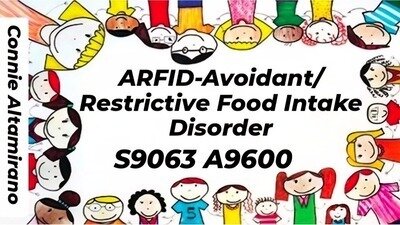

Have NYS Pass Avoidant Restrictive Food Intake Disorder (ARFID) Legislation
The Issue
When Medicine Recognizes a Disorder but the Law Lags Behind
When medicine recognizes a disorder but the law lags behind, families are often left to struggle alone.
Avoidant/Restrictive Food Intake Disorder (ARFID) is a medically recognized eating disorder that affects both children and adults, including many individuals on and off the autism spectrum. The condition can lead to significant nutritional deficiencies, anxiety surrounding food, social isolation, and serious health complications. Yet across New York State, many families still face barriers to diagnosis, treatment, and insurance coverage simply because public systems have not fully caught up with modern medical science.
ARFID was formally recognized in 2013, when it was included in the Diagnostic and Statistical Manual of Mental Disorders (DSM-5). Unlike other eating disorders, ARFID is not driven by body image concerns. Instead, individuals may restrict food because of sensory sensitivities, lack of appetite, or intense fear of choking, vomiting, or other adverse consequences associated with eating.
For many families, the path to diagnosis can be long and confusing. Children and adults with ARFID may see multiple specialists before the condition is properly identified, often while struggling with nutritional deficiencies, anxiety around food, and increasing social isolation.
The disorder can manifest in several ways. Some individuals experience significant weight loss or failure to gain expected weight, while others may experience unintended weight gain due to extremely limited diets dominated by a small number of “safe foods,” often highly processed or nutritionally imbalanced. Regardless of body size, individuals living with ARFID can face serious medical risks related to inadequate nutrition.
Emerging research also demonstrates that ARFID has a strong genetic component. A large twin study involving nearly 34,000 children found that the heritability of ARFID is approximately 79 percent, indicating that genetics play a substantial role in the development of the disorder. Researchers have concluded that ARFID may be among the most heritable eating disorders, with genetic influence comparable to several neurodevelopmental conditions.
In some cases, ARFID can also develop following traumatic medical events. Severe allergic reactions—such as anaphylaxis—can trigger intense fear around eating, leading to what clinicians describe as the “fear of aversive consequences” subtype of ARFID. After experiencing a life-threatening allergic episode, individuals may begin avoiding not only the allergen itself but a growing number of foods out of fear that another reaction could occur.
Medical professionals identify several warning signs when ARFID develops following such events, including:
Persistent fear of eating beyond avoiding a specific allergen
Restrictive eating patterns extending beyond medically necessary dietary limitations
Significant weight loss, failure to gain expected weight, or unintended weight gain
Nutritional deficiencies
Anxiety surrounding meals or avoidance of eating in social settings
When these symptoms emerge, experts recommend evaluation by a multidisciplinary care team, which may include pediatricians, dietitians, psychologists, and other specialists trained in feeding and eating disorders.
Despite growing medical recognition, public awareness and policy frameworks have not fully kept pace. As highlighted in When Medicine Advances and Law Does Not, Families Pay the Price, published in the Queens Ledger, families often encounter fragmented medical guidance, limited insurance pathways, and widespread misunderstanding of ARFID within healthcare systems and public institutions.
To address this gap, companion legislation has been introduced in the New York State Legislature.
Senate Bill S9063, sponsored by Senator Joseph P. Addabbo Jr., seeks to advance awareness and recognition of ARFID across New York State. Senate co-sponsors include Nathalia Fernandez, Michael Gianaris, Andrew Gounardes, John C. Liu, Monica R. Martinez, Rachel May, Zellnor Myrie, Kevin S. Parker, Jessica Ramos, Julia Salazar, and Luis R. Sepúlveda.
In the Assembly, Assembly Bill A9600, sponsored by Assemblymember Jenifer Rajkumar, would amend New York’s Mental Hygiene Law and Public Health Law to explicitly include ARFID within the state’s legal definition of eating disorders.
Assembly co-sponsors include Linda B. Rosenthal, Andrew Hevesi, Steven Raga, Claire Valdez, and Jessica González-Rojas.
This effort is about more than legislation. It is about ensuring that children and adults living with ARFID do not fall through the cracks of systems that have yet to align with modern medical understanding. When public policy fails to reflect established medical knowledge, families are often left navigating complex health challenges on their own.
Bringing greater awareness and recognition to ARFID in New York is not merely a policy issue. It is a matter of public health, early intervention, and ensuring that families receive the knowledge, resources, and support they need.
Please take a moment to sign and share this petition. Public awareness and community voices can help ensure that this condition receives the recognition it deserves and that families across New York have access to the care and support they need.
To read the legislation:
Senate Bill S9063
https://www.nysenate.gov/legislation/bills/2025/S9063
Assembly Bill A9600
https://www.nysenate.gov/legislation/bills/2025/A9600
Article:
https://queensledger.com/2026/03/12/when-medicine-advances-and-law-does-not-families-pay-the-price/
59
The Issue
When Medicine Recognizes a Disorder but the Law Lags Behind
When medicine recognizes a disorder but the law lags behind, families are often left to struggle alone.
Avoidant/Restrictive Food Intake Disorder (ARFID) is a medically recognized eating disorder that affects both children and adults, including many individuals on and off the autism spectrum. The condition can lead to significant nutritional deficiencies, anxiety surrounding food, social isolation, and serious health complications. Yet across New York State, many families still face barriers to diagnosis, treatment, and insurance coverage simply because public systems have not fully caught up with modern medical science.
ARFID was formally recognized in 2013, when it was included in the Diagnostic and Statistical Manual of Mental Disorders (DSM-5). Unlike other eating disorders, ARFID is not driven by body image concerns. Instead, individuals may restrict food because of sensory sensitivities, lack of appetite, or intense fear of choking, vomiting, or other adverse consequences associated with eating.
For many families, the path to diagnosis can be long and confusing. Children and adults with ARFID may see multiple specialists before the condition is properly identified, often while struggling with nutritional deficiencies, anxiety around food, and increasing social isolation.
The disorder can manifest in several ways. Some individuals experience significant weight loss or failure to gain expected weight, while others may experience unintended weight gain due to extremely limited diets dominated by a small number of “safe foods,” often highly processed or nutritionally imbalanced. Regardless of body size, individuals living with ARFID can face serious medical risks related to inadequate nutrition.
Emerging research also demonstrates that ARFID has a strong genetic component. A large twin study involving nearly 34,000 children found that the heritability of ARFID is approximately 79 percent, indicating that genetics play a substantial role in the development of the disorder. Researchers have concluded that ARFID may be among the most heritable eating disorders, with genetic influence comparable to several neurodevelopmental conditions.
In some cases, ARFID can also develop following traumatic medical events. Severe allergic reactions—such as anaphylaxis—can trigger intense fear around eating, leading to what clinicians describe as the “fear of aversive consequences” subtype of ARFID. After experiencing a life-threatening allergic episode, individuals may begin avoiding not only the allergen itself but a growing number of foods out of fear that another reaction could occur.
Medical professionals identify several warning signs when ARFID develops following such events, including:
Persistent fear of eating beyond avoiding a specific allergen
Restrictive eating patterns extending beyond medically necessary dietary limitations
Significant weight loss, failure to gain expected weight, or unintended weight gain
Nutritional deficiencies
Anxiety surrounding meals or avoidance of eating in social settings
When these symptoms emerge, experts recommend evaluation by a multidisciplinary care team, which may include pediatricians, dietitians, psychologists, and other specialists trained in feeding and eating disorders.
Despite growing medical recognition, public awareness and policy frameworks have not fully kept pace. As highlighted in When Medicine Advances and Law Does Not, Families Pay the Price, published in the Queens Ledger, families often encounter fragmented medical guidance, limited insurance pathways, and widespread misunderstanding of ARFID within healthcare systems and public institutions.
To address this gap, companion legislation has been introduced in the New York State Legislature.
Senate Bill S9063, sponsored by Senator Joseph P. Addabbo Jr., seeks to advance awareness and recognition of ARFID across New York State. Senate co-sponsors include Nathalia Fernandez, Michael Gianaris, Andrew Gounardes, John C. Liu, Monica R. Martinez, Rachel May, Zellnor Myrie, Kevin S. Parker, Jessica Ramos, Julia Salazar, and Luis R. Sepúlveda.
In the Assembly, Assembly Bill A9600, sponsored by Assemblymember Jenifer Rajkumar, would amend New York’s Mental Hygiene Law and Public Health Law to explicitly include ARFID within the state’s legal definition of eating disorders.
Assembly co-sponsors include Linda B. Rosenthal, Andrew Hevesi, Steven Raga, Claire Valdez, and Jessica González-Rojas.
This effort is about more than legislation. It is about ensuring that children and adults living with ARFID do not fall through the cracks of systems that have yet to align with modern medical understanding. When public policy fails to reflect established medical knowledge, families are often left navigating complex health challenges on their own.
Bringing greater awareness and recognition to ARFID in New York is not merely a policy issue. It is a matter of public health, early intervention, and ensuring that families receive the knowledge, resources, and support they need.
Please take a moment to sign and share this petition. Public awareness and community voices can help ensure that this condition receives the recognition it deserves and that families across New York have access to the care and support they need.
To read the legislation:
Senate Bill S9063
https://www.nysenate.gov/legislation/bills/2025/S9063
Assembly Bill A9600
https://www.nysenate.gov/legislation/bills/2025/A9600
Article:
https://queensledger.com/2026/03/12/when-medicine-advances-and-law-does-not-families-pay-the-price/
Petition Updates
Share this petition
Petition created on March 17, 2026