
Flat deposit - Refund system framework to keep mountains clean
The Issue
Summary -
Plastic waste accumulation along high-altitude trekking routes threatens fragile alpine ecosystems, contaminates mountain streams with microplastics, and severely impacts local wildlife. Existing garbage control models creates severe operational bottlenecks and administrative friction.
This petition proposes a simplified, scalable solution:-The Flat Deposit-Return Model.
1. Problem Statement & Ecosystem Impact
Mountains or tourist places face distinct challenge of plastic pollution. It is the one of the major problem of mountain regions and creates following severe threat :
Hydrological Contamination:- UV exposure and extreme weather break down non-biodegradable plastics into microplastics, which directly enter pristine mountain streams and contaminate downstream drinking water.
Wildlife Ingestion: Single-use wrappers and bags left behind by trekkers are ingested by local fauna, causing fatal intestinal blockages.
Soil and Landscape Degradation: Non-biodegradable waste smothers delicate alpine flora, alters natural soil chemistry, and destroys the pristine aesthetic that draws visitors to our trails.
2. The Proposed Solution: 3-Step Flat Deposit Framework
To solve this problem of the pollution in the mountains places we urge institutions to establish flat deposit system:-
[ Step 1: Entry & Deposit ] ──► [ Step 2: Trek & Collect ] ──► [ Step 3: Return & Refund ]
Trekkers pay flat ₹200 Trekkers carry waste Bag presented + Token verified
Collect receipt/token + pick up trail litter Full deposit refunded
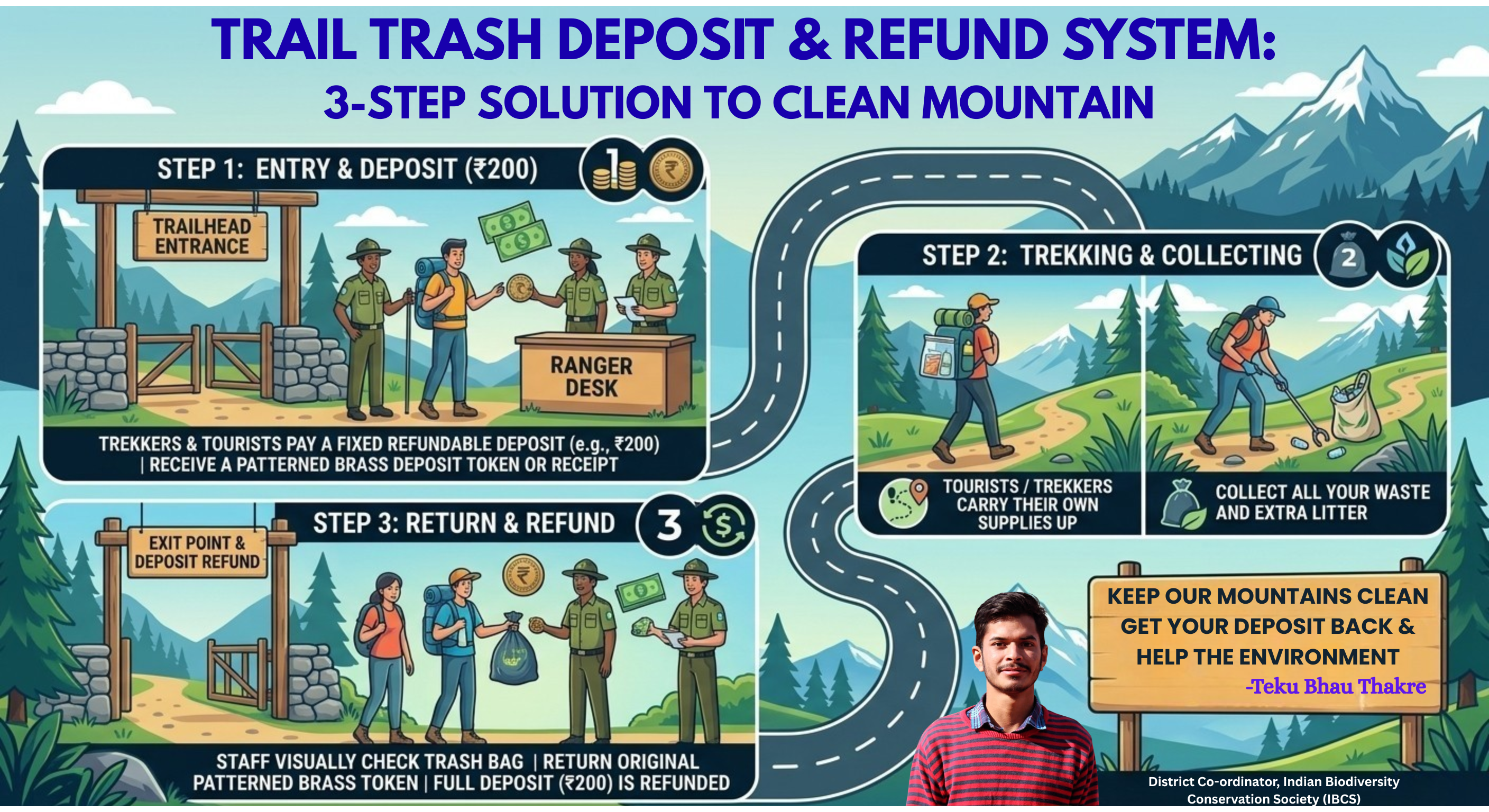
How does it works:-
Step 1: Entry & Deposit
• Trekkers pay a fixed refundable deposit (e.g., ₹200,500 etc.) at the entrance desk.
• The trekker /traveller receives a deposit receipt or token.
Step 2: Trekking & Collecting
• Trekkers /traveller carry their own food, water, and plastic items up the mountain.
• While hiking, they collect all their generated trash—and optionally pick up extra litter along the path—in a bag.
Step 3: Return & Refund
• At the exit desk, the trekker presents their bag of collected trash along with their entry receipt.
• Staff do a quick visual check to confirm the bag contains trash/plastics.
Why This Flat Approach Works Better
Zero Bottlenecks: Eliminates long entry queues because staff don’t waste time on it. Zero effort to clean environment.
Low Effort: Removes complex paperwork and tracking systems at the start of the hike.
Positive Motivation: Direct cash-back incentive turns garbage collection into a simple, rewarding task for every visitor.
4. Financial & Operational Sustainability
Self-Financing: Unclaimed deposits from visitors who choose not to bring back waste are pooled into a dedicated fund.
Local Employment:Funds from forfeited deposits directly finance local community cleanup crews, trail maintenance, and waste segregation facilities at the base.
Scalability:Due to its low infrastructure requirements, this model can be rapidly deployed across various national parks, forest checkpoints, and private trekking routes.
5. Implementation Roadmap
1. Pilot Project:Deploy at a single, high-traffic trailhead for a 30-day trial.
2. Community Integration:Partner with local Gram Panchayats and eco-tourism clubs to manage the exit desk and waste segregation.
3. Public Awareness: Install clear signage at the base area explaining the 3-step process.
Conclusion -
This modal is one of the best modal to combat the problem of the plastic pollution in the mountains or tourist places.
#letskeepmountainsclean
Petitioner:-Teku Bhau Thackeray
Contact -teku566@gmail.com

2
The Issue
Summary -
Plastic waste accumulation along high-altitude trekking routes threatens fragile alpine ecosystems, contaminates mountain streams with microplastics, and severely impacts local wildlife. Existing garbage control models creates severe operational bottlenecks and administrative friction.
This petition proposes a simplified, scalable solution:-The Flat Deposit-Return Model.
1. Problem Statement & Ecosystem Impact
Mountains or tourist places face distinct challenge of plastic pollution. It is the one of the major problem of mountain regions and creates following severe threat :
Hydrological Contamination:- UV exposure and extreme weather break down non-biodegradable plastics into microplastics, which directly enter pristine mountain streams and contaminate downstream drinking water.
Wildlife Ingestion: Single-use wrappers and bags left behind by trekkers are ingested by local fauna, causing fatal intestinal blockages.
Soil and Landscape Degradation: Non-biodegradable waste smothers delicate alpine flora, alters natural soil chemistry, and destroys the pristine aesthetic that draws visitors to our trails.
2. The Proposed Solution: 3-Step Flat Deposit Framework
To solve this problem of the pollution in the mountains places we urge institutions to establish flat deposit system:-
[ Step 1: Entry & Deposit ] ──► [ Step 2: Trek & Collect ] ──► [ Step 3: Return & Refund ]
Trekkers pay flat ₹200 Trekkers carry waste Bag presented + Token verified
Collect receipt/token + pick up trail litter Full deposit refunded
How does it works:-
Step 1: Entry & Deposit
• Trekkers pay a fixed refundable deposit (e.g., ₹200,500 etc.) at the entrance desk.
• The trekker /traveller receives a deposit receipt or token.
Step 2: Trekking & Collecting
• Trekkers /traveller carry their own food, water, and plastic items up the mountain.
• While hiking, they collect all their generated trash—and optionally pick up extra litter along the path—in a bag.
Step 3: Return & Refund
• At the exit desk, the trekker presents their bag of collected trash along with their entry receipt.
• Staff do a quick visual check to confirm the bag contains trash/plastics.
Why This Flat Approach Works Better
Zero Bottlenecks: Eliminates long entry queues because staff don’t waste time on it. Zero effort to clean environment.
Low Effort: Removes complex paperwork and tracking systems at the start of the hike.
Positive Motivation: Direct cash-back incentive turns garbage collection into a simple, rewarding task for every visitor.
4. Financial & Operational Sustainability
Self-Financing: Unclaimed deposits from visitors who choose not to bring back waste are pooled into a dedicated fund.
Local Employment:Funds from forfeited deposits directly finance local community cleanup crews, trail maintenance, and waste segregation facilities at the base.
Scalability:Due to its low infrastructure requirements, this model can be rapidly deployed across various national parks, forest checkpoints, and private trekking routes.
5. Implementation Roadmap
1. Pilot Project:Deploy at a single, high-traffic trailhead for a 30-day trial.
2. Community Integration:Partner with local Gram Panchayats and eco-tourism clubs to manage the exit desk and waste segregation.
3. Public Awareness: Install clear signage at the base area explaining the 3-step process.
Conclusion -
This modal is one of the best modal to combat the problem of the plastic pollution in the mountains or tourist places.
#letskeepmountainsclean
Petitioner:-Teku Bhau Thackeray
Contact -teku566@gmail.com
Petition Updates
Share this petition
Petition created on 23 August 2026