
Feeding Communities Not Landfills: How Restaurants and Grocery Stores Can End Hunger
The Issue
The Issue:
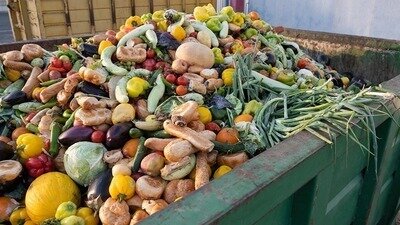
Every day, millions of Americans don’t know when they’re next meal is going to be. More than 47 million people in this country are experiencing some type of food insecurity. A decent amount comes from marginalized communities struggling with food insecurity. This can include children who rely solely on school meals, senior citizens on a fixed income, and families who are unable to purchase groceries. Restaurants and grocery stores don’t necessarily help with the cause. “Restaurants and other food services are a big part of this problem—contributing to 28% of this waste, or one-fifth of all the food available to consumers, ends up as waste” (Waste Not, Want Not: How restaurants are tackling food waste). This food ends up in dumpsters and landfills instead of shelters, food banks, and homes that desperately need it.
If we continue the path we're on, there will be serious repercussions for both people and the environment. Every year, millions of pounds of perfectly edible food end up in landfills. With United States contributing nearly 60 million tons or 120 billion pounds every year (RTS). While this is a big social issue, it’s also an environmental issue. Food waste is a problem in its own right, but it also contributes to the biggest environmental issue of this decade: climate change. Wasting food creates irreversible environmental consequences. It generates greenhouse gases, which make up 11 percent of the world’s emissions. This includes methane, carbon dioxide, and chlorofluorocarbons, which contribute to global warming. Food that sits in landfills and decays for long periods of time can produce nitrogen pollution, which causes algae blooms and dead zones. “According to the World Wildlife Federation, the production of wasted food in the United States is equivalent to the greenhouse emissions of 37 million cars” (Wasting Food Has Environmental Repercussions). This is without a doubt a serious crisis, but we have the tools to fix it. We must act fast before it’s too late.
It’s time for us to unite and turn waste into hope. If we all work together, we can strive to make the world a better place by fighting hunger, protecting the environment for centuries to come, and ensuring no edible food goes to waste. Please take five seconds of your time to sign this petition to demand that a nationwide policy be put in place that requires restaurants and grocery stores to donate safe, surplus food to shelters and communities in need.

12
The Issue
The Issue:
Every day, millions of Americans don’t know when they’re next meal is going to be. More than 47 million people in this country are experiencing some type of food insecurity. A decent amount comes from marginalized communities struggling with food insecurity. This can include children who rely solely on school meals, senior citizens on a fixed income, and families who are unable to purchase groceries. Restaurants and grocery stores don’t necessarily help with the cause. “Restaurants and other food services are a big part of this problem—contributing to 28% of this waste, or one-fifth of all the food available to consumers, ends up as waste” (Waste Not, Want Not: How restaurants are tackling food waste). This food ends up in dumpsters and landfills instead of shelters, food banks, and homes that desperately need it.
If we continue the path we're on, there will be serious repercussions for both people and the environment. Every year, millions of pounds of perfectly edible food end up in landfills. With United States contributing nearly 60 million tons or 120 billion pounds every year (RTS). While this is a big social issue, it’s also an environmental issue. Food waste is a problem in its own right, but it also contributes to the biggest environmental issue of this decade: climate change. Wasting food creates irreversible environmental consequences. It generates greenhouse gases, which make up 11 percent of the world’s emissions. This includes methane, carbon dioxide, and chlorofluorocarbons, which contribute to global warming. Food that sits in landfills and decays for long periods of time can produce nitrogen pollution, which causes algae blooms and dead zones. “According to the World Wildlife Federation, the production of wasted food in the United States is equivalent to the greenhouse emissions of 37 million cars” (Wasting Food Has Environmental Repercussions). This is without a doubt a serious crisis, but we have the tools to fix it. We must act fast before it’s too late.
It’s time for us to unite and turn waste into hope. If we all work together, we can strive to make the world a better place by fighting hunger, protecting the environment for centuries to come, and ensuring no edible food goes to waste. Please take five seconds of your time to sign this petition to demand that a nationwide policy be put in place that requires restaurants and grocery stores to donate safe, surplus food to shelters and communities in need.
Petition Updates
Share this petition
Petition created on April 25, 2025