

Expand the Canadian Single-Use Plastic Ban to Cover Microplastic Contributors
The Issue
Imagine a future where every sip of water, every bite of seafood, and every breath you take contains tiny pieces of plastic that could lead to significant health risks.
Did you know it is estimated that there will be more plastic in the ocean than fish by 2050? Plastic products have become deeply integrated in today's world with an endless number of uses and invaluable benefits. But those are not without side effects. While the increase in plastic straws and ring carriers is alarming on its own, microplastics create an even more complex problem, because they are largely invisible but their impacts are loud and clear. When many plastic products come into contact with water like through steeping of tea, washing of synthetic clothes or flushing of wipes, they will shed some of their plastic fibres and if these fragments are smaller than 5 millimetres they are considered microplastics.
The abundance of marine microplastic pollution, from harmful processes in the production, consumption and waste management of plastics, threatens ecosystems and human health. They are harder to combat than larger marine pollution due to their size which makes removing them from the ocean more difficult and means controlling them at the source is essential to marine ecosystem health. Marine organisms mistakenly consume microplastics which can lead to toxic accumulation of chemicals and gets worse moving up the food web, being passed along to humans who eat seafood. To exacerbate the problem, there are human health impacts which are hard to quantify but include endocrine disruptors with the potential to create large-scale changes in hormone activity, impacting especially development and fertility. Plus, continuous exposure to these harmful substances is linked to inflammation, increased sickness from pathogens, and chronic health conditions affecting our well-being and that of future generations.
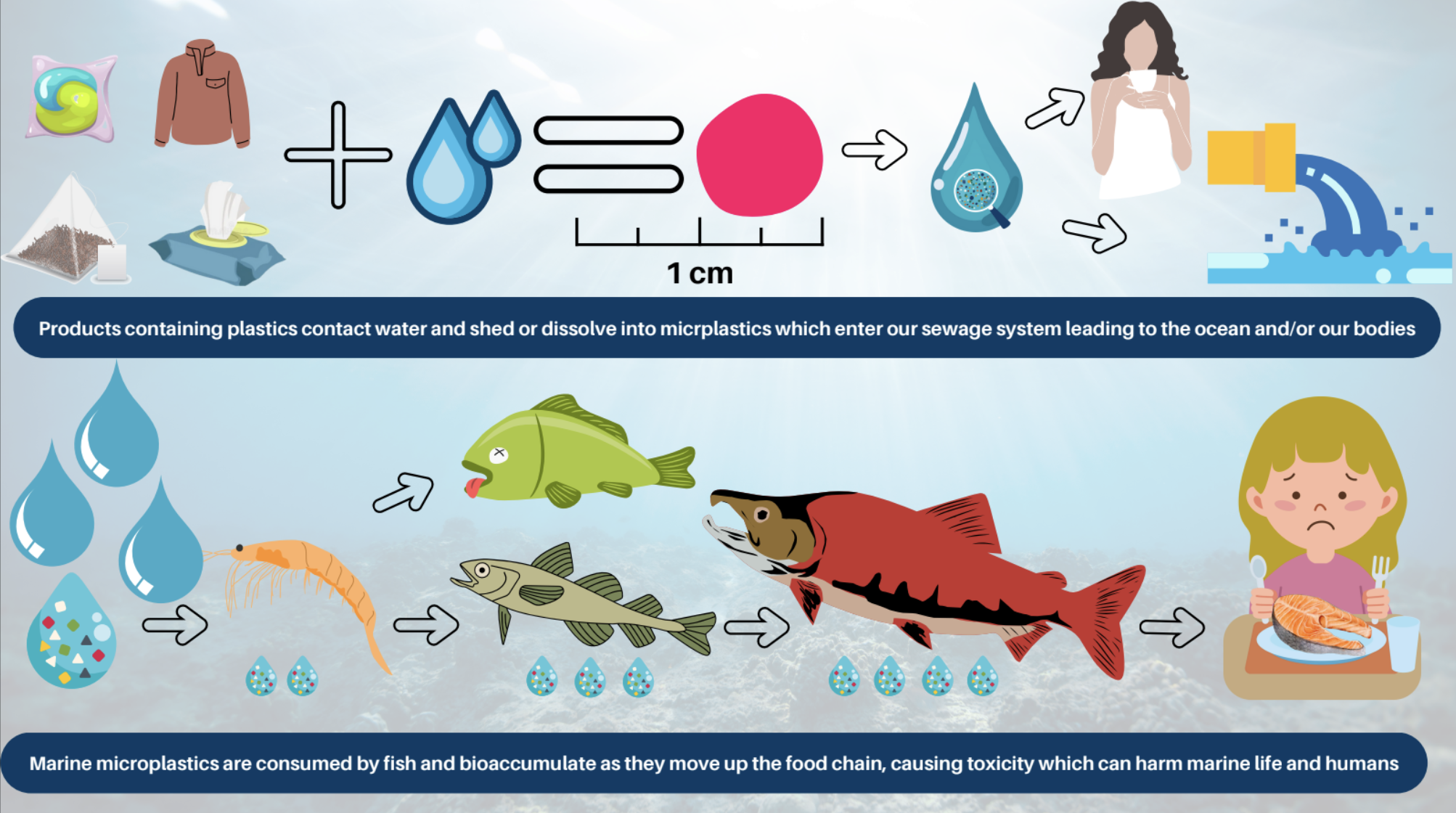
Environment and Climate Change Canada has already acted in favour of protecting ecosystems from plastic with Canada’s Single-Use Plastic Ban. This is a great step to reduce overall marine plastic pollution and it aids the country in ensuring its goal of zero plastic waste by 2030 and reduces greenhouse gas emissions. It prohibits manufacturing, importing, and selling of six types of single-use plastics, including checkout bags, cutlery, food service ware, ring carriers, stir sticks and straws. However this ban overlooked common single-use household products contributing significantly to microplastic pollution entering marine environments when we put them into our sewage through laundry, washing machines and sinks. Although many microplastics are caught by sewage treatment plants; thousands of trillions of microplastics (3.85 × 10^16) still enter the ocean, where they can persist as threats for hundreds of years. The current ban should be expanded to account for sources of microplastic pollution, with suggestions of plastic pyramid tea bags, flushable wipes, and PVA (polyvinyl alcohol - a plastic) coated dishwasher and laundry pods. These items were preliminarily chosen because there are readily available and cheap alternatives, and they have some especially concerning features.
- Plastic tea bags: Not only contribute to microplastics but also contain potential endocrine disruptors - these can be directly consumed by people drinking tea. McGill University found that steeping a single plastic tea bag at brewing temperature releases about 11.6 billion microplastic and 3.1 billion nanoplastic particles into the water.
Alternative: The traditional biodegradable paper tea bags or loose-leaf tea. - Disposable flushable wipes: Often contain synthetic fibres that break down into microplastics, clogging water systems and polluting waterways.
Alternative: Not flushing the wipes, compostable wipes or reusable cloths. - The casings of dishwashers and washing machine pods: Studies conducted by Plymouth University revealed a single load of laundry could release more than 700,000 microscopic plastic lint.
Alternative: Powder or liquid detergents in recyclable packaging.
To address this problem, we have designed a multi-pronged approach in order to reach a large audience and create impact in multiple spheres.
- We created a lesson plan for British Columbia highschool science classes teaching about the dangers of microplastics and introducing collective climate action as a transformative way to combat environmental issues. Informing about this issue can not only amplify voices, but can also be a tool to combat climate anxiety which is all too prevalent in this generation. Encouraging individual climate action can encourage youth by showing them they have the ability to make a positive change in the world. Inviting them into collective action combats feelings of being too small to make a difference. And it can get new leaders connected with an important cause!
- We created an email template to Environment and Climate Change Canada to inform them of our concern about microplastics in general and calling for legislative regulation over sources. This ministry held a consultation period over the summer about microplastics from the laundry and textile industries. We hope to piggyback off of this movement on their part to encourage even larger-scale governmental change.
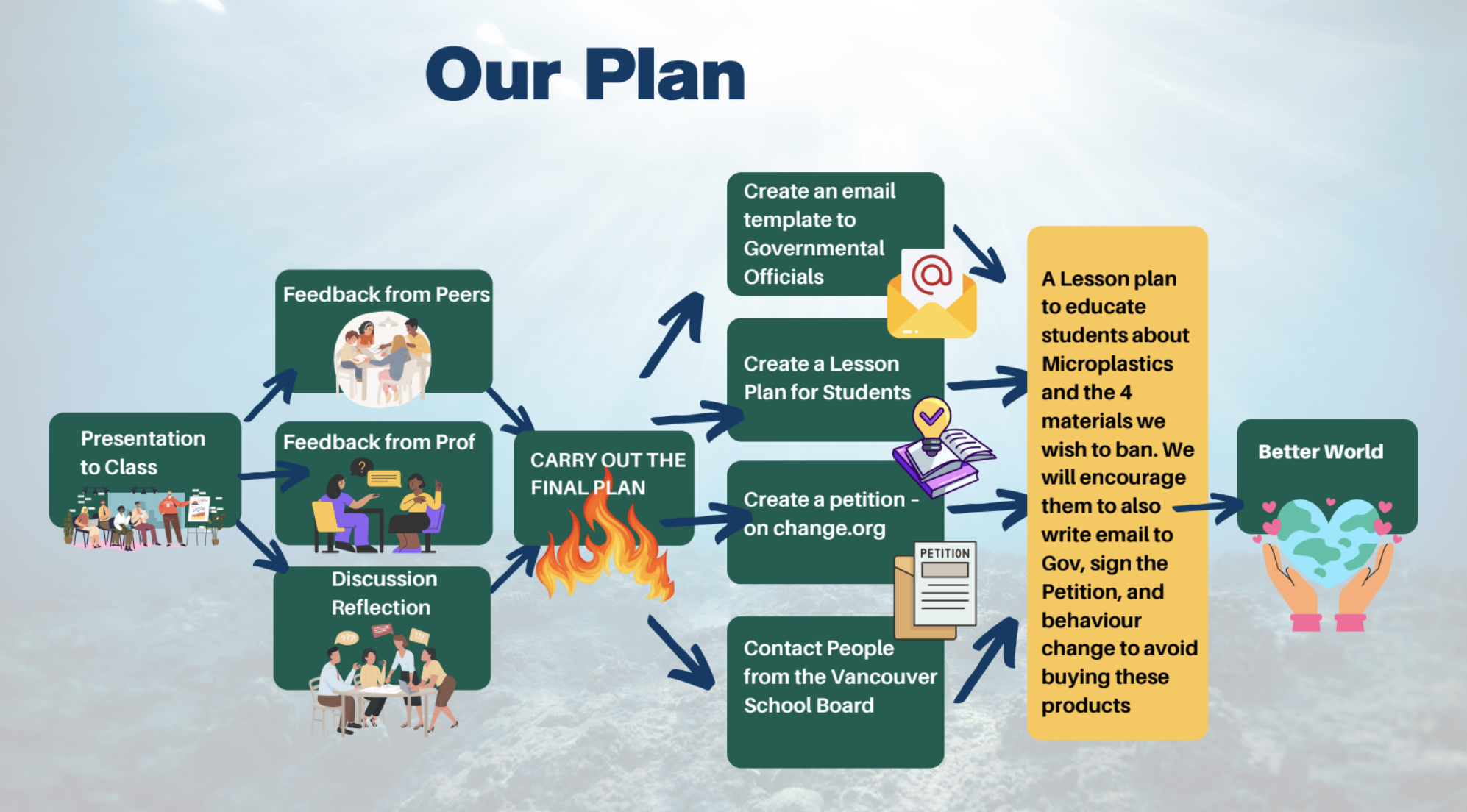
We believe it's time to address these overlooked sources. An influential move like this could help to significantly decrease the amount of microplastics entering our environment, and therefore, our bodies. We urge the Canadian government to take a step in expanding the current Single-use plastic regulations to mitigate the overlooked sources of microplastics. With accessible and affordable alternatives readily available, we can make significant progress in protecting our environment and public health. Sign the petition today and demand comprehensive action in protecting the public and our environment from the dangers of microplastics.
But petitioning doesn’t need to be the end of the story. You can take action today by saying no to the perilous plastic pyramids, flawed pods, and wasteful wipes and by loving level-headed loose-leaf tea, clean compostable wipes and different dependable detergents. And don’t be sucked into the traps of consumerism selling unnecessarily more expensive plastic tea bags, detergent pods and single-use wipes through misleading marketing saying they are "biodegradable" or "flushable" while intentionally masking their microplastic pollution. Say yes to cleaner water, unpolluted ecosystems and healthier people. Join us today in this move against marine microplastics!

192
The Issue
Imagine a future where every sip of water, every bite of seafood, and every breath you take contains tiny pieces of plastic that could lead to significant health risks.
Did you know it is estimated that there will be more plastic in the ocean than fish by 2050? Plastic products have become deeply integrated in today's world with an endless number of uses and invaluable benefits. But those are not without side effects. While the increase in plastic straws and ring carriers is alarming on its own, microplastics create an even more complex problem, because they are largely invisible but their impacts are loud and clear. When many plastic products come into contact with water like through steeping of tea, washing of synthetic clothes or flushing of wipes, they will shed some of their plastic fibres and if these fragments are smaller than 5 millimetres they are considered microplastics.
The abundance of marine microplastic pollution, from harmful processes in the production, consumption and waste management of plastics, threatens ecosystems and human health. They are harder to combat than larger marine pollution due to their size which makes removing them from the ocean more difficult and means controlling them at the source is essential to marine ecosystem health. Marine organisms mistakenly consume microplastics which can lead to toxic accumulation of chemicals and gets worse moving up the food web, being passed along to humans who eat seafood. To exacerbate the problem, there are human health impacts which are hard to quantify but include endocrine disruptors with the potential to create large-scale changes in hormone activity, impacting especially development and fertility. Plus, continuous exposure to these harmful substances is linked to inflammation, increased sickness from pathogens, and chronic health conditions affecting our well-being and that of future generations.
Environment and Climate Change Canada has already acted in favour of protecting ecosystems from plastic with Canada’s Single-Use Plastic Ban. This is a great step to reduce overall marine plastic pollution and it aids the country in ensuring its goal of zero plastic waste by 2030 and reduces greenhouse gas emissions. It prohibits manufacturing, importing, and selling of six types of single-use plastics, including checkout bags, cutlery, food service ware, ring carriers, stir sticks and straws. However this ban overlooked common single-use household products contributing significantly to microplastic pollution entering marine environments when we put them into our sewage through laundry, washing machines and sinks. Although many microplastics are caught by sewage treatment plants; thousands of trillions of microplastics (3.85 × 10^16) still enter the ocean, where they can persist as threats for hundreds of years. The current ban should be expanded to account for sources of microplastic pollution, with suggestions of plastic pyramid tea bags, flushable wipes, and PVA (polyvinyl alcohol - a plastic) coated dishwasher and laundry pods. These items were preliminarily chosen because there are readily available and cheap alternatives, and they have some especially concerning features.
- Plastic tea bags: Not only contribute to microplastics but also contain potential endocrine disruptors - these can be directly consumed by people drinking tea. McGill University found that steeping a single plastic tea bag at brewing temperature releases about 11.6 billion microplastic and 3.1 billion nanoplastic particles into the water.
Alternative: The traditional biodegradable paper tea bags or loose-leaf tea. - Disposable flushable wipes: Often contain synthetic fibres that break down into microplastics, clogging water systems and polluting waterways.
Alternative: Not flushing the wipes, compostable wipes or reusable cloths. - The casings of dishwashers and washing machine pods: Studies conducted by Plymouth University revealed a single load of laundry could release more than 700,000 microscopic plastic lint.
Alternative: Powder or liquid detergents in recyclable packaging.
To address this problem, we have designed a multi-pronged approach in order to reach a large audience and create impact in multiple spheres.
- We created a lesson plan for British Columbia highschool science classes teaching about the dangers of microplastics and introducing collective climate action as a transformative way to combat environmental issues. Informing about this issue can not only amplify voices, but can also be a tool to combat climate anxiety which is all too prevalent in this generation. Encouraging individual climate action can encourage youth by showing them they have the ability to make a positive change in the world. Inviting them into collective action combats feelings of being too small to make a difference. And it can get new leaders connected with an important cause!
- We created an email template to Environment and Climate Change Canada to inform them of our concern about microplastics in general and calling for legislative regulation over sources. This ministry held a consultation period over the summer about microplastics from the laundry and textile industries. We hope to piggyback off of this movement on their part to encourage even larger-scale governmental change.
We believe it's time to address these overlooked sources. An influential move like this could help to significantly decrease the amount of microplastics entering our environment, and therefore, our bodies. We urge the Canadian government to take a step in expanding the current Single-use plastic regulations to mitigate the overlooked sources of microplastics. With accessible and affordable alternatives readily available, we can make significant progress in protecting our environment and public health. Sign the petition today and demand comprehensive action in protecting the public and our environment from the dangers of microplastics.
But petitioning doesn’t need to be the end of the story. You can take action today by saying no to the perilous plastic pyramids, flawed pods, and wasteful wipes and by loving level-headed loose-leaf tea, clean compostable wipes and different dependable detergents. And don’t be sucked into the traps of consumerism selling unnecessarily more expensive plastic tea bags, detergent pods and single-use wipes through misleading marketing saying they are "biodegradable" or "flushable" while intentionally masking their microplastic pollution. Say yes to cleaner water, unpolluted ecosystems and healthier people. Join us today in this move against marine microplastics!
The Decision Makers

Supporter Voices
Petition Updates
Share this petition
Petition created on November 22, 2024