
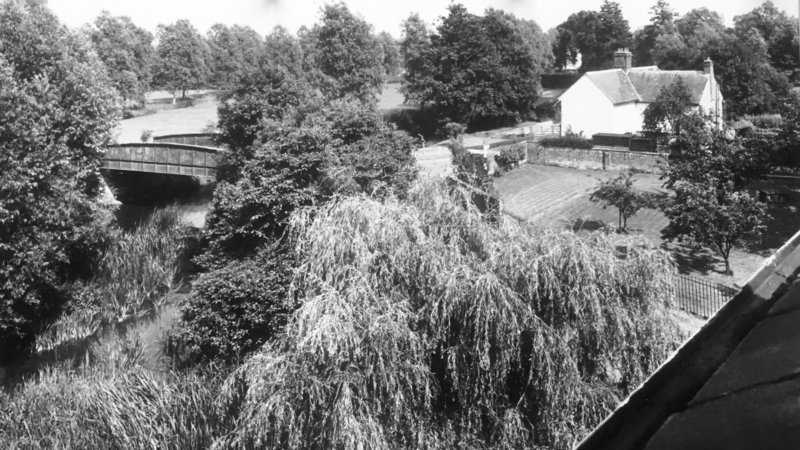
We came across this photo of the bridge taken in the late 1960s just before we came to live at Boxted Mill. It is remarkable that nothing has changed apart from the vegetable garden and the large willow in the foreground.
Conclusions and Recommendations quoted from Boxted Bridge Heritage Assessment document, Place Services, August 2020 :
"Assessment has found that the bridge is considered to be of significance and is a non- designated heritage asset. The bridge also contributes positively to the setting of both the Grade II listed Boxted Mill and Island Cottage (a non-designated heritage asset). The significance of the bridge is drawn from its architectural interest as a complete and unaltered example of c.1900 bridge. This is also in a wider location which has been subject to very little change; the setting and experience of this heritage asset, and those adjacent, is considered to contribute to their respective significance.
Considering the above, the removal of this bridge will cause harm to it as a non- designated heritage asset and the setting of both a designated and non-designated heritage asset. As such it is recommended that a sequential approach is adopted, taking the best case/most sensitive scenario as a starting point and working forwards from this base as necessary. The approaches are outlined below, with approach 1 as the preferred.
Approach 1:
The bridge is fully retained, and sympathetic repairs are undertaken which do not detract from the architectural interest of the structure. Should this approach not be viable then it will need to be robustly justified. All other alternative approaches will result in harm to heritage assets.
Approach 2:
Should the structure not be retained in-situ, all alterations should be fully justified. Should the bridge require altering then principal features should be retained and reused where possible. These features include the flank walls, brick/granite piers and brick abutments. Should these features not be retained, this should be fully justified and features which are of same aesthetic and construction installed."
6.4 Depending on approach, a scheme of archaeological building recoding will likely be required commensurate with either a ‘Level 2 or 3’ as outlined in Historic England Guidance Understanding Historic Buildings.17
6.5 All statements and recommendations in this document are subject to consultation and agreement with the local planning authority.
Photo is possibly by Charles Seeley, photographer