Equip Every Child with the Knowledge and Skills to Navigate Grief and Loss
The Issue
Death, dying, grief and bereavement are universal human experiences, yet in Australia, children are not taught how to understand or navigate them.
How common is grief in children and young people?
In Australia, approximately 1 in 20 children will experience the death of a parent before the age of 18. Many more will experience the death of a sibling, grandparent, neighbour, friend or pet, as well as non-death losses such as family separation, illness, parent incarceration or natural disasters.
How does grief impact children and young people?
Grieving children experience an increased risk of anxiety and depression, substance use, self-harm, and suicide attempts, poorer physical health and poorer educational and employment outcomes. Recent research by Curtin University found that children who experienced the death of a parent were more than twice as likely to have a mental health disorder compared with children who had not experienced parental death.
What do children and young people think?
We know that children and young people want to learn about death, dying, grief and bereavement. Australian research by Curtin University involving 42 young people aged 14–24 found that young people want more opportunities to learn about grief, have their experiences recognised and validated, and develop the knowledge and skills to support themselves and others. Additional research by Curtin University examined 213 questions asked by bereaved children aged 5–12, and found that children have important questions about why people die, what happens after death and how to understand and manage grief.
What can we do?
We cannot prevent children or young people from experiencing grief, but we can prevent them from having to navigate it alone, without knowledge, tools and support by creating grief-literate schools. Like mental health literacy, grief literacy equips children, young people and adults with the knowledge, language, and confidence to understand loss, provide support, and seek help when needed.
The United Kingdom Government and the New Zealand Government recently recognised the need for grief education in schools when they passed legislation making it a mandatory part of their National Education Curriculum. The Australian Childhood Grief Network (ACGN) proposes that Australia follow in their footsteps and include grief education in the National Australian Curriculum.
Our vision
Our vision is that all Australian schools have the knowledge, tools, and support to hold the grief of children, young people, school staff, and the broader community.
We recognise that schools exist at the centre of community, and when a community experiences a loss, schools are often called upon to guide the community through grief without adequate training or support.
What does the community think?
We know the community largely supports including grief in the Australian Curriculum. The Australian Childhood Grief Network (ACGN), in partnership with Quality of Care Collaborative Australia (QuoCCA), recently surveyed over 1000 people and found that:
- 93% of respondents felt that grief education should be taught in primary schools, and
- 96% felt it should be taught in high schools.
Our ask
In a world of economic and environmental uncertainty, global conflict and the grief of an imagined future, children and young people increasingly need the knowledge, tools and support to navigate grief and build resilience.
We call for age-appropriate, culturally inclusive education about death, dying, grief, and bereavement to be explicitly included in the next review of the Australian Curriculum (Health and Physical Education and Personal and Social Capability), supported by teacher resources and professional learning.
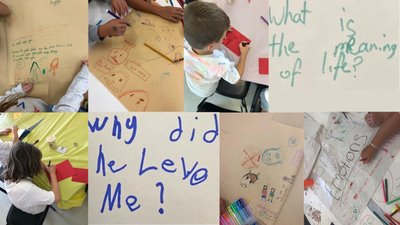
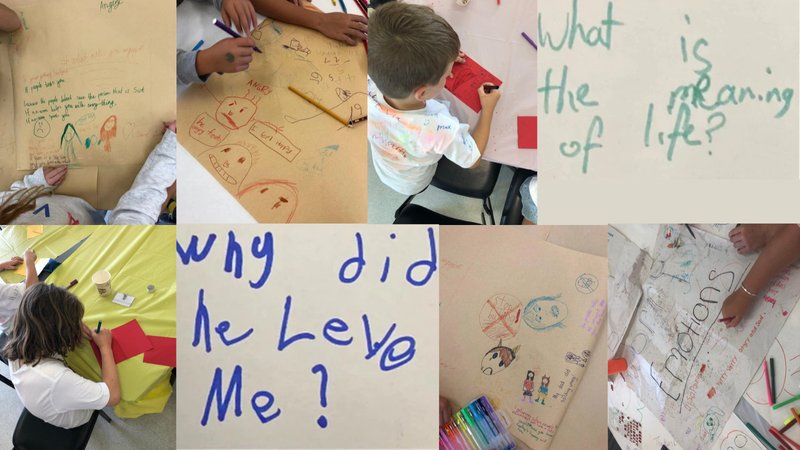
The images in our banner were provided by Lion Heart Camps for Kids and are shared with consent.

69
The Issue
Death, dying, grief and bereavement are universal human experiences, yet in Australia, children are not taught how to understand or navigate them.
How common is grief in children and young people?
In Australia, approximately 1 in 20 children will experience the death of a parent before the age of 18. Many more will experience the death of a sibling, grandparent, neighbour, friend or pet, as well as non-death losses such as family separation, illness, parent incarceration or natural disasters.
How does grief impact children and young people?
Grieving children experience an increased risk of anxiety and depression, substance use, self-harm, and suicide attempts, poorer physical health and poorer educational and employment outcomes. Recent research by Curtin University found that children who experienced the death of a parent were more than twice as likely to have a mental health disorder compared with children who had not experienced parental death.
What do children and young people think?
We know that children and young people want to learn about death, dying, grief and bereavement. Australian research by Curtin University involving 42 young people aged 14–24 found that young people want more opportunities to learn about grief, have their experiences recognised and validated, and develop the knowledge and skills to support themselves and others. Additional research by Curtin University examined 213 questions asked by bereaved children aged 5–12, and found that children have important questions about why people die, what happens after death and how to understand and manage grief.
What can we do?
We cannot prevent children or young people from experiencing grief, but we can prevent them from having to navigate it alone, without knowledge, tools and support by creating grief-literate schools. Like mental health literacy, grief literacy equips children, young people and adults with the knowledge, language, and confidence to understand loss, provide support, and seek help when needed.
The United Kingdom Government and the New Zealand Government recently recognised the need for grief education in schools when they passed legislation making it a mandatory part of their National Education Curriculum. The Australian Childhood Grief Network (ACGN) proposes that Australia follow in their footsteps and include grief education in the National Australian Curriculum.
Our vision
Our vision is that all Australian schools have the knowledge, tools, and support to hold the grief of children, young people, school staff, and the broader community.
We recognise that schools exist at the centre of community, and when a community experiences a loss, schools are often called upon to guide the community through grief without adequate training or support.
What does the community think?
We know the community largely supports including grief in the Australian Curriculum. The Australian Childhood Grief Network (ACGN), in partnership with Quality of Care Collaborative Australia (QuoCCA), recently surveyed over 1000 people and found that:
- 93% of respondents felt that grief education should be taught in primary schools, and
- 96% felt it should be taught in high schools.
Our ask
In a world of economic and environmental uncertainty, global conflict and the grief of an imagined future, children and young people increasingly need the knowledge, tools and support to navigate grief and build resilience.
We call for age-appropriate, culturally inclusive education about death, dying, grief, and bereavement to be explicitly included in the next review of the Australian Curriculum (Health and Physical Education and Personal and Social Capability), supported by teacher resources and professional learning.
The images in our banner were provided by Lion Heart Camps for Kids and are shared with consent.
Petition Updates
Share this petition
Petition created on November 17, 2026