
Education Awareness About Service Animals In New Brunswick, Canada
The Issue
Education and awareness can make a significant difference in the lives of people who rely on service animals.
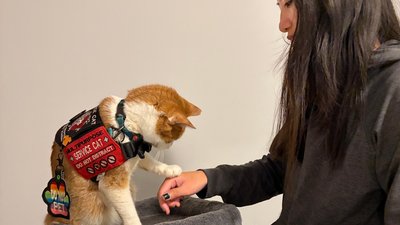
As someone with invisible disabilities and the handler of a legitimate, task trained service animal that is a cat, I have experienced how misinformation, lack of education and assumptions about service animals can create unnecessary challenges when accessing businesses and public spaces. These barriers can affect a person's independence, accessibility and quality of life.
Here's what needs to change and why.
In New Brunswick, Canada, businesses and the public need greater education about service animals, including correct terminology, the New Brunswick Human Rights Act, provincial guidelines and appropriate customer service practices.
There needs to be a better understanding of the differences between service animals, emotional support animals and therapy animals, the disability-related tasks service animals perform, and the responsibilities businesses have when accommodating people with disabilities.
Under the New Brunswick Human Rights Act, employers, public service providers (e.g. schools,
hospitals, restaurants, malls, and insurance) and housing providers has a duty to accommodate people with disabilities who rely on service animals, up to the point of undue hardship.
Respecting boundaries is equally important. Service animals should not be approached, petted, fed, distracted, separated from their handlers or photographed without permission. Please direct your attention and speak to the handler rather than attempting to interact with the animal. Please give service animal teams space and respect their boundaries.
Businesses should also avoid making assumptions about someone's disability, the legitimacy of their service animal or what assistance they may need. Good customer service means communicating respectfully, asking appropriate questions when necessary and asking the person for assistance rather than making assumptions.
Here's what I am asking for.
I would like local governments, disability advocacy organizations and businesses to work together to develop educational resources, workshops and training opportunities for businesses, employees and the general public throughout New Brunswick.
This education information should cover:
- The federal Accessibility Canada Act, the New Brunswick Provincial Human Act, and provincial guidelines.
- Correct terminology and the differences between service animals, emotional support animals and therapy animals.
- Business responsibilities, appropriate customer service and respectful communication.
- Service animal boundaries and why respecting boundaries is important.
- How to recognize, clarify and address misrepresentation without making assumptions or discriminating against legitimate service animal teams.
- Understanding that service animals are not limited to dogs. Other types of animals, including cats, are recognized under New Brunswick provincial human rights guidelines.
The goal is to work together, not against each other.
Better education can help reduce ableism, misinformation, accessibility barriers, misunderstandings and unnecessary human rights complaints. It benefits both businesses and people with disabilities by helping everyone understand their responsibilities and rights.
People with disabilities should not have to repeatedly explain or defend their needs and rights just to access everyday services. People with visible and invisible disabilities deserve to be treated with dignity, respect and understanding.
The Government of New Brunswick has taken steps toward improving accessibility through the Provincial Accessibility Act. However, accessibility should not be an afterthought or something people with disabilities have to wait years to experience. We should be included in the conversation from the beginning, not after decisions have already been made.
Nothing about us, without us.
I am asking local governments and business leaders in New Brunswick to prioritize service animal education and work collaboratively toward more accessible and inclusive communities.
Please sign and share this petition to help make a difference.
Thank you for taking the time to read, support and help bring greater awareness to an issue that affects people with visible and invisible disabilities and their legitimate service animal teams.

22
The Issue
Education and awareness can make a significant difference in the lives of people who rely on service animals.
As someone with invisible disabilities and the handler of a legitimate, task trained service animal that is a cat, I have experienced how misinformation, lack of education and assumptions about service animals can create unnecessary challenges when accessing businesses and public spaces. These barriers can affect a person's independence, accessibility and quality of life.
Here's what needs to change and why.
In New Brunswick, Canada, businesses and the public need greater education about service animals, including correct terminology, the New Brunswick Human Rights Act, provincial guidelines and appropriate customer service practices.
There needs to be a better understanding of the differences between service animals, emotional support animals and therapy animals, the disability-related tasks service animals perform, and the responsibilities businesses have when accommodating people with disabilities.
Under the New Brunswick Human Rights Act, employers, public service providers (e.g. schools,
hospitals, restaurants, malls, and insurance) and housing providers has a duty to accommodate people with disabilities who rely on service animals, up to the point of undue hardship.
Respecting boundaries is equally important. Service animals should not be approached, petted, fed, distracted, separated from their handlers or photographed without permission. Please direct your attention and speak to the handler rather than attempting to interact with the animal. Please give service animal teams space and respect their boundaries.
Businesses should also avoid making assumptions about someone's disability, the legitimacy of their service animal or what assistance they may need. Good customer service means communicating respectfully, asking appropriate questions when necessary and asking the person for assistance rather than making assumptions.
Here's what I am asking for.
I would like local governments, disability advocacy organizations and businesses to work together to develop educational resources, workshops and training opportunities for businesses, employees and the general public throughout New Brunswick.
This education information should cover:
- The federal Accessibility Canada Act, the New Brunswick Provincial Human Act, and provincial guidelines.
- Correct terminology and the differences between service animals, emotional support animals and therapy animals.
- Business responsibilities, appropriate customer service and respectful communication.
- Service animal boundaries and why respecting boundaries is important.
- How to recognize, clarify and address misrepresentation without making assumptions or discriminating against legitimate service animal teams.
- Understanding that service animals are not limited to dogs. Other types of animals, including cats, are recognized under New Brunswick provincial human rights guidelines.
The goal is to work together, not against each other.
Better education can help reduce ableism, misinformation, accessibility barriers, misunderstandings and unnecessary human rights complaints. It benefits both businesses and people with disabilities by helping everyone understand their responsibilities and rights.
People with disabilities should not have to repeatedly explain or defend their needs and rights just to access everyday services. People with visible and invisible disabilities deserve to be treated with dignity, respect and understanding.
The Government of New Brunswick has taken steps toward improving accessibility through the Provincial Accessibility Act. However, accessibility should not be an afterthought or something people with disabilities have to wait years to experience. We should be included in the conversation from the beginning, not after decisions have already been made.
Nothing about us, without us.
I am asking local governments and business leaders in New Brunswick to prioritize service animal education and work collaboratively toward more accessible and inclusive communities.
Please sign and share this petition to help make a difference.
Thank you for taking the time to read, support and help bring greater awareness to an issue that affects people with visible and invisible disabilities and their legitimate service animal teams.
The Decision Makers
Petition Updates
Share this petition
Petition created on November 14, 2026