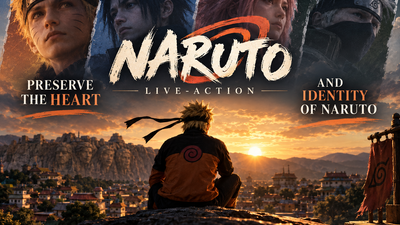

Don’t Reinvent Naruto — Preserve What Made the Original Special
The Issue
A Plea to Preserve the Heart and Identity of Naruto
Dear Lionsgate, filmmakers, producers, Masashi Kishimoto, and everyone involved in the live-action adaptation of Naruto,
We are writing on behalf of ourselves and countless other fans who have been deeply inspired by the world of Naruto. Created by Masashi Kishimoto, this legendary manga and anime has resonated with audiences around the world because of its unforgettable characters, compelling storylines, humor, relationships, world-building, and profound themes of loneliness, perseverance, friendship, sacrifice, and redemption.
Recent reports and discussions surrounding possible changes to the original story have left many fans deeply concerned. This petition is not a demand for a frame-by-frame recreation of the anime. We understand that a live-action adaptation requires changes in structure, pacing, dialogue, visual presentation, and sometimes even the order in which events are introduced.
Our request is more fundamental: please preserve the identity, character psychology, emotional core, and narrative integrity of Naruto.
Naruto is not a franchise that needs to be "fixed" or fundamentally reinvented. Its imperfections are part of what made it meaningful. Its characters are compelling precisely because they are not perfect, and its story works because their flaws, mistakes, relationships, and experiences gradually shape who they become.
1. Do Not Strip Characters of Their Core Flaws and Development
One of the greatest dangers in adaptation is removing the very flaws that make characters worth following.
Recent live-action adaptations, including Avatar: The Last Airbender, have sparked criticism over changes to the personalities and developmental arcs of their characters. When defining weaknesses and character flaws are substantially reduced, the eventual growth of those characters can feel less meaningful because the audience has been given less of a starting point from which that growth can emerge.
A character cannot realistically undergo a compelling transformation if they are already portrayed as emotionally mature, morally perfect, or passive from the beginning.
This principle is especially important for Naruto.
Naruto's immaturity, loneliness, impulsiveness, need for recognition, and tendency to act before thinking are not obstacles that should simply be removed. They are fundamental parts of his journey. Sasuke's isolation, pride, anger, and obsession with revenge are equally essential to understanding his choices. Sakura's development, Kakashi's emotional distance, and the flaws and contradictions of the wider cast are what allow these characters to grow over time.
Please do not make the characters better people at the beginning at the expense of making their journeys less meaningful.
Their flaws are not mistakes in Kishimoto's writing. They are the starting point of their development.
2. Do Not Compress Naruto Into a "Narrative Smoothie"
Another major danger is excessive plot compression.
Recent adaptations such as Yu Yu Hakusho and Avatar: The Last Airbender demonstrate how difficult it can be to condense enormous stories into only a handful of episodes. When multiple arcs, characters, locations, conflicts, and emotional developments are merged together simply to make the story fit a limited runtime, the result can feel rushed and structurally chaotic.
Characters who originally needed considerable time to become friends, rivals, enemies, or trusted companions can suddenly be expected to form deep relationships within minutes. Major conflicts lose their emotional weight because the audience has not had enough time to understand what is at stake.
This would be particularly damaging to Naruto.
The story is enormous, but its importance does not come only from its major battles or plot twists. It comes from the time spent watching characters live together, train together, misunderstand each other, fail, recover, and gradually change.
Naruto and Sasuke's relationship cannot be reduced to a few convenient scenes. Naruto's bond with Iruka, Team 7's formation, Kakashi's relationship with his students, Sakura's development, and the introduction of characters such as Gaara all require enough breathing room for the audience to become emotionally invested.
Please do not prioritize checking off plot points over allowing relationships and emotions to develop naturally.
A shorter story does not necessarily need to be a faster story. Sometimes the right adaptation decision is to tell less of the original story rather than trying to tell everything at once.
3. Structural Changes Are Acceptable — If They Preserve the Heart of the Story
We also want to make one point absolutely clear: we are not opposed to changes.
The live-action adaptation of One Piece demonstrates that an adaptation can restructure the source material and still retain its identity. The writers reorganized events, introduced certain characters and storylines earlier, adjusted pacing, and adapted exaggerated elements to work within a live-action setting.
What mattered was that the fundamental personalities, relationships, motivations, and emotional core of the characters remained recognizable.
This is the approach we hope to see with Naruto.
A live-action adaptation does not need to copy the anime frame by frame. It does not need to reproduce every joke, scene, or event in exactly the same order. Filmmakers should absolutely use the strengths of cinema and live-action storytelling.
But there is a crucial difference between adaptation and reinvention.
Restructuring the story to make it work on screen is one thing. Changing the personalities, motivations, relationships, and fundamental arcs of the characters is something else entirely.
The goal should not be to blindly copy Naruto.
The goal should be to understand why Naruto works — and preserve that.
4. Let Kishimoto's Voice Remain Central to the Adaptation
There is an especially important reason for hope.
Masashi Kishimoto is not simply the creator of a distant source material. He has already met director Destin Daniel Cretton and expressed his confidence in Cretton's approach. Kishimoto has specifically praised Cretton for being open-minded and willing to embrace his input, and has expressed his expectation that they can cooperate during the production process.
As the live-action film moves forward, we sincerely hope that this collaboration remains meaningful.
If the creator of Naruto is willing to share his experience, understanding of the characters, and vision for his world, that is an extraordinary opportunity. His involvement should be used not merely as a symbolic connection to the original manga, but as a resource for understanding the very things that made the story work in the first place.
Please listen to Kishimoto not only when adapting the world of Naruto, but when adapting the people who inhabit it.
No adaptation needs to preserve every single detail of its source material. But when difficult decisions have to be made about a character's personality, motivation, relationships, or emotional journey, the original creator's perspective should carry genuine weight.
5. Please Learn From the History of Anime Adaptations
Hollywood has already given fans painful examples of what can happen when an adaptation loses sight of its source material, including Dragonball Evolution, Death Note, and Cowboy Bebop.
These examples have taught audiences an important lesson: changing things simply because the original material is considered "too anime," "too exaggerated," or "too complicated" does not automatically make an adaptation better.
Naruto has its own unique tone, humor, mythology, relationships, and visual identity. Those elements should be translated into live-action rather than erased simply to make the franchise resemble a conventional Hollywood production.
Live-action should not mean "less Naruto."
It should mean a different medium through which Naruto can be experienced.
6. Preserve What Makes Naruto Naruto
We understand that adapting such a massive story is an enormous challenge. We understand that scenes will be shortened, events may be rearranged, characters may be introduced differently, and certain elements may need to be modified for practical reasons.
We are not asking for perfection.
We are asking for respect.
Please preserve the psychological foundations of the characters. Give important relationships enough time to develop. Allow flaws to remain flaws so that growth can feel earned. Avoid compressing enormous emotional journeys into a sequence of plot points. And when structural changes are necessary, make those changes in service of the story rather than at the expense of its identity.
Naruto already has a story that has connected with millions of people around the world. It does not need to be reinvented to become meaningful.
It needs to be translated faithfully into another medium.
We sincerely hope that Lionsgate, Destin Daniel Cretton, the producers, Masashi Kishimoto, and everyone involved will listen to the concerns of the fans who have carried this story with them for years.
We want this adaptation to succeed.
We want new audiences to discover Naruto.
We want longtime fans to be proud of what they see on screen.
And we are ready to support the live-action adaptation — as long as it respects the heart of the story that made Naruto special in the first place.
Please sign this petition to show your support for an adaptation that embraces the possibilities of live-action while preserving the characters, relationships, themes, and spirit of Masashi Kishimoto's original work.

1
The Issue
A Plea to Preserve the Heart and Identity of Naruto
Dear Lionsgate, filmmakers, producers, Masashi Kishimoto, and everyone involved in the live-action adaptation of Naruto,
We are writing on behalf of ourselves and countless other fans who have been deeply inspired by the world of Naruto. Created by Masashi Kishimoto, this legendary manga and anime has resonated with audiences around the world because of its unforgettable characters, compelling storylines, humor, relationships, world-building, and profound themes of loneliness, perseverance, friendship, sacrifice, and redemption.
Recent reports and discussions surrounding possible changes to the original story have left many fans deeply concerned. This petition is not a demand for a frame-by-frame recreation of the anime. We understand that a live-action adaptation requires changes in structure, pacing, dialogue, visual presentation, and sometimes even the order in which events are introduced.
Our request is more fundamental: please preserve the identity, character psychology, emotional core, and narrative integrity of Naruto.
Naruto is not a franchise that needs to be "fixed" or fundamentally reinvented. Its imperfections are part of what made it meaningful. Its characters are compelling precisely because they are not perfect, and its story works because their flaws, mistakes, relationships, and experiences gradually shape who they become.
1. Do Not Strip Characters of Their Core Flaws and Development
One of the greatest dangers in adaptation is removing the very flaws that make characters worth following.
Recent live-action adaptations, including Avatar: The Last Airbender, have sparked criticism over changes to the personalities and developmental arcs of their characters. When defining weaknesses and character flaws are substantially reduced, the eventual growth of those characters can feel less meaningful because the audience has been given less of a starting point from which that growth can emerge.
A character cannot realistically undergo a compelling transformation if they are already portrayed as emotionally mature, morally perfect, or passive from the beginning.
This principle is especially important for Naruto.
Naruto's immaturity, loneliness, impulsiveness, need for recognition, and tendency to act before thinking are not obstacles that should simply be removed. They are fundamental parts of his journey. Sasuke's isolation, pride, anger, and obsession with revenge are equally essential to understanding his choices. Sakura's development, Kakashi's emotional distance, and the flaws and contradictions of the wider cast are what allow these characters to grow over time.
Please do not make the characters better people at the beginning at the expense of making their journeys less meaningful.
Their flaws are not mistakes in Kishimoto's writing. They are the starting point of their development.
2. Do Not Compress Naruto Into a "Narrative Smoothie"
Another major danger is excessive plot compression.
Recent adaptations such as Yu Yu Hakusho and Avatar: The Last Airbender demonstrate how difficult it can be to condense enormous stories into only a handful of episodes. When multiple arcs, characters, locations, conflicts, and emotional developments are merged together simply to make the story fit a limited runtime, the result can feel rushed and structurally chaotic.
Characters who originally needed considerable time to become friends, rivals, enemies, or trusted companions can suddenly be expected to form deep relationships within minutes. Major conflicts lose their emotional weight because the audience has not had enough time to understand what is at stake.
This would be particularly damaging to Naruto.
The story is enormous, but its importance does not come only from its major battles or plot twists. It comes from the time spent watching characters live together, train together, misunderstand each other, fail, recover, and gradually change.
Naruto and Sasuke's relationship cannot be reduced to a few convenient scenes. Naruto's bond with Iruka, Team 7's formation, Kakashi's relationship with his students, Sakura's development, and the introduction of characters such as Gaara all require enough breathing room for the audience to become emotionally invested.
Please do not prioritize checking off plot points over allowing relationships and emotions to develop naturally.
A shorter story does not necessarily need to be a faster story. Sometimes the right adaptation decision is to tell less of the original story rather than trying to tell everything at once.
3. Structural Changes Are Acceptable — If They Preserve the Heart of the Story
We also want to make one point absolutely clear: we are not opposed to changes.
The live-action adaptation of One Piece demonstrates that an adaptation can restructure the source material and still retain its identity. The writers reorganized events, introduced certain characters and storylines earlier, adjusted pacing, and adapted exaggerated elements to work within a live-action setting.
What mattered was that the fundamental personalities, relationships, motivations, and emotional core of the characters remained recognizable.
This is the approach we hope to see with Naruto.
A live-action adaptation does not need to copy the anime frame by frame. It does not need to reproduce every joke, scene, or event in exactly the same order. Filmmakers should absolutely use the strengths of cinema and live-action storytelling.
But there is a crucial difference between adaptation and reinvention.
Restructuring the story to make it work on screen is one thing. Changing the personalities, motivations, relationships, and fundamental arcs of the characters is something else entirely.
The goal should not be to blindly copy Naruto.
The goal should be to understand why Naruto works — and preserve that.
4. Let Kishimoto's Voice Remain Central to the Adaptation
There is an especially important reason for hope.
Masashi Kishimoto is not simply the creator of a distant source material. He has already met director Destin Daniel Cretton and expressed his confidence in Cretton's approach. Kishimoto has specifically praised Cretton for being open-minded and willing to embrace his input, and has expressed his expectation that they can cooperate during the production process.
As the live-action film moves forward, we sincerely hope that this collaboration remains meaningful.
If the creator of Naruto is willing to share his experience, understanding of the characters, and vision for his world, that is an extraordinary opportunity. His involvement should be used not merely as a symbolic connection to the original manga, but as a resource for understanding the very things that made the story work in the first place.
Please listen to Kishimoto not only when adapting the world of Naruto, but when adapting the people who inhabit it.
No adaptation needs to preserve every single detail of its source material. But when difficult decisions have to be made about a character's personality, motivation, relationships, or emotional journey, the original creator's perspective should carry genuine weight.
5. Please Learn From the History of Anime Adaptations
Hollywood has already given fans painful examples of what can happen when an adaptation loses sight of its source material, including Dragonball Evolution, Death Note, and Cowboy Bebop.
These examples have taught audiences an important lesson: changing things simply because the original material is considered "too anime," "too exaggerated," or "too complicated" does not automatically make an adaptation better.
Naruto has its own unique tone, humor, mythology, relationships, and visual identity. Those elements should be translated into live-action rather than erased simply to make the franchise resemble a conventional Hollywood production.
Live-action should not mean "less Naruto."
It should mean a different medium through which Naruto can be experienced.
6. Preserve What Makes Naruto Naruto
We understand that adapting such a massive story is an enormous challenge. We understand that scenes will be shortened, events may be rearranged, characters may be introduced differently, and certain elements may need to be modified for practical reasons.
We are not asking for perfection.
We are asking for respect.
Please preserve the psychological foundations of the characters. Give important relationships enough time to develop. Allow flaws to remain flaws so that growth can feel earned. Avoid compressing enormous emotional journeys into a sequence of plot points. And when structural changes are necessary, make those changes in service of the story rather than at the expense of its identity.
Naruto already has a story that has connected with millions of people around the world. It does not need to be reinvented to become meaningful.
It needs to be translated faithfully into another medium.
We sincerely hope that Lionsgate, Destin Daniel Cretton, the producers, Masashi Kishimoto, and everyone involved will listen to the concerns of the fans who have carried this story with them for years.
We want this adaptation to succeed.
We want new audiences to discover Naruto.
We want longtime fans to be proud of what they see on screen.
And we are ready to support the live-action adaptation — as long as it respects the heart of the story that made Naruto special in the first place.
Please sign this petition to show your support for an adaptation that embraces the possibilities of live-action while preserving the characters, relationships, themes, and spirit of Masashi Kishimoto's original work.
Petition Updates
Share this petition
Petition created on October 5, 2026