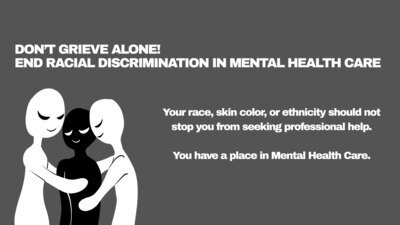

Don't Grieve Alone: End Racial Discrimination in Mental Health Care
The Issue
Don’t Grieve Alone: End Racial Disparities in Mental Health Care is an awareness and advocacy campaign that aims to address racial inequalities in mental health care and promote equal access to compassionate, accessible, and culturally responsive psychological support. People from marginalized racial and ethnic communities may experience barriers when seeking mental health services, including discrimination, social stigma, financial difficulties, and a lack of providers who understand their cultural backgrounds and experiences. These challenges can make it more difficult for individuals to receive appropriate care, particularly during periods of grief, emotional distress, and other mental health difficulties.
Research has consistently highlighted racial and ethnic disparities in mental health care. McGuire and Miranda (2008) discussed inequalities in access to and the quality of mental health services, emphasizing the need for improved policies, a more diverse mental health workforce, and better access to appropriate treatment. More recent evidence shows that these disparities remain a concern. Sheehan et al. (2024) analyzed nationally representative data from 441,993 adults in the United States collected between 2008 and 2020. Their findings revealed that most racial and ethnic minority groups were less likely to receive mental health treatment than White adults, regardless of mental health status. Although treatment utilization increased over the study period, progress in reducing these disparities remained limited.
Further evidence comes from Yirenya-Tawiah and Cubbin (2025), who examined mental health service use among 19,555 U.S. adults during the COVID-19 pandemic. Their findings showed that racial and ethnic minority groups had significantly lower odds of receiving mental health care than non-Hispanic White adults, even after accounting for factors such as income, education, geographic location, and mental health needs. The researchers emphasized the importance of improving access to services and developing culturally relevant interventions for underserved communities. Together, these studies demonstrate the continuing need to address unequal access to mental health care and to ensure that people from different racial backgrounds receive appropriate support.
The campaign also recognizes the importance of understanding grief and the emotional challenges faced by marginalized communities. Chang and Robles (2025) examined racial disparities in premature and cumulative family bereavement, highlighting that the burden of losing family members is not experienced equally across racial groups. Meanwhile, Subica and Link (2024) investigated mental illness stigma among Black, Latina/o, and Asian American adults, emphasizing the importance of understanding stigma and its relationship with attitudes toward seeking treatment. These findings reinforce the need to promote empathy, challenge harmful stereotypes, and encourage individuals to seek appropriate support without fear of judgment or discrimination.
To address these concerns, the campaign will use educational social media posts, informational videos, awareness posters, and an online petition to inform the public and encourage collective action. These materials will present research-based information about racial disparities, explain common barriers to mental health care, challenge misconceptions surrounding mental illness, and promote the importance of accessible and culturally responsive services. The online petition will serve as an advocacy initiative, allowing supporters to express their support for efforts to reduce racial inequalities and improve access to mental health care.
Ultimately, Don’t Grieve Alone seeks to encourage a more compassionate and inclusive society in which everyone can access mental health support regardless of racial or ethnic background. Through education, awareness, and advocacy, the campaign aims to challenge stigma and discrimination, increase public understanding of racial disparities, and encourage support for more equitable mental health services. Everyone deserves to be heard, understood, and supported during times of grief and emotional difficulty, and no one should face additional barriers to receiving the care they need.
References
Chang, M., & Robles, T. F. (2025). Measuring premature and cumulative family member bereavement: Racial disparities and later mortality risk. Proceedings of the National Academy of Sciences, 122(24), e2313600122. https://doi.org/10.1073/pnas.2313600122
McGuire, T. G., & Miranda, J. (2008). New evidence regarding racial and ethnic disparities in mental health: Policy implications. Health Affairs, 27(2), 393–403. https://doi.org/10.1377/hlthaff.27.2.393
Sheehan, A. E., Walsh, R. F. L., & Liu, R. T. (2024). Racial and ethnic trends in mental health service utilisation and perceived unmet need in the USA. Journal of Epidemiology and Community Health, 78(4), 228–234. https://doi.org/10.1136/jech-2023-220683
Subica, A. M., & Link, B. G. (2024). Mental illness stigma in Black, Latina/o, and Asian Americans. Journal of Racial and Ethnic Health Disparities, 13(1), 463–474. https://doi.org/10.1007/s40615-024-02259-8
Yirenya-Tawiah, A., & Cubbin, C. (2025). Racial and ethnic disparities in mental health service utilization during COVID-19. Journal of Racial and Ethnic Health Disparities. Advance online publication. https://doi.org/10.1007/s40615-025-02456-z

16
The Issue
Don’t Grieve Alone: End Racial Disparities in Mental Health Care is an awareness and advocacy campaign that aims to address racial inequalities in mental health care and promote equal access to compassionate, accessible, and culturally responsive psychological support. People from marginalized racial and ethnic communities may experience barriers when seeking mental health services, including discrimination, social stigma, financial difficulties, and a lack of providers who understand their cultural backgrounds and experiences. These challenges can make it more difficult for individuals to receive appropriate care, particularly during periods of grief, emotional distress, and other mental health difficulties.
Research has consistently highlighted racial and ethnic disparities in mental health care. McGuire and Miranda (2008) discussed inequalities in access to and the quality of mental health services, emphasizing the need for improved policies, a more diverse mental health workforce, and better access to appropriate treatment. More recent evidence shows that these disparities remain a concern. Sheehan et al. (2024) analyzed nationally representative data from 441,993 adults in the United States collected between 2008 and 2020. Their findings revealed that most racial and ethnic minority groups were less likely to receive mental health treatment than White adults, regardless of mental health status. Although treatment utilization increased over the study period, progress in reducing these disparities remained limited.
Further evidence comes from Yirenya-Tawiah and Cubbin (2025), who examined mental health service use among 19,555 U.S. adults during the COVID-19 pandemic. Their findings showed that racial and ethnic minority groups had significantly lower odds of receiving mental health care than non-Hispanic White adults, even after accounting for factors such as income, education, geographic location, and mental health needs. The researchers emphasized the importance of improving access to services and developing culturally relevant interventions for underserved communities. Together, these studies demonstrate the continuing need to address unequal access to mental health care and to ensure that people from different racial backgrounds receive appropriate support.
The campaign also recognizes the importance of understanding grief and the emotional challenges faced by marginalized communities. Chang and Robles (2025) examined racial disparities in premature and cumulative family bereavement, highlighting that the burden of losing family members is not experienced equally across racial groups. Meanwhile, Subica and Link (2024) investigated mental illness stigma among Black, Latina/o, and Asian American adults, emphasizing the importance of understanding stigma and its relationship with attitudes toward seeking treatment. These findings reinforce the need to promote empathy, challenge harmful stereotypes, and encourage individuals to seek appropriate support without fear of judgment or discrimination.
To address these concerns, the campaign will use educational social media posts, informational videos, awareness posters, and an online petition to inform the public and encourage collective action. These materials will present research-based information about racial disparities, explain common barriers to mental health care, challenge misconceptions surrounding mental illness, and promote the importance of accessible and culturally responsive services. The online petition will serve as an advocacy initiative, allowing supporters to express their support for efforts to reduce racial inequalities and improve access to mental health care.
Ultimately, Don’t Grieve Alone seeks to encourage a more compassionate and inclusive society in which everyone can access mental health support regardless of racial or ethnic background. Through education, awareness, and advocacy, the campaign aims to challenge stigma and discrimination, increase public understanding of racial disparities, and encourage support for more equitable mental health services. Everyone deserves to be heard, understood, and supported during times of grief and emotional difficulty, and no one should face additional barriers to receiving the care they need.
References
Chang, M., & Robles, T. F. (2025). Measuring premature and cumulative family member bereavement: Racial disparities and later mortality risk. Proceedings of the National Academy of Sciences, 122(24), e2313600122. https://doi.org/10.1073/pnas.2313600122
McGuire, T. G., & Miranda, J. (2008). New evidence regarding racial and ethnic disparities in mental health: Policy implications. Health Affairs, 27(2), 393–403. https://doi.org/10.1377/hlthaff.27.2.393
Sheehan, A. E., Walsh, R. F. L., & Liu, R. T. (2024). Racial and ethnic trends in mental health service utilisation and perceived unmet need in the USA. Journal of Epidemiology and Community Health, 78(4), 228–234. https://doi.org/10.1136/jech-2023-220683
Subica, A. M., & Link, B. G. (2024). Mental illness stigma in Black, Latina/o, and Asian Americans. Journal of Racial and Ethnic Health Disparities, 13(1), 463–474. https://doi.org/10.1007/s40615-024-02259-8
Yirenya-Tawiah, A., & Cubbin, C. (2025). Racial and ethnic disparities in mental health service utilization during COVID-19. Journal of Racial and Ethnic Health Disparities. Advance online publication. https://doi.org/10.1007/s40615-025-02456-z
Petition Updates
Share this petition
Petition created on October 13, 2026