Create sensory-friendly train cars on the LIRR
Create sensory-friendly train cars on the LIRR
The Issue
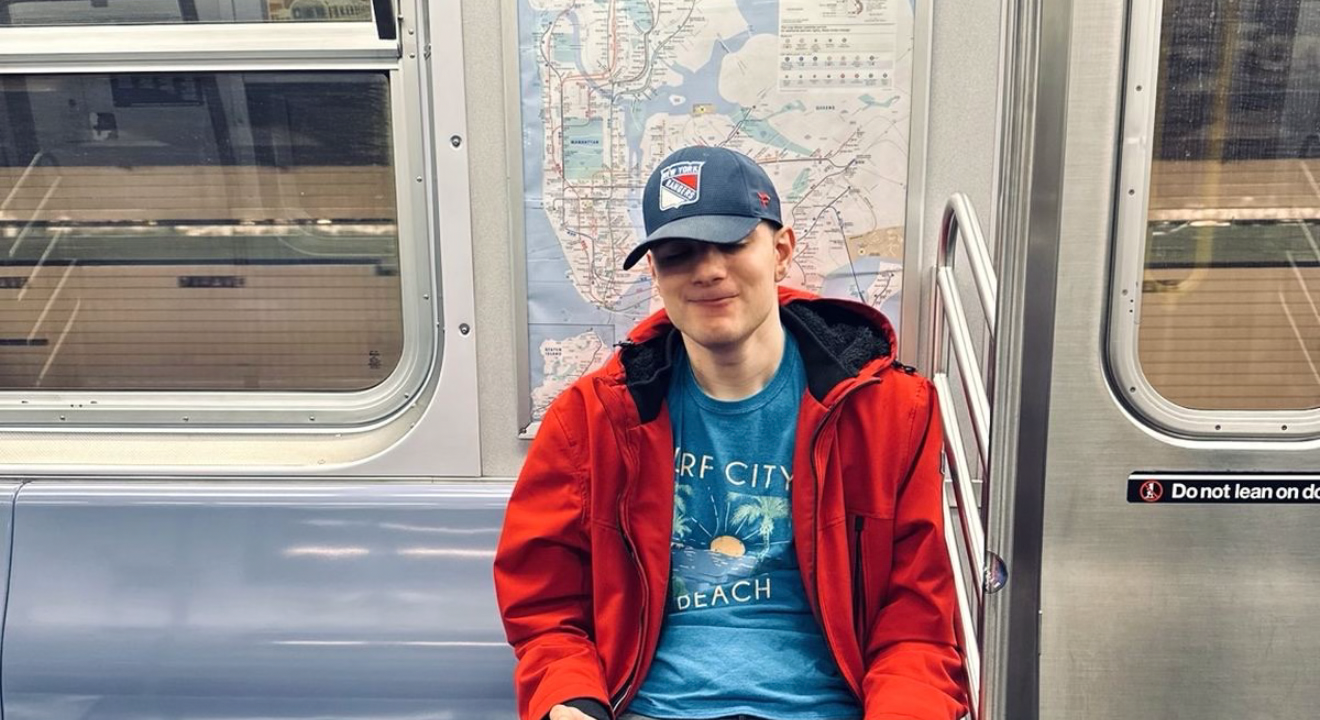
My son Daniel is 24 years old, nonverbal, and on the autism spectrum.
As his father, I know how difficult something as simple as taking a train can become. Crowded spaces, overwhelming sensory stimulation, and the fear of being judged because our loved ones behave differently can turn an ordinary journey into an exhausting experience.
For this reason, public transportation is something our family rarely uses.
Recently, however, Daniel and I encountered an extraordinary conductor on the Long Island Rail Road. Her kindness, patience, and understanding made us feel welcome in a way I will never forget.
She reminded me that compassion and humanity still exist.
But that experience also left me wondering:
Why should families like mine have to depend on a chance encounter with an exceptionally compassionate employee to feel comfortable traveling? What if that understanding could become part of the system itself?
I am asking the Metropolitan Transportation Authority (MTA) to consider introducing a sensory-friendly train car pilot program on the Long Island Rail Road.
My proposal is simple: designate one sensory-friendly car on selected LIRR trains three times daily—morning, afternoon, and evening.
These cars could offer reduced unnecessary noise, appropriate lighting where feasible, clear signage, and train crews trained to understand the needs of passengers with autism, sensory sensitivities, and other disabilities.
Most importantly, they would offer an environment where families do not have to feel embarrassed or judged when their loved ones vocalize, move unexpectedly, or experience sensory distress.
This is not about separating people with disabilities from society.
It is about creating a society that makes room for them.
I am proposing a 90-day pilot program using existing train cars and resources wherever possible, with input from disability advocates, autistic individuals, families, and MTA employees.
If successful, the program could eventually expand to additional LIRR services and other parts of the MTA network.
Imagine a mother taking her autistic child on a train without fearing the reactions of other passengers.
Imagine an adult with sensory challenges feeling confident enough to travel independently.
Imagine a father like me being able to take his son into Manhattan knowing that there is a space where he will be welcomed and understood.
For some, these may seem like small changes.
For families like ours, they could be life-changing.
Accessibility is about more than elevators, ramps, and wheelchair spaces. Those accommodations are essential, but we must also recognize disabilities that are not always visible.
New York has an opportunity to lead by demonstrating that public transportation can be designed with compassion as well as efficiency.
I invite the MTA, elected officials, disability advocacy organizations, and fellow New Yorkers to support this proposal and help explore a practical pilot program.
My son Daniel cannot express this request in words, but I can advocate for him, while recognizing that autistic individuals and families have diverse needs and experiences.
No family should have to choose between participating in everyday life and protecting the dignity of someone they love.
Please sign and share this petition.
Together, we can help make public transportation more welcoming, understanding, and accessible for everyone.
Wassim Rikabi
A father advocating for a more inclusive New York.

596
The Issue
My son Daniel is 24 years old, nonverbal, and on the autism spectrum.
As his father, I know how difficult something as simple as taking a train can become. Crowded spaces, overwhelming sensory stimulation, and the fear of being judged because our loved ones behave differently can turn an ordinary journey into an exhausting experience.
For this reason, public transportation is something our family rarely uses.
Recently, however, Daniel and I encountered an extraordinary conductor on the Long Island Rail Road. Her kindness, patience, and understanding made us feel welcome in a way I will never forget.
She reminded me that compassion and humanity still exist.
But that experience also left me wondering:
Why should families like mine have to depend on a chance encounter with an exceptionally compassionate employee to feel comfortable traveling? What if that understanding could become part of the system itself?
I am asking the Metropolitan Transportation Authority (MTA) to consider introducing a sensory-friendly train car pilot program on the Long Island Rail Road.
My proposal is simple: designate one sensory-friendly car on selected LIRR trains three times daily—morning, afternoon, and evening.
These cars could offer reduced unnecessary noise, appropriate lighting where feasible, clear signage, and train crews trained to understand the needs of passengers with autism, sensory sensitivities, and other disabilities.
Most importantly, they would offer an environment where families do not have to feel embarrassed or judged when their loved ones vocalize, move unexpectedly, or experience sensory distress.
This is not about separating people with disabilities from society.
It is about creating a society that makes room for them.
I am proposing a 90-day pilot program using existing train cars and resources wherever possible, with input from disability advocates, autistic individuals, families, and MTA employees.
If successful, the program could eventually expand to additional LIRR services and other parts of the MTA network.
Imagine a mother taking her autistic child on a train without fearing the reactions of other passengers.
Imagine an adult with sensory challenges feeling confident enough to travel independently.
Imagine a father like me being able to take his son into Manhattan knowing that there is a space where he will be welcomed and understood.
For some, these may seem like small changes.
For families like ours, they could be life-changing.
Accessibility is about more than elevators, ramps, and wheelchair spaces. Those accommodations are essential, but we must also recognize disabilities that are not always visible.
New York has an opportunity to lead by demonstrating that public transportation can be designed with compassion as well as efficiency.
I invite the MTA, elected officials, disability advocacy organizations, and fellow New Yorkers to support this proposal and help explore a practical pilot program.
My son Daniel cannot express this request in words, but I can advocate for him, while recognizing that autistic individuals and families have diverse needs and experiences.
No family should have to choose between participating in everyday life and protecting the dignity of someone they love.
Please sign and share this petition.
Together, we can help make public transportation more welcoming, understanding, and accessible for everyone.
Wassim Rikabi
A father advocating for a more inclusive New York.
The Decision Makers
Supporter Voices
Petition Updates
Share this petition
Petition created on October 31, 2026